Artwork
A Gardener and a Gentleman
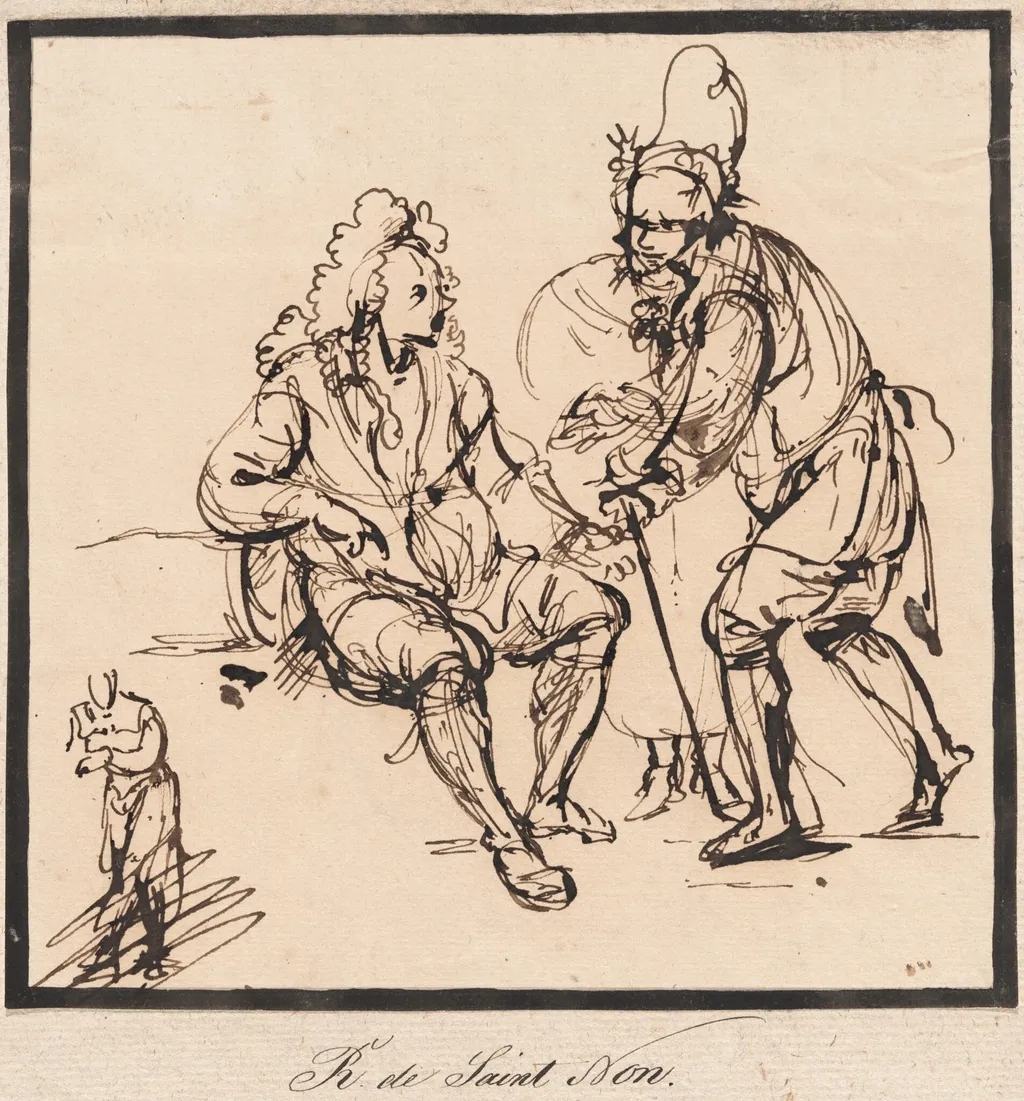
A Gardener and a Gentleman is an ink drawing by the Baroque artist Jean-Claude-Richard, Abbé de Saint-Non. It dates from 1745 and is held in the collection of the National Gallery of Art.
About this work
Overview
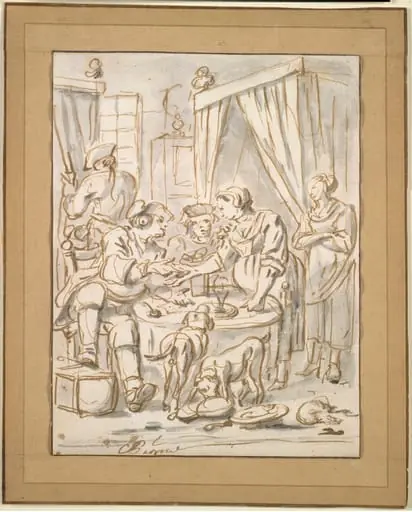
Created around 1745 by Jean-Claude-Richard, Abbé de Saint-Non, this drawing captures two figures in a casual outdoor setting. Executed in pen and brown ink on laid paper, it was later mounted on an older backing. The work’s informal composition and rapid brushwork suggest it was made as a spontaneous observation rather than a polished study, reflecting the artist’s interest in everyday moments.
Subject & Meaning
Their postures suggest a moment of rest, yet their limbs appear slightly disjointed, creating a subtle tension between relaxation and unease.
The scene depicts a seated man in a powdered wig and loose garments beside a standing figure in a broad hat and open shirt. Their postures suggest a moment of rest, yet their limbs appear slightly disjointed, creating a subtle tension between relaxation and unease. A third, smaller figure kneels in the corner, possibly tending to plants, reinforcing the garden setting. The lack of narrative clarity invites interpretation rather than storytelling.
Technique & Style
Saint-Non employed quick, overlapping pen strokes to model form and shadow, avoiding smooth contours in favor of textured, layered lines. Cross-hatching builds volume without precision, lending the figures a sense of immediacy. The roughness of the lines and the absence of fine detail suggest the drawing was made rapidly, possibly outdoors, capturing fleeting gestures rather than idealized forms.
History & Provenance
The drawing was produced during Saint-Non’s early career, before his better-known travels to Italy. It remains on its original mount, indicating it was preserved as a personal study rather than a finished work. No documented ownership history exists prior to its inclusion in institutional collections, suggesting it was retained by the artist or a close associate.
Context
In mid-18th-century France, drawings like this were often made as preparatory studies or private records of observed life. While formal portraiture dominated official commissions, artists increasingly turned to informal scenes of labor and leisure. Saint-Non’s sketch aligns with this emerging interest in unidealized human presence, though it retains a distinctly personal, unpolished character.
Legacy
Though not widely exhibited during Saint-Non’s lifetime, this drawing exemplifies the shift toward observational sketching in French art. Its unrefined quality influenced later generations who valued spontaneity over polish. Today, it stands as a quiet testament to the artist’s eye for unguarded moments, offering insight into the informal practices behind more formal works of the period.
Artist & collection

Artist
Jean-Claude-Richard, Abbé de Saint-Non
Saint-Non, Jean-Claude-Richard, Abbé de (1727–1791) was an artist.

 Interior of a Roman Villa
 Le concert
 Saint Luke at His Easel and Four Expressive Heads
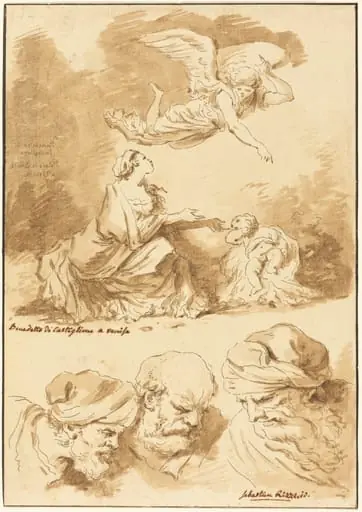 Hagar Consoled by an Angel (from a painting by Castiglione) and Three Heads of Old Men (from a painting by Ricci of Jesus and the Adultress)
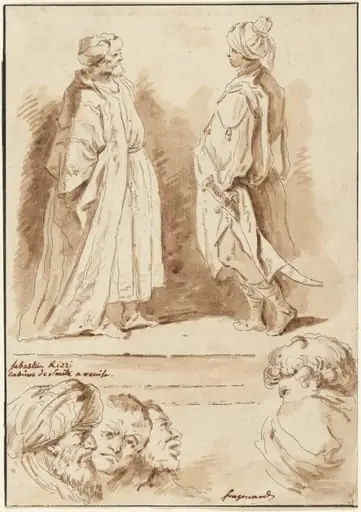 Details from "The Adoration of the Magi" and "The Pool at Bethesda"
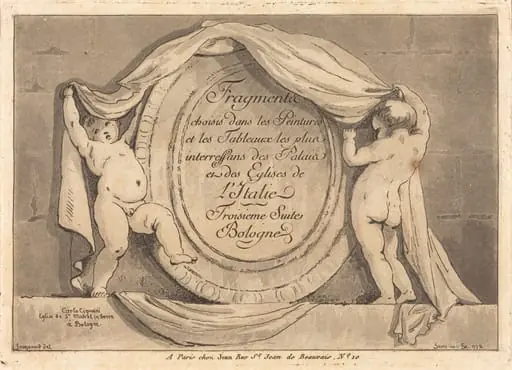 Title Page: Oval Design from the Church of San Michele de Bosco, Bologna
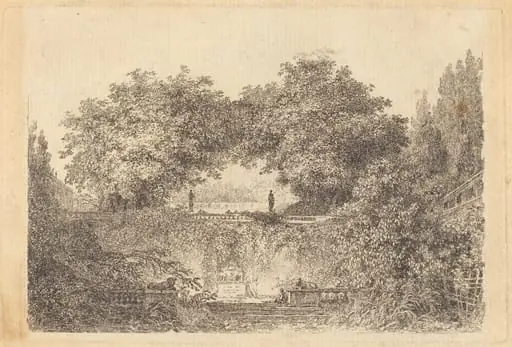 Le Petit Parc
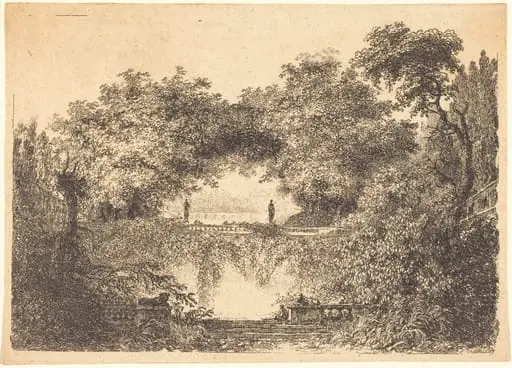 Le Petit Parc
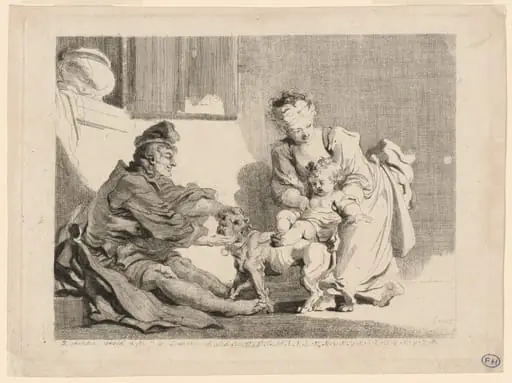 The Child and the Bulldog
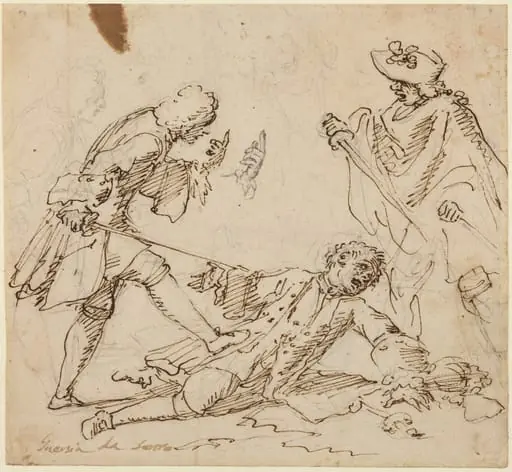 Three Men Fighting
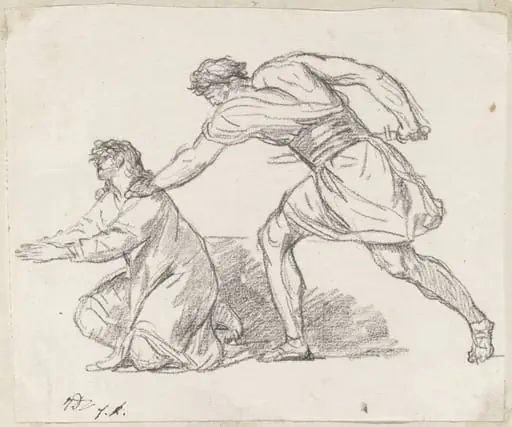 Warrior Seizing a Kneeling Figure
 Figure Studies including Seated Mother and Child
 Study for "The Romancer" (Le Conteur)
 Two Beggars with Their Dog
 Le paysan
 Interior Scene with Soldiers at a Table
 Two Turbaned Magicians and a Boy
 Three Soldiers and a Youth
 Seated Youth Leaning Against an Urn
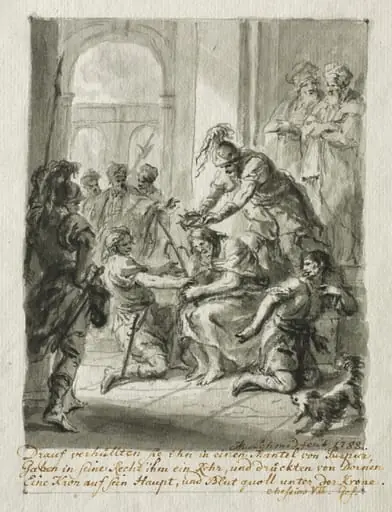 Christ Crowned with Thorns