Artwork
Hagar Consoled by an Angel (from a painting by Castiglione) and Three Heads of Old Men (from a painting by Ricci of Jesus and the Adultress)
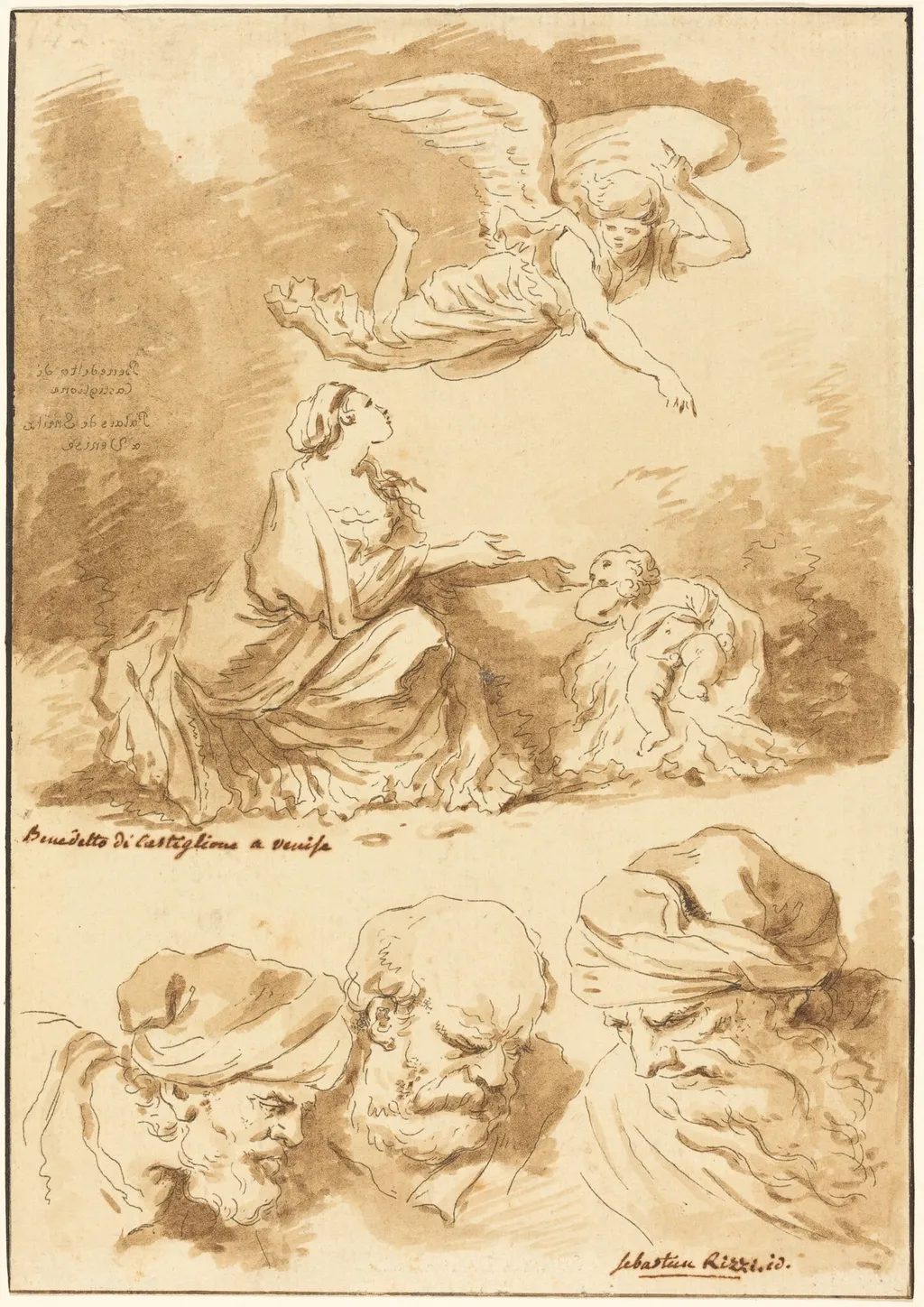
Hagar Consoled by an Angel (from a painting by Castiglione) and Three Heads of Old Men (from a painting by Ricci of Jesus and the Adultress) is an ink print by the Romanticist artist Jean-Claude-Richard, Abbé de Saint-Non. It dates from 1774 and is held in the collection of the National Gallery of Art.
About this work
Overview
The work functions as a sketch‑like study rather than a finished illustration.
Created in 1774 by the French abbé Jean‑Claude‑Richard Saint‑Non, this counterproof etching on laid paper combines two distinct narrative fragments into a single composition. Rendered in brown wash, the print juxtaposes a biblical consolation scene with a study of elderly heads, both derived from earlier paintings by Castiglione and Ricci. The work functions as a sketch‑like study rather than a finished illustration.
Subject & Meaning
The upper register depicts Hagar, the Egyptian maid of Abraham, reaching toward her infant son while an angel hovers above, echoing the Genesis episode where divine comfort is offered. Beneath, two aged men with exaggerated heads and flowing hair are entangled in drapery, echoing a secondary scene from Ricci’s depiction of Jesus and the woman taken in adultery. The pairing suggests a meditation on compassion across ages.
Technique & Style
Executed as a counterproof etching, the image was first printed from a copper plate and then reworked with brown wash, giving the surface a soft tonal depth. The lines are loose, with rapid hatching that conveys movement and emotion. The sketch‑like quality reflects an 18th‑century interest in preparatory studies, emphasizing expressive gesture over precise detail.
History & Provenance
The print bears the name of Saint‑Non, an abbé known for producing reproductions of contemporary paintings for scholarly circulation. It was likely intended for private study or distribution among collectors interested in the works of Castiglione and Ricci. No specific ownership record precedes its appearance in 19th‑century catalogues, and it now resides in a museum collection dedicated to graphic arts.
Context
Emerging in the late Enlightenment, the work illustrates the period’s shift toward emotional resonance in religious imagery, moving away from strict academic conventions. By merging two separate narrative scenes, Saint‑Non engages with the era’s fascination with compositional experimentation and the didactic potential of prints as tools for disseminating artistic ideas across Europe.
Artist & collection

Artist
Jean-Claude-Richard, Abbé de Saint-Non
Saint-Non, Jean-Claude-Richard, Abbé de (1727–1791) was an artist.

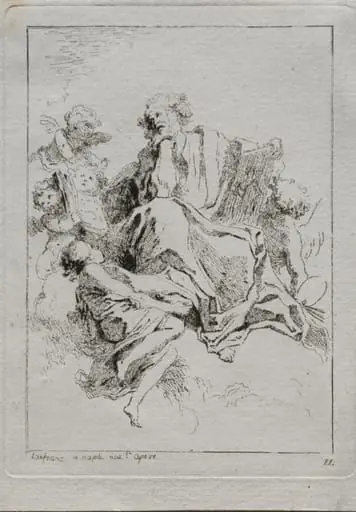 Saint Luke
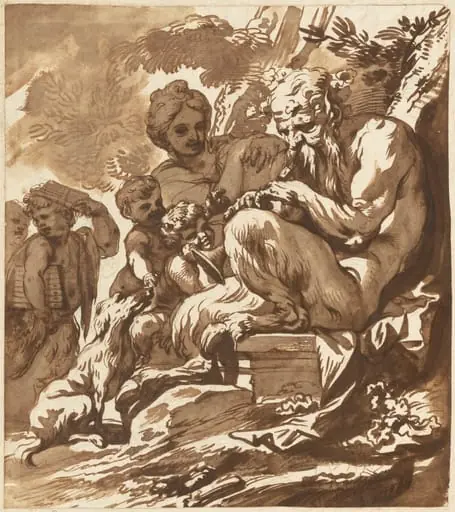 A Satyr Entertaining His Family
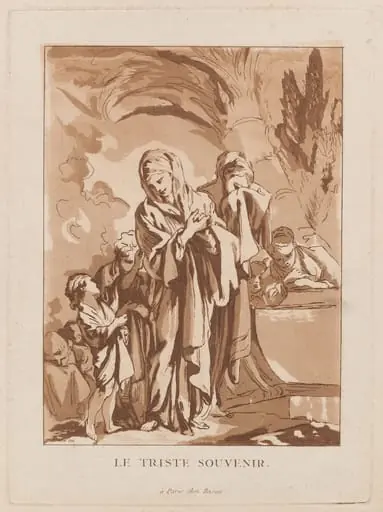 Le Triste Souvenir (The Sad Memory)
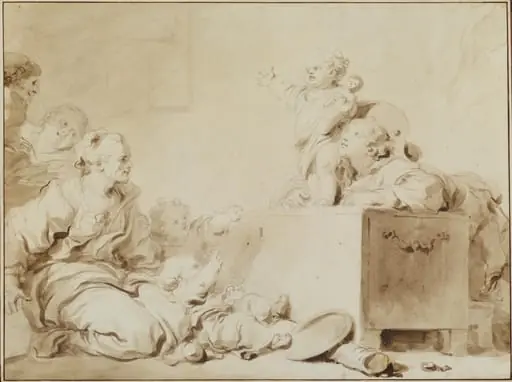 The Little Preacher
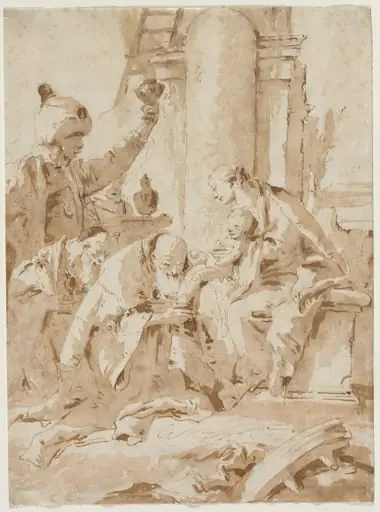 The Adoration of the Magi
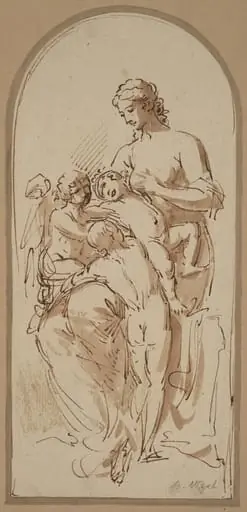 Charity
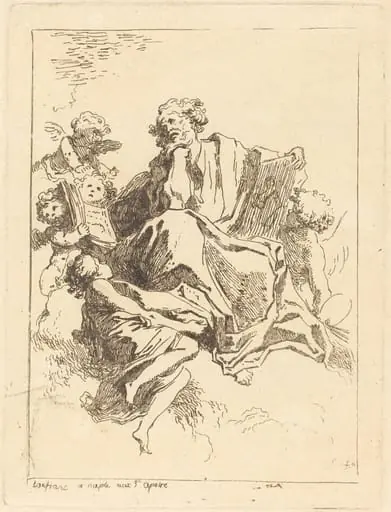 Saint Luke
 The Virgin and Child with Saint John
 The Holy Family with Two Saints
 Worship of the Golden Calf and Christ on the Mount of Olives
 The Adoration of the Shepherds
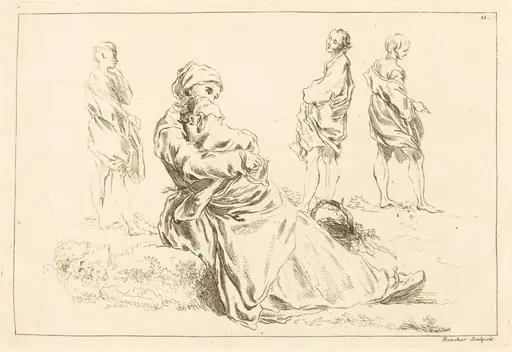 Figure Studies including Seated Mother and Child