Artwork
Ruins of a Fortified Tower among Wooded Hills [recto]
![Ruins of a Fortified Tower among Wooded Hills [recto], by Friedrich Salathé, graphite, 1818](https://artifactworldgallery.com/img/friedrich-salathe--ruins-of-a-fortified-tower-among-wooded-hills-recto--b1cfbca521a1183a-w1024.webp)
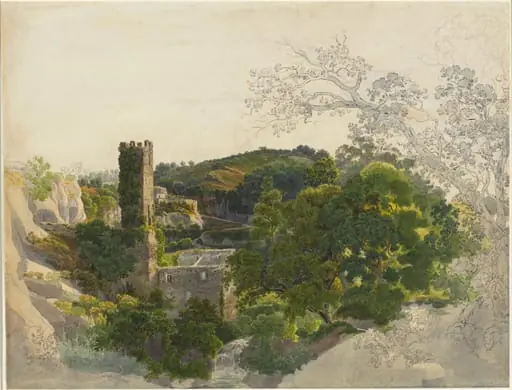
Ruins of a Fortified Tower among Wooded Hills [recto] is a graphite drawing by the Romanticist artist Friedrich Salathé. It dates from 1818 and is held in the collection of the National Gallery of Art.
About this work
Overview
Friedrich Salathé’s 1818 drawing, titled *Ruins of a Fortified Tower among Wooded Hills* (recto), is executed in brown wash and watercolor over graphite on wove paper. The work presents a solitary, dilapidated stone tower set amid rolling, tree‑laden hills, with a tranquil water surface and distant ships visible under a muted sky.
Subject & Meaning
The composition juxtaposes the decay of human architecture with the surrounding natural environment, emphasizing the tower’s broken walls and the tangled, leafless trees that encroach upon it. The faint silhouettes of ships on the water suggest a broader landscape beyond the immediate ruins, inviting contemplation of the passage of time and the transience of built structures.
Technique & Style
Salathé employed a light brown wash to model the tower’s stone and a cooler blue tone for distant hills and water, creating atmospheric depth. Underlying graphite sketches remain visible, indicating a preparatory drawing that was later overlaid with watercolor. The restrained palette and soft, cloudy sky align the piece with early Romantic sensibilities toward nature and ruin.
Context
Created during the early nineteenth century, the drawing reflects Romantic era interests in the sublime and the picturesque, where ruins served as visual metaphors for historical decay and emotional reflection. The work’s emphasis on a solitary tower amidst an untamed landscape echoes contemporary literary and artistic motifs that linked natural scenery with human fragility.
History & Provenance
The piece is documented as a 1818 work by Salathé, though details of its ownership history are scarce. It remains catalogued as a watercolor drawing on wove paper, preserving its original support and medium without known later alterations.
Artist & collection


![Tower of a Fortified House [recto], by Friedrich Salathé](https://artifactworldgallery.com/img/friedrich-salathe--tower-of-a-fortified-house-recto--123693842ba6a52f-w320.webp)
![Grove of Trees [verso], by Friedrich Salathé](https://artifactworldgallery.com/img/friedrich-salathe--grove-of-trees-verso--4013b539bd981a94-w320.webp)
 Convent of St. Katherine, Mount Sinai
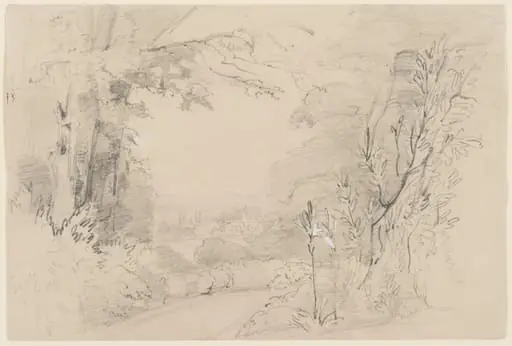 Sketch of landscape with trees
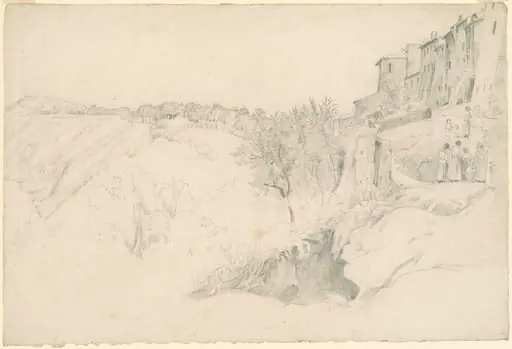 Hillside with Houses and Figures
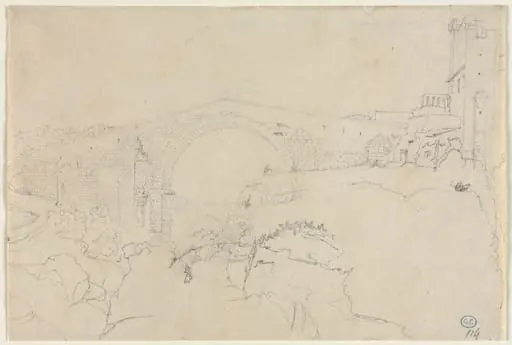 The Ponte dell'Abbadia at Vulci
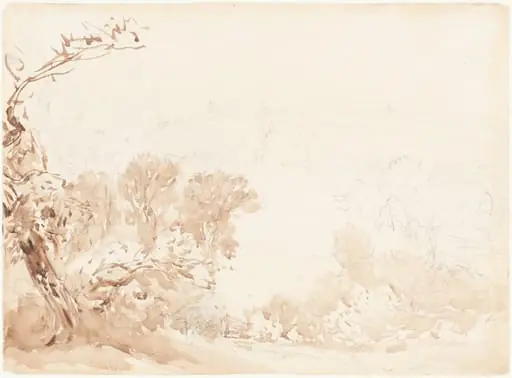 Hillside and Trees
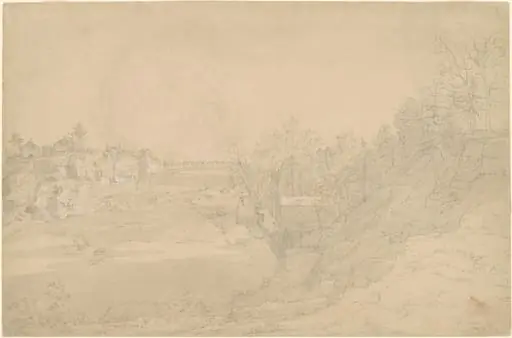 James McCullough's Leadmill
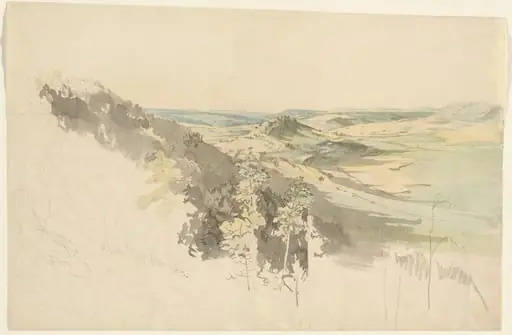 Hilly Landscape with Landsberg Castle
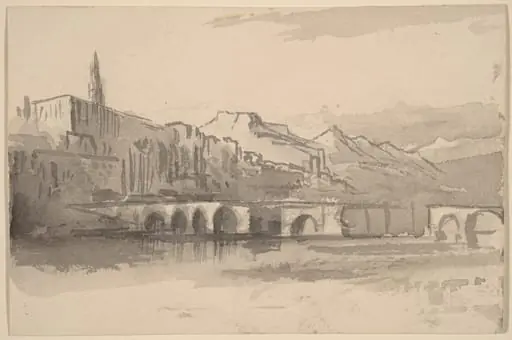 Bridge with Mountains in the Distance (Ventimiglia)
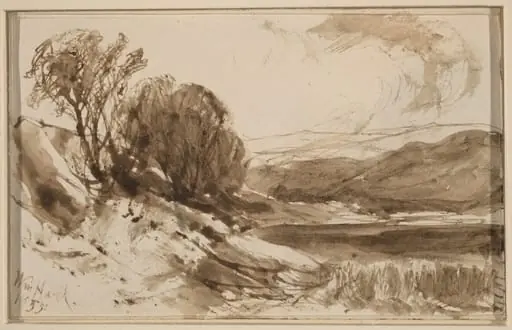 Hilly Landscape with Trees
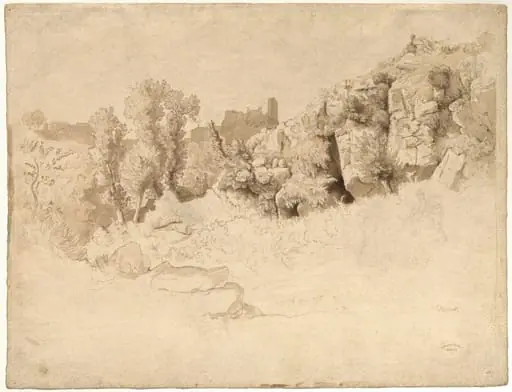 Rock Formations near Olevano
 The Waterfalls at Tivoli (recto)
 Landscape with Ruins