Artwork
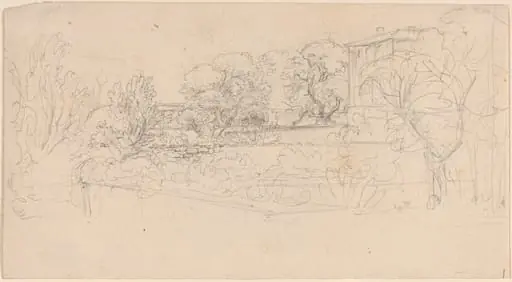
Corner of a Garden Court
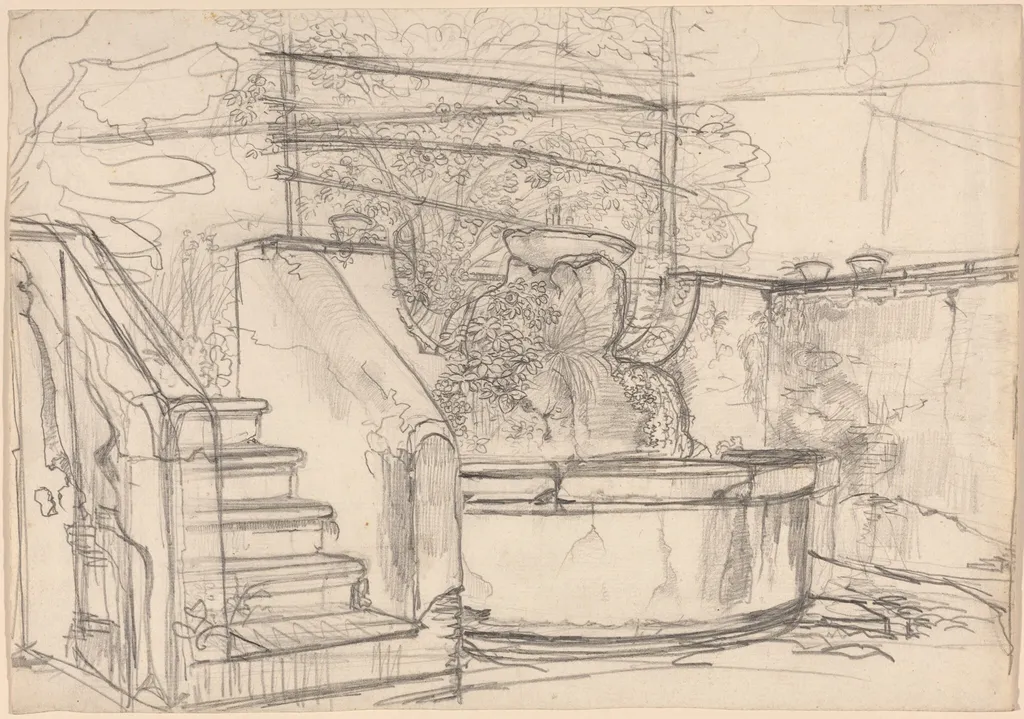
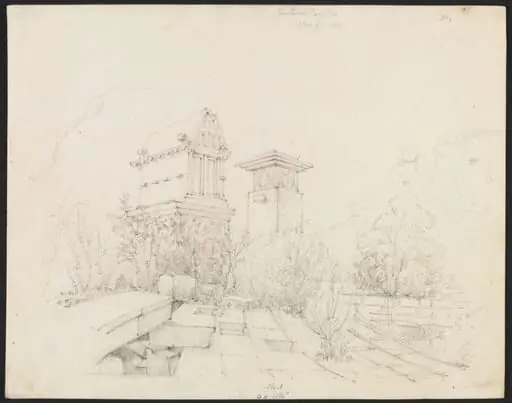
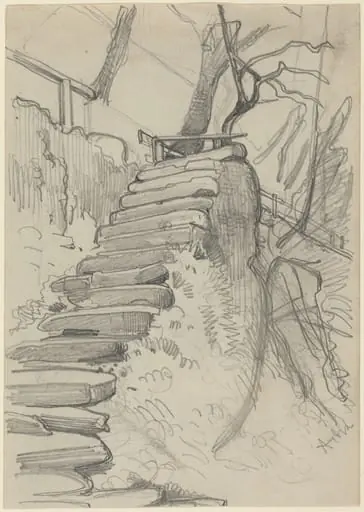
Corner of a Garden Court is a graphite drawing by the Romanticist artist Friedrich Salathé. It dates from 1818 and is held in the collection of the National Gallery of Art.
About this work
The painting is called Corner of a Garden Court.
It was made by Friedrich Salathé.
The artist worked on it between 1815 and 1821, which is interesting because it shows the time he spent on the piece.
Friedrich Salathé used graphite on laid paper to create this work.
This technique allowed for detailed drawings.
You can learn more about this style by looking into the movement: Romanticism.
Overview
Corner of a Garden Court is a graphite drawing on laid paper, executed by Friedrich Salathé between 1815 and 1821. The work belongs to a period when the artist focused on intimate architectural and natural scenes. Its medium—graphite on textured paper—enabled subtle tonal gradations and fine linear detail, characteristic of draftsmanship in early 19th-century European art.
Subject & Meaning
The drawing depicts a secluded corner of a garden courtyard, framed by stone walls and overgrown vegetation. No figures are present, suggesting a quiet, contemplative atmosphere. The composition emphasizes stillness and the quiet encroachment of nature on human structures, reflecting a Romantic sensibility toward solitude and the passage of time.
Technique & Style
Salathé employed graphite with precision, using hatching and light washes to model surfaces and suggest depth. The laid paper’s subtle texture enhanced the tactile quality of stone and foliage. His approach avoids dramatic contrast, favoring restrained tonal variation to evoke mood rather than narrative, aligning with the introspective tone of Romantic draftsmanship.
History & Provenance
The drawing was created during Salathé’s formative years, likely as a study or personal exercise rather than a commissioned piece. It remained in private hands until the 20th century, with no documented public exhibition during the artist’s lifetime. Its survival reflects its value as a refined example of Swiss Romantic drawing.
Context
Created during the height of Romanticism in Central Europe, the work resonates with contemporaries who turned to nature and ruins as subjects of emotional resonance. Salathé’s focus on modest, overlooked spaces contrasts with grand historical or landscape themes, offering a quieter, more personal variant of the movement’s ideals.
Legacy
Though Salathé is not widely known today, this drawing exemplifies the quiet precision of regional Romantic draftsmen. It contributes to the understanding of how lesser-known artists interpreted Romantic themes through intimate, everyday scenes, preserving a nuanced strand of 19th-century visual culture.
Artist & collection


![Tower of a Fortified House [recto], by Friedrich Salathé](https://artifactworldgallery.com/img/friedrich-salathe--tower-of-a-fortified-house-recto--123693842ba6a52f-w320.webp)
![Grove of Trees [verso], by Friedrich Salathé](https://artifactworldgallery.com/img/friedrich-salathe--grove-of-trees-verso--4013b539bd981a94-w320.webp)
![Ruins of a Fortified Tower among Wooded Hills [recto], by Friedrich Salathé](https://artifactworldgallery.com/img/friedrich-salathe--ruins-of-a-fortified-tower-among-wooded-hills-recto--b1cfbca521a1183a-w320.webp)
![A Terrace and Garden on Capri [recto], by François-Édouard Bertin](https://artifactworldgallery.com/img/francois-edouard-bertin--a-terrace-and-garden-on-capri-recto--8bd3839591b56d81-w320.webp)
![A Stand of Trees [recto], by John Varley](https://artifactworldgallery.com/img/john-varley--a-stand-of-trees-recto--88424b951e70bc89-w320.webp)