Artwork
Ruins of a Fortified Tower among Wooded Hills
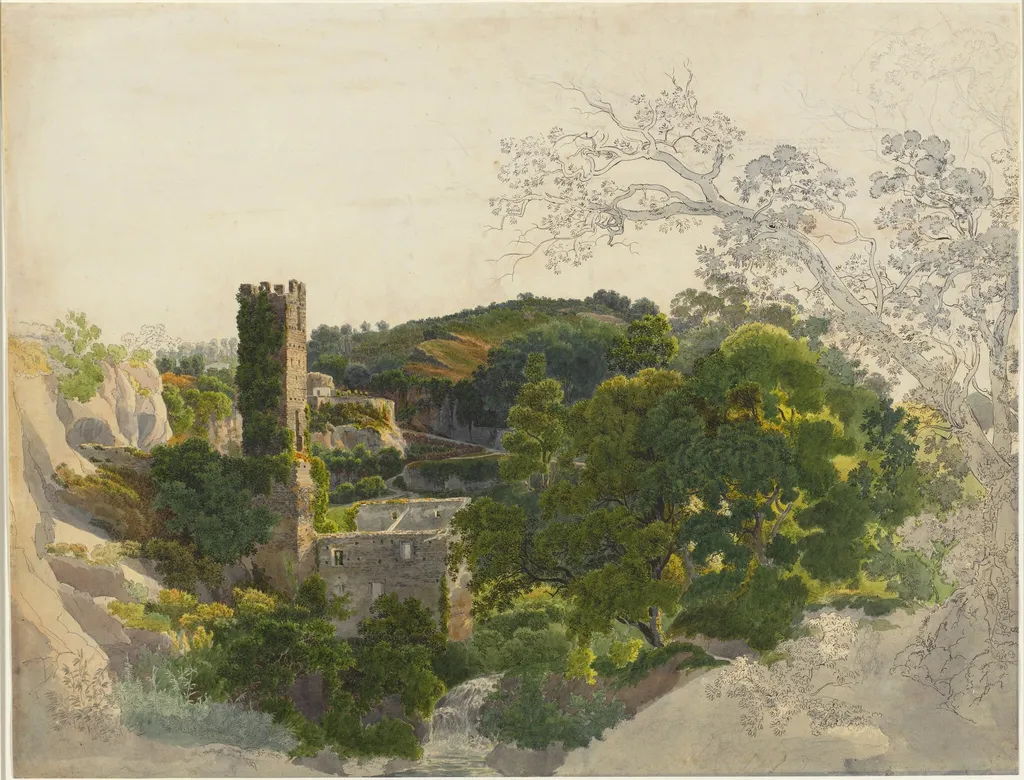
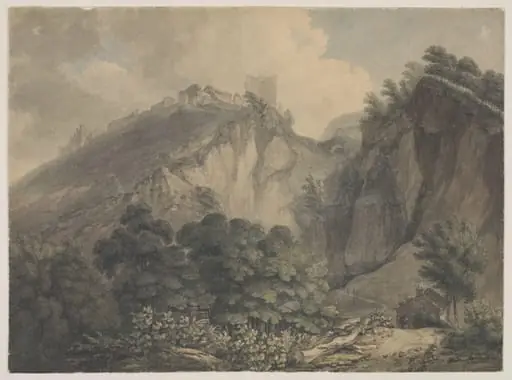
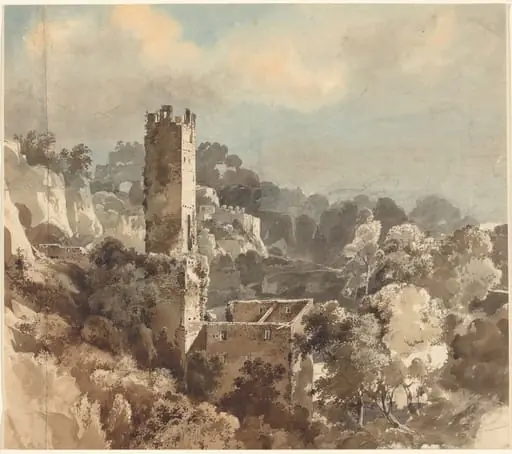
Ruins of a Fortified Tower among Wooded Hills is an ink drawing by the Romanticist artist Friedrich Salathé. It dates from 1818 and is held in the collection of the National Gallery of Art.
About this work
Overview
Created in 1818, this watercolor drawing by Friedrich Salathé depicts a solitary ruined tower nestled within a wooded landscape. Executed in watercolor, pen, and gray ink over graphite on wove paper, the work belongs to the genre of topographical landscape drawing. Its subdued palette of greens and browns, combined with delicate linework, conveys a quiet sense of decay and natural reclamation.
Subject & Meaning
The central subject is a crumbling stone tower, its structure partially overtaken by vegetation. Surrounding trees and rolling hills suggest a remote, untended setting. The absence of human figures and the encroaching foliage imply a passage of time and the quiet dominance of nature over human constructs, aligning with Romantic-era reflections on impermanence and the sublime in ruins.
Technique & Style
The precision in rendering individual leaves and stone joints contrasts with the softness of the sky, creating a balanced tension between detail and atmosphere.
Salathé employed layered watercolor washes to model the forms of hills and foliage, while fine pen strokes defined tree trunks, stone textures, and architectural fragments. Graphite underdrawing guided the composition, and gray ink added depth to shadows. The precision in rendering individual leaves and stone joints contrasts with the softness of the sky, creating a balanced tension between detail and atmosphere.
History & Provenance
The work was completed during Salathé’s active period in Switzerland, where he documented regional landscapes and architectural remnants. Likely produced during a sketching expedition, it was probably intended as a personal record rather than a commissioned piece. Its survival in good condition suggests it remained in private hands, possibly within Swiss artistic circles, before entering institutional collections.
Context
In early 19th-century Europe, interest in ruins and wild landscapes grew alongside Romanticism’s emphasis on emotion and nature’s power. Salathé’s depiction reflects this trend, echoing contemporary Swiss and German artists who sought to capture the melancholy beauty of decaying fortifications. Unlike grand historical scenes, his focus on modest, overlooked sites reveals a quieter, more introspective strain within the movement.
Legacy
Though not widely exhibited during his lifetime, Salathé’s watercolors, including this work, are now recognized for their sensitivity to natural detail and atmospheric tone. They contribute to the broader understanding of Swiss landscape drawing in the Romantic period, offering a nuanced alternative to more dramatic or idealized visions of nature prevalent in the era.
Artist & collection


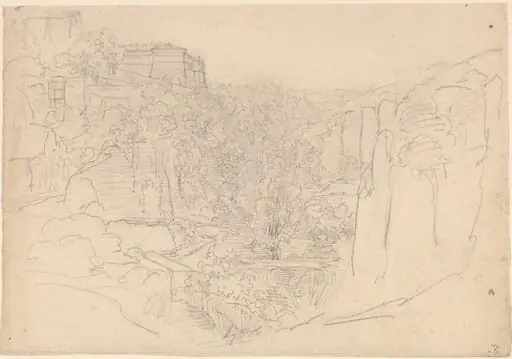
![Tower of a Fortified House [recto], by Friedrich Salathé](https://artifactworldgallery.com/img/friedrich-salathe--tower-of-a-fortified-house-recto--123693842ba6a52f-w320.webp)
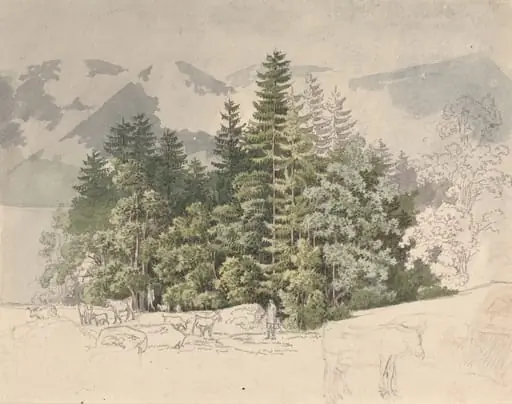
![Grove of Trees [verso], by Friedrich Salathé](https://artifactworldgallery.com/img/friedrich-salathe--grove-of-trees-verso--4013b539bd981a94-w320.webp)
![Ruins of a Fortified Tower among Wooded Hills [recto], by Friedrich Salathé](https://artifactworldgallery.com/img/friedrich-salathe--ruins-of-a-fortified-tower-among-wooded-hills-recto--b1cfbca521a1183a-w320.webp)
 Study of Butterbur (Petasites vulgaris, Desf.) the largest leaf of any English plant
 Conisborough Castle, Yorkshire
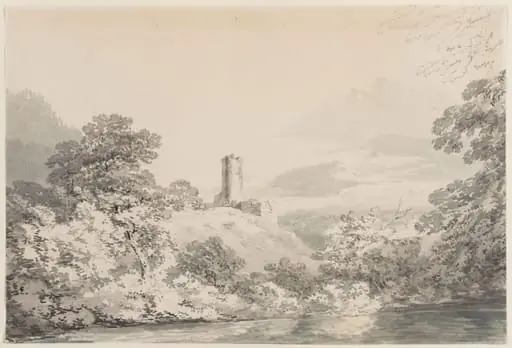 Landscape with tower on a rock
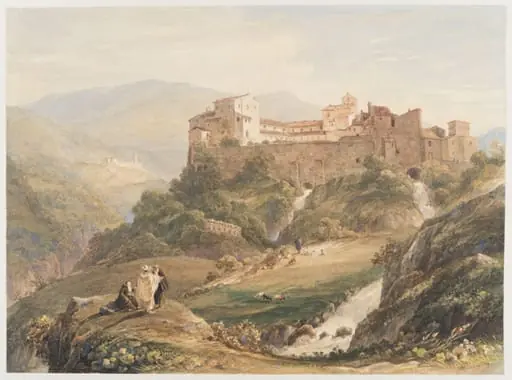 Italian landscape
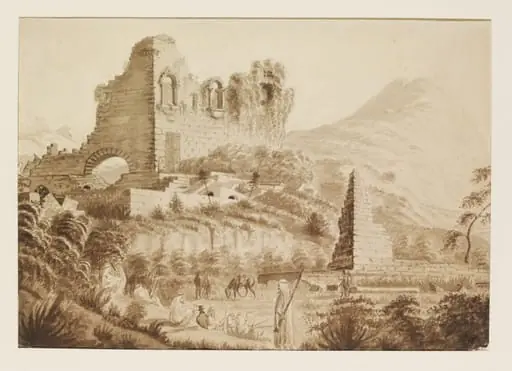 Villa Sevillana on the Road from Bona to Constantine
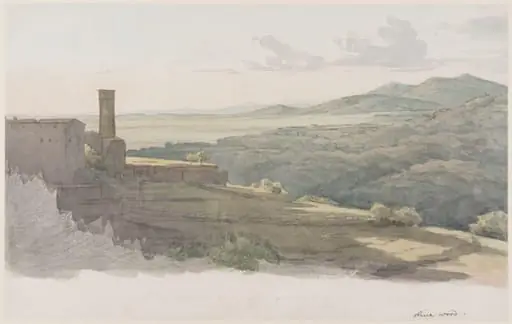 Villa of Maecenas at Tivoli
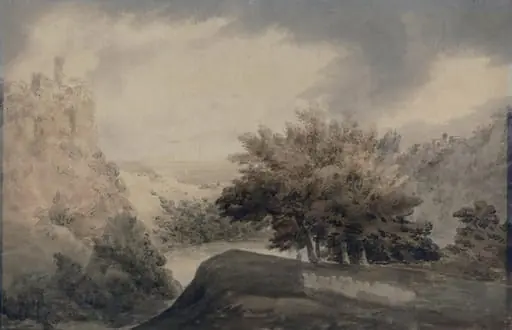 Lake Nemi
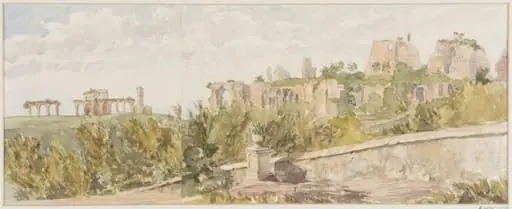 Palace of the Ceasars, Rome
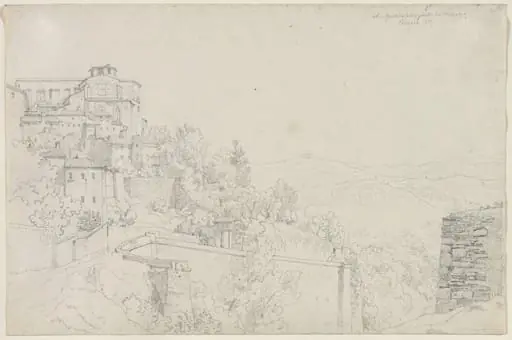 Saint Agostino from Bulagajo, Perugia (San Agostino dalla parte del Bulagajo, Perugia)
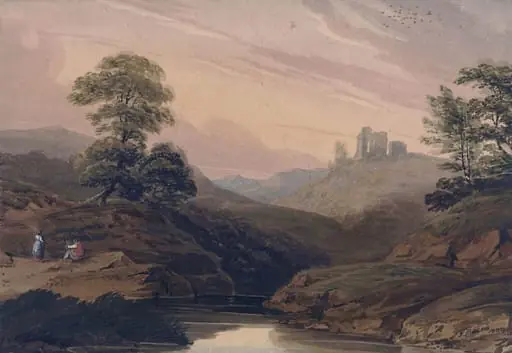 Mountainous Landscape with Stream and Ruin
 View of the Castle Gnandstein
 Ruins of a Fortified Tower among Wooded Hills