Artwork
Bucht bei bewegter See
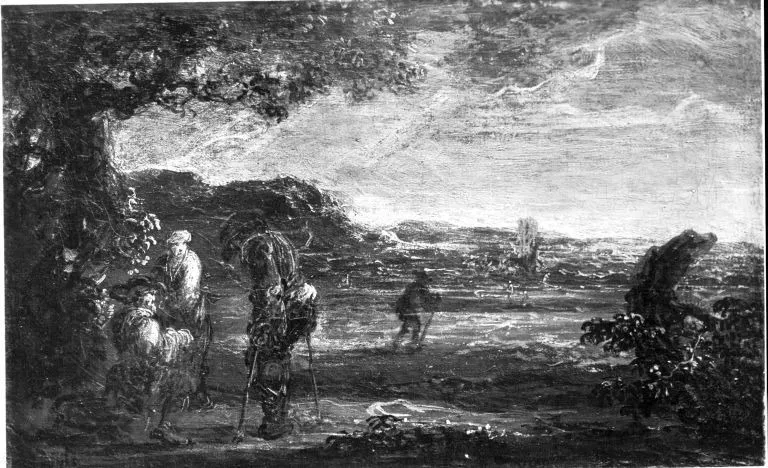
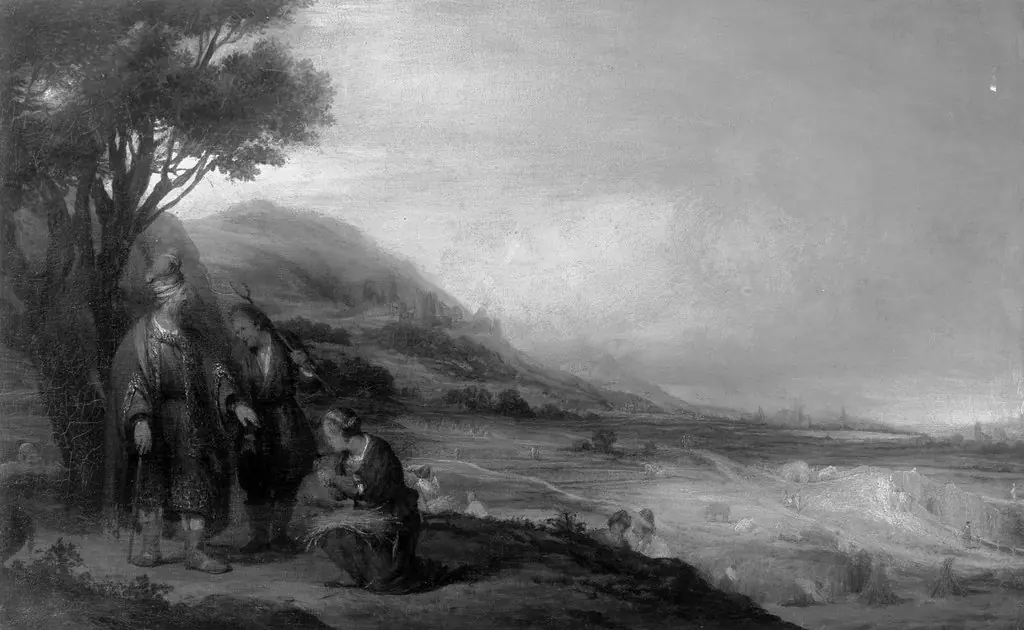
Bucht bei bewegter See is an unspecified painting by the Early Baroque Italian artist Salvator Rosa. It dates from 1644 and is held in the collection of the Bavarian State Painting Collections.
About this work
Overview
Bucht bei bewegter See, created by Italian Baroque painter Salvator Rosa in 1644, is a dramatic seascape characterized by intense movement and atmospheric depth. Part of the Alte Pinakothek collection, it exemplifies Rosa's distinctive approach to capturing the wildness of nature.
Subject & Meaning
The painting depicts a stormy coastal scene with a group of figures in old-fashioned attire gathered in the foreground, engaged in a discussion. One figure, gesturing with a staff, adds a sense of drama, while the turbulent water and ominous sky create an overall mood of tension and unease.
Technique & Style
Rosa employs chiaroscuro to achieve profound depth and contrast, accentuating the figures against the dark, dynamic landscape. The composition reflects his Baroque style, emphasizing emotional intensity and the sublime power of nature.
History & Provenance
Painted in 1644, Bucht bei bewegter See is an early Baroque work by Rosa, who was active in Naples, Rome, and Florence. The painting is now part of the Alte Pinakothek's collection, testament to Rosa's recognized talent in his time for expressive landscapes.
Context
As a multifaceted artist also known for poetry, satire, and music, Rosa's painting practice was informed by a broad creative outlook. Bucht bei bewegter See sits within the broader context of 17th-century Italian Baroque art, distinguished by its emphasis on movement and emotional depth.
Artist & collection
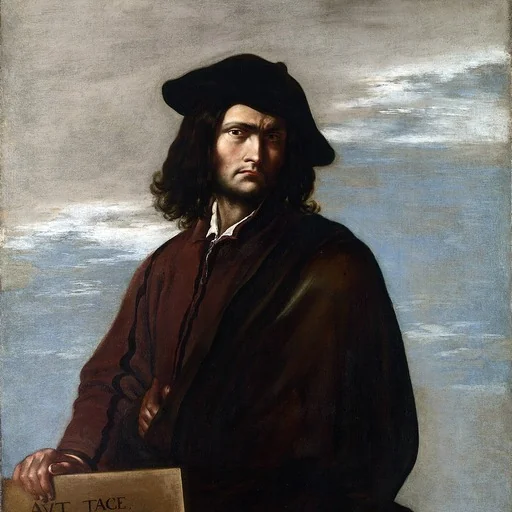
Artist
Salvator Rosa (1615 – 15 March 1673) is best known today as an Italian Baroque painter, whose romanticised landscapes and history paintings, often set in dark and untamed nature, exerted considerable influence from the 17th century into…