Artwork
Dr. Thomas Fuller
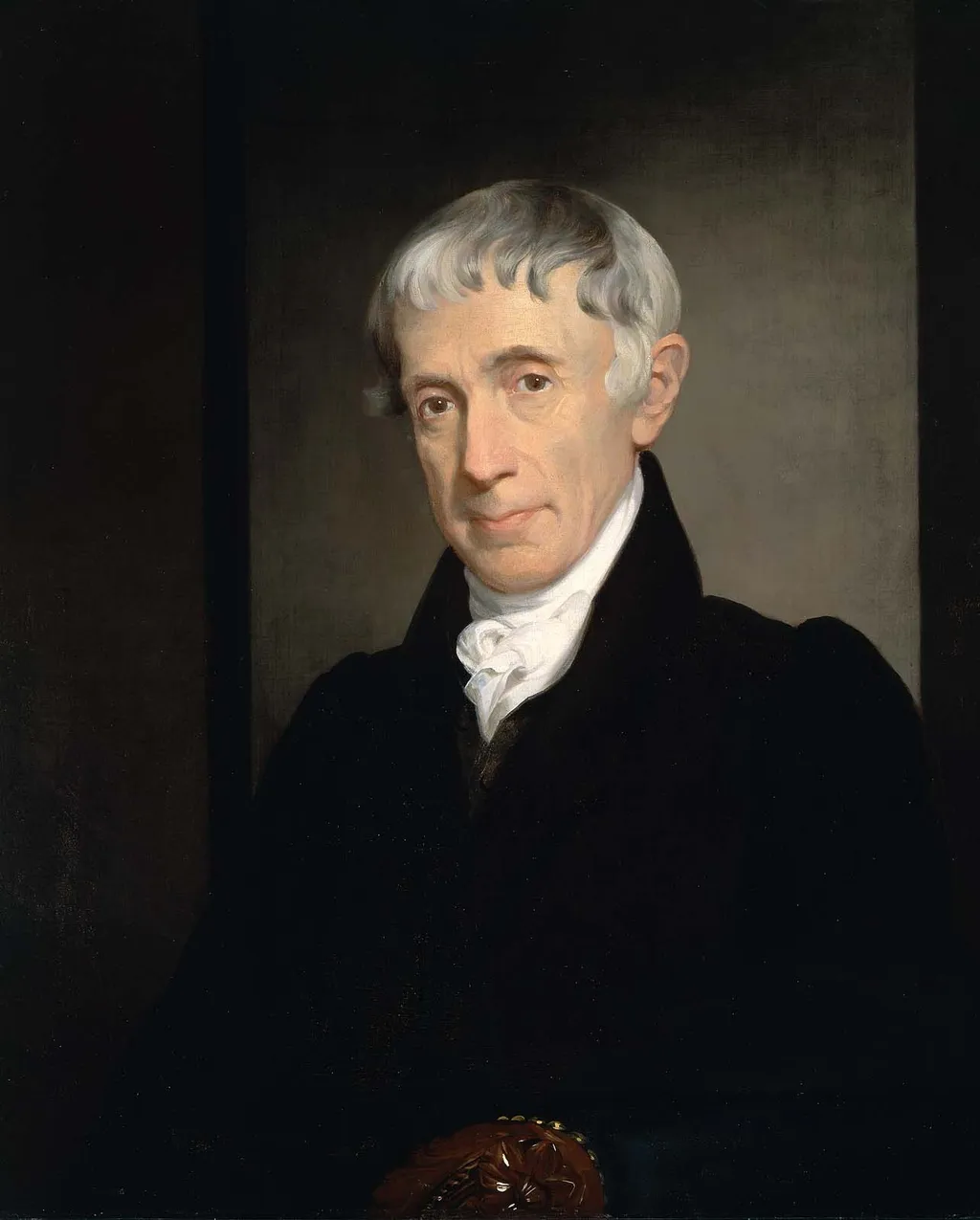
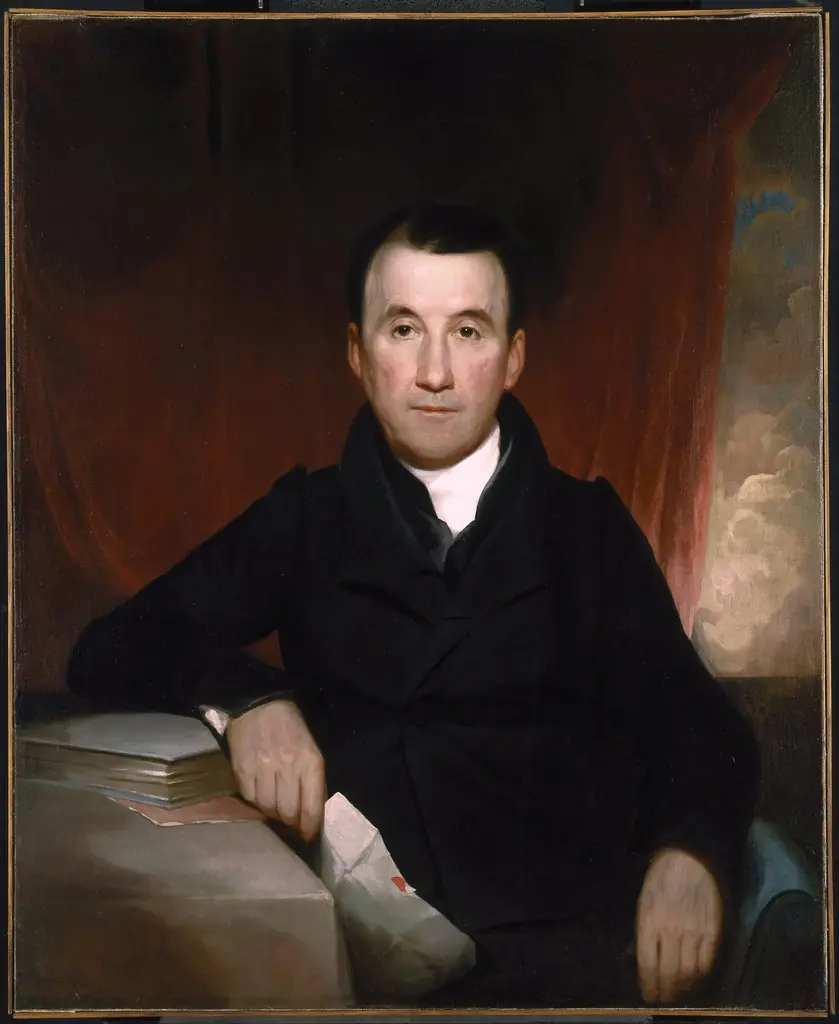
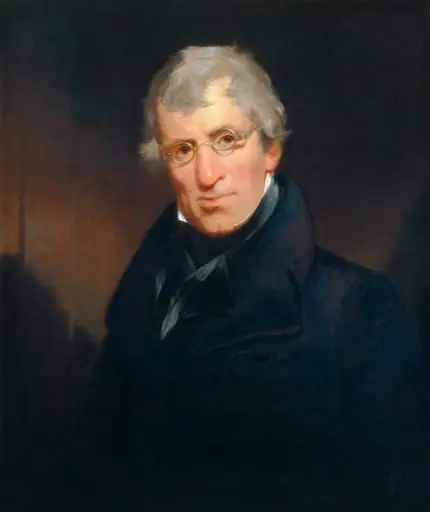
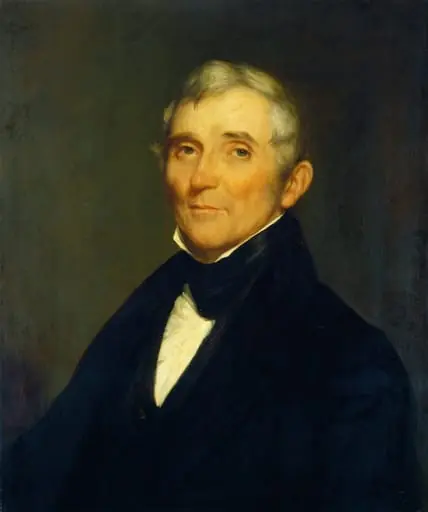
Dr. Thomas Fuller is an oil painting by Samuel F. B. Morse. It is held in the collection of the Museum of Fine Arts Boston. Samuel F.
About this work
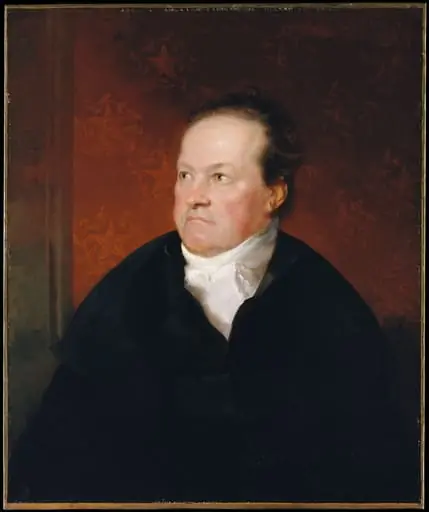
The subject's face is the central focus of the painting, with his eyes looking directly at the viewer.
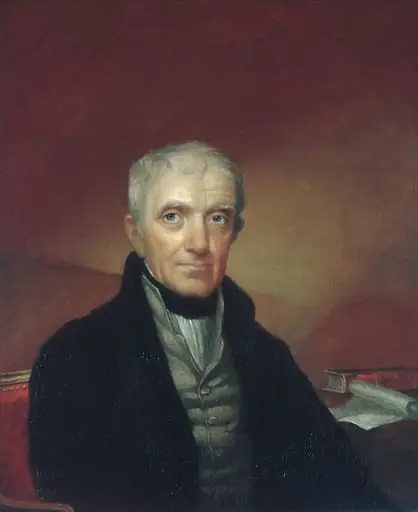
This portrait painting features a man with short, white hair and a serious expression. He is dressed in a black coat over a white shirt, with a high collar and a dark tie or cravat. The background is a dark, muted color.
The subject's face is the central focus of the painting, with his eyes looking directly at the viewer. His facial features are rendered in detail, with a subtle play of light and shadow on his skin.
This painting is a fine example of a portrait from the early 19th century. To learn more about the artist's technique, look up chiaroscuro.
Overview
Samuel F. B. Morse painted Dr. Thomas Fuller in oil during the early 1800s, before his later fame as an inventor. The portrait captures Fuller, a respected physician and scholar, in a restrained, formal composition. It resides in the Museum of Fine Arts, Boston, as part of its 19th-century American art collection. The work reflects Morse’s training as a portraitist and his attention to psychological presence over decorative flourish.
Subject & Meaning
Dr. Thomas Fuller was a noted African American physician and intellectual, known for his scholarly writings and medical practice. The portrait presents him with quiet dignity, his direct gaze inviting engagement without sentimentality. His attire—a dark coat, white shirt, and high collar—signals professional status and moral seriousness. The composition avoids ornamentation, emphasizing character and intellect over social display.
Technique & Style
Morse employed subtle chiaroscuro to model Fuller’s face, using soft transitions between light and shadow to define bone structure and skin texture. Brushwork is precise but unobtrusive, favoring clarity over expressive gesture. The dark, neutral background isolates the figure, focusing attention on facial expression and posture. The rendering of the cravat and collar suggests attention to fabric detail without distracting from the sitter’s presence.
History & Provenance
The painting was completed around 1830, during Morse’s active years as a portraitist in the United States. It remained in private hands before entering the Museum of Fine Arts, Boston’s collection. Its preservation reflects early American interest in documenting prominent individuals beyond the political elite, including African American professionals whose contributions were often overlooked in mainstream narratives of the era.
Context
In the 1830s, American portraiture often served to affirm social standing and moral character. Fuller’s portrait aligns with this tradition, yet its subject’s identity as a Black intellectual adds a layer of quiet resistance to prevailing racial hierarchies. Morse, though not an abolitionist activist, chose to depict Fuller with the same gravity afforded white professionals, reflecting a rare moment of visual equity in early American art.
Legacy
The portrait endures as a testament to Fuller’s life and to Morse’s early artistic practice. It stands as one of the few surviving 19th-century portraits of an African American professional rendered with such formal seriousness. Its presence in a major museum underscores shifting recognition of marginalized figures in American cultural history, offering a quiet but enduring counterpoint to dominant narratives of the time.
Own this work as a print
Artist & collection
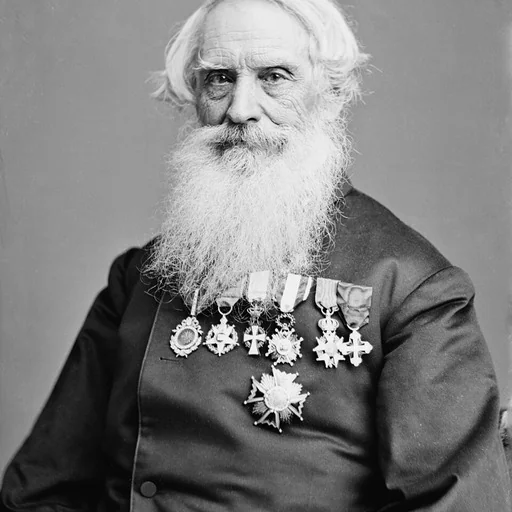
Artist
Samuel Finley Breese Morse was born on April 27, 1791, in Charlestown, Massachusetts, the eldest child of Reverend Jedidiah Morse, a Congregationalist pastor and author of early American geography textbooks, and Elizabeth Ann Breese Morse.