Artwork
Daniel Strobel, Jr.
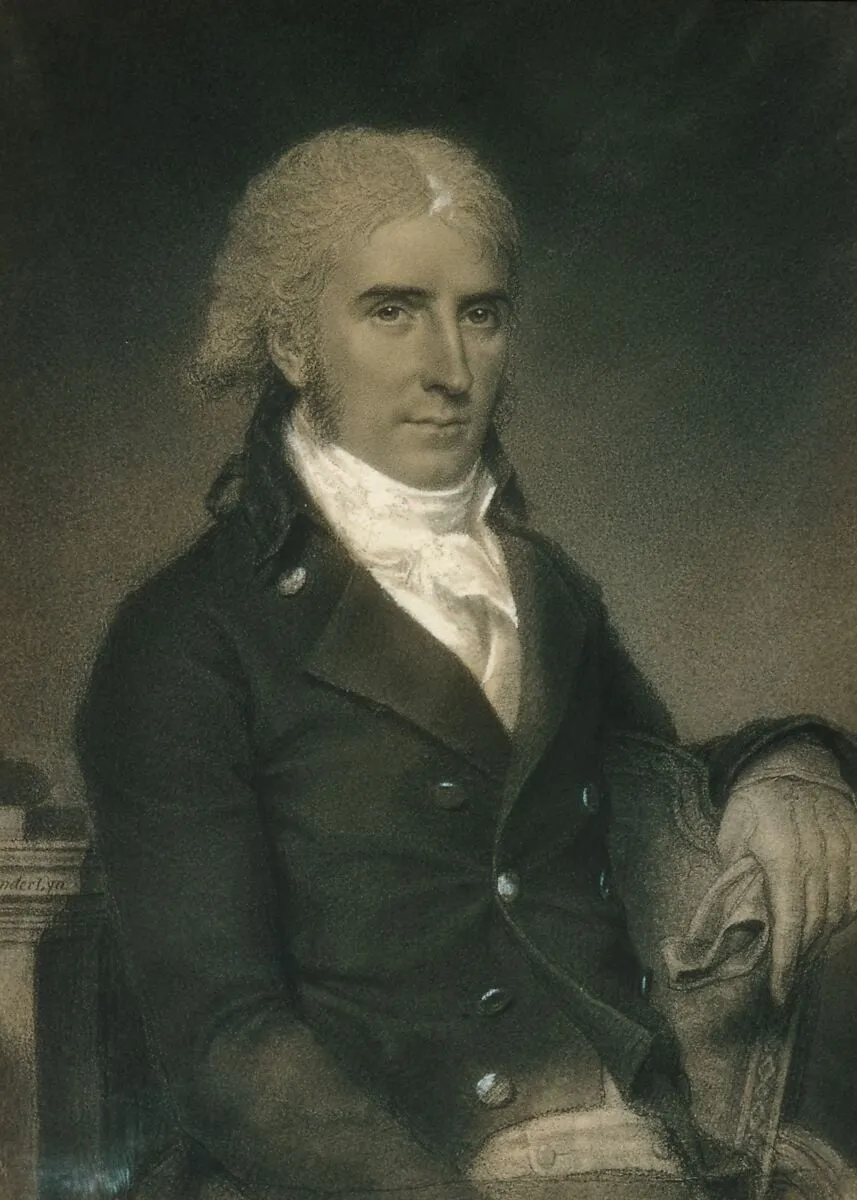
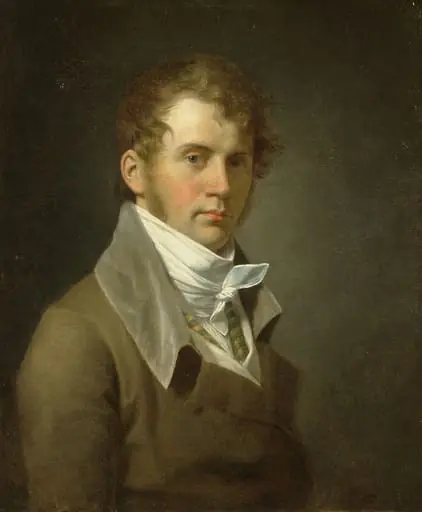
Daniel Strobel, Jr. is a gouache drawing by the Romanticist artist John Vanderlyn. It dates from 1799 and is held in the collection of the Metropolitan Museum of Art.
About this work
Vanderlyn studied in Paris, so the style feels European—soft shading, careful lines.
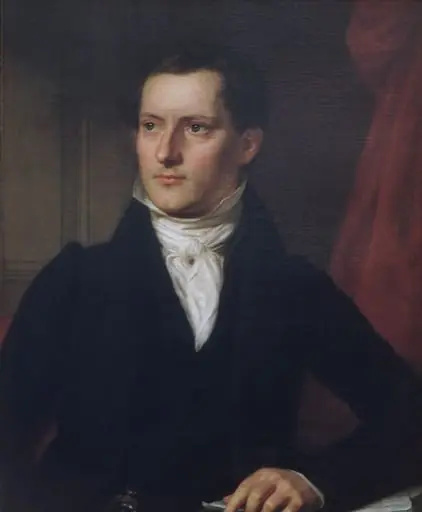
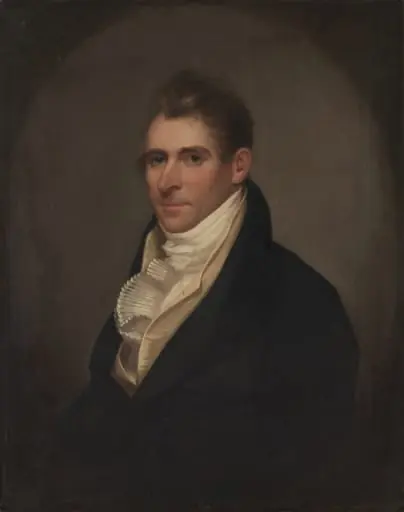
A young man with sharp cheekbones and a high collar looks straight at you. His hair is neatly tied back, and his coat is dark against the light paper.
This drawing was made in 1799, when portraits like this were rare in America. Vanderlyn studied in Paris, so the style feels European—soft shading, careful lines. The white gouache (a thick, opaque watercolor) brightens the face, making it pop.
If you like this, look up the technique: gouache.
Overview
John Vanderlyn's 1799 portrait of Daniel Strobel, Jr. is a refined study executed in Conté crayon, black chalk, and white gouache on off-white wove paper. The composition presents a bust-length view of the sitter, who faces the viewer directly with a steady gaze. Strobel is depicted with sharp cheekbones and a high, stiff collar, his dark coat contrasting against the light background. His hair is neatly tied back, adhering to the fashionable grooming of the late eighteenth century. Vanderlyn employs soft shading and subtle tonal transitions to model the face, a technique reflecting his training in Paris under Jacques-Louis David. This work exemplifies the artist's early mastery of the European neoclassical aesthetic, which he introduced to American portraiture. Created shortly after Vanderlyn's return from Europe, the drawing demonstrates a departure from the stiffer, more linear American styles of the period, favoring instead a sophisticated handling of light and form. The piece stands as a significant example of Vanderlyn's early career, illustrating his ability to capture both the physical likeness and the dignified presence of his subjects through a delicate interplay of chalk and gouache.
Subject & Meaning
The sitter, identified as Daniel Strobel, Jr., is presented with pronounced cheekbones and a composed expression, suggesting a dignified yet youthful presence. The direct eye contact and restrained pose convey a sense of personal confidence typical of early American portraiture, emphasizing individual identity within a modest compositional framework.
Technique & Style
Vanderlyn employs a blend of drawing media—conté and chalk for line work and shading, with white gouache applied to highlight the facial features. The handling reflects his Parisian training, evident in the soft gradations and careful delineation that echo contemporary European portrait conventions while adapting to the American context.
History & Provenance
Created at a time when few American artists produced finished portrait drawings, the work illustrates Vanderlyn’s early career before his return to the United States. The piece now belongs to the American Wing collection, where it is displayed as part of the museum’s holdings of late‑eighteenth‑century American art.
Context
In the late 1790s, American portraiture was dominated by oil paintings; a gouache portrait of this quality was unusual. Vanderlyn’s exposure to French academic practices introduced refined techniques to a nascent American visual culture, bridging transatlantic artistic trends during the post‑revolutionary period.
Artist & collection