Artwork
Wapping, Bristol
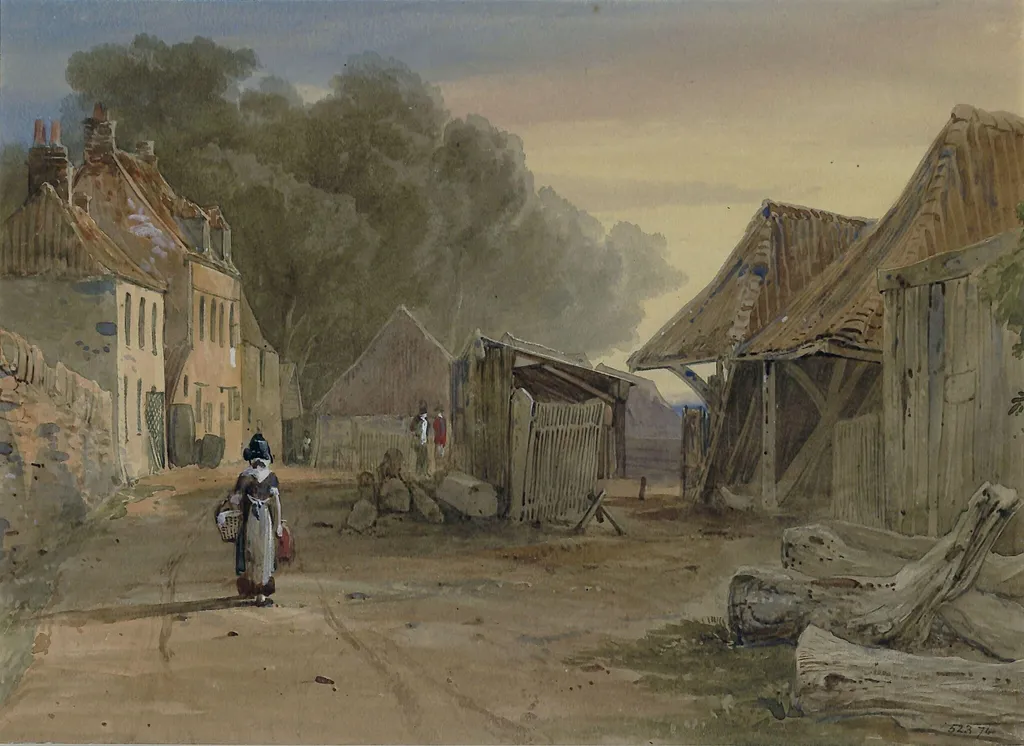
Wapping, Bristol is a watercolor work on paper by the British Romanticist artist Samuel Jackson. It dates from 1820 and is held in the collection of the Victoria and Albert Museum.
About this work
Overview
Samuel Jackson’s watercolour titled *Wapping, Bristol* was executed in 1820. The work is part of the Victoria and Albert Museum’s collection. It presents a quiet village street scene rendered in a muted palette, with a solitary figure moving centrally through the composition.
Subject & Meaning
At the heart of the picture a woman in a long dress and bonnet walks along the street, a basket held in her right hand. Flanked by a larger house on the left and a modest cottage on the right, the setting suggests everyday life in an early‑19th‑century English town, inviting contemplation of ordinary domestic routine.
Technique & Style
Jackson employs soft, fluid brushwork typical of watercolour, allowing the pigments to blend into gentle washes of colour. The restrained tonal range and delicate handling of light create an atmosphere of calm, while the subtle gradations in sky and foliage reinforce a sense of quietude.
History & Provenance
Created in 1820, the painting entered the Victoria and Albert Museum’s holdings at an unspecified later date. Its provenance traces back to the artist’s own output during a period when watercolour was gaining recognition as a respectable medium for landscape and genre subjects.
Context
The work belongs to the broader Romantic era, when artists often emphasized mood and the emotional resonance of ordinary scenes. Jackson’s focus on a tranquil street and the gentle movement of the figure aligns with the period’s interest in the picturesque qualities of rural and urban environments.
Own this work as a print
Artist & collection
Artist
Samuel Jackson painted quiet British landscapes in watercolour, mostly around Bristol and Wales between 1820 and 1869.

 Water Gate, Lower Close, Norwich
 Landscape with farm buildings and figures
 Amsterdam Street Scene
 View on the Thames near Sonning
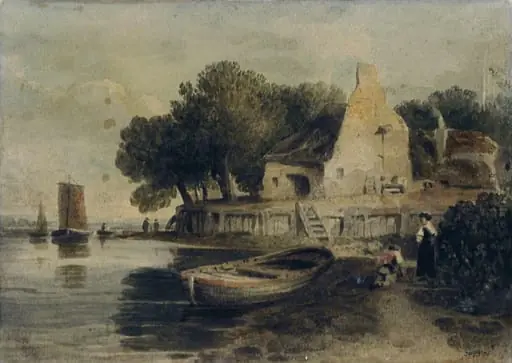 On the Thames at Millbank
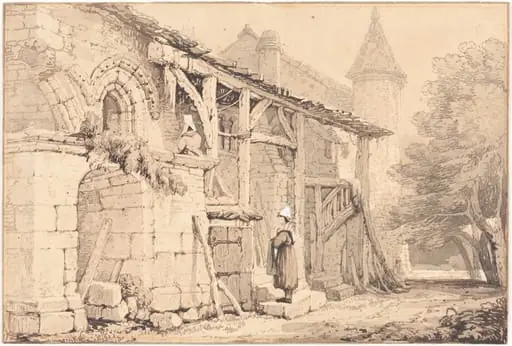 Scene at Jumièges
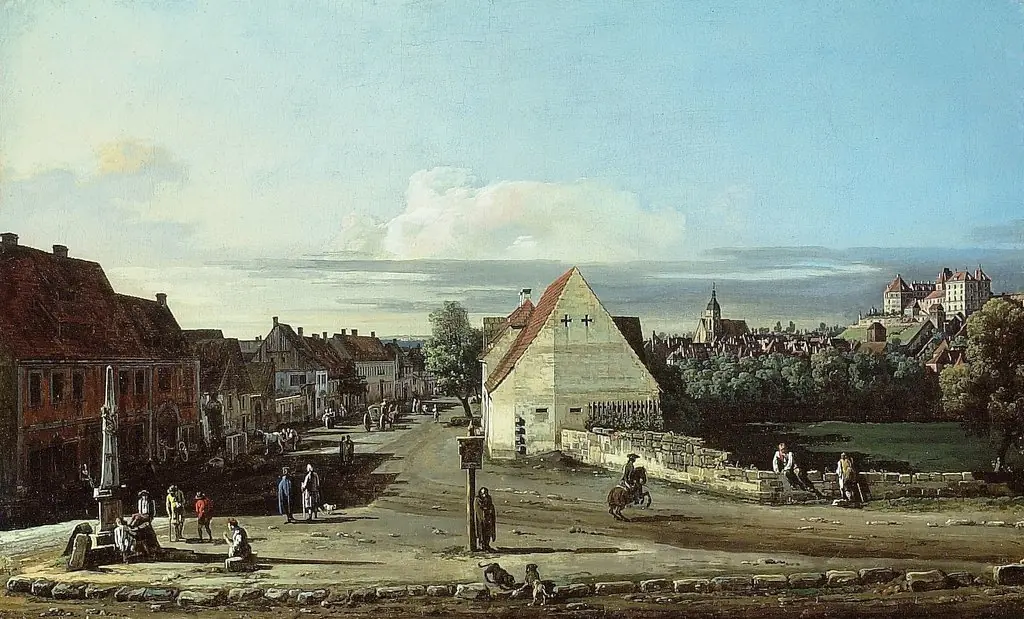 View of Pirna, from Sonnestein Castle
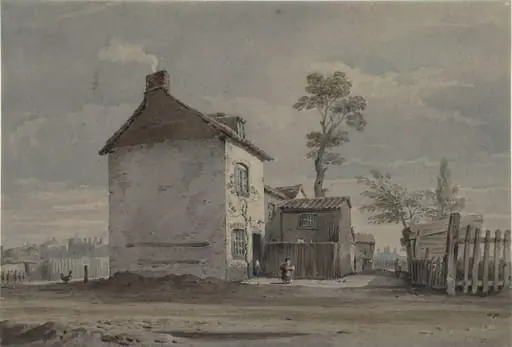 Cottages in a landscape
 Mill with Bridge and Figures
 Landscape with cottage
 Old country house with trees
 Landscape