Artwork
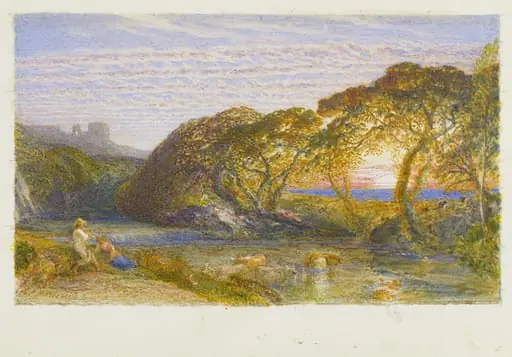
The Golden Hour
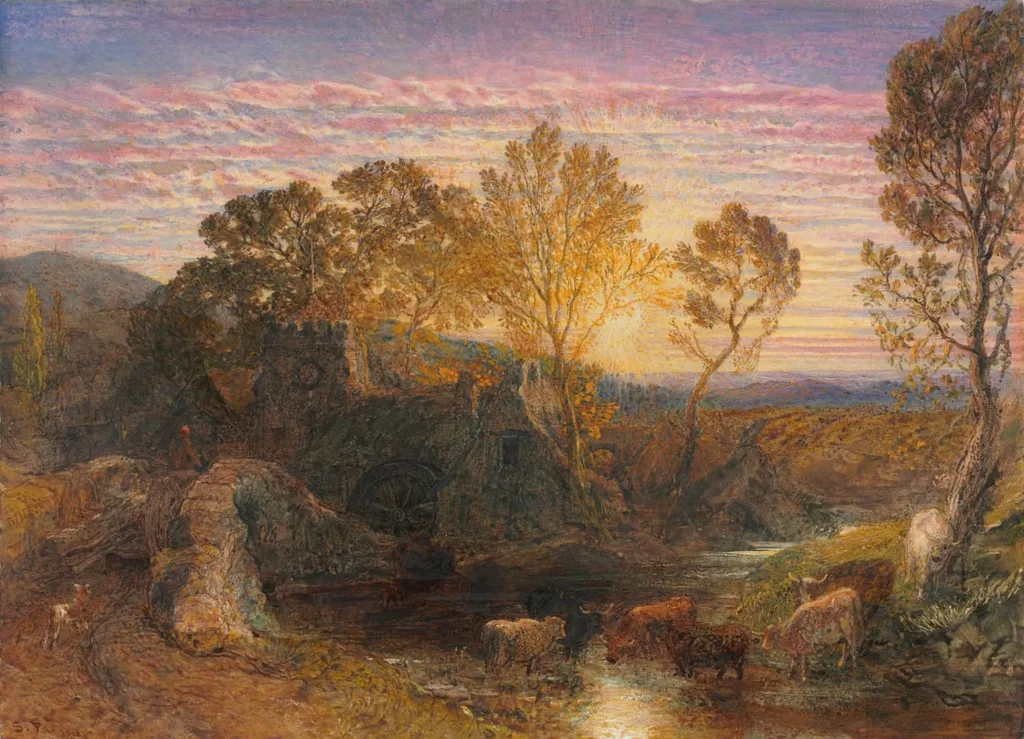
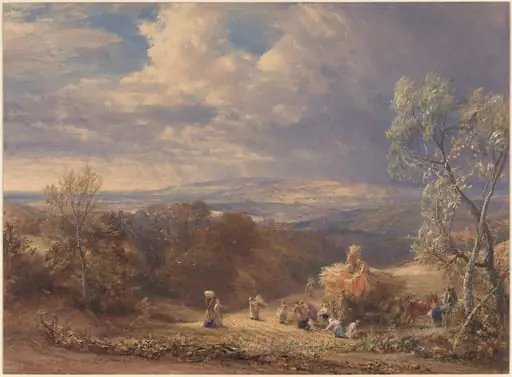
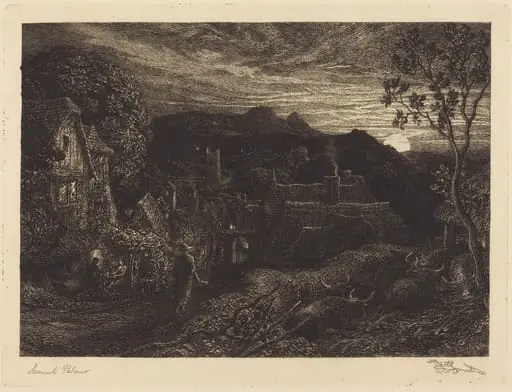
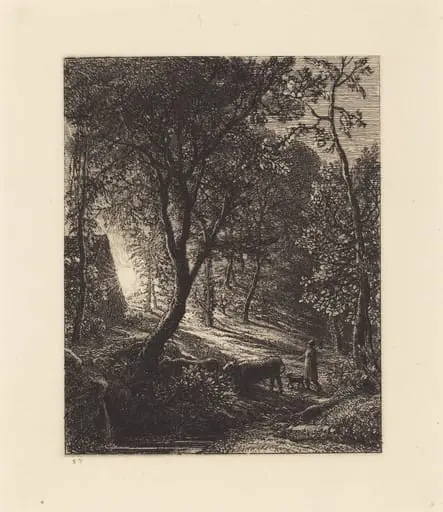
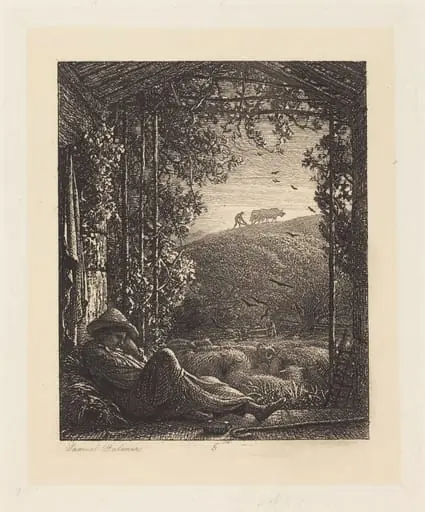
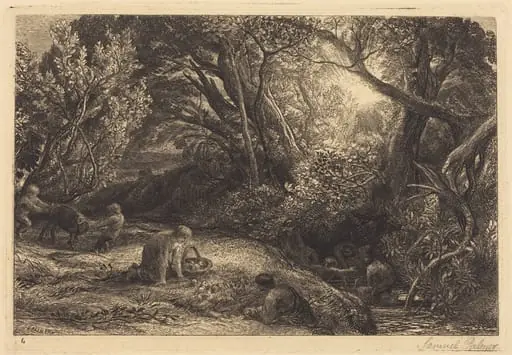
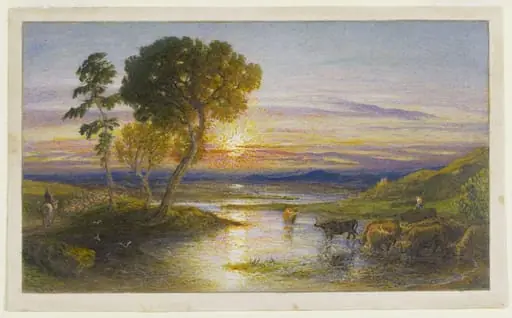
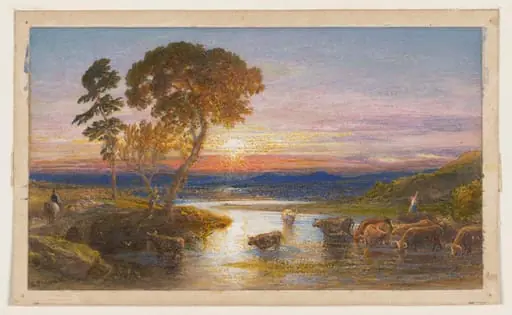
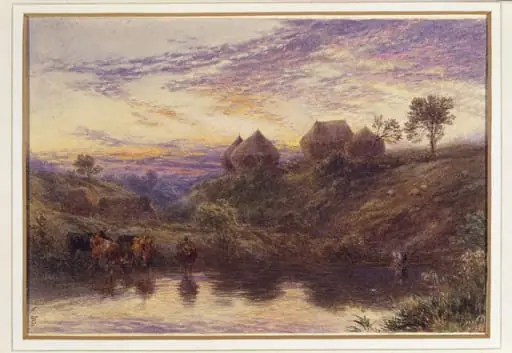
The Golden Hour is a drawing by the Impressionist artist Samuel Palmer. It dates from 1865 and is held in the collection of the Cleveland Museum of Art.
About this work
If you like this dreamy English countryside, look up Samuel Palmer (British, 1805–1881) for more of his quiet, glowing landscapes.
You see a fiery sunset over rolling green hills, painted in thick, glowing pinks and golds.
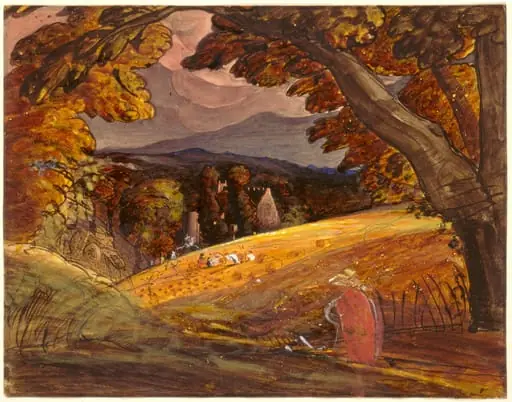
Palmer made this late in life, when his eyesight was failing. The colors feel almost too bright to be real—like he was trying to hold onto light itself. The clouds look soft enough to touch, but the paint is thick and textured, almost like paste.
If you like this dreamy English countryside, look up Samuel Palmer (British, 1805–1881) for more of his quiet, glowing landscapes.
Overview
Created near the end of his life, this watercolor by Samuel Palmer captures a sunset over Surrey’s rolling hills with intense, almost hallucinatory color. Though his vision was deteriorating, Palmer rendered the scene with thick, layered pigments that give the sky a tactile, paste-like quality. The work reflects a deep emotional engagement with nature, not as a mere subject but as a luminous, spiritual presence.
Subject & Meaning
The painting depicts a fading day, its sky ablaze with pink and violet clouds pierced by golden rays. Beyond its literal depiction, the scene functions as a meditation on transience—both the end of daylight and the approach of death. The quiet landscape, untouched by human presence, suggests a contemplative surrender to natural cycles, imbuing the moment with quiet solemnity.
Technique & Style
Palmer applied watercolor with unusual density, building up layers to create a relief-like surface that catches light like oil paint. The clouds are rendered in soft, blended washes, yet the pigment remains thick and palpable. His use of saturated hues—unusual for watercolor—conveys an inner radiance, as if the scene glows from within rather than reflects external light.
History & Provenance
Painted in the 1870s, this work belongs to Palmer’s later period, when he lived in relative isolation and increasingly turned inward. Though he had once been associated with the Shoreham Ancients, a group of visionary artists, this piece stands as a solitary testament to his enduring fascination with light and the sacred in nature. Its survival reflects its personal significance to the artist.
Context
In an era dominated by industrialization and realism, Palmer’s work remained rooted in Romantic ideals, drawing from Blakean mysticism and pastoral tradition. His landscapes rejected contemporary trends, instead offering a vision of nature as a divine, eternal realm. This watercolor, made as his eyesight failed, becomes an act of defiance—a final assertion of vision through color and texture.
Legacy
Though overlooked in his lifetime, Palmer’s late works later influenced British modernists drawn to expressive color and spiritual landscape. This drawing exemplifies his unique ability to translate inner perception into tangible form. Its emotional intensity and technical innovation continue to resonate as a quiet, luminous counterpoint to the era’s prevailing aesthetic.
Artist & collection
Artist
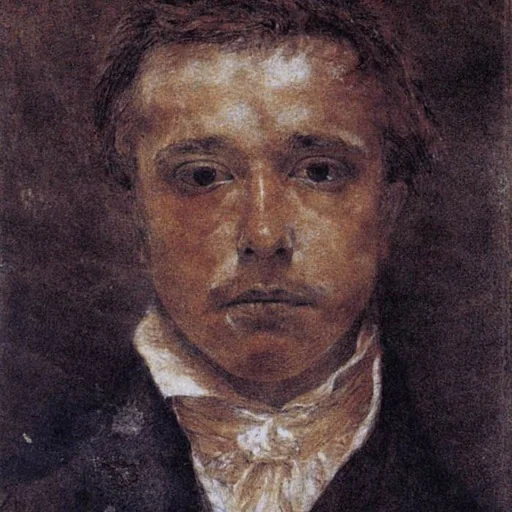
Samuel Palmer Hon.RE (Hon. Fellow of the Society of Painter-Etchers) (27 January 1805 – 24 May 1881) was a British landscape painter, etcher and printmaker. He was also a prolific writer. Palmer was a key figure in…