Artwork
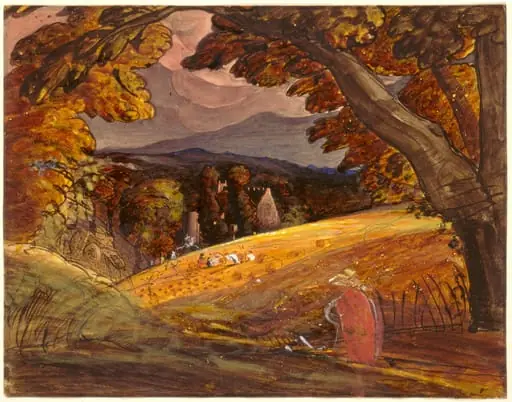
Harvesting
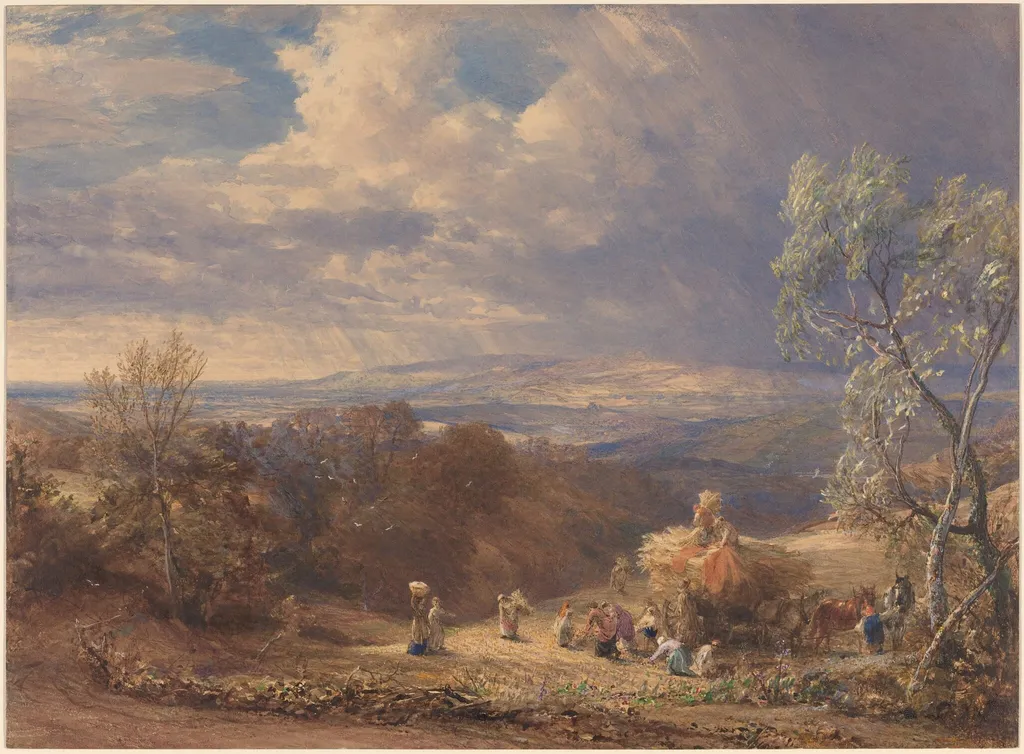
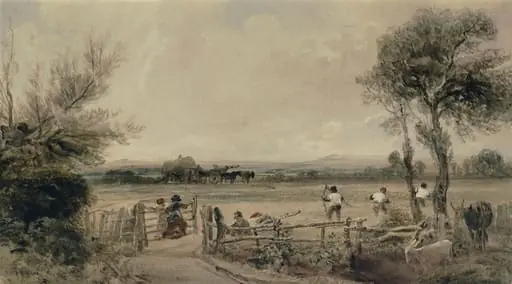
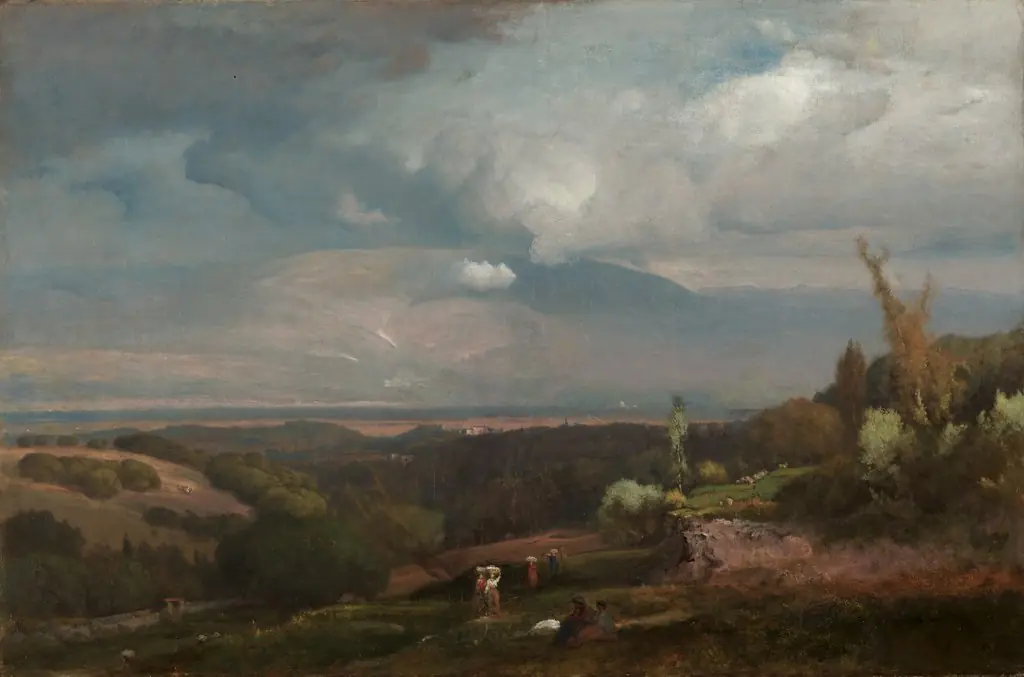
Harvesting is a gouache drawing by the Impressionist artist Samuel Palmer. It dates from 1851 and is held in the collection of the National Gallery of Art.
About this work
Overview
Its materials and methods reflect a deliberate, tactile approach to rendering light and texture, avoiding grandeur in favor of quiet observation.
Created around 1851, this drawing by Samuel Palmer combines watercolor, gouache, and graphite on paperboard, with selective scratching and thin applications of gum arabic. The work belongs to Palmer’s later period, when his focus shifted toward intimate rural scenes. Its materials and methods reflect a deliberate, tactile approach to rendering light and texture, avoiding grandeur in favor of quiet observation.
Subject & Meaning
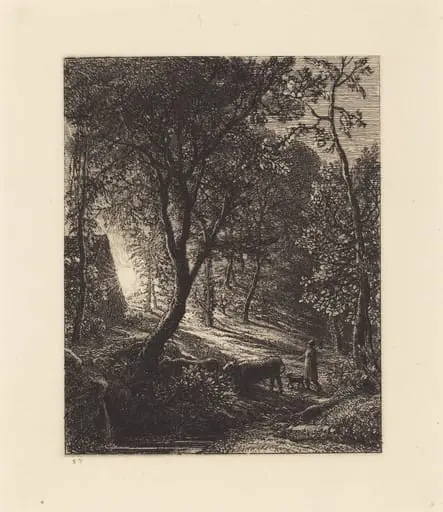
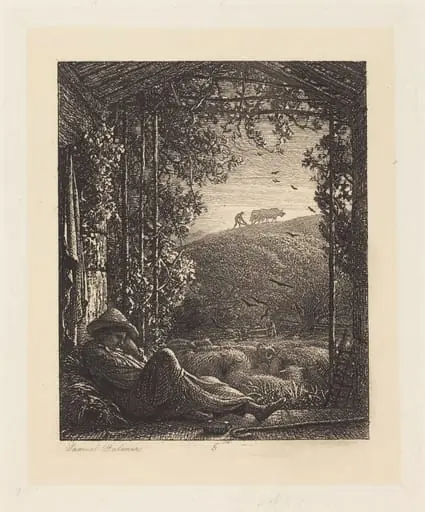
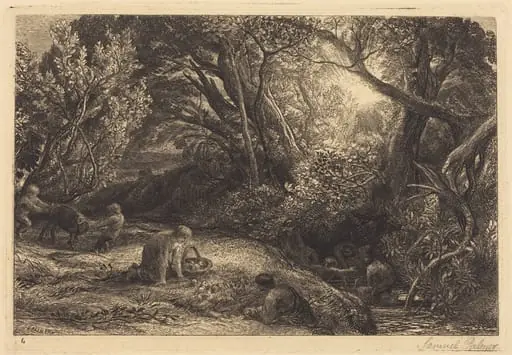
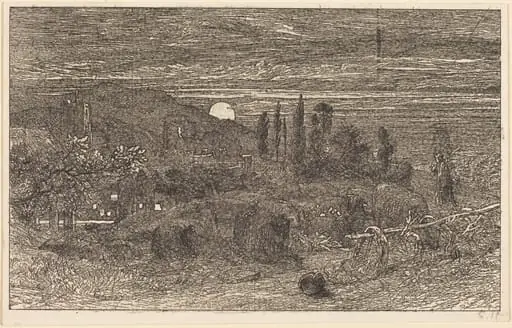
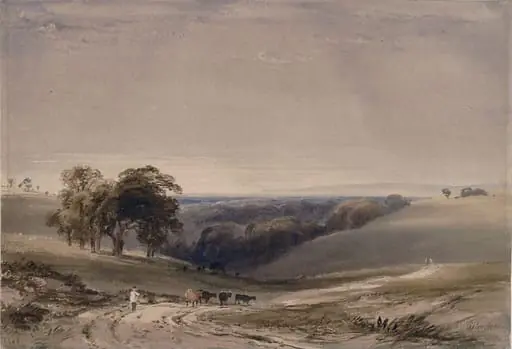
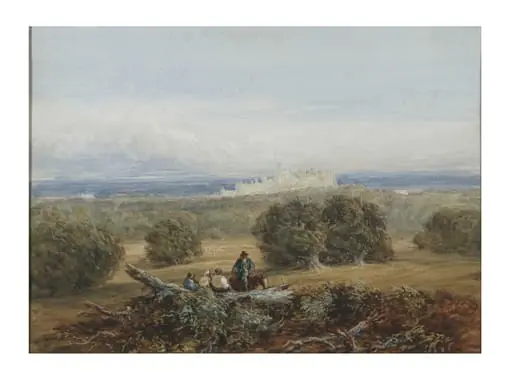
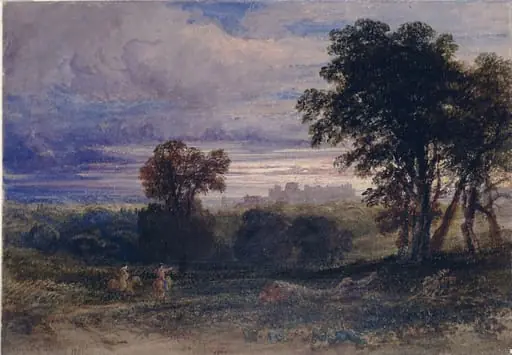
The scene portrays laborers gathering crops under a subdued sky, their forms integrated into the landscape rather than dominating it. There is no overt drama or idealization; instead, the figures move with quiet rhythm, suggesting a deep, unspoken bond between human effort and the land. The atmosphere evokes stillness rather than celebration, hinting at cycles of work and renewal beyond the moment captured.
Technique & Style
Palmer layered watercolor and gouache to build subtle tonal shifts, using graphite for underdrawing and fine scratching to reveal lighter passages beneath. Gum arabic was applied sparingly to adjust surface sheen and control pigment flow. These methods produce a textured, almost tactile surface, where light seems to emerge from within the paper rather than fall upon it, reinforcing the work’s meditative tone.
History & Provenance
The drawing emerged during Palmer’s retreat from the more mystical themes of his early Shoreham period, as he settled into a quieter, more grounded style. It remained in private hands for much of the 19th and 20th centuries before entering a public collection. Its survival in good condition reflects careful stewardship and growing recognition of Palmer’s draftsmanship beyond his paintings.
Context
In mid-19th-century Britain, industrialization reshaped rural life, yet Palmer’s work resisted narrative change. His focus on agrarian labor aligned with a broader Romantic interest in nature, but his approach was more introspective than political. Unlike contemporaries who idealized the countryside, he presented it as a place of quiet endurance, shaped by time and routine.
Legacy
Palmer’s use of mixed media in *Harvesting* influenced later British artists seeking alternatives to oil painting’s dominance. His integration of drawing and painting techniques helped redefine watercolor as a medium capable of depth and nuance. While not widely exhibited in his lifetime, his later works gained renewed attention in the 20th century for their emotional restraint and technical innovation.
Artist & collection
Artist
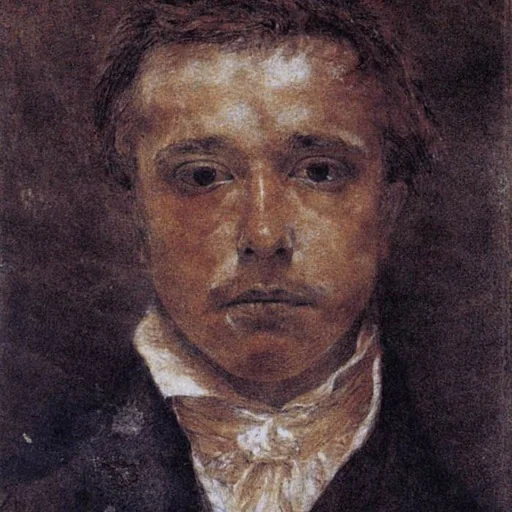
Samuel Palmer Hon.RE (Hon. Fellow of the Society of Painter-Etchers) (27 January 1805 – 24 May 1881) was a British landscape painter, etcher and printmaker. He was also a prolific writer. Palmer was a key figure in…