Artwork
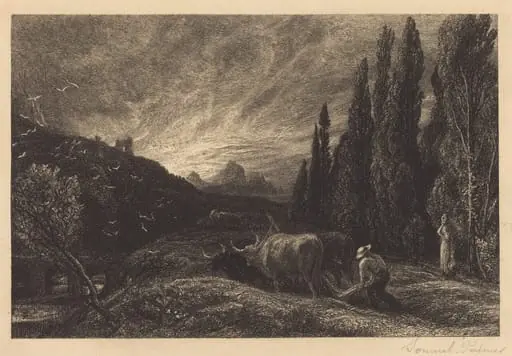
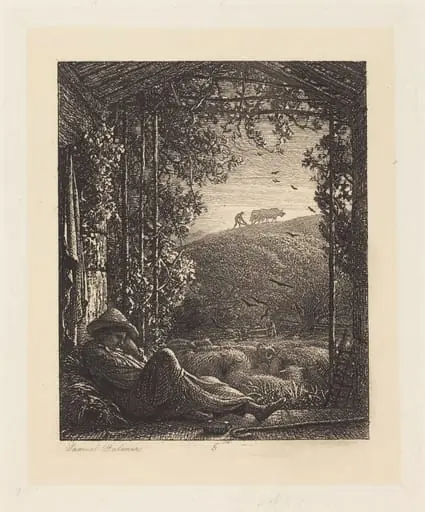
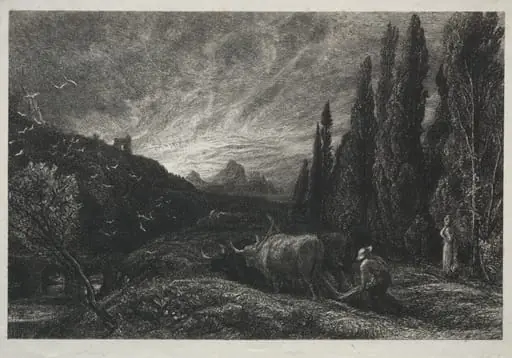
The Early Ploughman
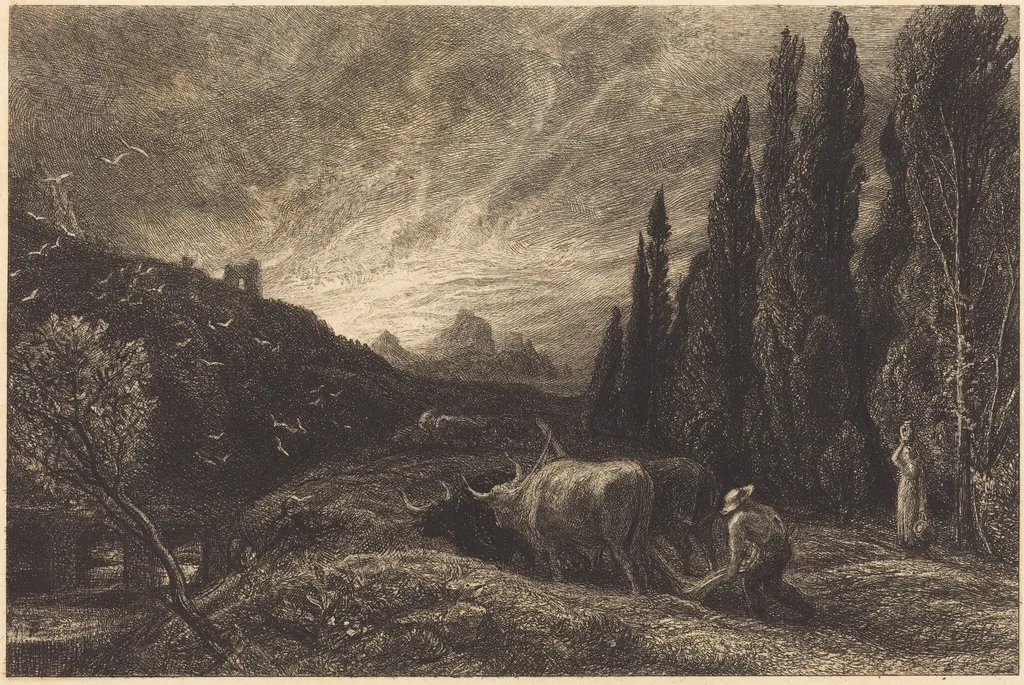
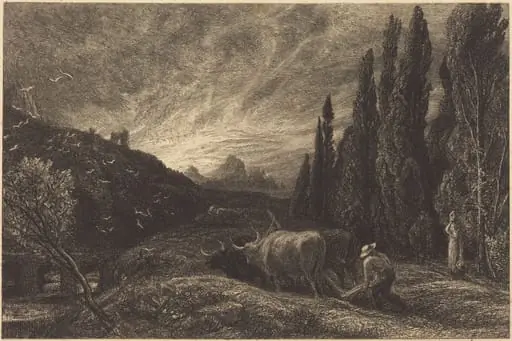
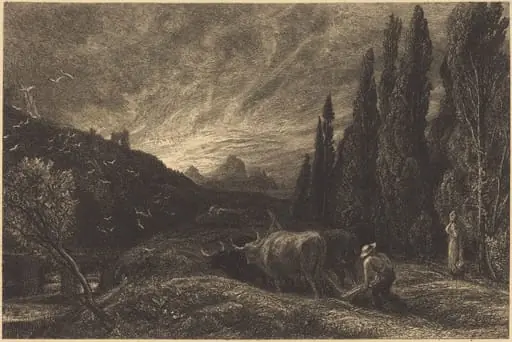
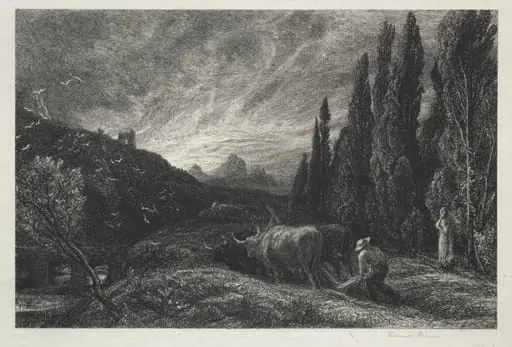
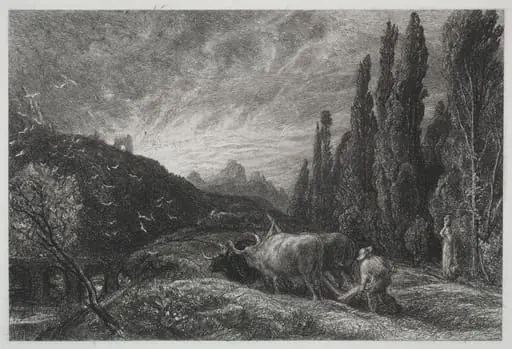
The Early Ploughman is an ink print by the Impressionist artist Samuel Palmer. It dates from 1861 and is held in the collection of the National Gallery of Art.
About this work
Overview
The Early Ploughman is an etching on laid paper created by Samuel Palmer in 1861, exemplifying his work in printmaking during the later phase of his career.
Subject & Meaning
The etching depicts a rural laborer ploughing a field, set against a serene landscape of rolling hills, trees, and a distant castle or tower, evoking a sense of tranquility and symbolic associations with the natural world.
Technique & Style
Rendered in etched lines on laid paper, the work showcases Palmer's skill in the medium, characterized by muted tones and soft lighting that create a warm atmosphere.
History & Provenance
Palmer was recognized for his expertise in etching, being elected an Honorary Fellow of the Society of Painter-Etchers, reflecting his standing within the art community.
Context
The work reflects Palmer's continued engagement with pastoral themes, characteristic of his earlier Romantic landscape paintings, and his ability to convey a sense of peacefulness and depth.
Own this work as a print
Artist & collection
Artist
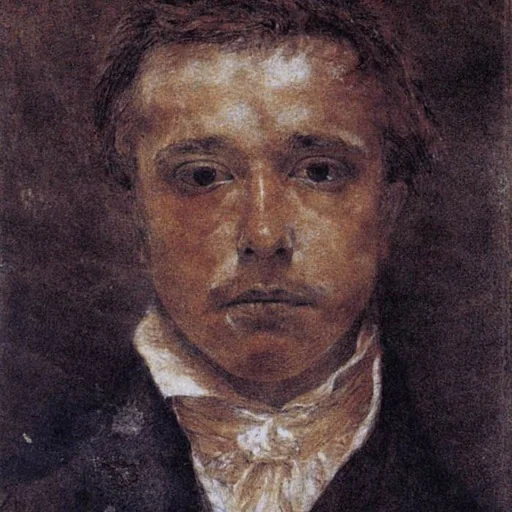
Samuel Palmer Hon.RE (Hon. Fellow of the Society of Painter-Etchers) (27 January 1805 – 24 May 1881) was a British landscape painter, etcher and printmaker. He was also a prolific writer. Palmer was a key figure in…