Artwork
The Sleeping Shepherd; Early Morning
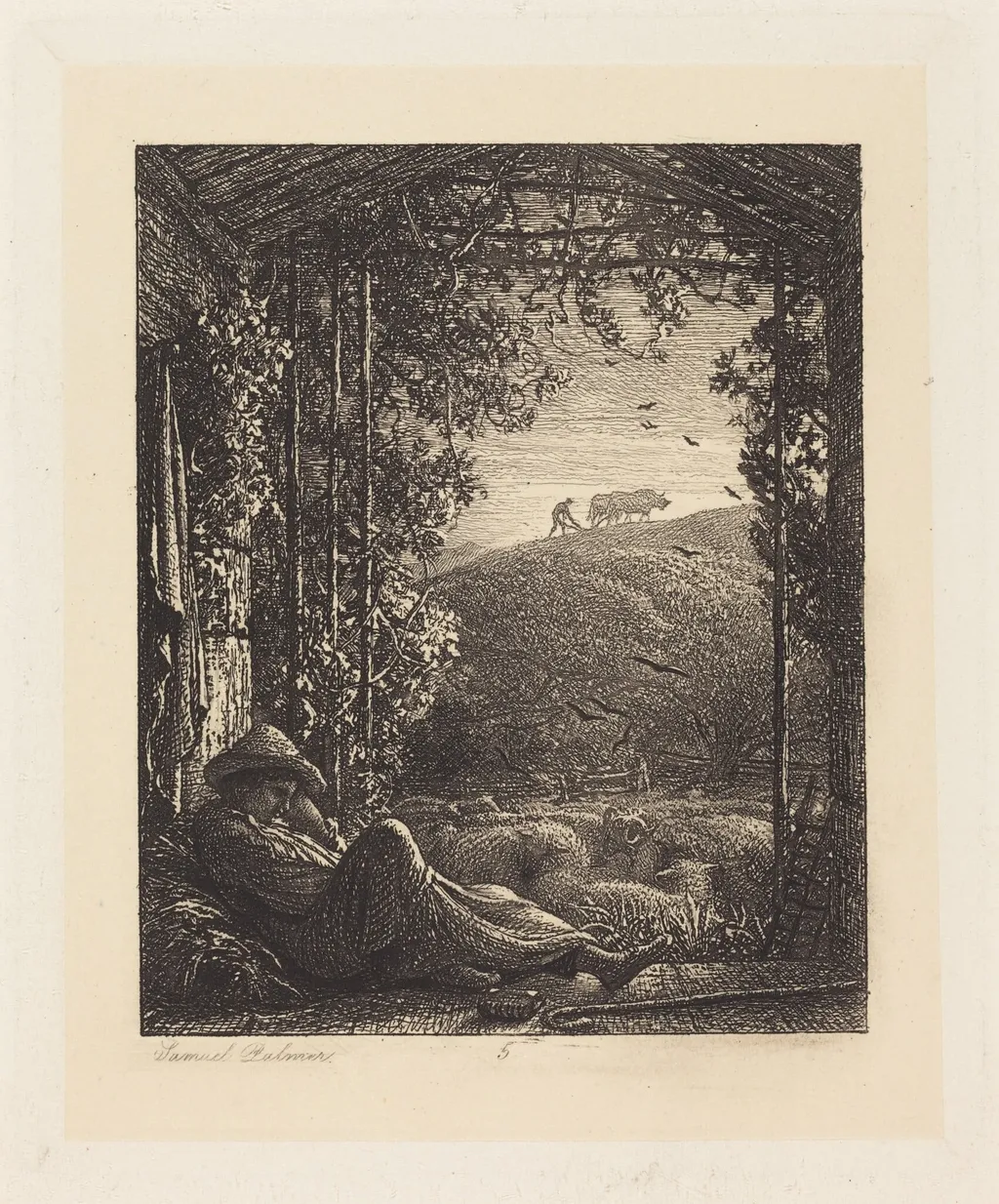
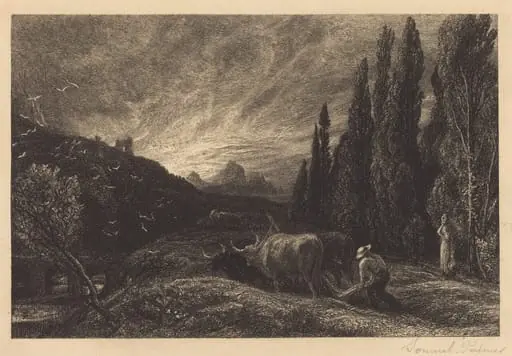
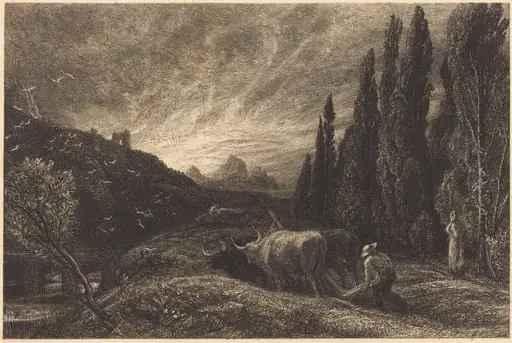
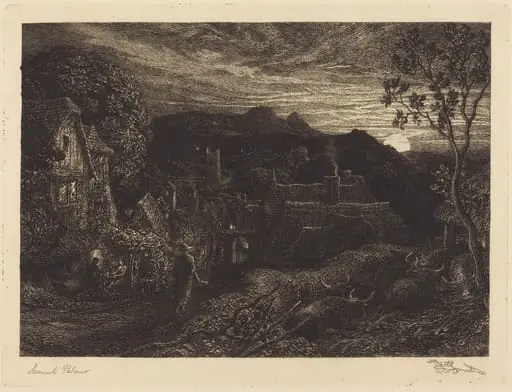
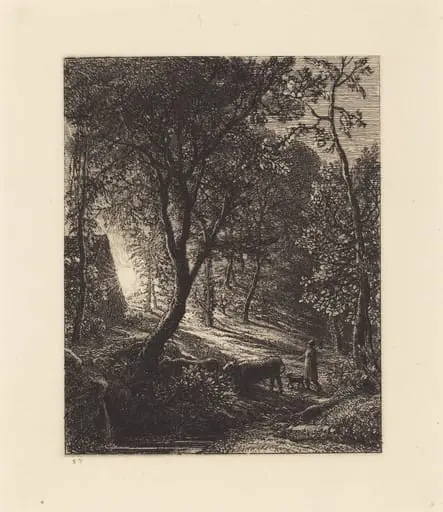
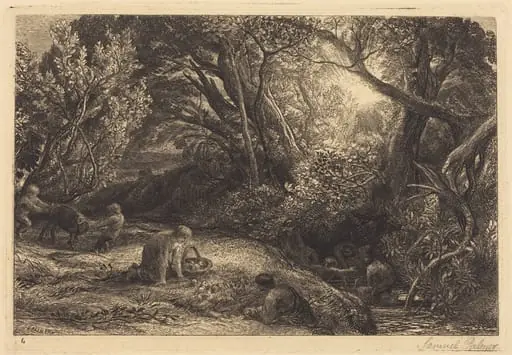
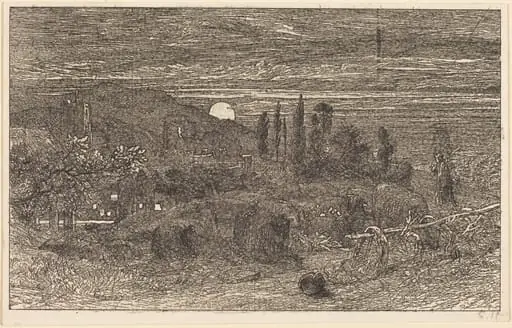
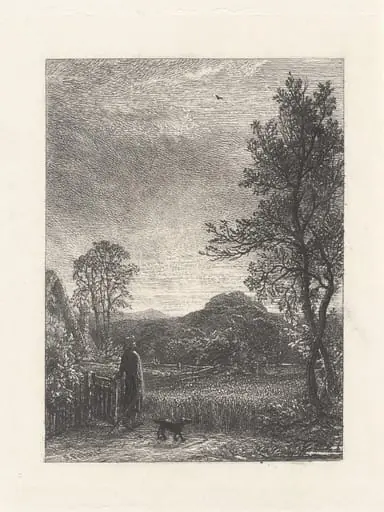
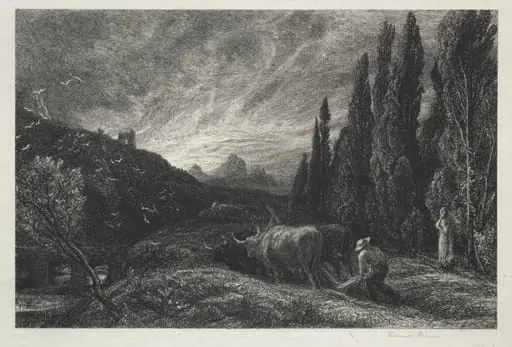
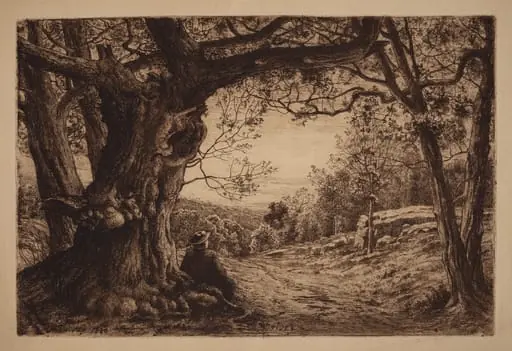
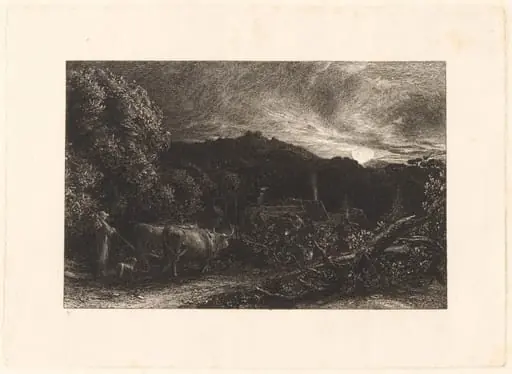
The Sleeping Shepherd; Early Morning is an ink print by the Impressionist artist Samuel Palmer. It dates from 1857 and is held in the collection of the National Gallery of Art.
About this work
Overview
Samuel Palmer created this 1857 etching on chine collé as part of his sustained engagement with intimate rural landscapes.
Samuel Palmer created this 1857 etching on chine collé as part of his sustained engagement with intimate rural landscapes. The work belongs to a phase in his career when he focused on quiet, nocturnal and dawn-lit scenes, often drawing from memory and imagination rather than direct observation. Its delicate technique and small scale reflect a personal, contemplative approach to printmaking, distinct from the grander traditions of landscape art at the time.
Subject & Meaning
The image portrays a shepherd reclining in repose amid a group of grazing sheep, surrounded by a quiet, hilly countryside at daybreak. There is no narrative action—only stillness and solitude. The scene evokes a sense of harmony between human and animal, earth and sky, suggesting an idealized, almost timeless rural existence. Palmer’s choice of subject aligns with Romantic ideals of nature as a sanctuary from industrial modernity.
Technique & Style
Palmer employed fine, controlled etching lines to model soft forms and subtle gradations of light. The use of chine collé—a technique involving thin paper adhered to a heavier support—enhanced the delicacy of the tonal transitions and allowed for richer ink saturation. His lines are precise yet fluid, capturing the hazy quality of morning mist and the gentle contours of the landscape without heavy contrast or dramatic emphasis.
History & Provenance
Created in 1857, this print emerged during Palmer’s later years, after his association with the Shoreham Ancients had waned. Though less publicly recognized than his earlier visionary works, this etching reflects his continued dedication to etching as a medium. It was likely produced in small editions for private collectors, and surviving impressions remain rare, held primarily in institutional collections rather than public exhibitions.
Context
In mid-19th century Britain, industrialization reshaped the countryside, prompting artists to revisit pastoral themes as acts of cultural memory. Palmer’s work stood apart from the realism of contemporaries like Constable or the social commentary of Dickensian imagery. Instead, he cultivated a lyrical, inward-looking vision—rooted in personal spirituality and a reverence for rural solitude—that resonated with a niche but devoted audience.
Legacy
Though not widely known during his lifetime, Palmer’s etchings gained renewed attention in the 20th century for their poetic intensity and technical refinement. *The Sleeping Shepherd* exemplifies his ability to distill emotion into minimal forms. Today, it is studied as a quiet counterpoint to the dominant trends of Victorian art, valued for its introspective atmosphere and the quiet authority of its craftsmanship.
Artist & collection
Artist
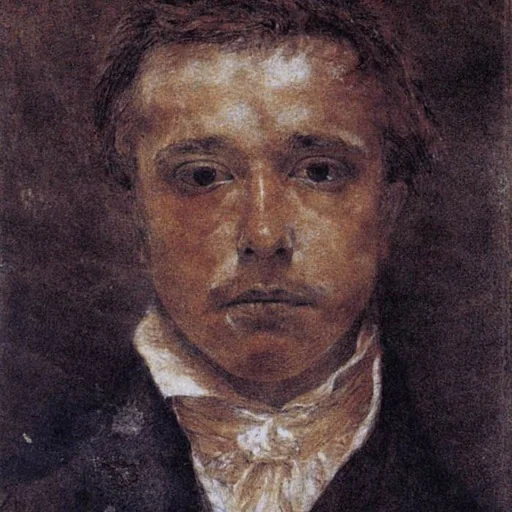
Samuel Palmer Hon.RE (Hon. Fellow of the Society of Painter-Etchers) (27 January 1805 – 24 May 1881) was a British landscape painter, etcher and printmaker. He was also a prolific writer. Palmer was a key figure in…