Artwork
A Series of Ancient Buildings and Rural Cottages in the North of England: Runswick
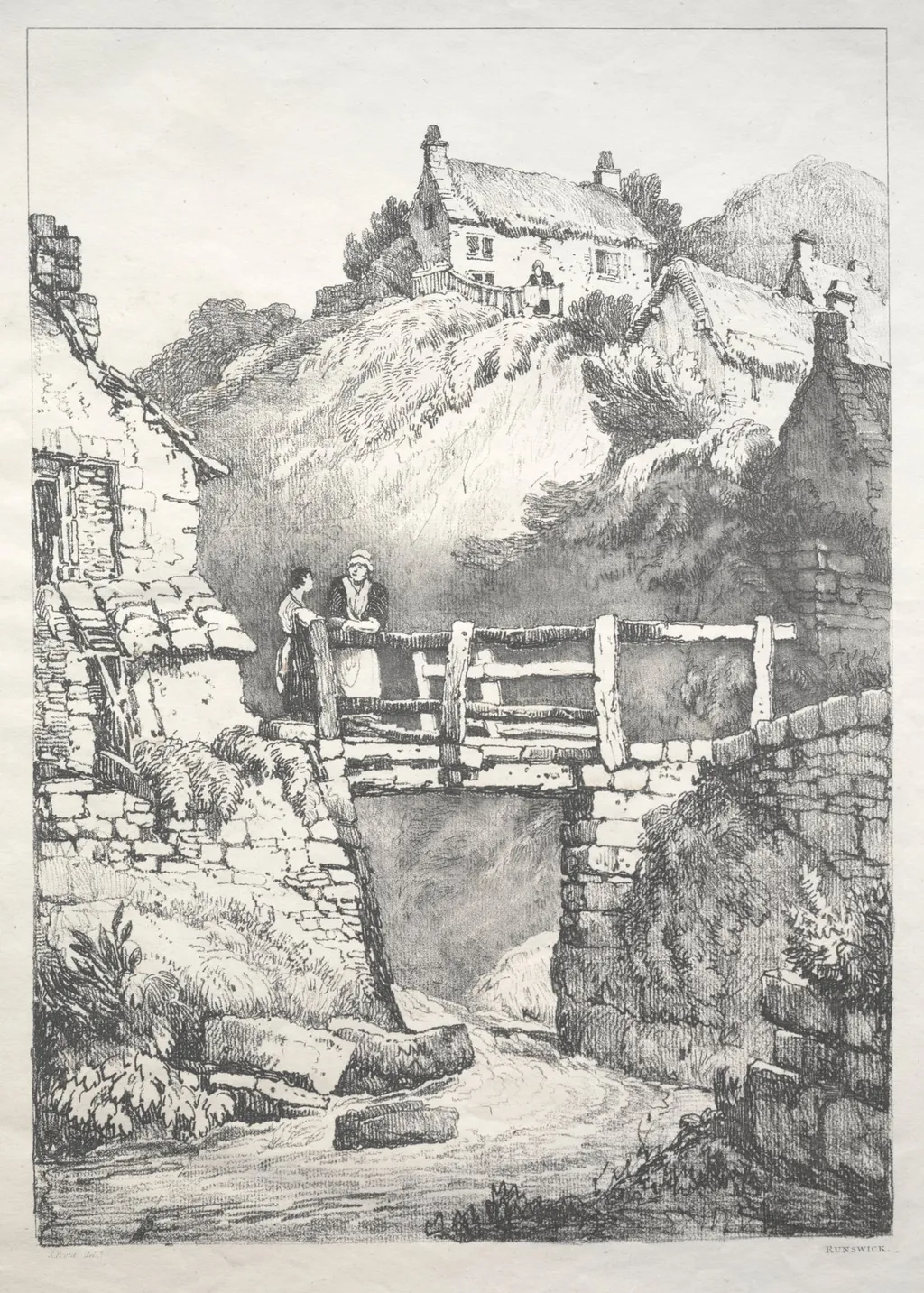
A Series of Ancient Buildings and Rural Cottages in the North of England: Runswick is a print by the Romanticist artist Samuel Prout. It dates from 1821 and is held in the collection of the Cleveland Museum of Art.
About this work
Overview
Created in 1821 by Samuel Prout, this print captures a quiet rural scene in Runswick, a village in northern England. Executed in ink and watercolor, it belongs to a series documenting vernacular architecture across the region. The work is held in the collection of The Cleveland Museum of Art, reflecting early 19th-century interest in topographical accuracy and modest landscapes.
Subject & Meaning
The composition emphasizes quietude and continuity, valuing the ordinary over the grandiose, aligning with a growing appreciation for rural authenticity.
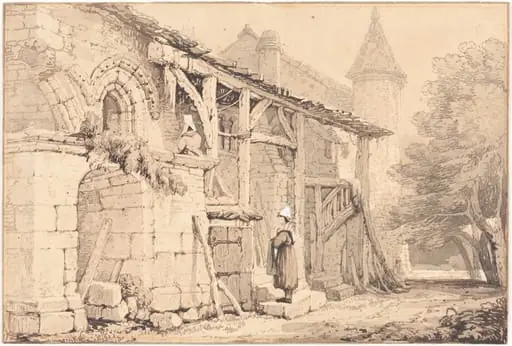
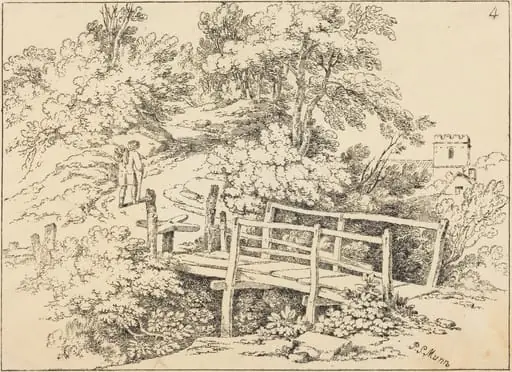
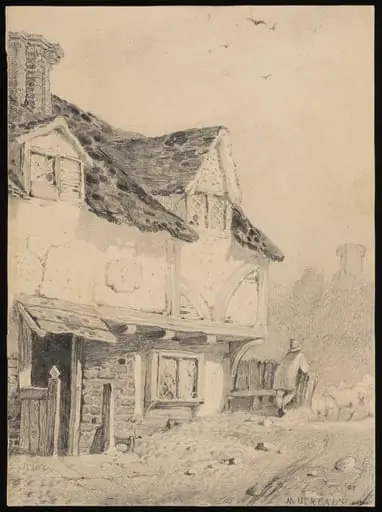
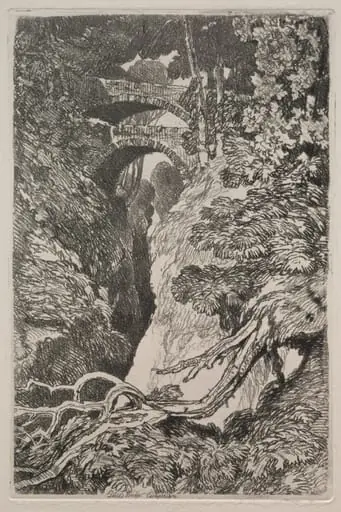
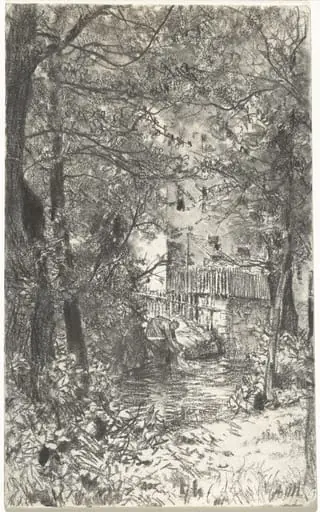
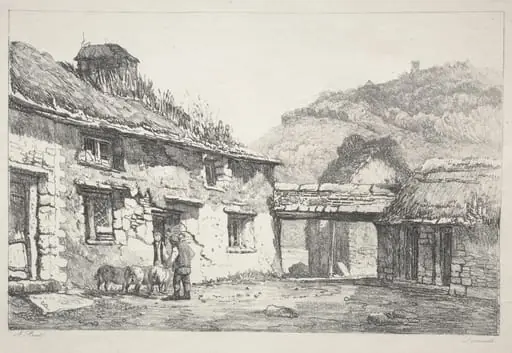
The scene depicts a modest stone bridge, a small cottage perched on a hillside, and clustered dwellings rising along the slope. Two figures—a woman in a bonnet and a man in a hat—stand near the bridge, their presence suggesting daily life rather than narrative drama. The composition emphasizes quietude and continuity, valuing the ordinary over the grandiose, aligning with a growing appreciation for rural authenticity.
Technique & Style
Prout employed fine ink lines to define architectural forms, layered with soft watercolor washes to suggest texture and atmosphere. Stone walls, wooden fencing, and tree foliage are rendered with deliberate simplicity, avoiding embellishment. The restrained palette and attention to surface detail reflect a topographical tradition, where clarity and observation outweigh dramatic effect.
History & Provenance
The print was produced as part of Prout’s broader project to record northern English villages, undertaken during travels in the early 1820s. It entered The Cleveland Museum of Art’s collection through documented acquisition, likely in the 20th century. Its preservation reflects institutional interest in British watercolor traditions and regional documentary art of the period.
Context
This work emerged during a time when Romanticism encouraged a renewed focus on nature, heritage, and the everyday. While not overtly emotional, Prout’s approach resonated with contemporaries seeking to preserve vanishing rural scenes amid industrial change. His detailed sketches influenced later topographical artists and contributed to a visual record of pre-industrial England.
Legacy
Prout’s Runswick print exemplifies a quiet but enduring strand of British art that prioritized observation over idealization. Its inclusion in major collections underscores its role in documenting vernacular architecture. Though less celebrated than grand Romantic landscapes, such works laid groundwork for later documentary and regionalist traditions in British visual culture.
Artist & collection
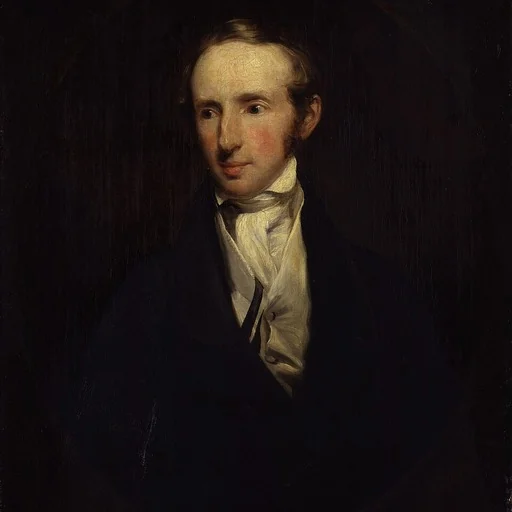
Artist
Samuel Prout (; 17 September 1783 – 10 February 1852) was a British watercolourist, and one of the masters of watercolour architectural painting, who largely invented the genre of the grand steet scene in British…