Artwork
Moonlight on a river
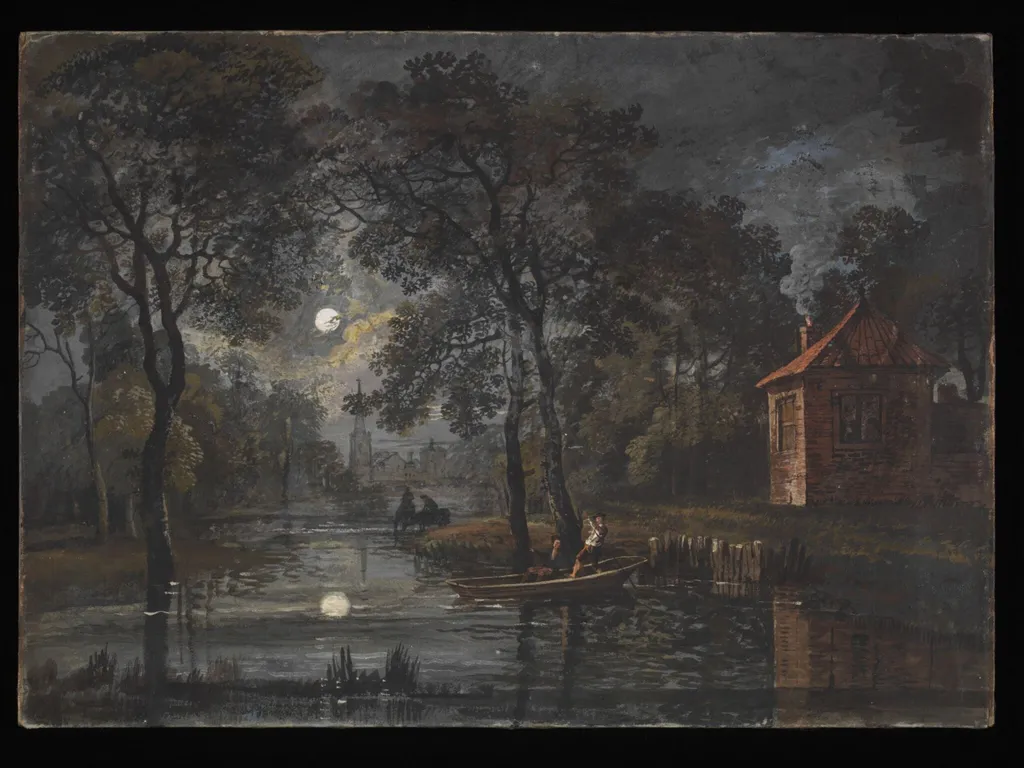
Moonlight on a river is a watercolor work on paper by the British Romanticist artist Paul Sandby. It dates from 1800 and is held in the collection of the Victoria and Albert Museum.
About this work
Overview
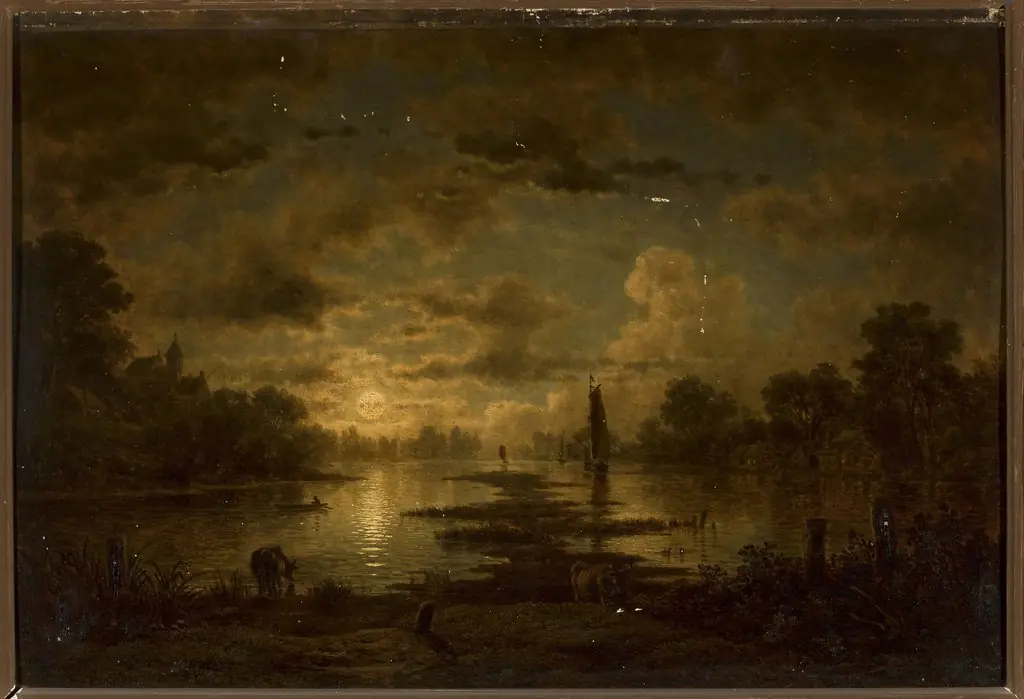
Silhouetted trees frame the banks, while the moon’s glow suffuses the surface, giving the water a silvery sheen.
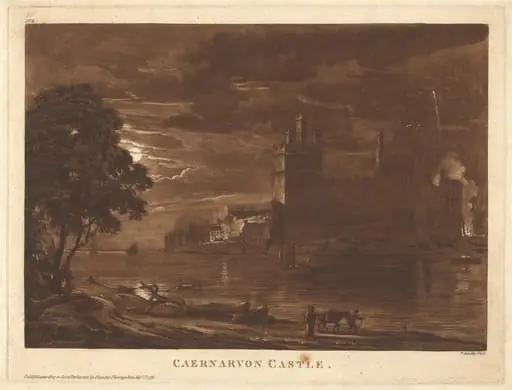
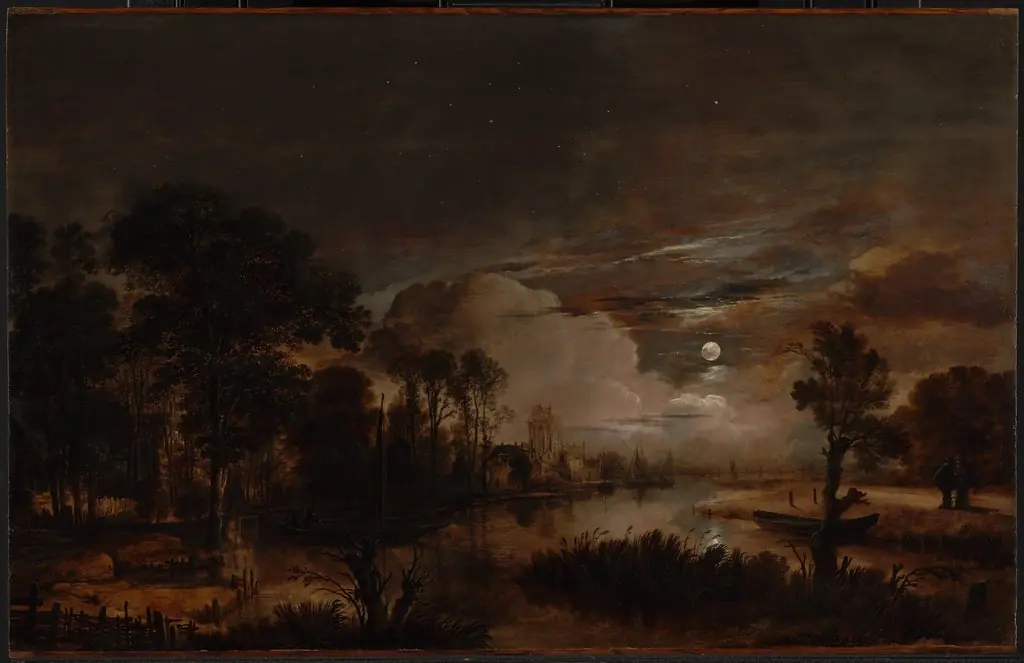
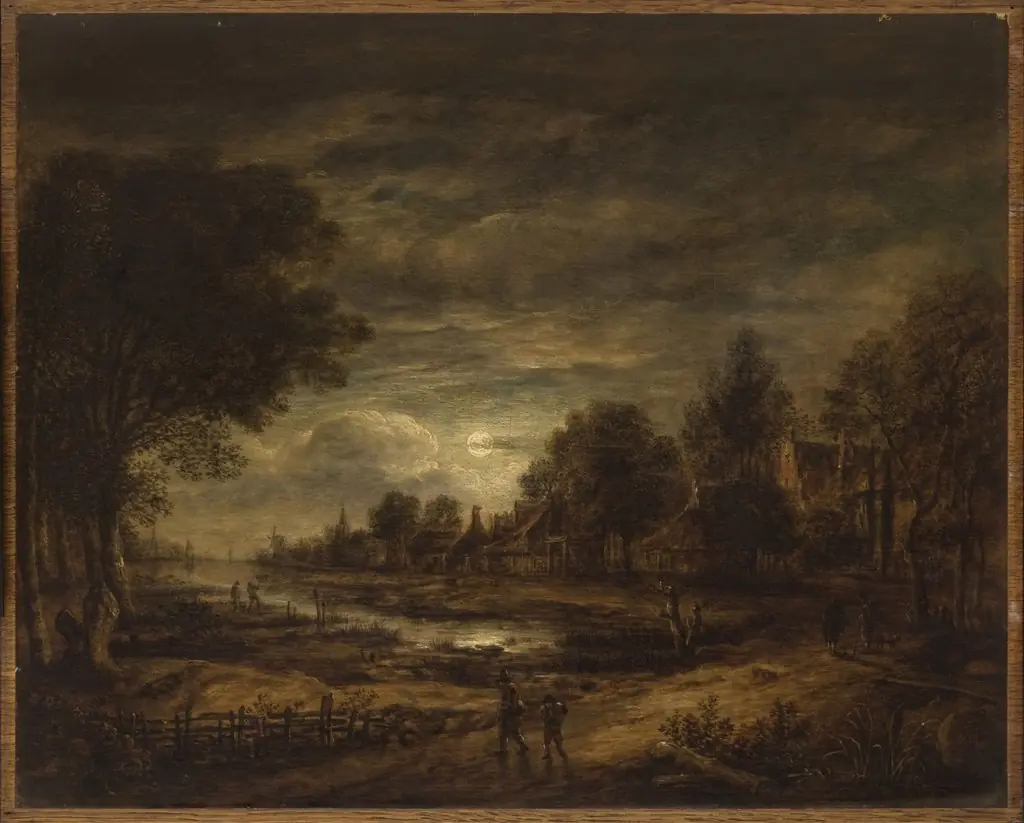
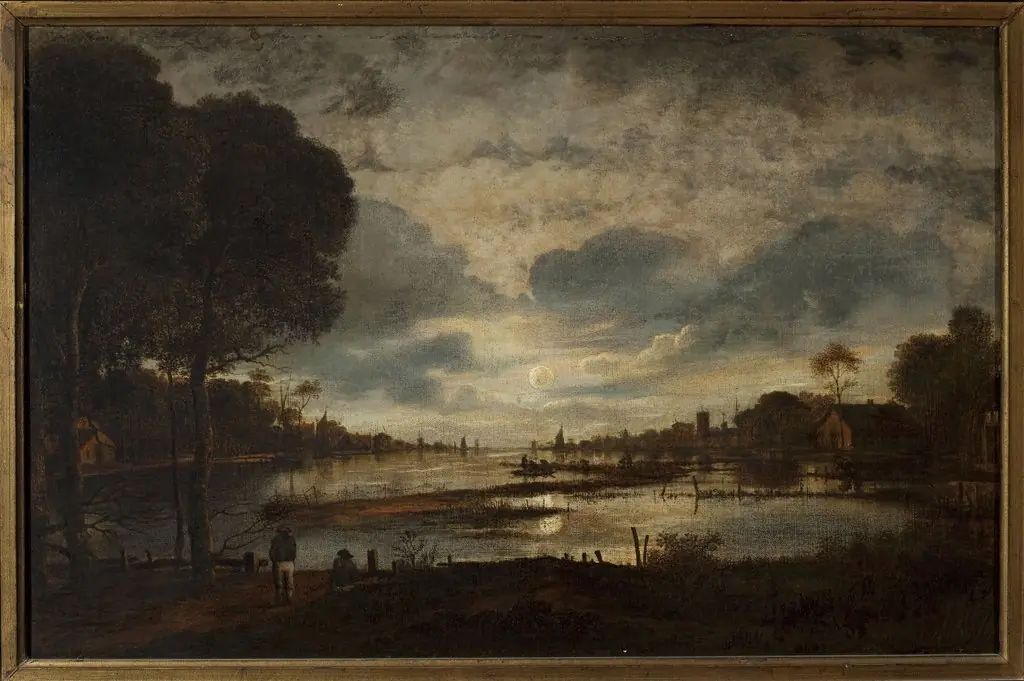
Created in 1800 by Paul Sandby, this watercolour presents a nocturnal river scene illuminated by moonlight. The composition centers on a quiet stretch of water beside a modest wooden boathouse, with a small boat occupied by two figures and a rider on horseback moving along a nearby path. Silhouetted trees frame the banks, while the moon’s glow suffuses the surface, giving the water a silvery sheen.
Subject & Meaning
The work captures a moment of tranquil activity after dusk, juxtaposing human presence with the natural environment. The boatmen and rider suggest routine travel or leisure, while the moonlight emphasizes the fleeting interplay between light and darkness, inviting contemplation of the calm that settles over the landscape at night.
Technique & Style
Sandby employs delicate, layered washes to render the misty atmosphere, allowing the pale lunar illumination to emerge through subtle gradations of tone. The contrast between the dark silhouettes of trees and structures and the luminous water exemplifies a chiaroscuro approach, using light to model form and convey mood within the limited palette of watercolour.
History & Provenance
Signed and dated 1800, the piece belongs to the later period of Sandby’s career, when he focused increasingly on atmospheric landscapes. It has remained in private collections before entering a museum’s holdings in the early twentieth century, where it continues to be referenced as an example of early British watercolour night scenes.
Own this work as a print
Artist & collection
Artist
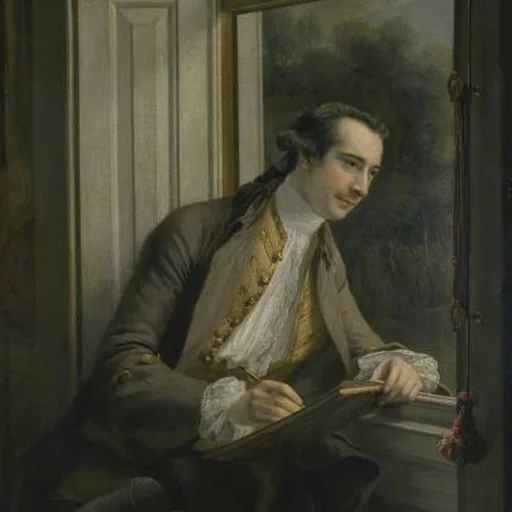
Paul Sandby, (1731 – 7 November 1809) was an English mapmaker and painter who specialised in landscape art. Along with his older brother Thomas Sandby, he was one of the founding members of the Royal Academy in 1768.