Artwork
Village Street, Old Charlton, Kent
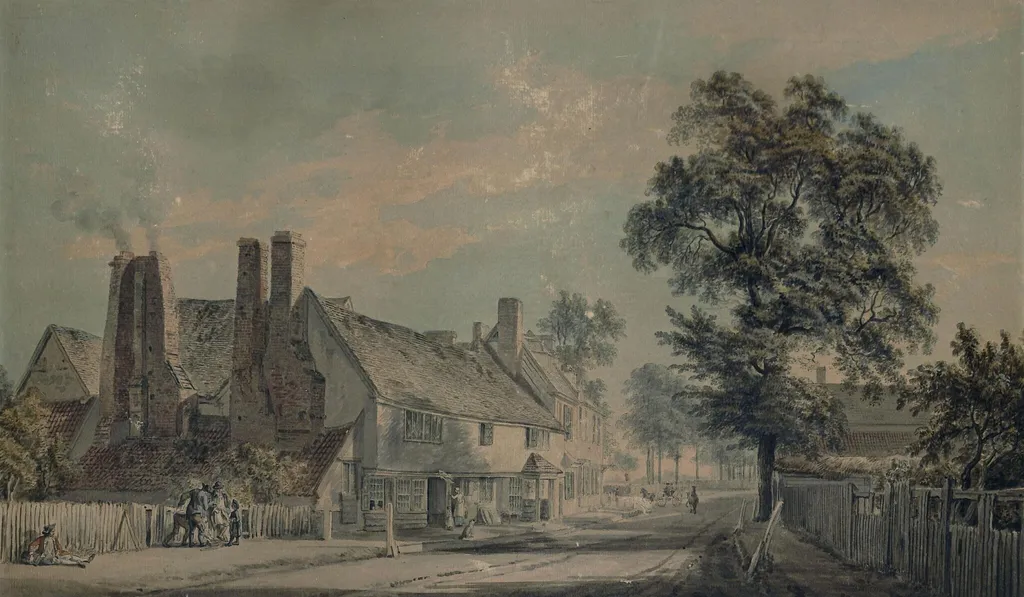
Village Street, Old Charlton, Kent is a watercolor work on paper by the Rococo painting artist Paul Sandby. It dates from 1750 and is held in the collection of the Victoria and Albert Museum. Created in 1750, this watercolour depicts a modest village thoroughfare in Old Charlton, Kent.
About this work
Overview
Created in 1750, this watercolour depicts a modest village thoroughfare in Old Charlton, Kent. The composition presents a narrow, unpaved road flanked by low, simple dwellings capped with tall brick chimneys, one of which releases a thin wisp of smoke. A handful of figures traverse the street, while a line of trees borders the right side under a gently clouded sky.
Subject & Meaning
The work captures an ordinary moment of rural life, emphasizing the tranquility of a small community. The sparse human presence and the subdued activity of daily chores suggest a stable, self‑contained environment, offering viewers a quiet glimpse into 18th‑century English village routines.
Technique & Style
Executed in watercolor, the artist employs a restrained palette of light hues to render the sky and the subtle gradations of shadow on the buildings. Delicate washes convey the softness of the clouds, while finer brushwork defines the texture of the brick chimneys and the foliage along the roadside, creating a balanced, atmospheric scene.
History & Provenance
The piece is part of the Victoria and Albert Museum’s collection, where it is displayed among other 18th‑century British watercolours. Its provenance traces back to the museum’s acquisition records, confirming its origin as a work produced in the mid‑1700s and preserved as an example of early English landscape watercolor.
Artist & collection
Artist
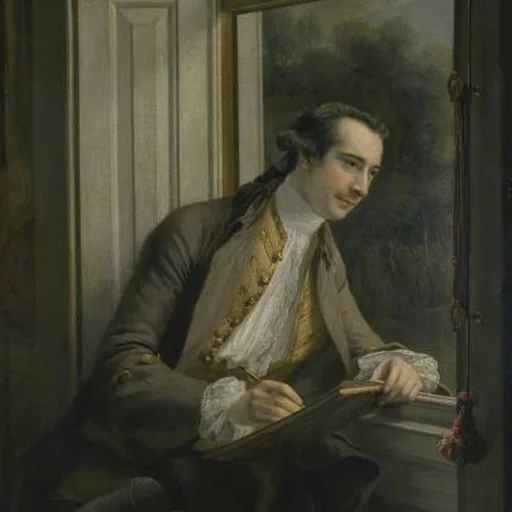
Paul Sandby, (1731 – 7 November 1809) was an English mapmaker and painter who specialised in landscape art. Along with his older brother Thomas Sandby, he was one of the founding members of the Royal Academy in 1768.

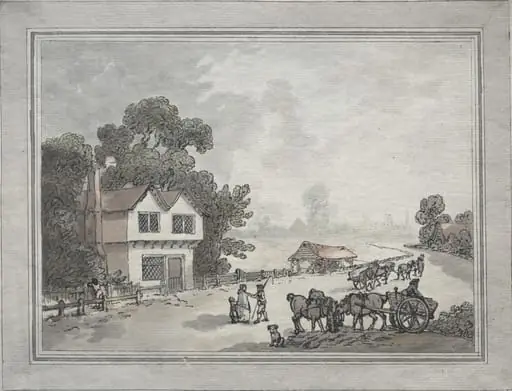 Horses and Carts on a Country Road
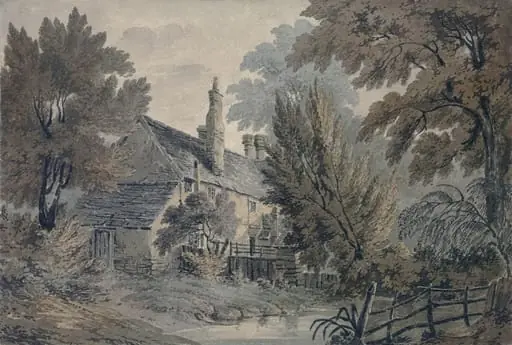 Landscape with House by a Pond
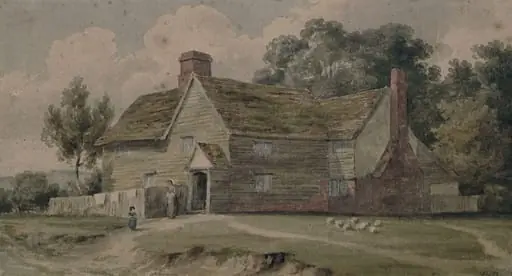 Landscape with cottage and figures
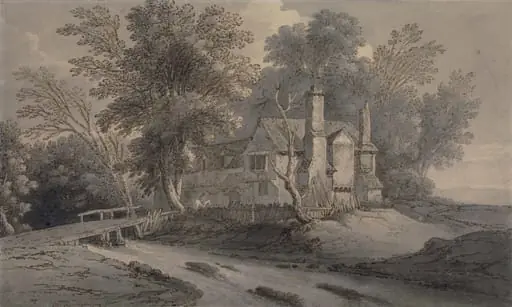 An Old Manor House
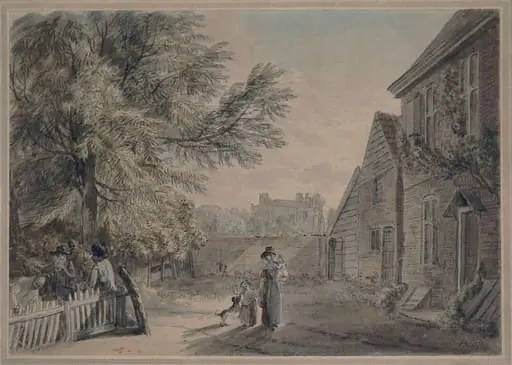 Old Public House, Bayswater
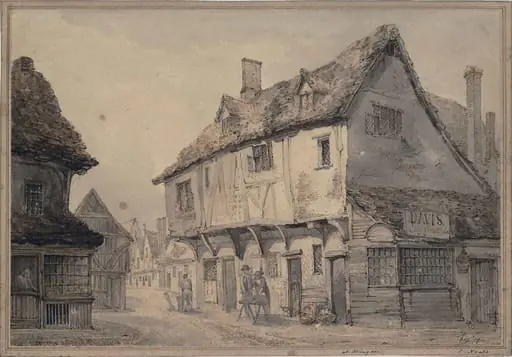 Old Houses at Abingdon, Berkshire
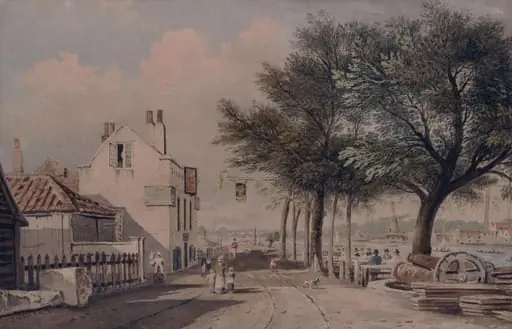 The Spread Eagle, Millbank
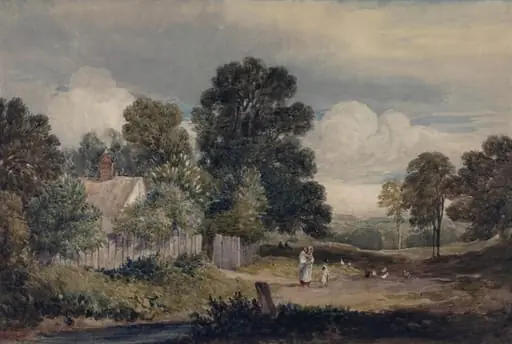 Cottage near Norwood
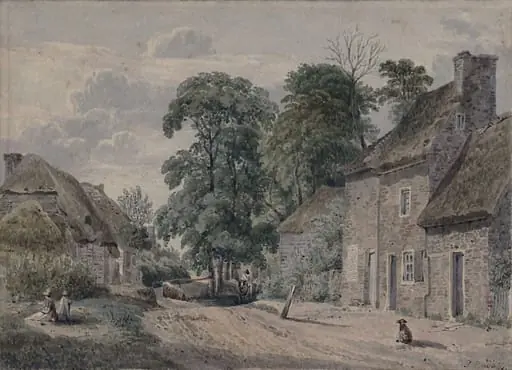 Manstone, near Ramsgate, Kent
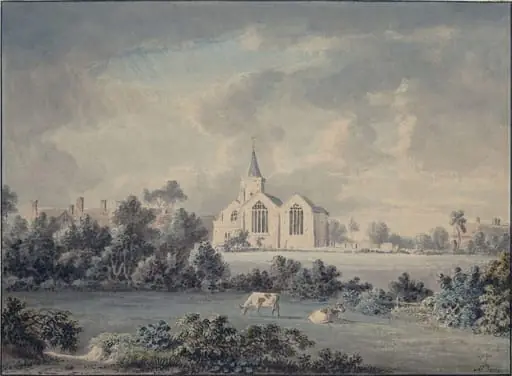 Landscape with church and houses
 Houses at Putney Heath
 Farmhouse, Buckinghamshire