Artwork
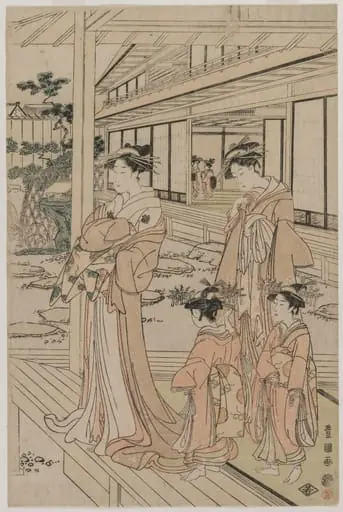
Two Beauties on a Veranda
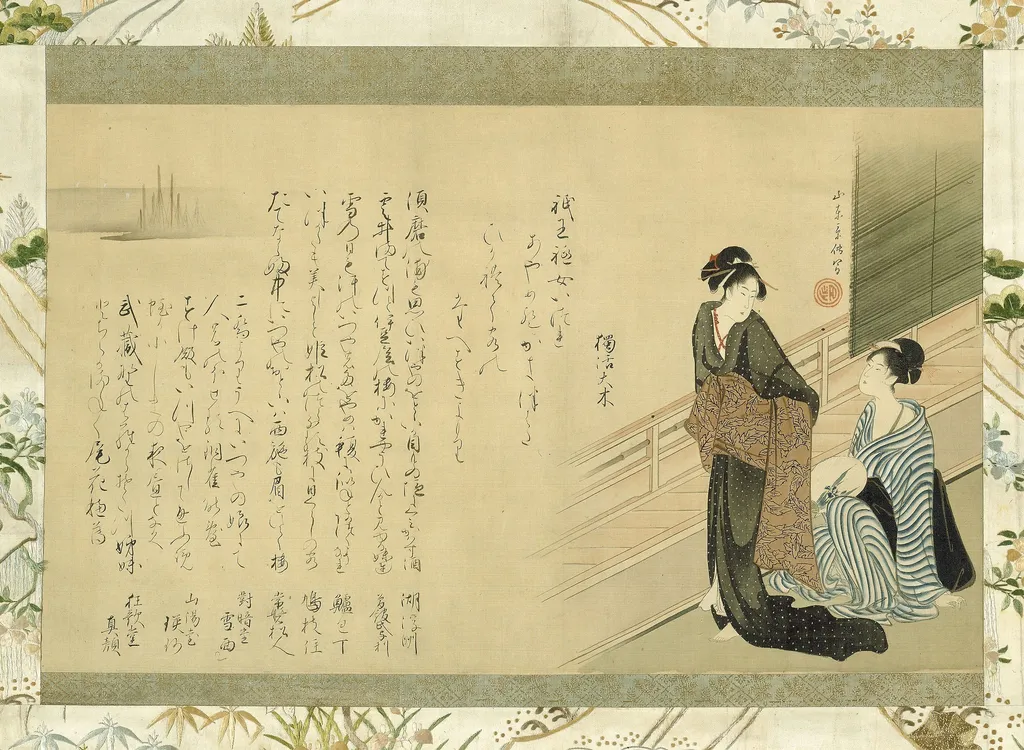
Two Beauties on a Veranda is an unspecified painting by the Ukiyo-e artist Santō Kyōden. It dates from 1803 and is held in the collection of the Art Institute of Chicago.
About this work
Overview
Created in 1803 by Santō Kyōden, this woodblock print belongs to the ukiyo-e tradition, capturing everyday life in Edo-period Japan.
Created in 1803 by Santō Kyōden, this woodblock print belongs to the ukiyo-e tradition, capturing everyday life in Edo-period Japan. Kyōden, primarily known as a writer and illustrator, produced works that blended literary wit with visual art. Though not a professional painter, his prints reflect the aesthetic sensibilities of urban culture, particularly the portrayal of women in domestic or leisurely settings. The work is one of many that connected literature and image in popular media of the time.
Subject & Meaning
The print shows two women on a veranda, their poised postures and elaborate kimonos suggesting social refinement. One holds a large cloth, possibly a garment or towel, hinting at private, domestic activity. The scene avoids theatricality, instead emphasizing quiet composure. The inclusion of Japanese text on the left implies a narrative or poetic context, common in Kyōden’s illustrated books, where visual and literary elements reinforced each other to evoke mood rather than tell a direct story.
Technique & Style
Kyōden employed the standard ukiyo-e woodblock method, using flat planes of color and fine linework to define form. The kimonos are rendered with subtle patterns—dots and stripes—that suggest texture without shading. The background includes a simple wall and window, framing the figures without depth. Unlike Western chiaroscuro, the lighting is even and non-dramatic, consistent with Japanese aesthetic principles that favor clarity and restraint over contrast or volume.
History & Provenance
The print emerged from Kyōden’s broader output during the early 1800s, a period when illustrated literature and prints flourished in Edo. As a publisher and shop owner, he had direct access to print production and often incorporated his commercial interests into his work. While the specific provenance of this piece is undocumented, similar prints were widely distributed among urban middle-class audiences, serving both as art and as cultural commentary.
Context
This work reflects the rise of ukiyo-e as a medium for depicting the pleasures and routines of Edo’s merchant class. Women in kimonos, verandas, and quiet interiors were common motifs, symbolizing refined urban life. Kyōden’s dual role as writer and illustrator placed him at the intersection of literature and visual culture, where prints often accompanied stories or poems. His work helped blur boundaries between high and popular art in late Edo society.
Legacy
Kyōden’s prints, including this one, are valued for their integration of text and image, a hallmark of his literary approach to visual art. While less celebrated than contemporaries like Hokusai or Utamaro, his contributions helped shape the narrative potential of ukiyo-e. His emphasis on everyday elegance and textual interplay influenced later illustrators and remains a distinctive thread in the history of Japanese printmaking.
Artist & collection
Artist
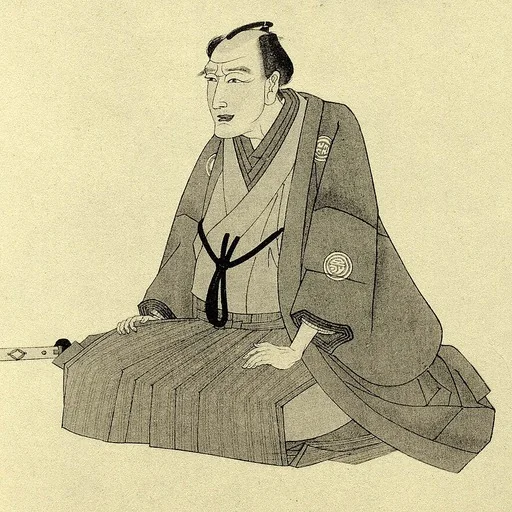
Santō Kyōden (山東 京伝; Japanese pronunciation: , 13 September 1761 Edo – 27 October 1816) was a Japanese artist, writer, and the owner of a tobacco shop during the Edo period.

 Untitled
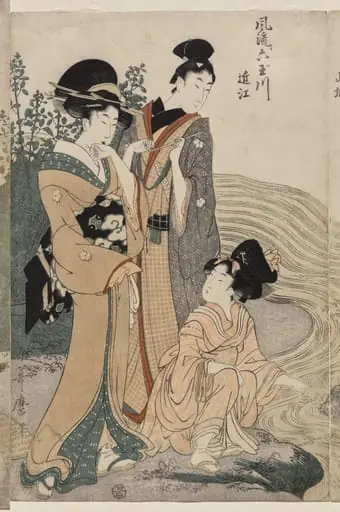 Omi Province from the series Fashionable Six Jewel Rivers (Furyu Mu Tamagawa)
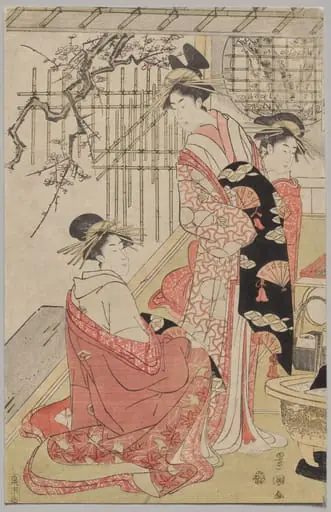 Courtesans of the Ōgiya on a Spring Outing
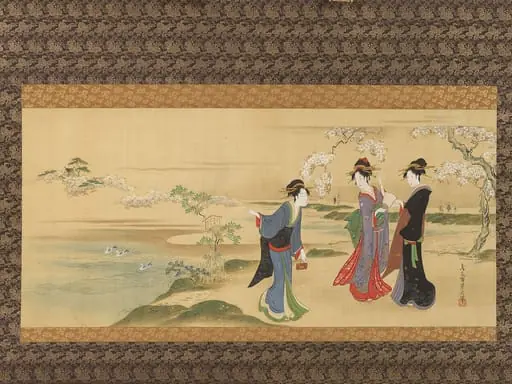 Untitled
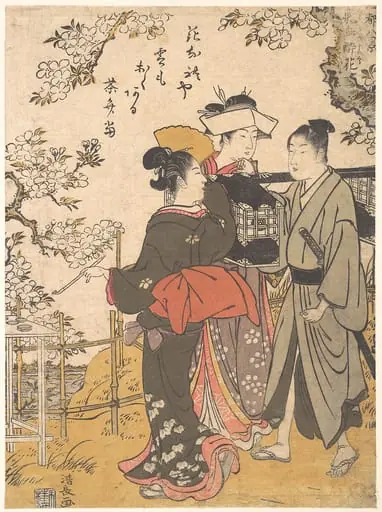 Untitled
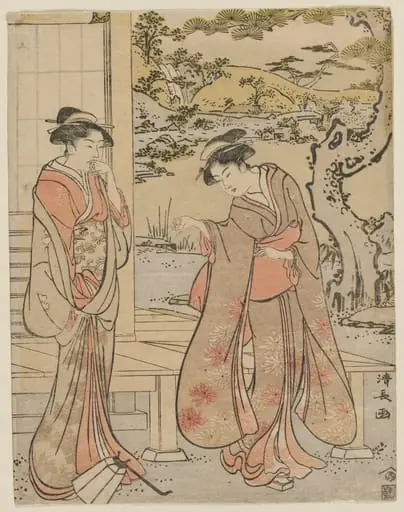 Woman Dropping a Lantern by a Porch
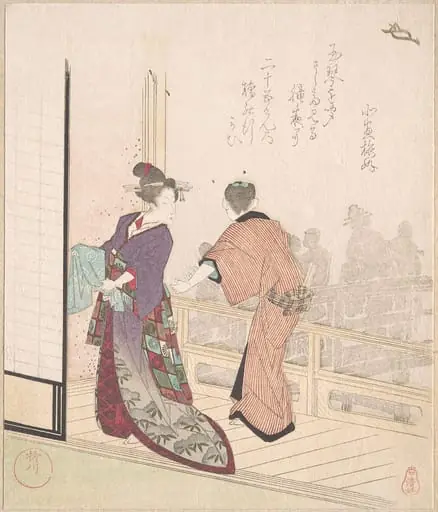 Untitled
 The Matsukaze Chapter of the Tale of Genji (from the series The Tale of Genji in Elegant Modern Dress)
 Party on the Pleasure Boat Kawaichimaru
 Three Women (from the series A Brief Collection of Japanese Beauties)
 Untitled
 Courtesan Standing on a Veranda