Artwork
Untitled
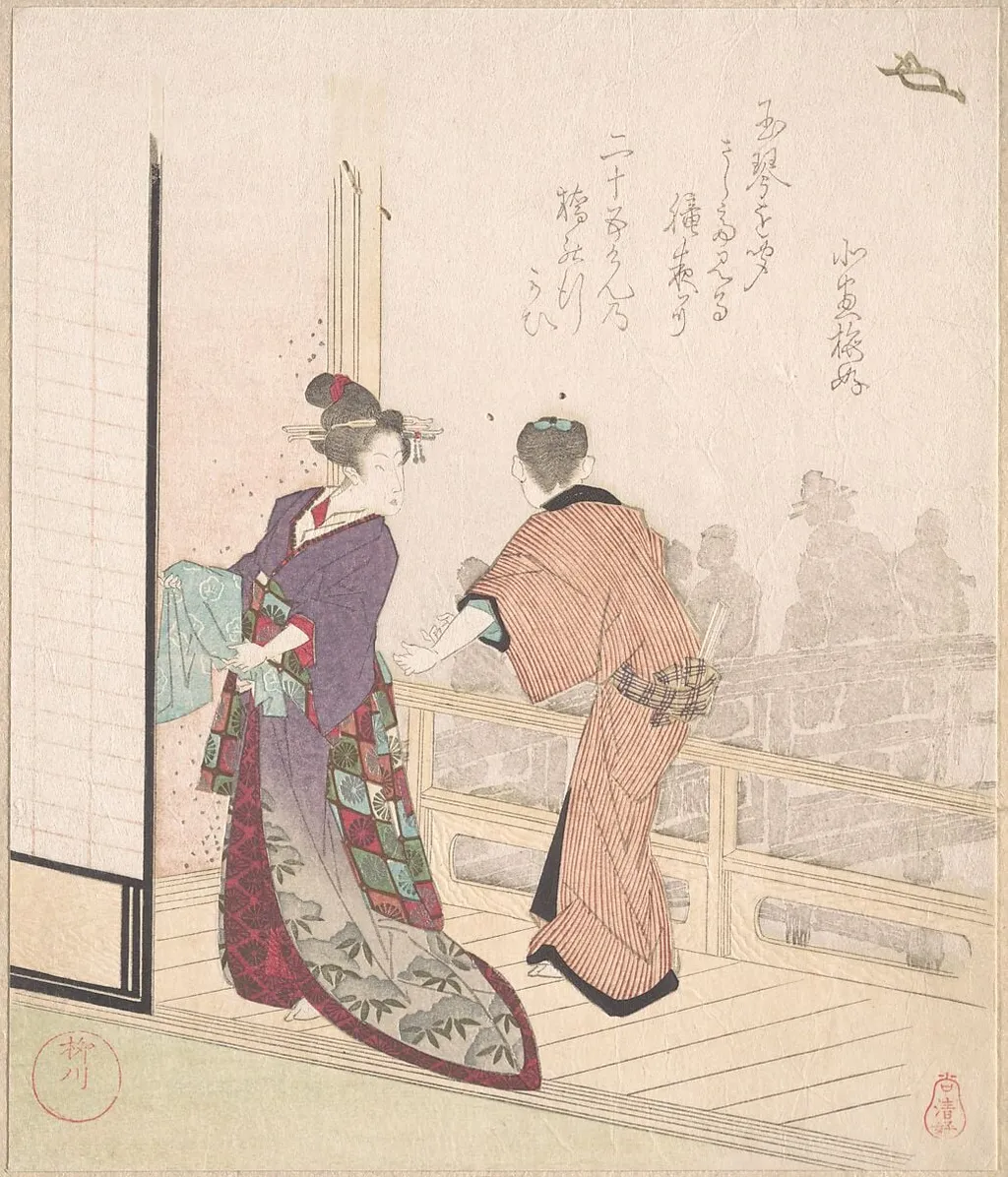
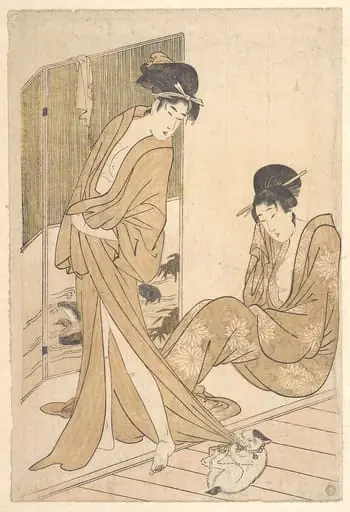
Untitled is an ink print by the Baroque artist Yanagawa Shigenobu. It dates from 1800 and is held in the collection of the Metropolitan Museum of Art.
About this work
Overview
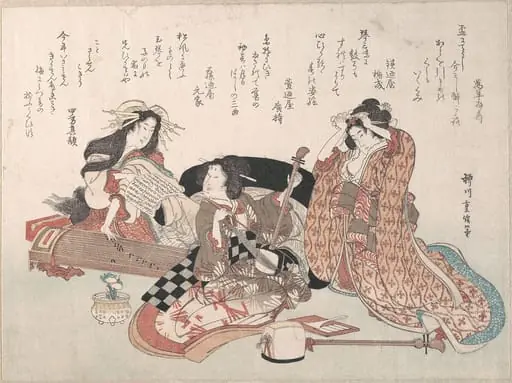
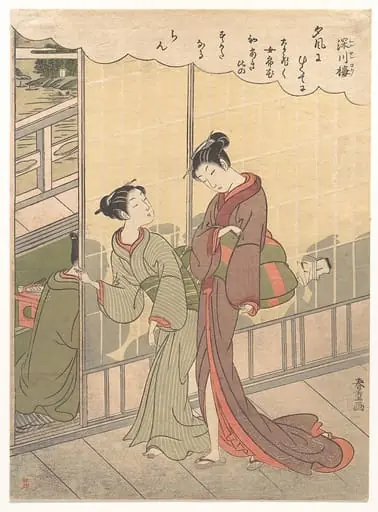
This woodblock print, dated around 1800, is attributed to Yanagawa Shigenobu and belongs to the surimono genre—privately commissioned prints often produced for poetic or seasonal occasions. Executed in ink and color on paper, it depicts a quiet moment between two figures on a balcony, rendered with refined detail and subtle tonal variation characteristic of early 19th-century Japanese printmaking.
Subject & Meaning
The scene portrays a man and woman on a balcony, their postures suggesting contemplation or quiet companionship.
The scene portrays a man and woman on a balcony, their postures suggesting contemplation or quiet companionship. The woman holds a fan, while the man rests his arm on the railing, indicating a moment of pause. The presence of Japanese script in the background implies a literary or poetic reference, common in surimono, though the specific text remains untranscribed here. The setting evokes intimacy without narrative climax.
Technique & Style
The print employs fine lines and layered color washes typical of surimono production, with careful attention to textile patterns and architectural detail. The woman’s kimono features a complex red-and-blue design, while the man’s striped robe and black collar are rendered with precision. The grid-patterned railing and pale pink background are printed with restrained palette, emphasizing texture over bold contrast.
History & Provenance
The work entered the collection of The Metropolitan Museum of Art as part of its broader holdings in Japanese prints. While its original commission and early ownership are undocumented, its survival and preservation reflect the enduring interest in surimono as refined, non-commercial art objects produced for elite audiences during the Edo period.
Context
Surimono prints like this one were often created for New Year’s or poetic gatherings, commissioned by literary societies or wealthy patrons. Unlike mass-produced ukiyo-e, they were limited in number and emphasized artistic experimentation. This piece exemplifies the genre’s focus on elegance, seasonal mood, and subtle allusion rather than popular themes.
Legacy
Though Yanagawa Shigenobu is less widely known than contemporaries like Hokusai or Hiroshige, his surimono contribute to the understanding of private print culture in late Edo Japan. This work remains a quiet example of how artistic skill was applied to intimate, non-commercial formats, preserving aesthetic values distinct from mainstream printmaking.
Artist & collection


 Shōkei|Celebrated Waterfall
 Untitled
 Untitled
 Untitled
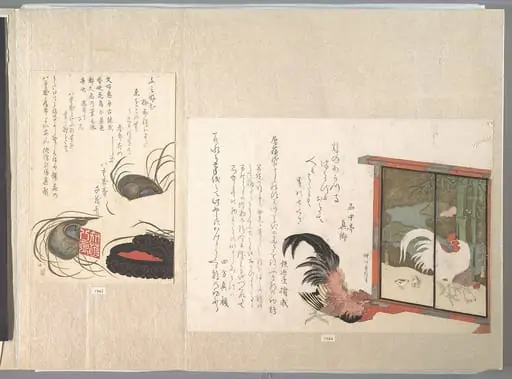 鶏図衝立を見る鶏|Cock Eyeing a Free-standing Screen Painted with Cock, Hen, and Chicks, from Spring Rain Surimono Album (Harusame surimono-jō), vol. 1
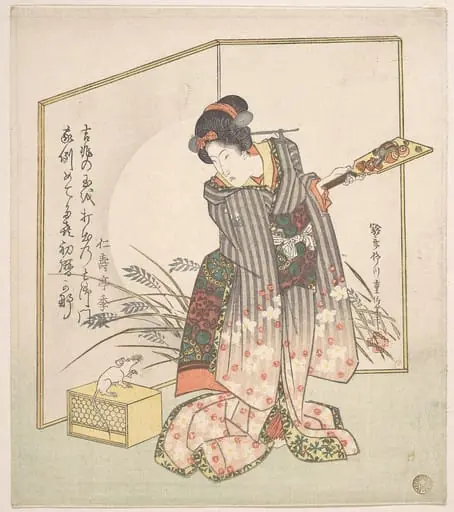 Untitled
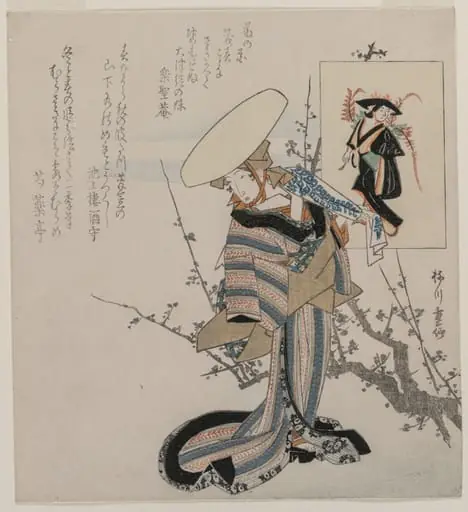 Woman by a Plum Tree Matched with the Wisteria Maiden (from a series of women compared to figures from Otsu paintings)
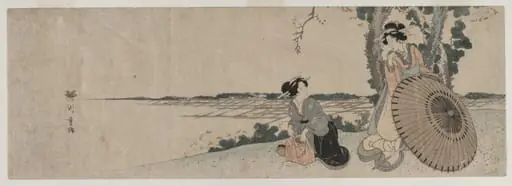 Two Women on a Hilltop
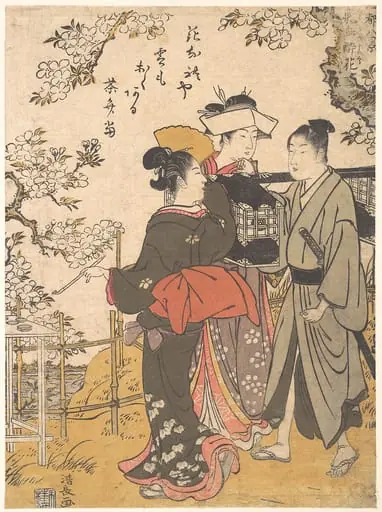 Untitled
 Untitled
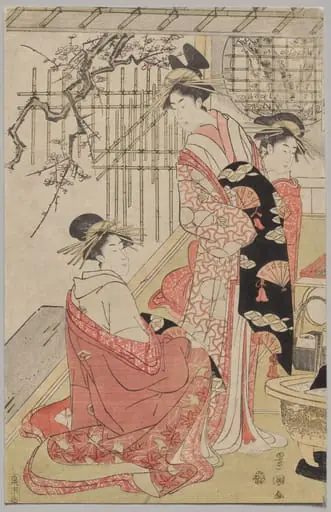 Courtesans of the Ōgiya on a Spring Outing
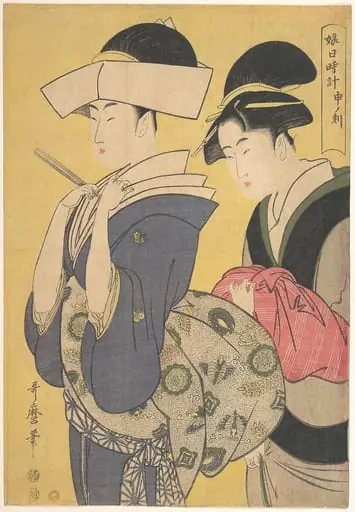 娘日時計 申ノ刻|Seru no Koku
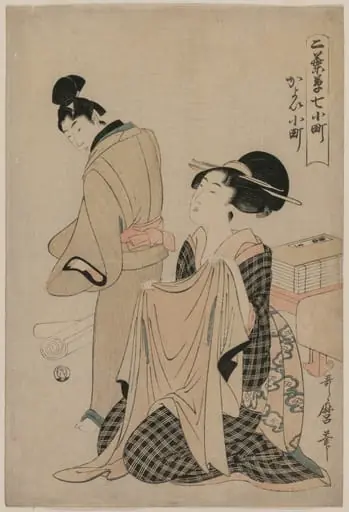 Seven Komachi Episodes: A Woman Holding an Outer Garment for a Man
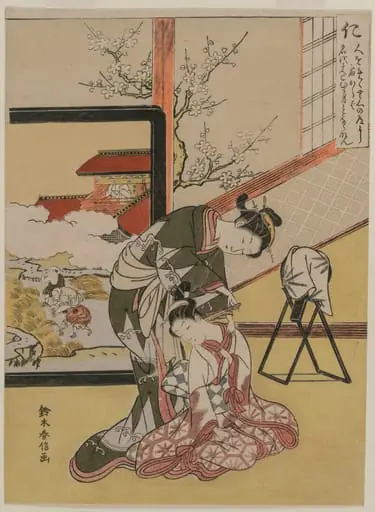 Benevolence, from The Five Virtues
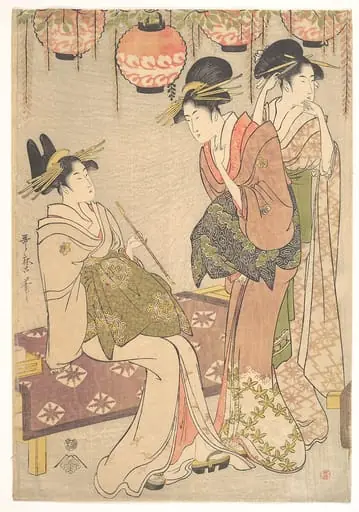 Untitled
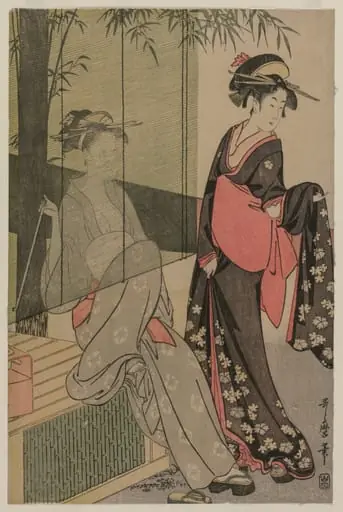 Two Women by a Bamboo Blind
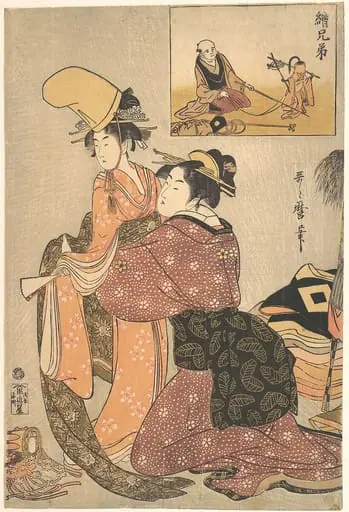 喜多川歌麿画 絵兄弟娘道成寺 見立猿廻し 「絵兄弟」|A Woman Dressing a Girl for a the Kabuki Dance “Musume Dojōji,” with “Brother Picture” (E-kyōdai) of a Monkey Trainer
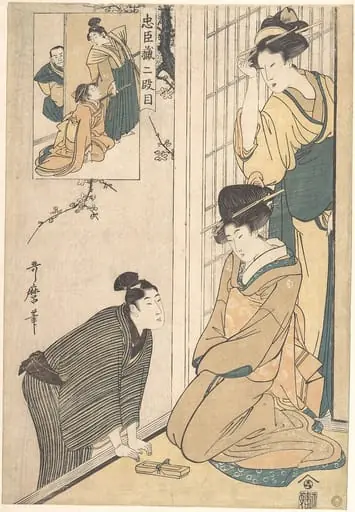 忠臣蔵二段目|A Young Man at the Side of a House
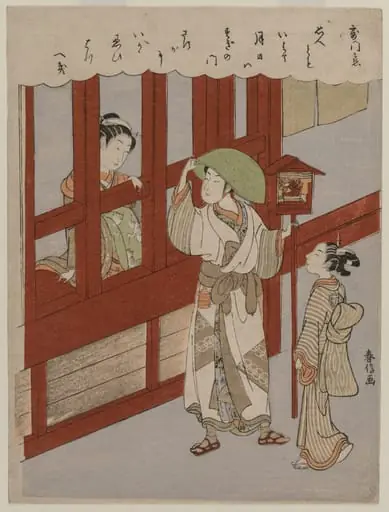 Love at the Brothel Gate
 Untitled