Artwork
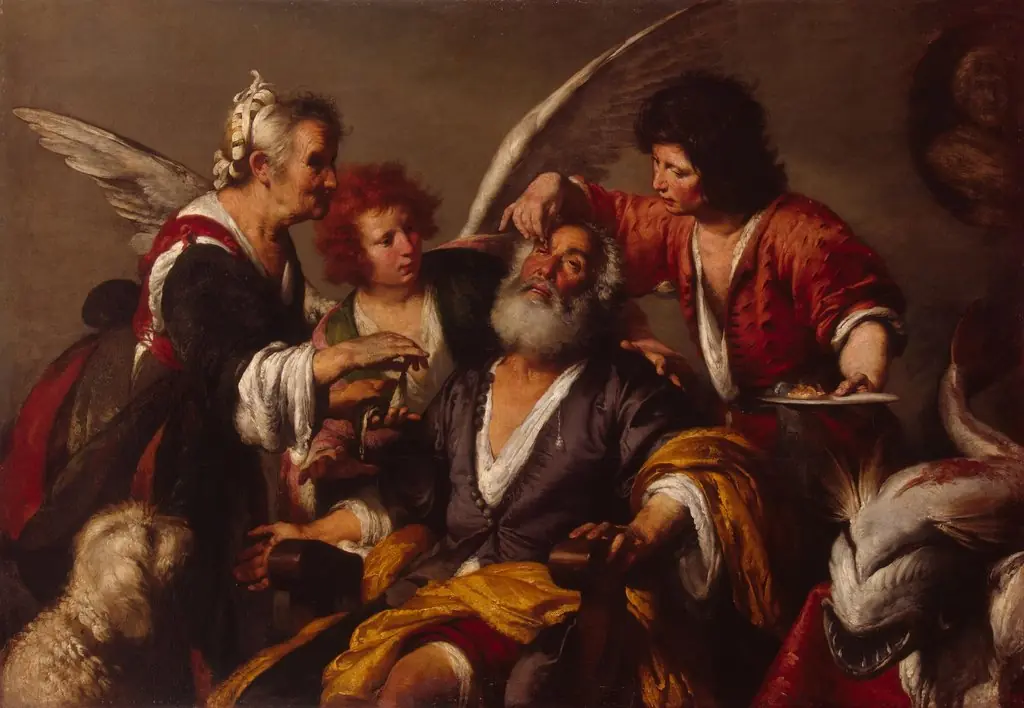
Tobias heals his blind father
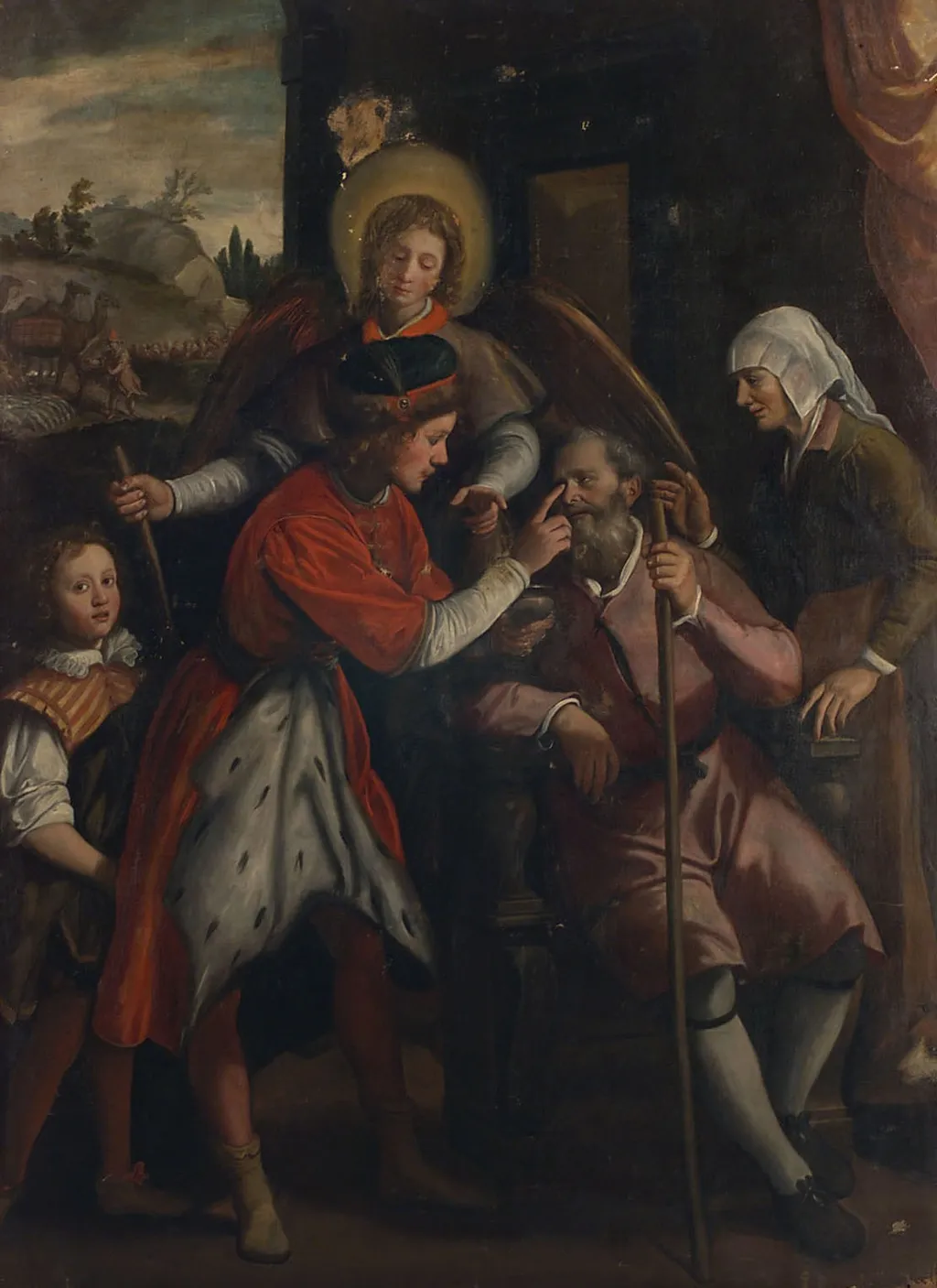
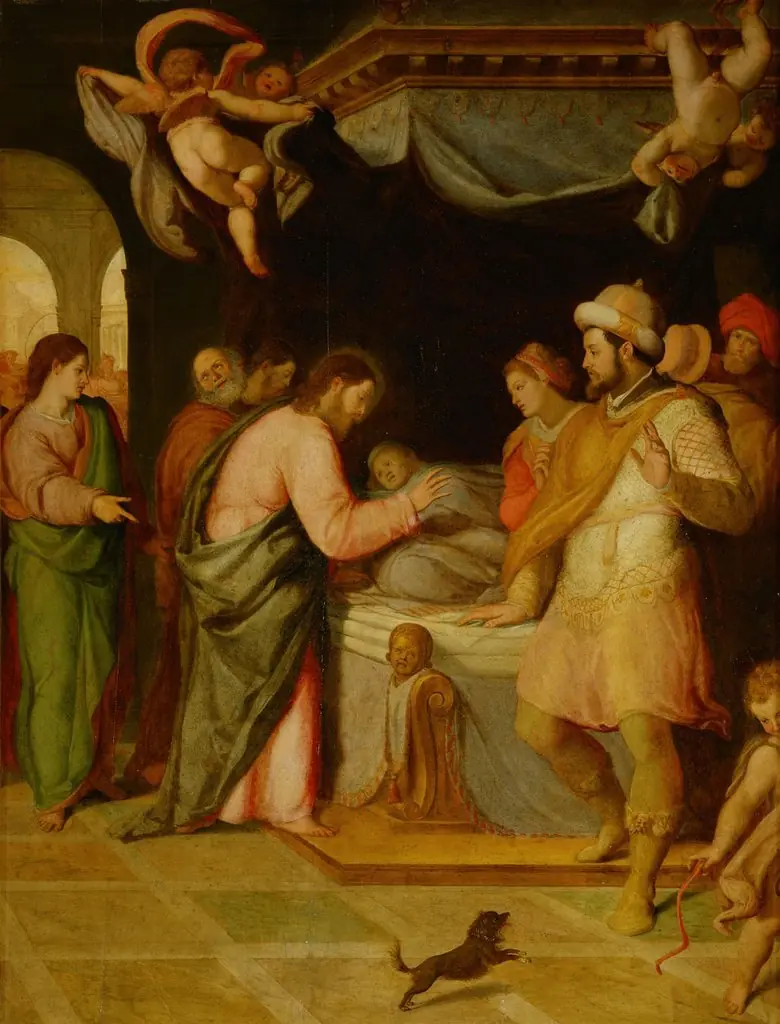
Tobias heals his blind father is an unspecified painting by the Early Baroque Italian artist Santi di Tito. It dates from 1600 and is held in the collection of the Kunsthistorisches Museum.
About this work
Overview
This late sixteenth-century painting by Santi di Tito represents a pivotal moment in Italian art, bridging Mannerist elegance and Baroque naturalism. Executed around 1600, the work portrays a biblical narrative with a newfound emphasis on clarity and emotional immediacy. It remains part of the Kunsthistorisches Museum’s holdings, reflecting the artist’s role in redefining religious imagery.
Subject & Meaning
The scene illustrates the Old Testament episode in which Tobias, aided by the archangel Raphael, restores his father Tobit’s sight using the gall of a fish. The figures—son, father, and mother—are arranged to convey both intimacy and divine intervention. The act of healing serves as a metaphor for faith and filial devotion, underscoring the restorative power of obedience to divine guidance.
Technique & Style
Santi di Tito employs a controlled use of light and shadow, a hallmark of his mature style, to model figures with volumetric solidity. The composition avoids Mannerist distortion, favoring balanced groupings and naturalistic gestures. Brushwork remains precise, particularly in the rendering of textiles and the angel’s wings, while the landscape recedes with atmospheric subtlety.
History & Provenance
Created during the artist’s later years, the painting entered the Kunsthistorisches Museum’s collection through early modern acquisitions. Its exact commission and early ownership remain unrecorded, though its inclusion in a major public institution suggests recognition of its artistic significance shortly after completion.
Context
Emerging at the close of the sixteenth century, the work reflects Counter-Reformation ideals that prioritized legible, emotionally resonant religious narratives. Santi di Tito’s approach aligned with broader shifts toward naturalism, rejecting the artificiality of late Mannerism in favor of compositions that engaged viewers through direct, human-scale drama.
Legacy
The painting exemplifies the transitional phase between Mannerism and Baroque, influencing subsequent generations of artists who sought to combine narrative clarity with technical refinement. Its presence in a major museum collection ensures its continued study as a document of late Renaissance artistic evolution and devotional expression.
Artist & collection
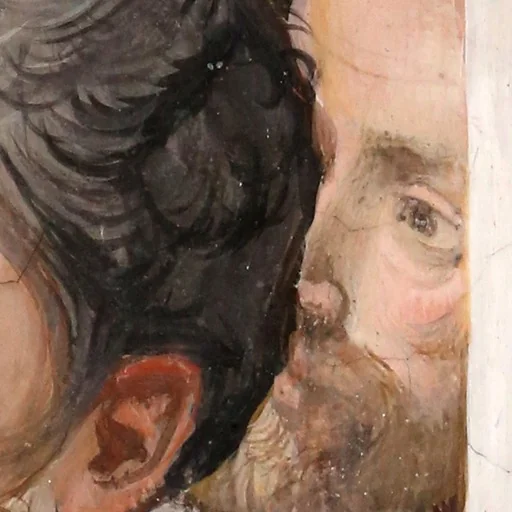
Artist
Santi di Tito (5 December 1536 – 25 July 1603) was one of the most influential and leading Italian painters of the proto-Baroque style – what is sometimes referred to as "Counter-Maniera" or Counter-Mannerism.