Artwork
Hebron
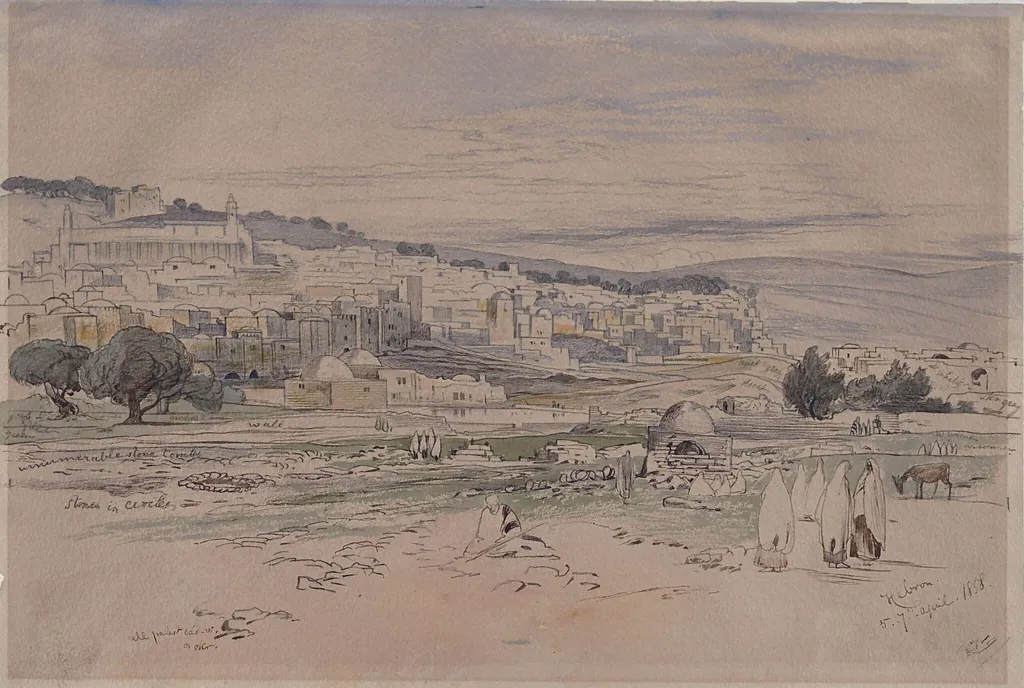
Hebron is a watercolor work on paper by the Impressionist artist Edward Lear. It dates from 6 and is held in the collection of the Victoria and Albert Museum.
About this work
Overview
The work belongs to a series of topographical studies he made while documenting landscapes for future publications.
Edward Lear, an English artist and writer, produced *Hebron* as a watercolour in 1856 during a period of extensive travel across the Mediterranean and Middle East. The work belongs to a series of topographical studies he made while documenting landscapes for future publications. Though best known for his literary nonsense, Lear’s artistic practice centered on precise observation and atmospheric rendering, often completed en plein air and later refined in his studio.
Subject & Meaning
The painting portrays the ancient city of Hebron, situated in the southern West Bank, with its whitewashed buildings clustered against a hilly horizon. A single tower rises above the rooftops, likely referencing the historic architecture of the region. The composition emphasizes stillness and distance, with no human figures present, suggesting a contemplative engagement with place rather than narrative or political commentary.
Technique & Style
Lear employed transparent watercolour washes to achieve a delicate tonal range, allowing the paper’s white to suggest light and atmosphere. Soft, loose brushwork defines the rolling hills and cloud-covered sky, while finer strokes delineate architectural details with restraint. The muted palette—pale ochres, greys, and pale blues—enhances the quiet mood, reflecting his commitment to capturing light and spatial depth without theatrical effect.
History & Provenance
Created during Lear’s 1856 journey through Palestine, *Hebron* was likely made as a field study, later incorporated into his published travel accounts. It entered the Victoria and Albert Museum’s collection through established channels of 19th-century British art acquisition, possibly as part of a larger group of works donated or purchased following his death in 1888. Its preservation reflects the museum’s interest in topographical art from the Victorian era.
Context
Lear’s watercolours of the Middle East were part of a broader European tradition of documenting foreign landscapes for scholarly and popular audiences. Unlike later Orientalist works that emphasized exoticism, his approach was grounded in topographical accuracy and personal observation. His travels coincided with increased British interest in biblical geography, though his focus remained on visual record rather than religious interpretation.
Legacy
Though Lear’s literary fame overshadows his artistic output, his watercolours are recognized for their technical discipline and quiet lyricism. *Hebron* exemplifies his contribution to 19th-century landscape documentation, influencing later artists who valued observational integrity over romanticized depiction. The work remains a reference point in studies of travel art and the intersection of science and aesthetics in Victorian visual culture.
Artist & collection
Artist
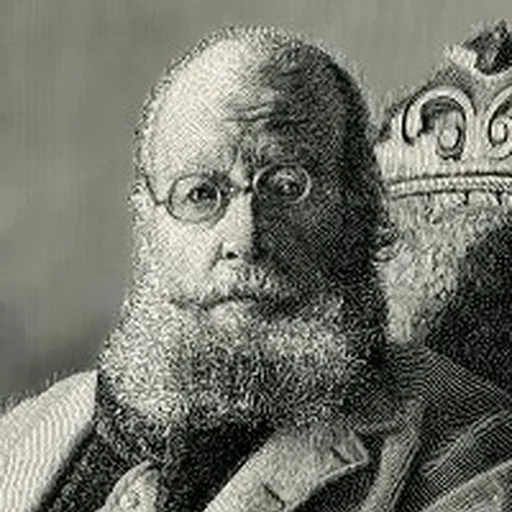
Edward Lear (12 May 1812 – 29 January 1888) was an English artist, illustrator, musician, author and poet, who is known mostly for his literary nonsense in poetry and prose and especially his limericks, a form he popularised but which term…

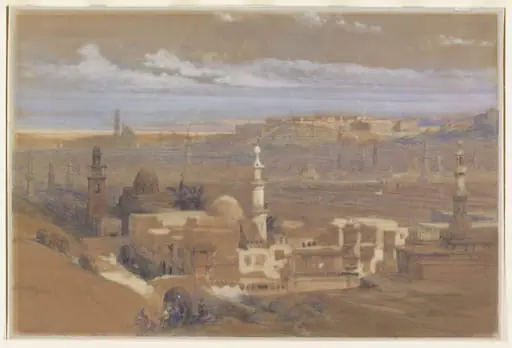 Grand Cairo
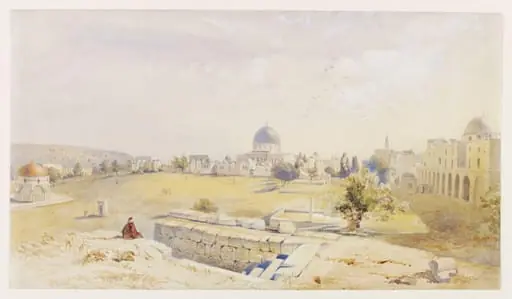 Jerusalem. Mount Moriah The Site Of The Temple now occupied by the Mosque of Omar
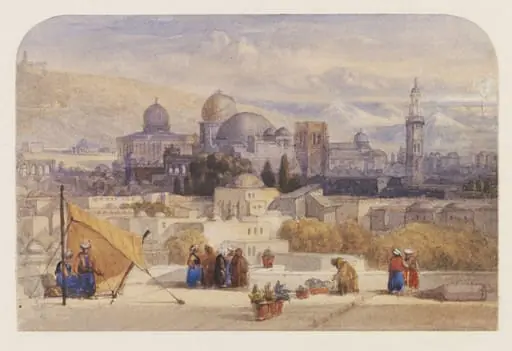 Jerusalem from the Terrace of the Latin Convent
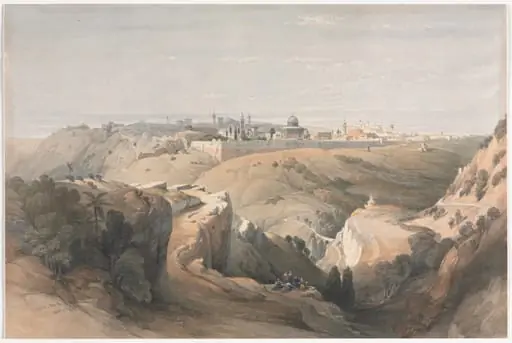 Jerusalem from the Mount of Olives
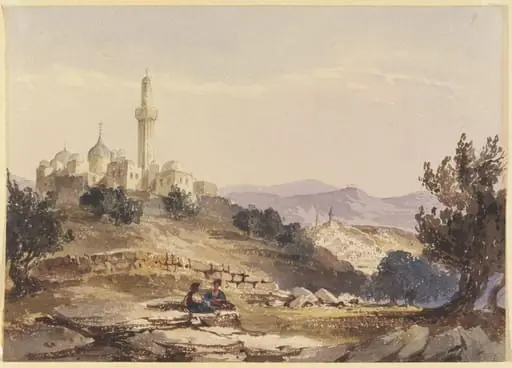 Mosque of the Ascension on the Mount of Olives
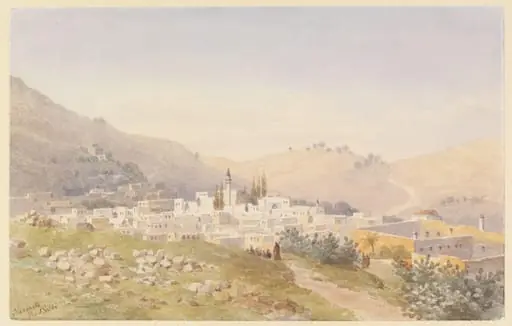 Nazareth
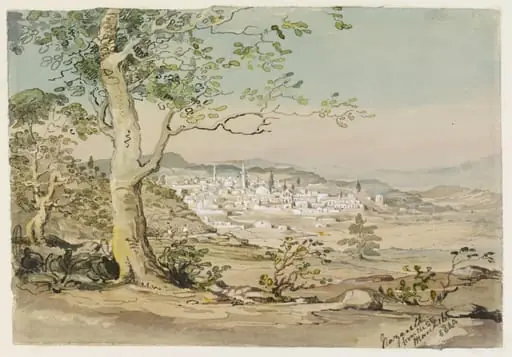 Nazareth. from the SE
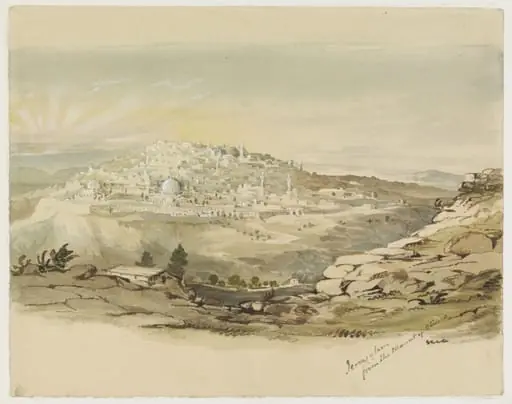 Jerusalem from the Mount of Olives
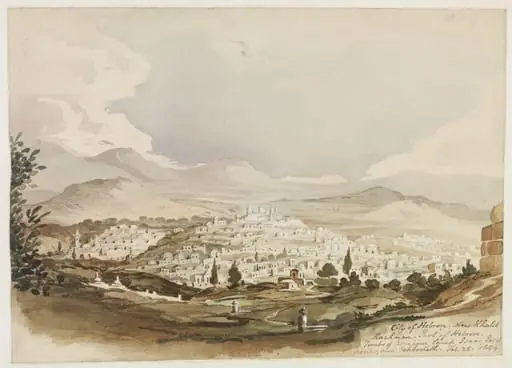 City of Hebron - Now Khalil Rachman - Pool of Hebron. Tombs of Abraham, Sarah, Isaac, Jacob, Abner, and Ishbosheth
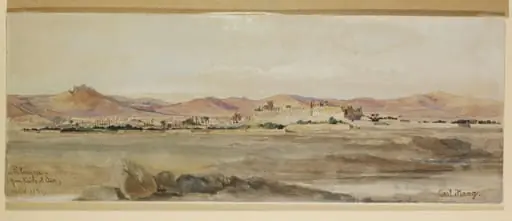 Palmyra (from Kasr el Ain)