Artwork
Men on a Spar
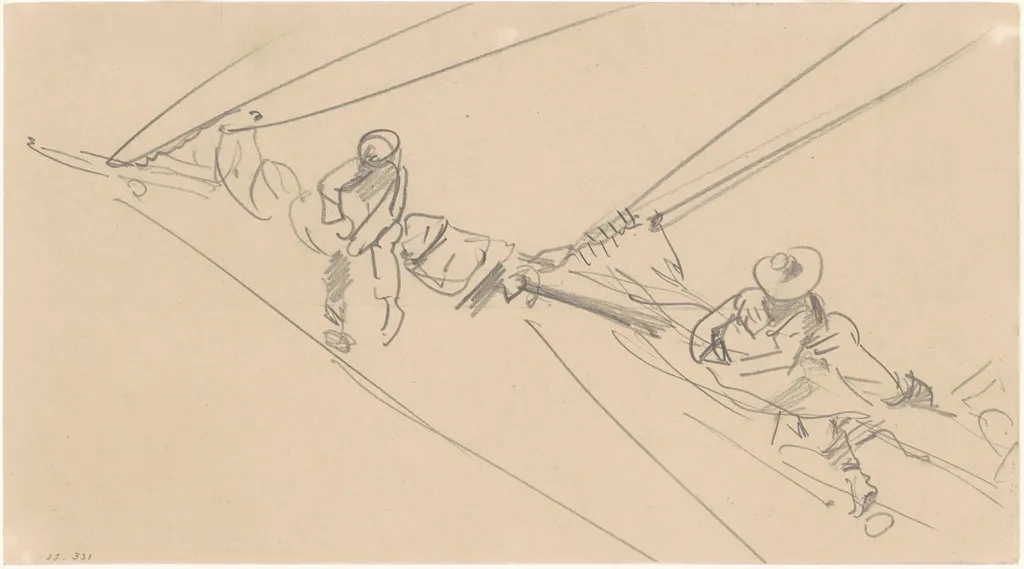
Men on a Spar is a graphite drawing by the Impressionist artist John Singer Sargent. It dates from 1876 and is held in the collection of the National Gallery of Art.
About this work
Overview
John Singer Sargent’s drawing titled *Men on a Spar* dates to roughly 1876. Executed in graphite on wove paper, the work records a brief, observational study of laborers at work on a wooden spar. The composition is compact, focusing on the interaction of the figures with the structure rather than on narrative detail.
Subject & Meaning
The scene depicts three dockworkers bent over a massive timber spar, their bodies tensed as they manipulate ropes and rigging. Their faces are not shown, emphasizing the physical effort and collective rhythm of the task. The drawing captures a moment of shared labor, reflecting Sargent’s interest in the human form engaged in everyday work.
Technique & Style
Sargent employs swift, light graphite strokes that suggest movement without rendering fine detail. The lines are loose yet purposeful, outlining muscular tension and the curvature of the spar. This economical approach allows the viewer to sense the weight of the timber and the strain of the figures through minimal mark‑making.
History & Provenance
Created while Sargent was observing dockworkers along the Spanish coast, the drawing remained in his personal collection before entering the public domain through a mid‑20th‑century acquisition by a major museum. Its provenance traces a straightforward path from the artist’s studio to institutional ownership, underscoring its value as a study piece.
Artist & collection
Artist
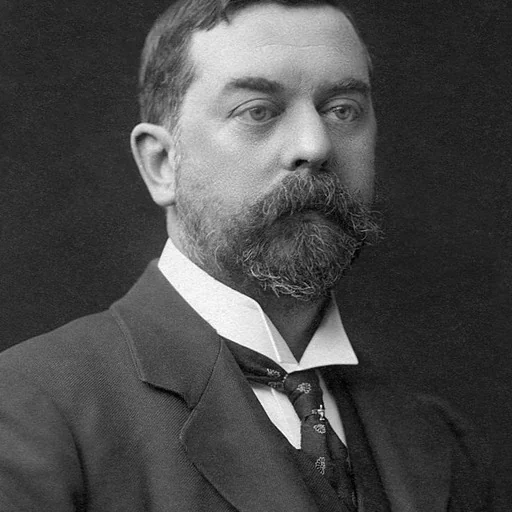
John Singer Sargent (; January 12, 1856 – April 15, 1925) was an American expatriate artist, considered the "leading portrait painter of his generation" for his evocations of Belle Époque and Edwardian-era luxury.

![Study for "Shoeing Calvary Horses at the Front" [verso], by John Singer Sargent](https://artifactworldgallery.com/img/john-singer-sargent--study-for-shoeing-calvary-horses-at-the-front-verso--6f6d1a163e84e9ab-w320.webp) Study for "Shoeing Calvary Horses at the Front" [verso]
Study for "Shoeing Calvary Horses at the Front" [verso]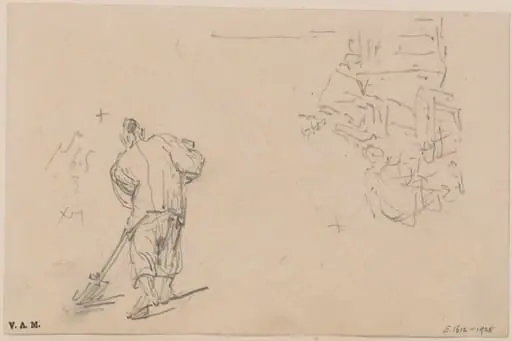 A Chinese figure sweeping, and two figures by a basket
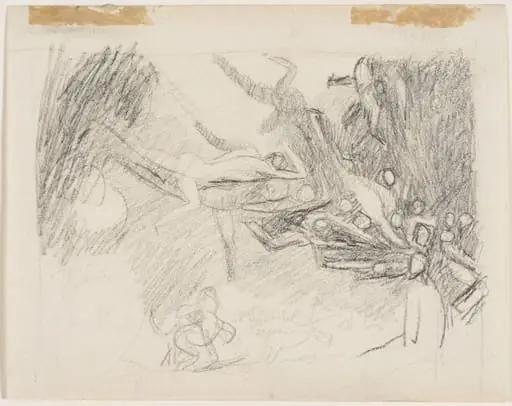 Untitled
![Figure Studies [verso], by Valentine Cameron Prinsep](https://artifactworldgallery.com/img/valentine-cameron-prinsep--figure-studies-verso--ecadfdfaae5c079d-w320.webp) Figure Studies [verso]
Figure Studies [verso]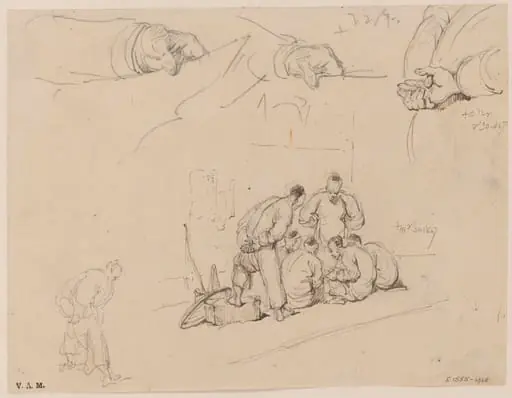 Drawings of a group of Chinese men, clasped hands, and a hand holding paper
![Study for a Lunette [recto], by Charles Sprague Pearce](https://artifactworldgallery.com/img/charles-sprague-pearce--study-for-a-lunette-recto--96fa9dd266d834e5-w320.webp) Study for a Lunette [recto]
Study for a Lunette [recto]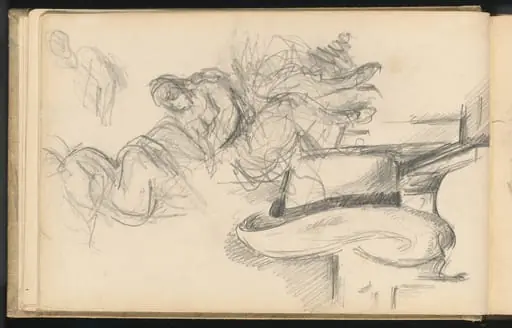 Studies Including a Straw Hat
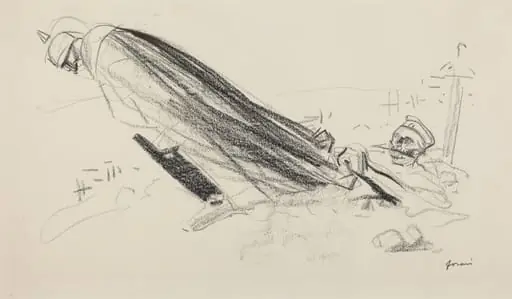 Ceux de la priemiere heure. "Sire! ou en somme-nous de "la guerre fraiche et joyeuse"?..."
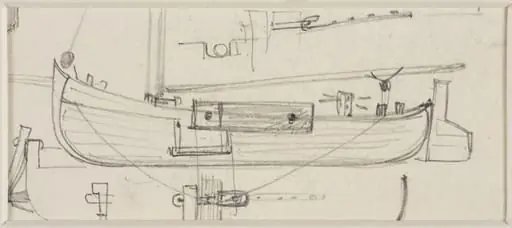 Section of a sailing barge
 Girl Picking Cherries
 Preparing for the March
 Partial Sketch of a Boy in Knickers