Artwork
St Catherine among the Philosophers
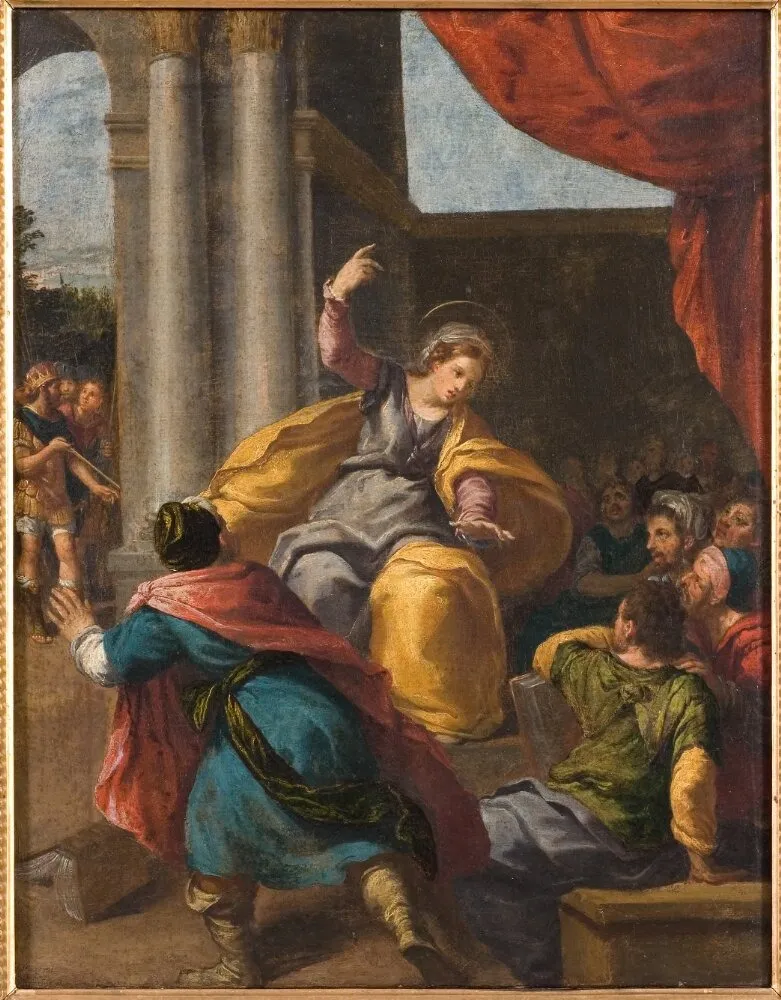
St Catherine among the Philosophers is an oil painting by the Mannerist artist Scarsellino. It dates from 1595 and is held in the collection of the Nationalmuseum.
About this work
Overview
Painted around 1595 by Ippolito Scarsella, known as Scarsellino, this oil on panel work belongs to the late Mannerist tradition of the Ferrara school.
Painted around 1595 by Ippolito Scarsella, known as Scarsellino, this oil on panel work belongs to the late Mannerist tradition of the Ferrara school. It portrays Saint Catherine of Alexandria engaged in intellectual exchange with a group of male scholars. The composition centers her as the focal point, surrounded by figures arranged in a semicircle, suggesting a moment of philosophical discourse. The painting is part of the Nationalmuseum’s collection in Stockholm.
Subject & Meaning
The scene illustrates the legendary confrontation between Saint Catherine and pagan philosophers, a popular subject in Christian iconography. According to tradition, she converted many through her eloquence before her martyrdom. Here, her raised arm and outstretched hand convey persuasion, while the philosophers’ attentive postures reflect their intellectual surrender. The setting transforms a theological narrative into a humanist dialogue, blending spiritual conviction with classical learning.
Technique & Style
Scarsellino employs refined brushwork and a restrained palette of muted earth tones accented by vivid robes—yellow, blue, and red—to distinguish figures. The figures are elongated, with delicate gestures and composed expressions typical of Mannerism. The background features architectural elements and a draped curtain, creating depth without overwhelming the intimate scale. Light falls evenly, avoiding dramatic contrasts, reinforcing the calm, cerebral tone of the scene.
History & Provenance
The painting was likely commissioned for a private or ecclesiastical setting in Ferrara during the late 1590s. It entered the Nationalmuseum’s collection in Sweden in the 19th century, possibly through diplomatic or art-market channels. Its journey from Italy to Scandinavia reflects broader patterns of Renaissance and Mannerist works dispersing across Europe after the Counter-Reformation, when religious imagery was reevaluated in Protestant contexts.
Context
In late 16th-century Italy, religious subjects were often framed within humanist ideals, reflecting the era’s intellectual currents. Ferrara, though politically diminished, remained a center for artistic innovation under the Este court. Scarsellino’s synthesis of sacred narrative with classical settings aligns with broader trends in northern Italian painting, where theological themes were explored through refined, contemplative compositions rather than overt emotionalism.
Legacy
Scarsellino’s work, though less widely known than contemporaries like Correggio or Titian, exemplifies the quiet sophistication of Mannerist painting outside Venice and Florence. This painting contributes to understanding how religious figures were reimagined as intellectual authorities in a period of theological and philosophical upheaval. Its preservation in Sweden underscores the international reach of Italian art beyond its origins.
Artist & collection
Artist
Scarsellino or Ippolito Scarsella (1550 (or 1551) – 28 October 1620) was an Italian mid-to-late sixteenth century reformist painter and one of the most important representatives of the School of Ferrara.

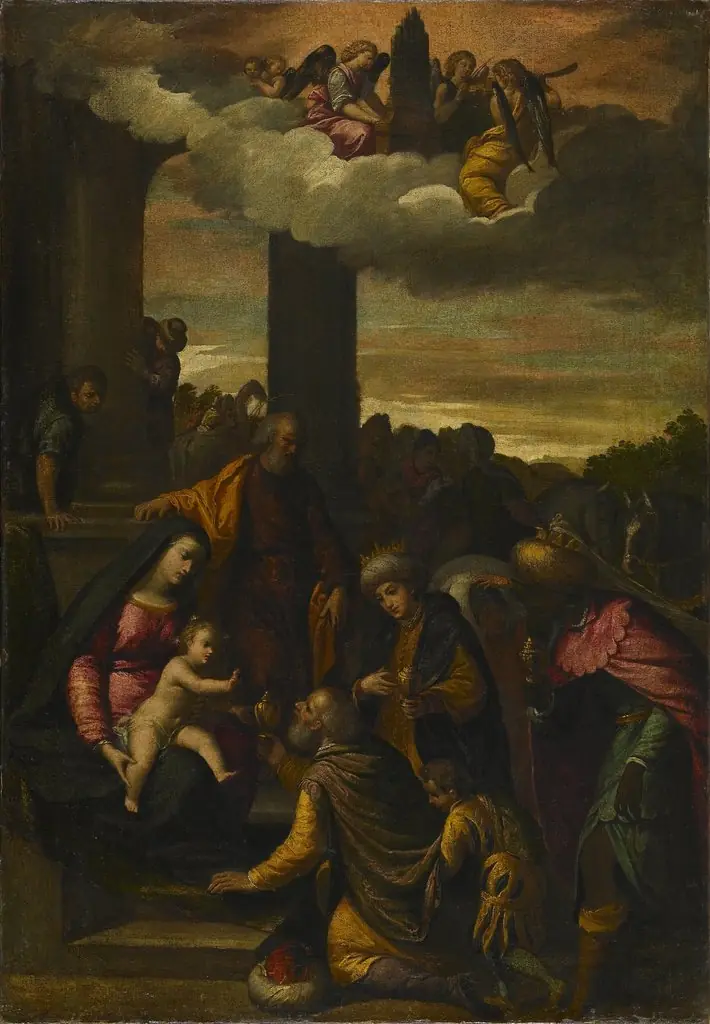
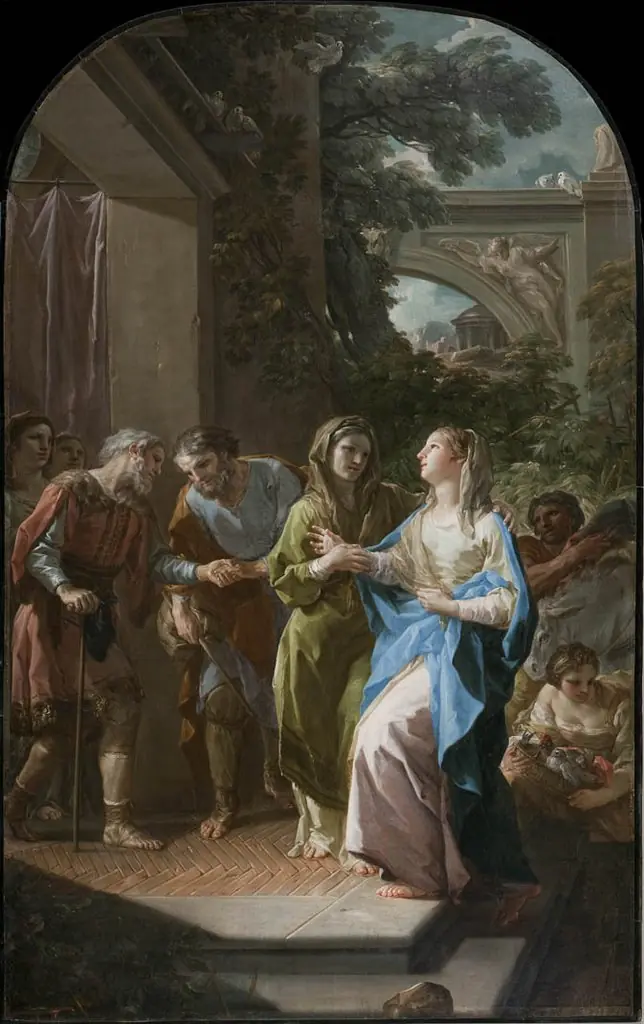 The visitation
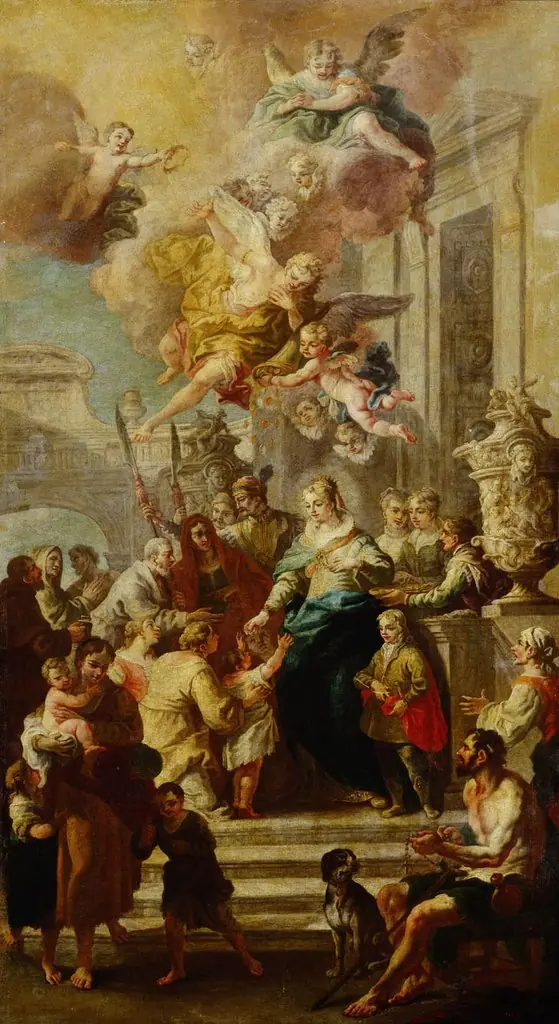 Alms donation from St. Elizabeth of Portugal
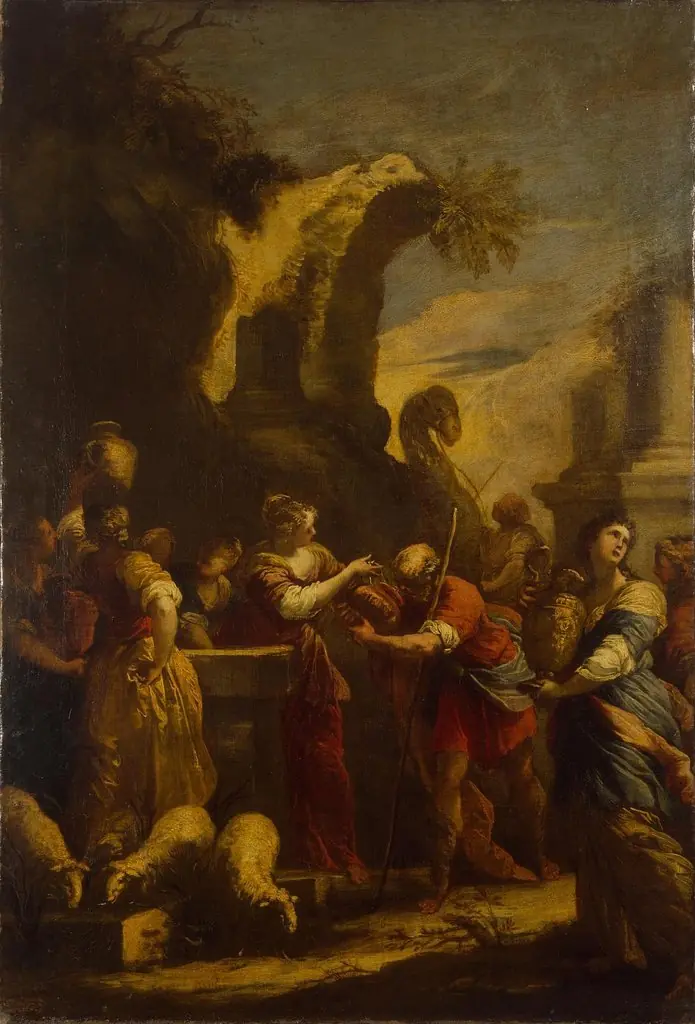 Rebecca at the Well
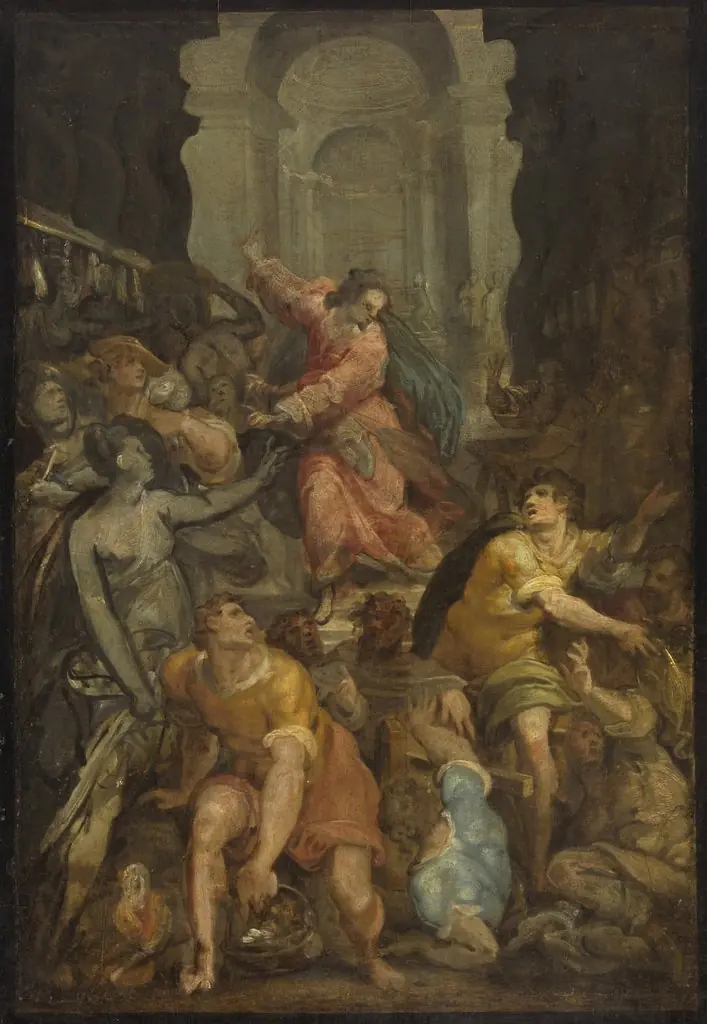 Christus vertreibt die Händler aus dem Tempel (?)
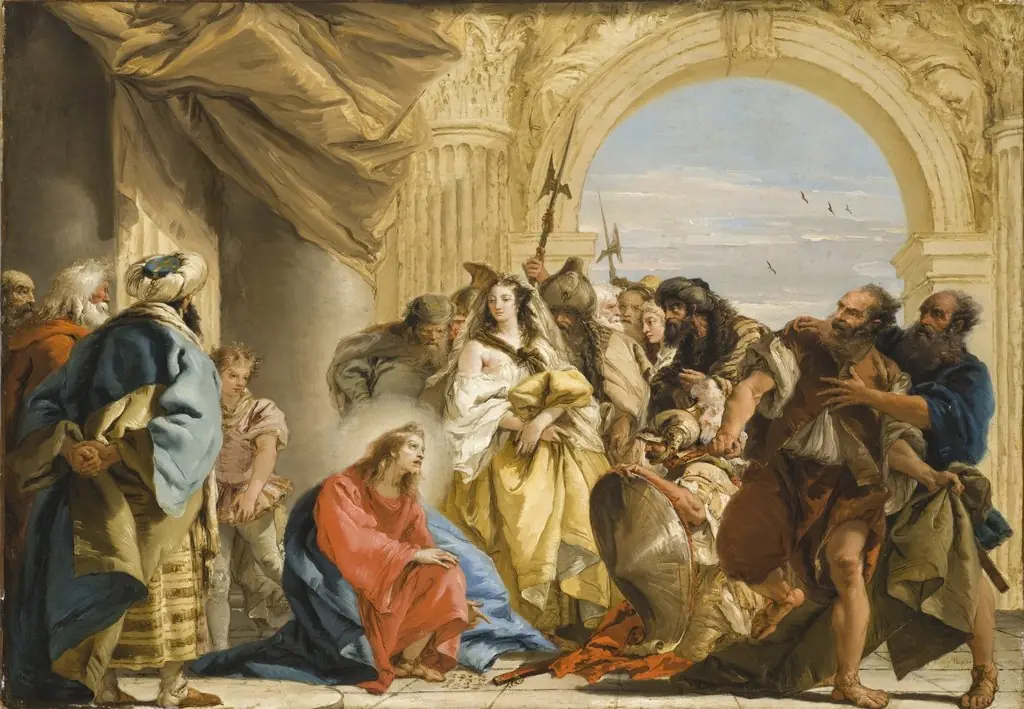 Christ and the Woman Taken in Adultery
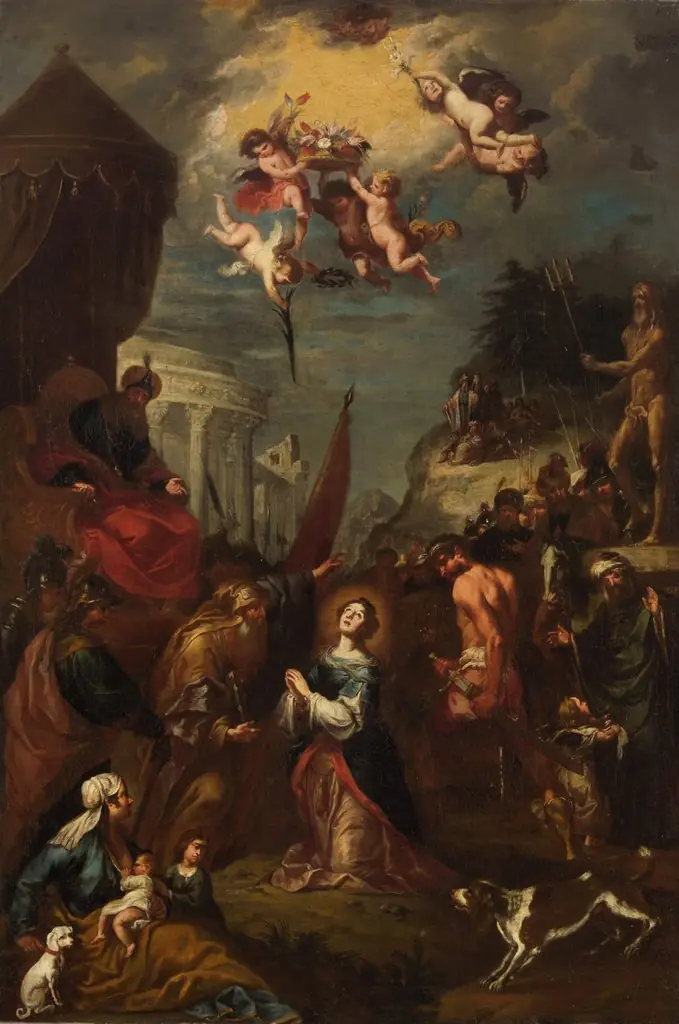 Marter der Hl. Dorothea
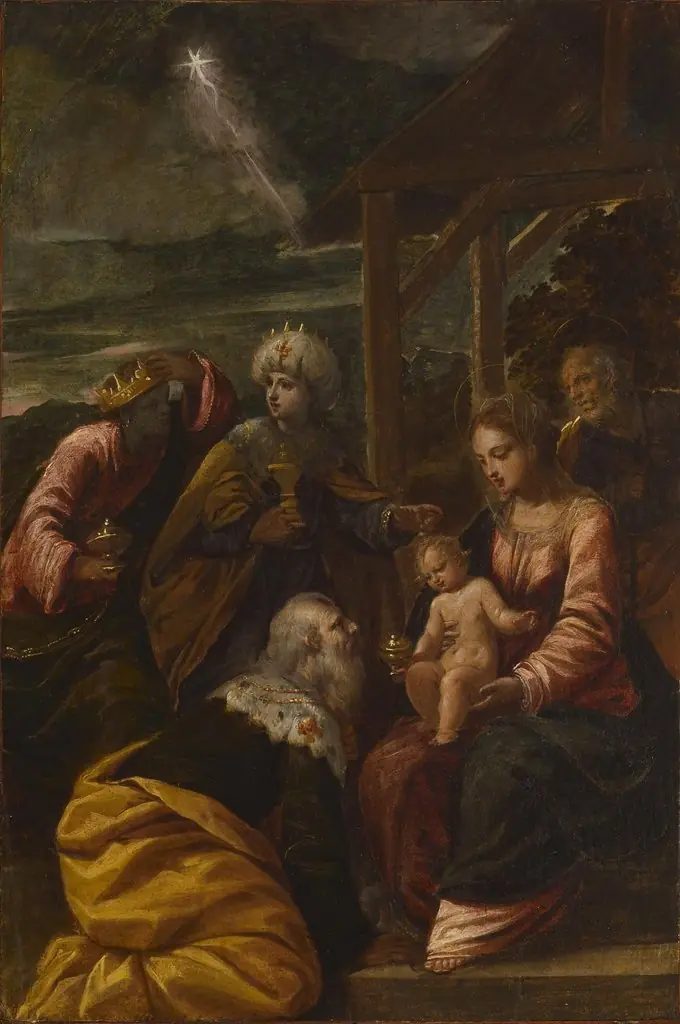
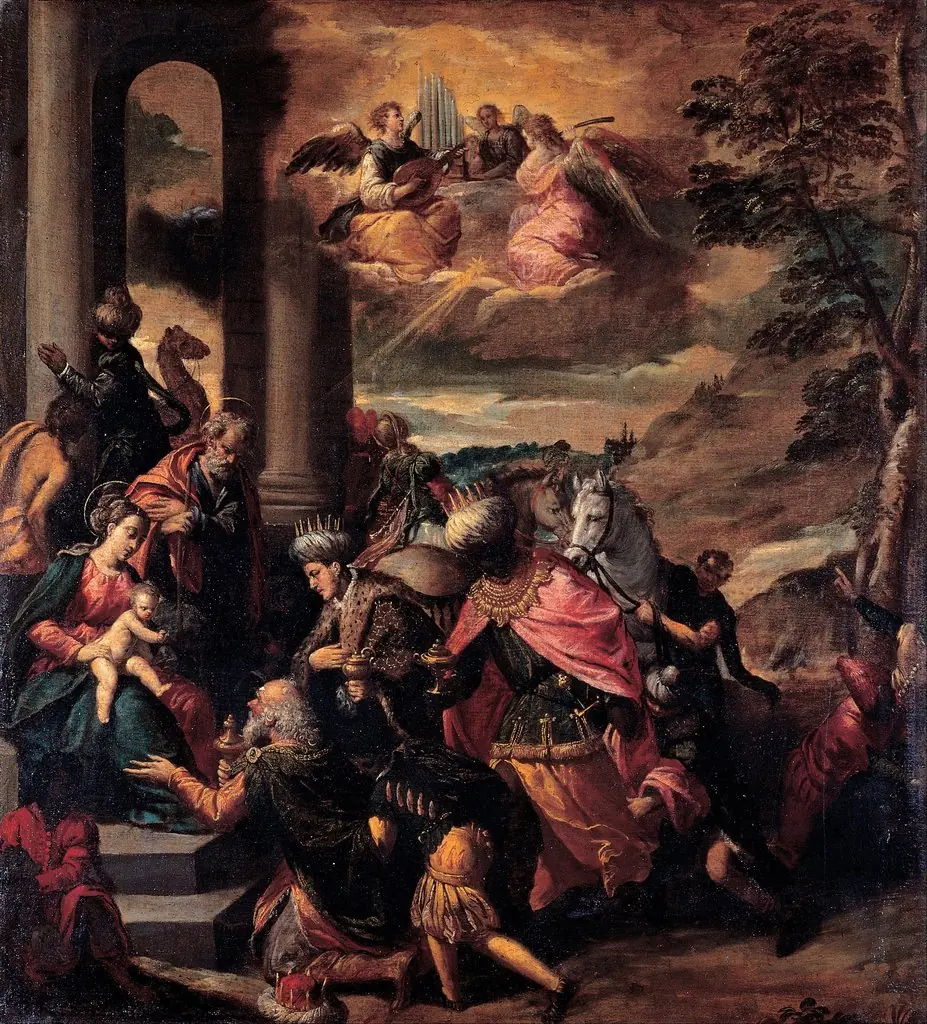 Adoration of the Magi
 Martyrium der hl. Justina
 Verkündigung Mariae
 The Adoration of the Shepherds
 Christ and the Woman Taken in Adultery
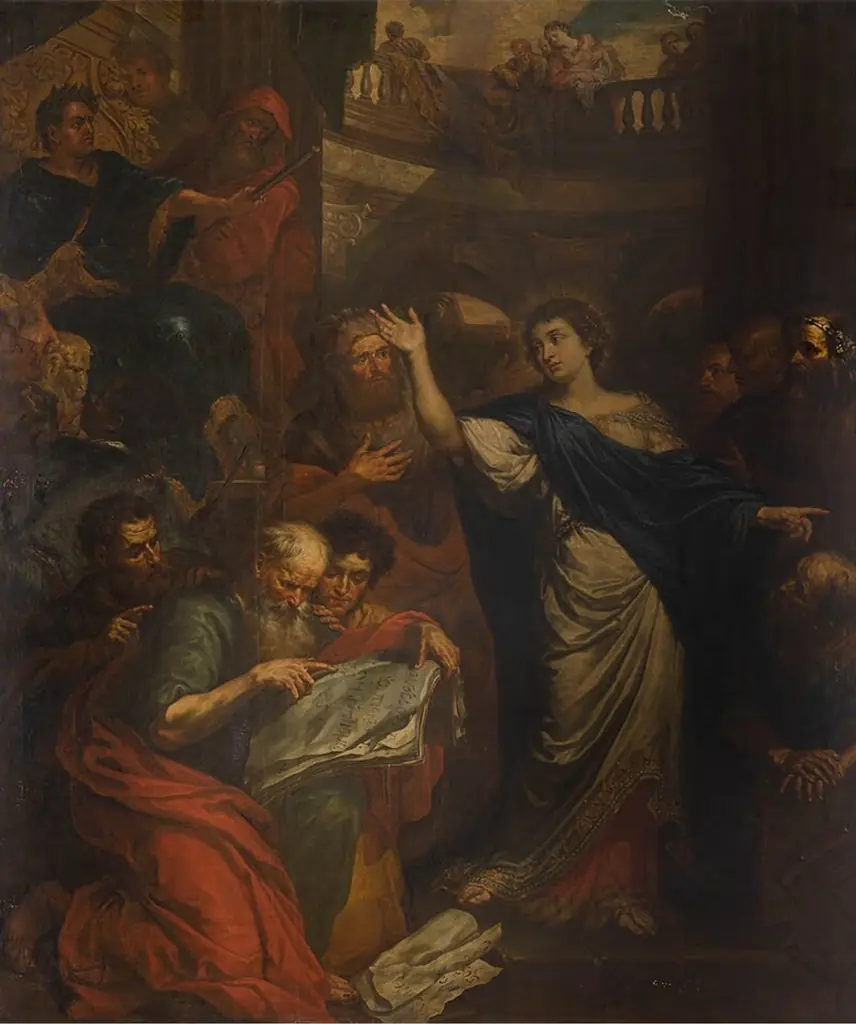 Saint Catherine of Alexandria in discussion with the fifty philosophers