Artwork
Cairo
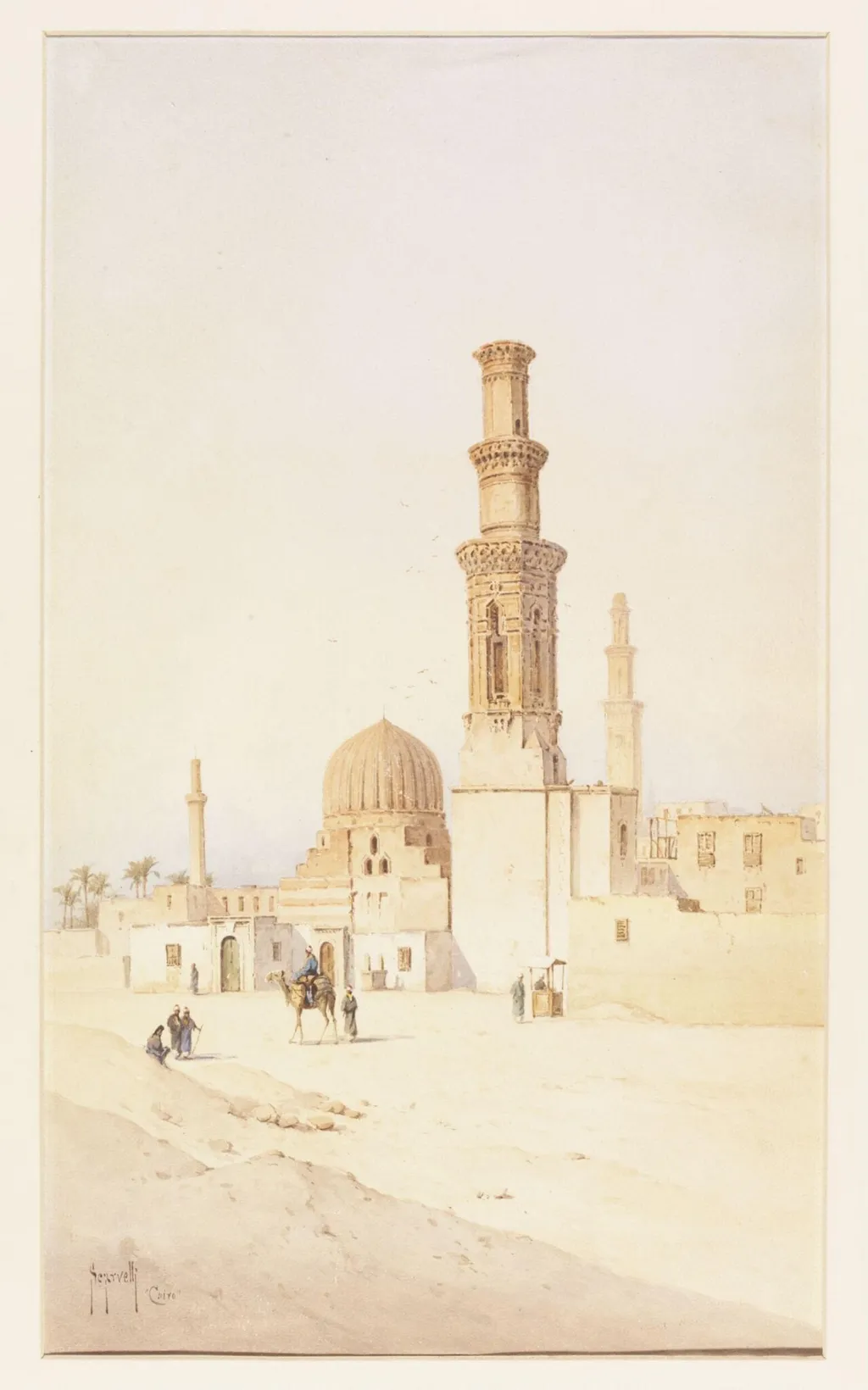
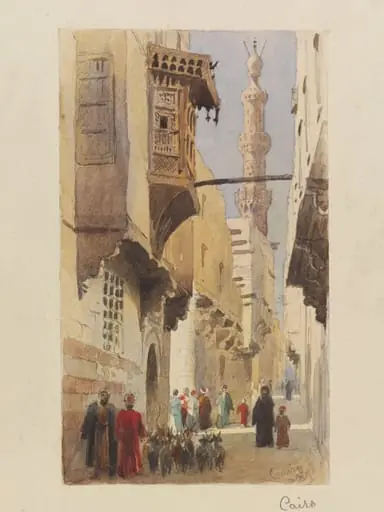
Cairo is a watercolor work on paper by Spyrodon Scarvelli. It dates from 1900 and is held in the collection of the Victoria and Albert Museum.
About this work
Overview
Jarvis in 1927 by colleagues from the Egyptian State Telegraphs & Telephones as a farewell gesture upon his departure.
Cairo is a watercolour painting by Spyrodon Scarvelli, completed around 1900. It depicts a sunlit urban street scene in Egypt, rendered with delicate washes to capture the quality of light. The work was given to J.W. Jarvis in 1927 by colleagues from the Egyptian State Telegraphs & Telephones as a farewell gesture upon his departure. It later entered the art market through a Christie’s auction in 1974, where it was acquired for £21.
Subject & Meaning
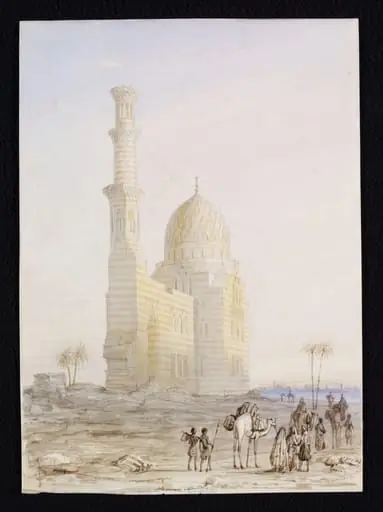
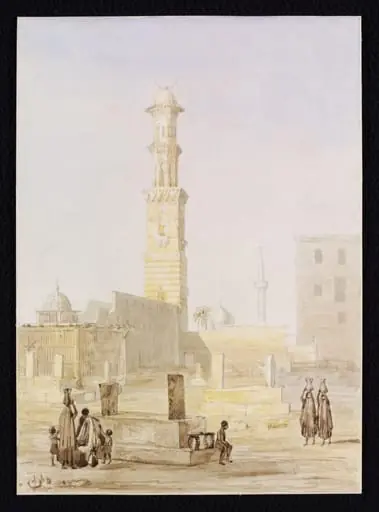
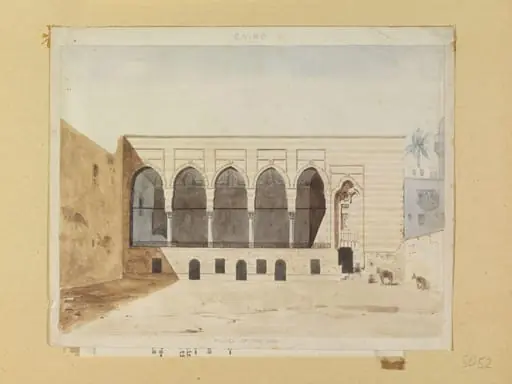
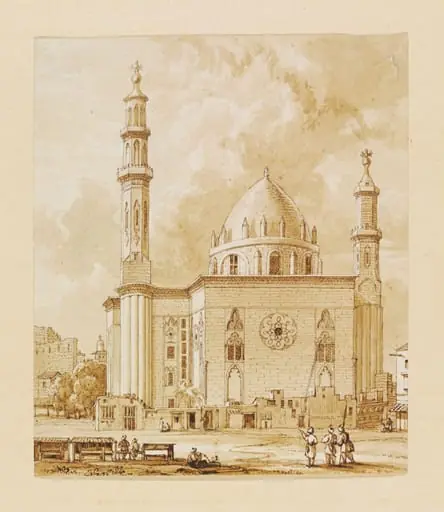
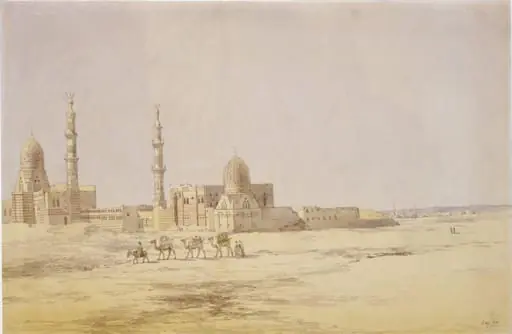
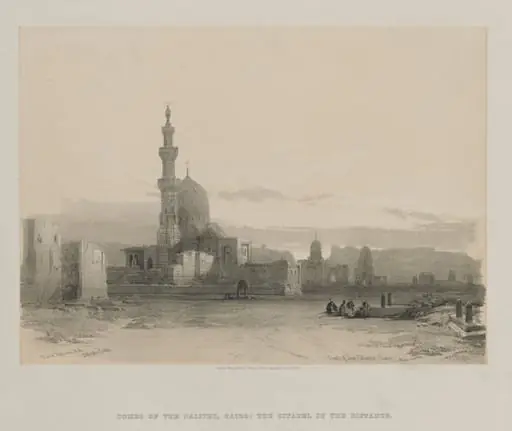
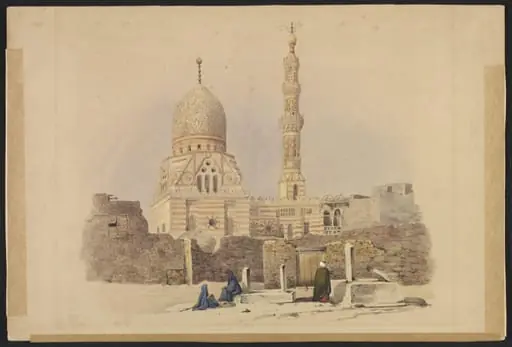
The scene portrays a narrow, sandy thoroughfare lined with flat-roofed buildings featuring small windows, suggesting a residential or commercial quarter in historic Cairo. A prominent tower with carved details and a dome rises in the distance, likely referencing a mosque or religious structure. Figures on foot and atop a camel indicate daily life, grounding the image in the rhythms of urban existence rather than idealized spectacle.
Technique & Style
Scarvelli employed transparent watercolour washes to model form and atmosphere, allowing the paper’s white to suggest highlights and the dry climate. Soft transitions between tones convey the intensity of sunlight without harsh lines. The composition is observational rather than dramatic, emphasizing spatial depth through receding architecture and subtle gradations of colour, typical of travel sketches from the period.
History & Provenance
The painting remained in the possession of J.W. Jarvis until it was sold at Christie’s in February 1974. Its earlier history before 1927 is undocumented, though its presentation to Jarvis suggests it was created during his time in Egypt. The modest auction price reflects its status as a personal memento rather than a major artistic statement at the time of sale.
Context
Scarvelli’s work aligns with a tradition of British and European artists documenting Egyptian landscapes during the late 19th and early 20th centuries. These sketches often served as visual records for colonial administrators, engineers, and travelers. The focus on architecture and everyday movement, rather than exoticism, reflects a more restrained, documentary approach common among non-professional artists working abroad.
Legacy
Though not widely exhibited or studied, Cairo exemplifies the quiet, personal nature of colonial-era travel art. Its survival and eventual entry into the auction market underscore how such works, once intimate gifts, later entered broader cultural circulation. The painting contributes to a lesser-known corpus of watercolours that quietly document urban life in Egypt beyond official narratives.
Artist & collection
Artist
Spyrodon Scarvelli painted quiet urban scenes in watercolour around the turn of the 20th century.

![Egypt and Nubia, Volume III: Tombs of the Caliphs-Cairo. Mosque of Ayed Be[y], by Louis Haghe](https://artifactworldgallery.com/img/louis-haghe--egypt-and-nubia-volume-iii-tombs-of-the-caliphs-cairo-mosque--9062e89e981f8684-w320.webp)