Artwork
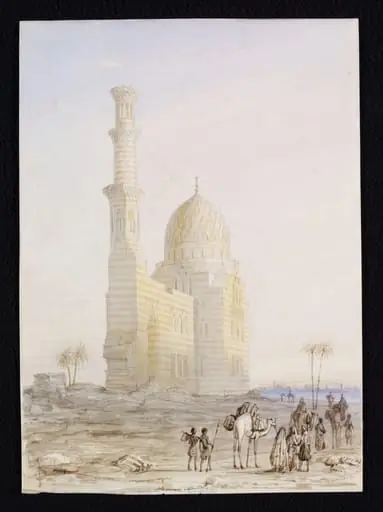
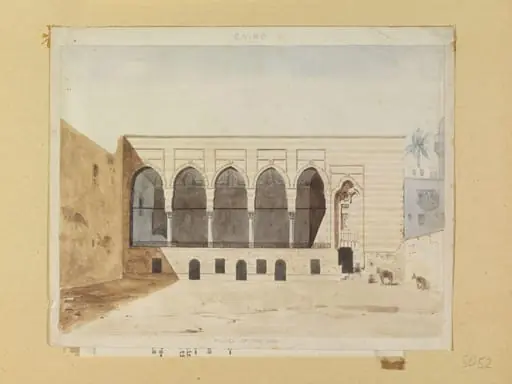
Mosk of Kaed Bey Cairo -
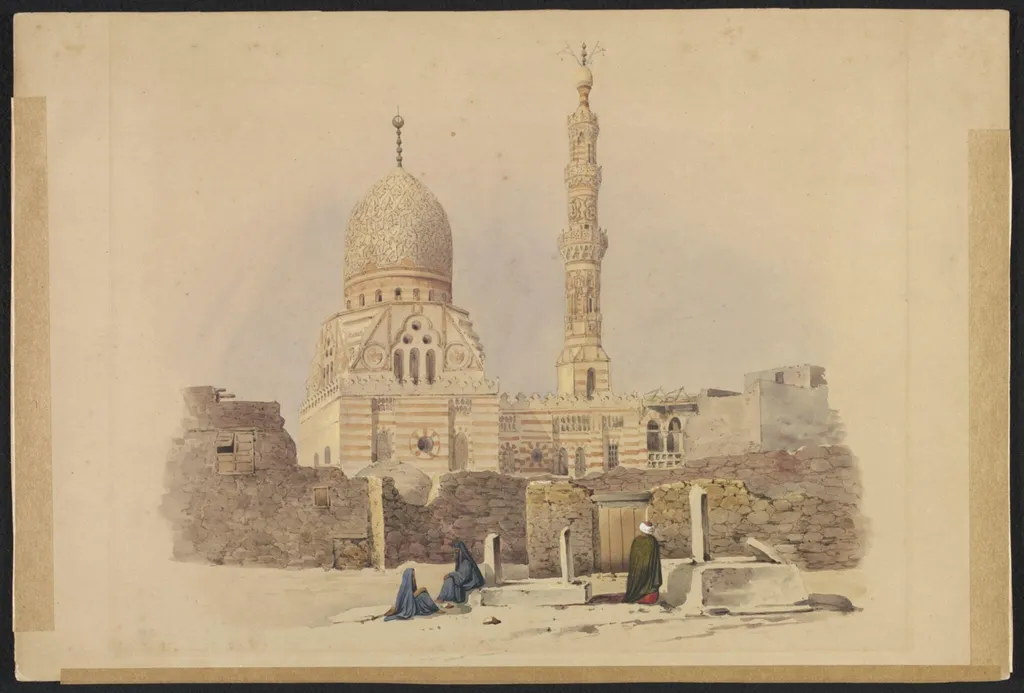
Mosk of Kaed Bey Cairo - is a watercolor work on paper by the Orientalist artist Antonio or Anton Schranz. It dates from 1801 and is held in the collection of the Victoria and Albert Museum.
About this work
Overview
This watercolour, created in 1801 by Antonio or Anton Schranz (Jr), captures the Madrasah and Mausoleum of Sultan Qayt-Bay in Cairo’s Eastern Cemetery.
This watercolour, created in 1801 by Antonio or Anton Schranz (Jr), captures the Madrasah and Mausoleum of Sultan Qayt-Bay in Cairo’s Eastern Cemetery. Rendered in delicate washes, the work reflects early 19th-century European interest in Mamluk architecture. The composition emphasizes architectural detail against a backdrop of decay, suggesting a contemplative engagement with time and ruin. The piece was once in the collection of C. Powney before entering the art market in 1966.
Subject & Meaning
The scene centers on the monumental complex built by Sultan Qayt-Bay in the 15th century, a symbol of Mamluk power and piety. In the foreground, scattered ruins and three seated figures evoke abandonment and quiet observation. The contrast between the intact, ornate structure behind and the crumbling stones ahead implies a meditation on impermanence, aligning with Romantic-era sensibilities toward historical decay and the passage of time.
Technique & Style
Executed in watercolour, the work employs soft, translucent layers to suggest atmospheric depth and texture. Earthy ochres, muted blues, and pale greys dominate, enhancing the sense of age and stillness. Architectural elements like the dome’s geometric patterns and the minaret’s carved stonework are rendered with precision, while the foreground ruins are loosely brushed, creating a visual tension between clarity and erosion.
History & Provenance
The watercolour was owned by C. Powney prior to its sale in October 1966, as documented by Rodney Searight. Its journey through private hands reflects the 19th- and 20th-century European collecting of Orientalist and topographical art. The artist, Antonio or Anton Schranz (Jr), was part of a generation of travellers who recorded Middle Eastern monuments, contributing to Western visual archives of Islamic architecture during a period of increasing archaeological interest.
Context
Created during the early years of European exploration in Egypt, the work emerges amid growing fascination with Islamic heritage following Napoleon’s campaign. Artists like Schranz documented monuments before widespread restoration or destruction, offering records valued for their observational accuracy. The inclusion of human figures in ruins aligns with contemporary European conventions that framed ancient sites as evocative, melancholic landscapes.
Legacy
The watercolour stands as a modest but significant example of early 19th-century topographical art, preserving a visual record of Qayt-Bay’s complex before modern interventions. It contributes to a broader corpus of European renderings of Islamic architecture, offering insight into how Western observers interpreted and valued non-European heritage. Its quiet composition continues to inform historical understanding of Cairo’s architectural landscape.
Artist & collection
Artist
Antonio Schranz made watercolours of Egyptian and Levantine sites in the 1830s–40s.

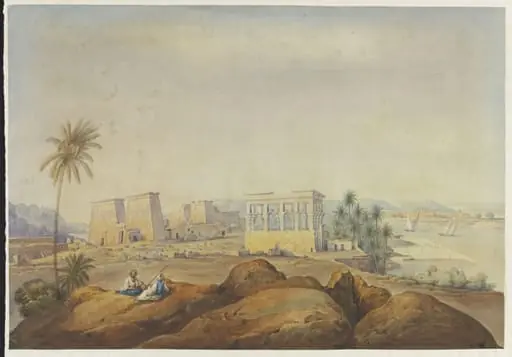 The Temple of Isis and Kiosk of Trajan on the Island of Philae
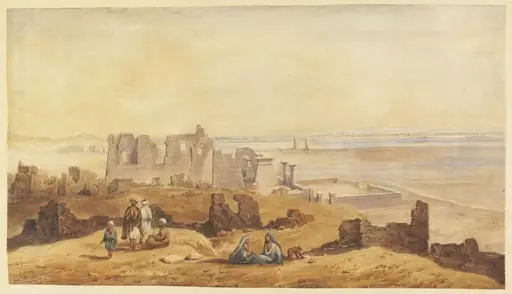 Luxor: the West Bank, with the Temple of Ramesses III at Madinat Habu; looking east towards the Nile
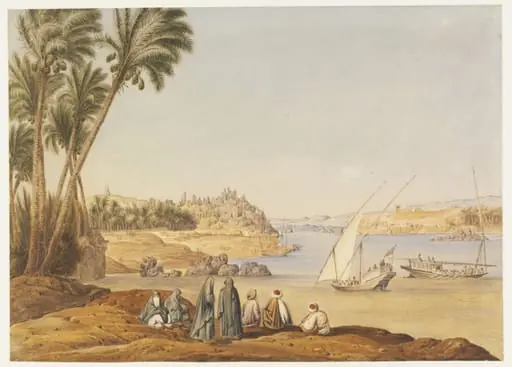 Aswan; looking south up the Nile
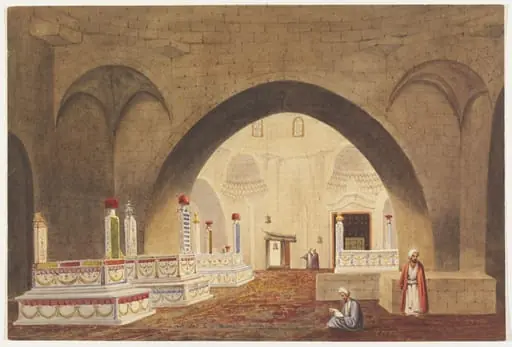 Mausoleum of Mehmet Ali and his family at Cairo
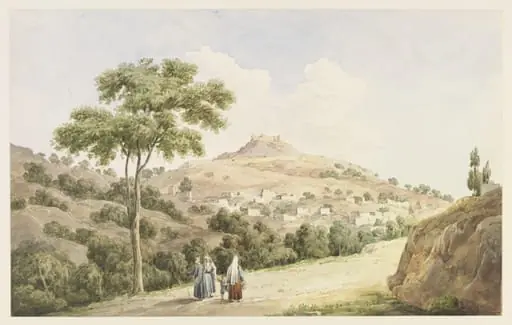 Saffed
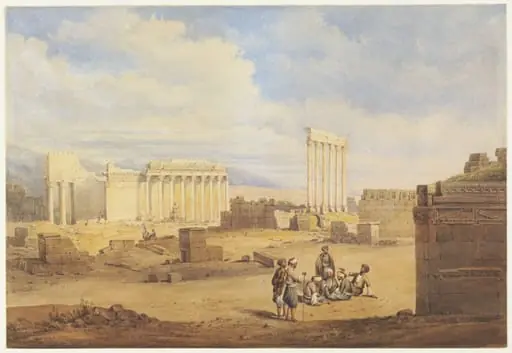 Baalbek
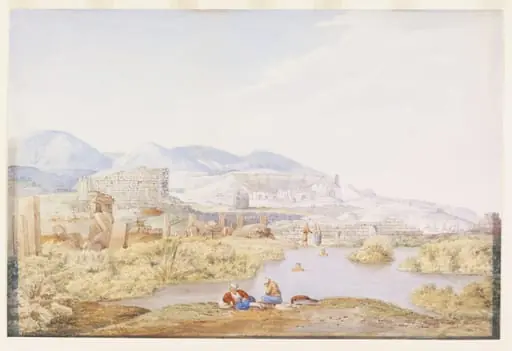 Hierapolis - Natural Hot Spring. Phrygia
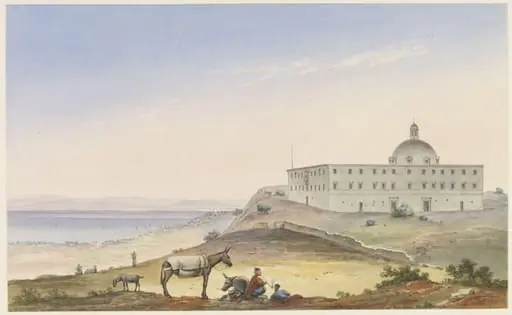 Convent on Mount Carmel
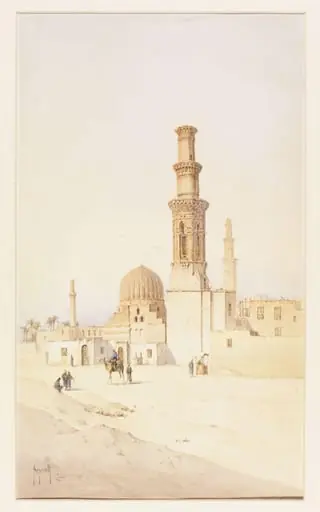 Cairo
Cairo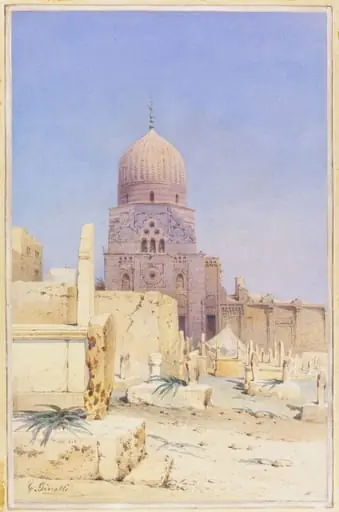 Mosque/Tomb in Cairo
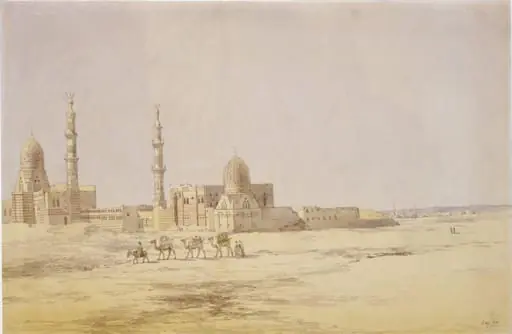 Tombs of the Khalifs, Cairo
 Tomb near Cairo
![Egypt and Nubia, Volume III: Tombs of the Caliphs-Cairo. Mosque of Ayed Be[y], by Louis Haghe](https://artifactworldgallery.com/img/louis-haghe--egypt-and-nubia-volume-iii-tombs-of-the-caliphs-cairo-mosque--9062e89e981f8684-w320.webp) Egypt and Nubia, Volume III: Tombs of the Caliphs-Cairo. Mosque of Ayed Be[y]
Egypt and Nubia, Volume III: Tombs of the Caliphs-Cairo. Mosque of Ayed Be[y]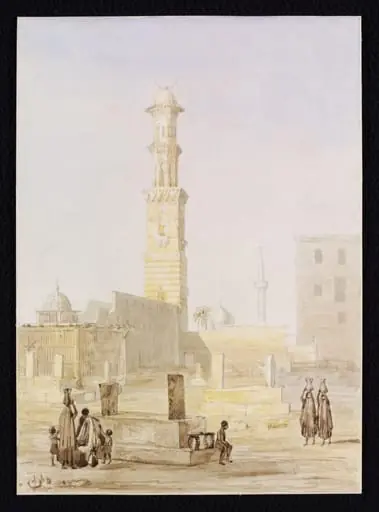 Tombs near Cairo
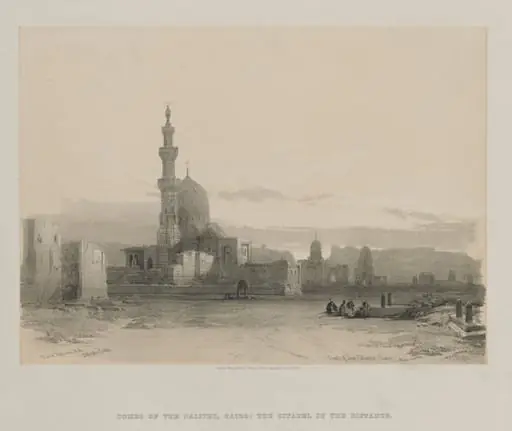 Egypt and Nubia, Volume III: Tombs of the Caliph's, Cairo
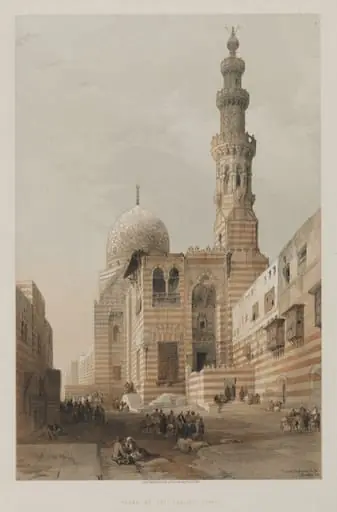 Egypt and Nubia, Volume III: Tombs of the Khalifs, Cairo
 Cairo: Palace of the Cadi
![Cairo, the Nile, and the Pyramids of Gizeh. from the Moccat[e]m, by Unknown](https://artifactworldgallery.com/img/unknown--cairo-the-nile-and-the-pyramids-of-gizeh-from-the-moccat-e-m--6e7774624f6a7e54-w320.webp) Cairo, the Nile, and the Pyramids of Gizeh. from the Moccat[e]m
Cairo, the Nile, and the Pyramids of Gizeh. from the Moccat[e]m Cairo
Cairo