Artwork
Virgin on a Crescent with a Starry Crown
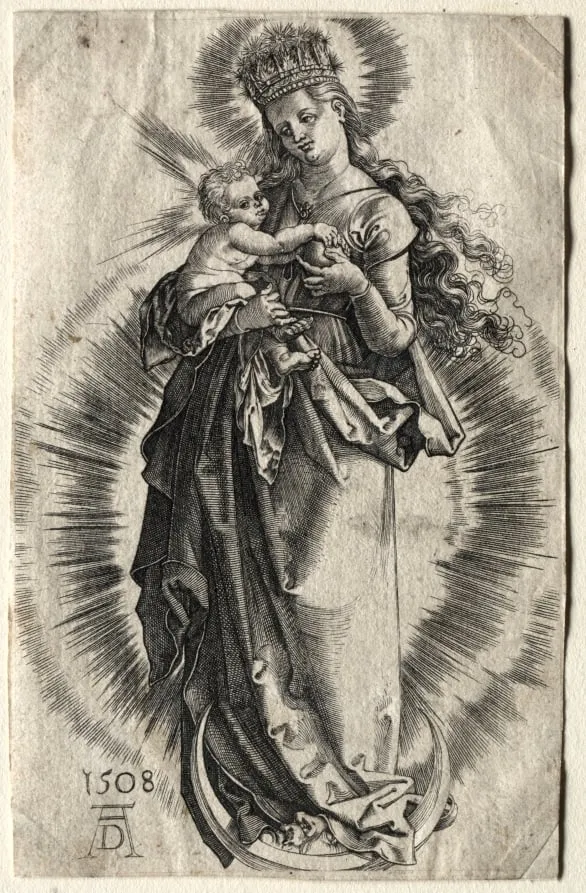
Virgin on a Crescent with a Starry Crown is a print by the Renaissance artist Albrecht Dürer. It dates from 1504 and is held in the collection of the Cleveland Museum of Art.
About this work
The date "1508" is stamped in the corner, showing this was made in the early 1500s.
This is a black-and-white print of a woman holding a small child. She wears a long, flowing robe and a crown made of stars. The woman’s face looks calm, and the baby reaches toward her. Behind them, light rays burst outward like sunbeams.
The woman stands on a crescent moon, which is a common symbol in religious art. The date "1508" is stamped in the corner, showing this was made in the early 1500s.
If you like this style, look up Renaissance.
Overview
Created in 1508, this black-and-white print by Albrecht Dürer portrays the Virgin Mary standing atop a crescent moon, adorned with a halo of stars. Executed in the medium of engraving, it reflects Dürer’s precision and control over line and tone. Though often associated with painting, Dürer’s reputation was largely built on his prints, which circulated widely across Europe and influenced artistic conventions beyond Germany.
Subject & Meaning
The image draws from traditional Marian iconography, particularly the Woman of the Apocalypse described in Revelation. Mary’s position on the crescent moon and her star-studded crown symbolize purity, divine favor, and triumph over chaos. The infant Jesus reaches toward her, suggesting both human tenderness and spiritual connection. The radiating light behind them evokes heavenly presence without depicting a literal sun or divine figure.
Technique & Style
Dürer employed fine, controlled engraving lines to render texture, volume, and light. The contrast between the dark, detailed folds of Mary’s robe and the delicate radiance of the halo demonstrates his technical mastery. Facial expressions are restrained, emphasizing serenity over drama. The composition is tightly framed, focusing attention on the figures while the crescent moon anchors the verticality of the scene.
History & Provenance
The print was produced during Dürer’s mature period, shortly after his second trip to Italy, where he absorbed Renaissance ideals of proportion and symbolism. It entered the collection of The Cleveland Museum of Art in the 20th century, having passed through several private European collections. Its survival in good condition reflects its enduring value among collectors of Northern Renaissance prints.
Context
In early 16th-century Europe, devotional imagery of the Virgin was widespread, especially in print form, due to rising literacy and the Reformation’s emphasis on personal piety. Dürer’s work aligned with both Catholic devotional trends and humanist interests in classical harmony. His integration of Italian compositional principles into Northern traditions helped bridge regional artistic styles during a period of intense cultural exchange.
Legacy
This print exemplifies how Dürer elevated printmaking from craft to a respected art form. His precise technique and symbolic depth influenced generations of Northern European artists. Though not among his most famous works, it remains a clear example of how religious themes were rendered with intellectual rigor and emotional restraint, contributing to the broader visual language of the Renaissance.
Artist & collection
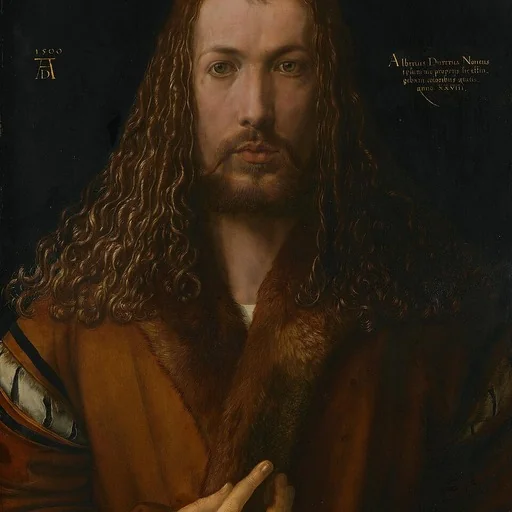
Artist
Albrecht Dürer spent his life in Nuremberg, a busy German city where artists traded prints like currency.

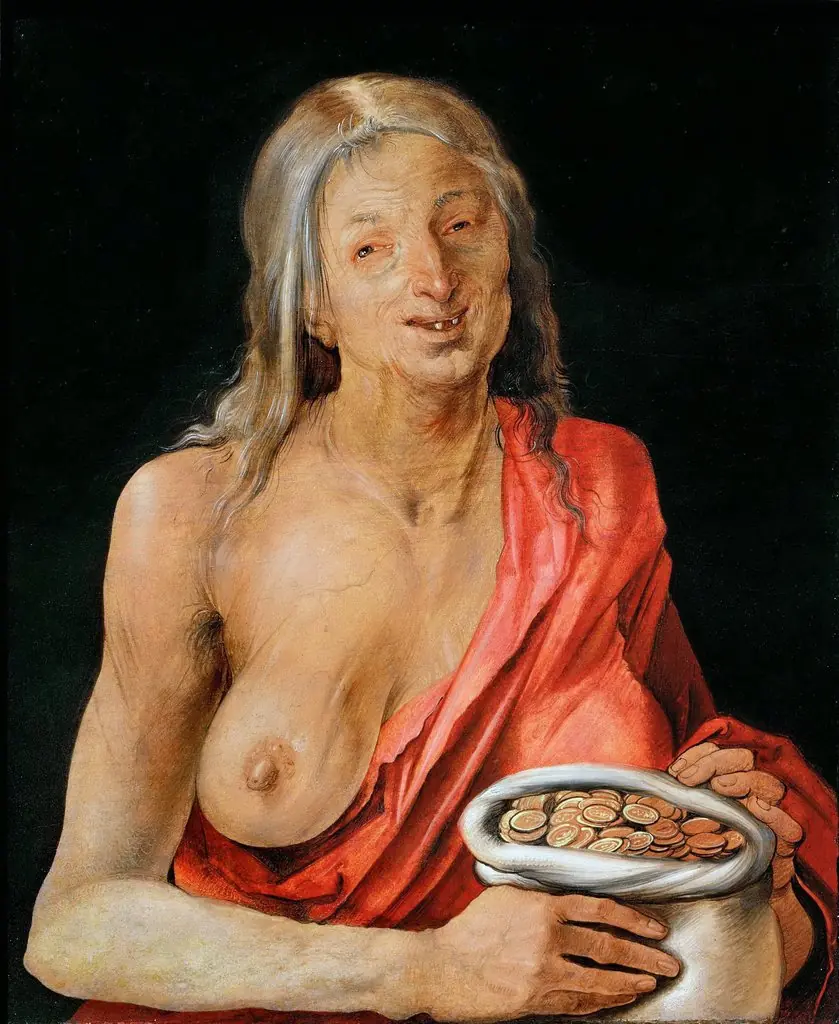
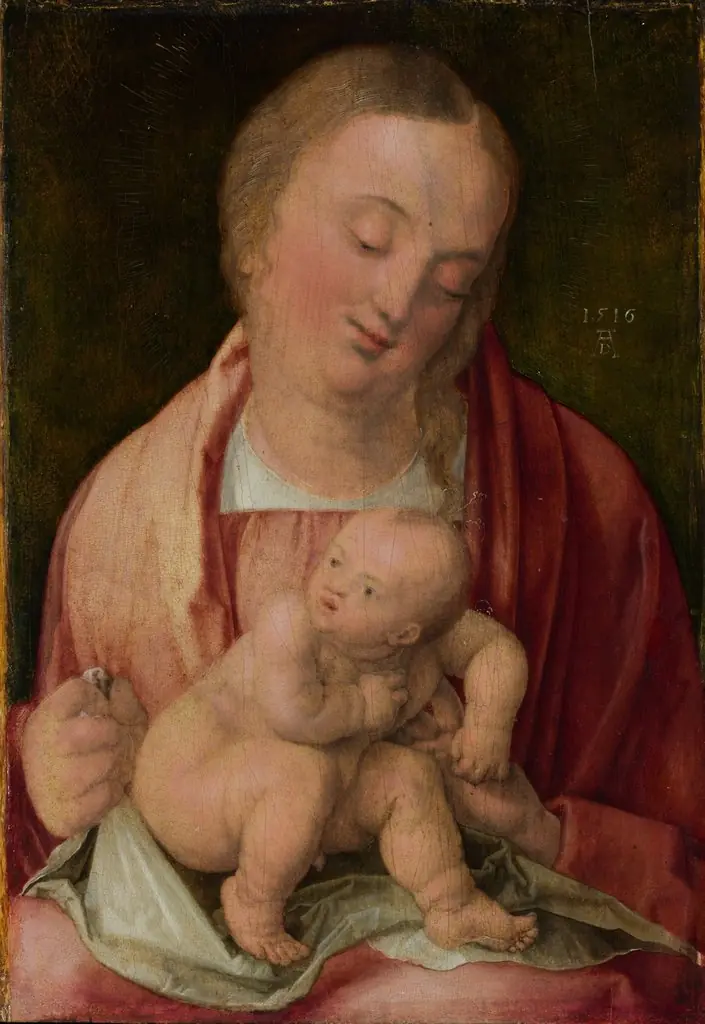
![Madonna and Child [obverse], by Albrecht Dürer](https://artifactworldgallery.com/img/albrecht-durer--madonna-and-child-obverse--d7b8ebf05d22ebe5-w320.webp)
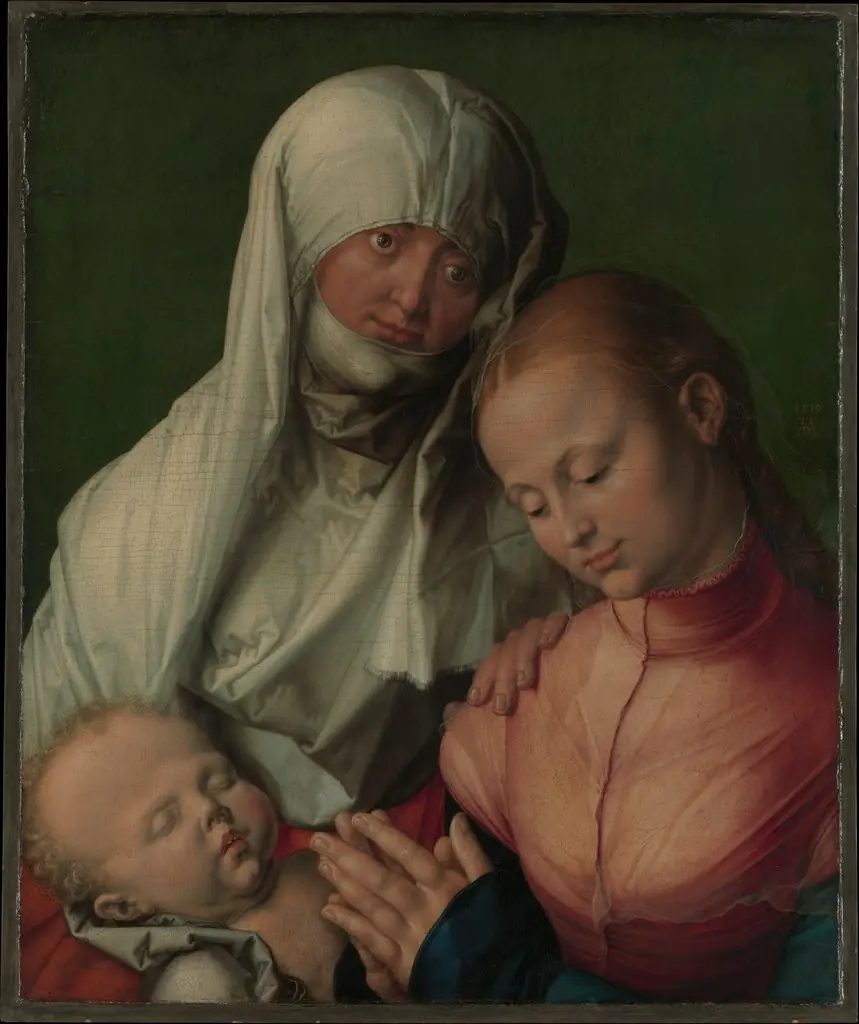
![Lot and His Daughters [reverse], by Albrecht Dürer](https://artifactworldgallery.com/img/albrecht-durer--lot-and-his-daughters-reverse--b4ebf9b282faa17a-w320.webp)
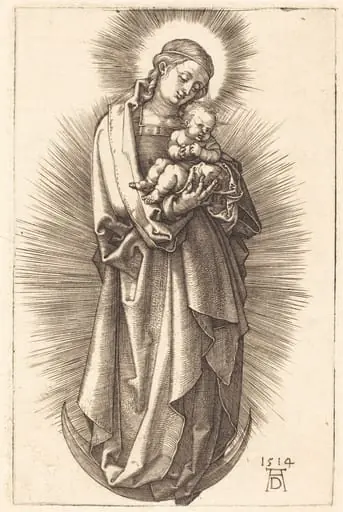 The Virgin and Child on a Crescent with a Diadem
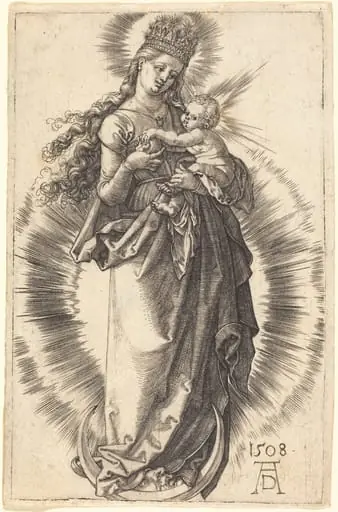 The Virgin and Child on a Crescent with a Starry Crown
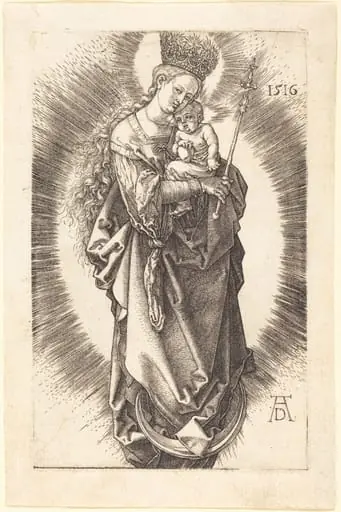 The Virgin and Child on a Crescent with a Sceptre and a Starry Crown
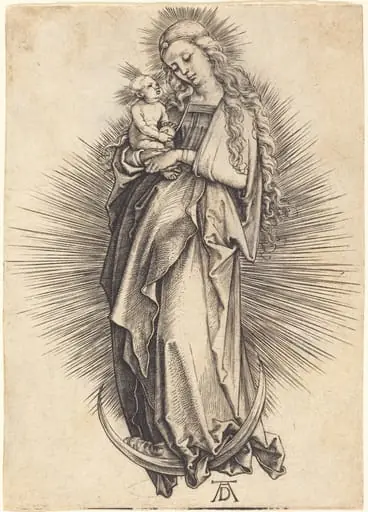 The Virgin on the Crescent
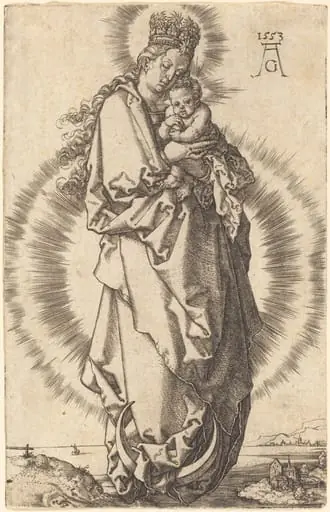 The Virgin with the Child on the Crescent
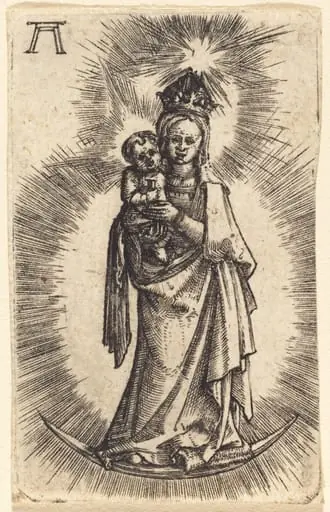 The Virgin on the Crescent
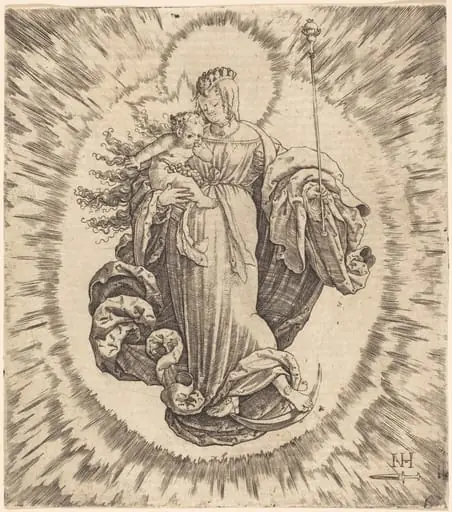 Madonna on a Crescent
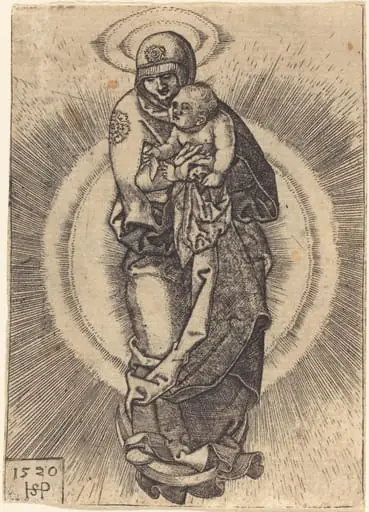 The Virgin and Child on the Crescent
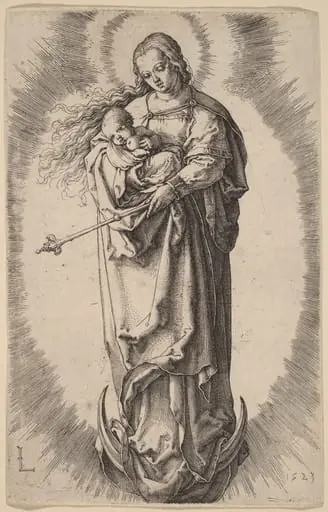 The Virgin and Child on the Crescent
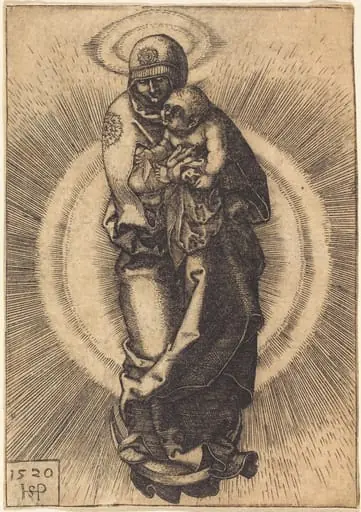 The Virgin and Child on the Crescent
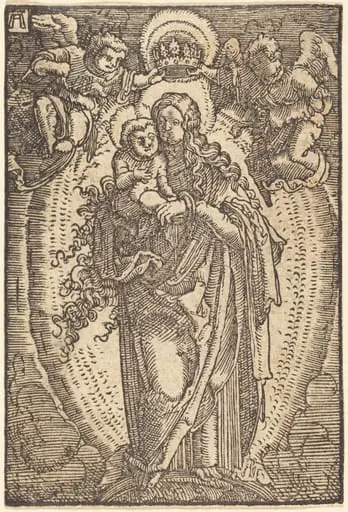 The Virgin and Child on a Crescent
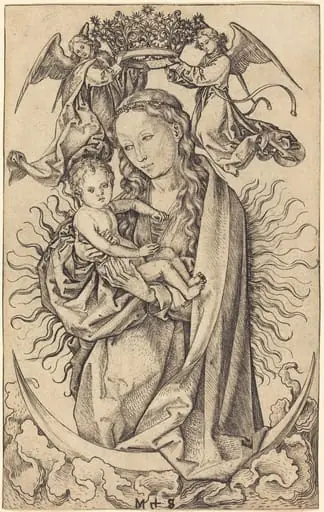 Madonna on the Crescent