Artwork
Saint Philip
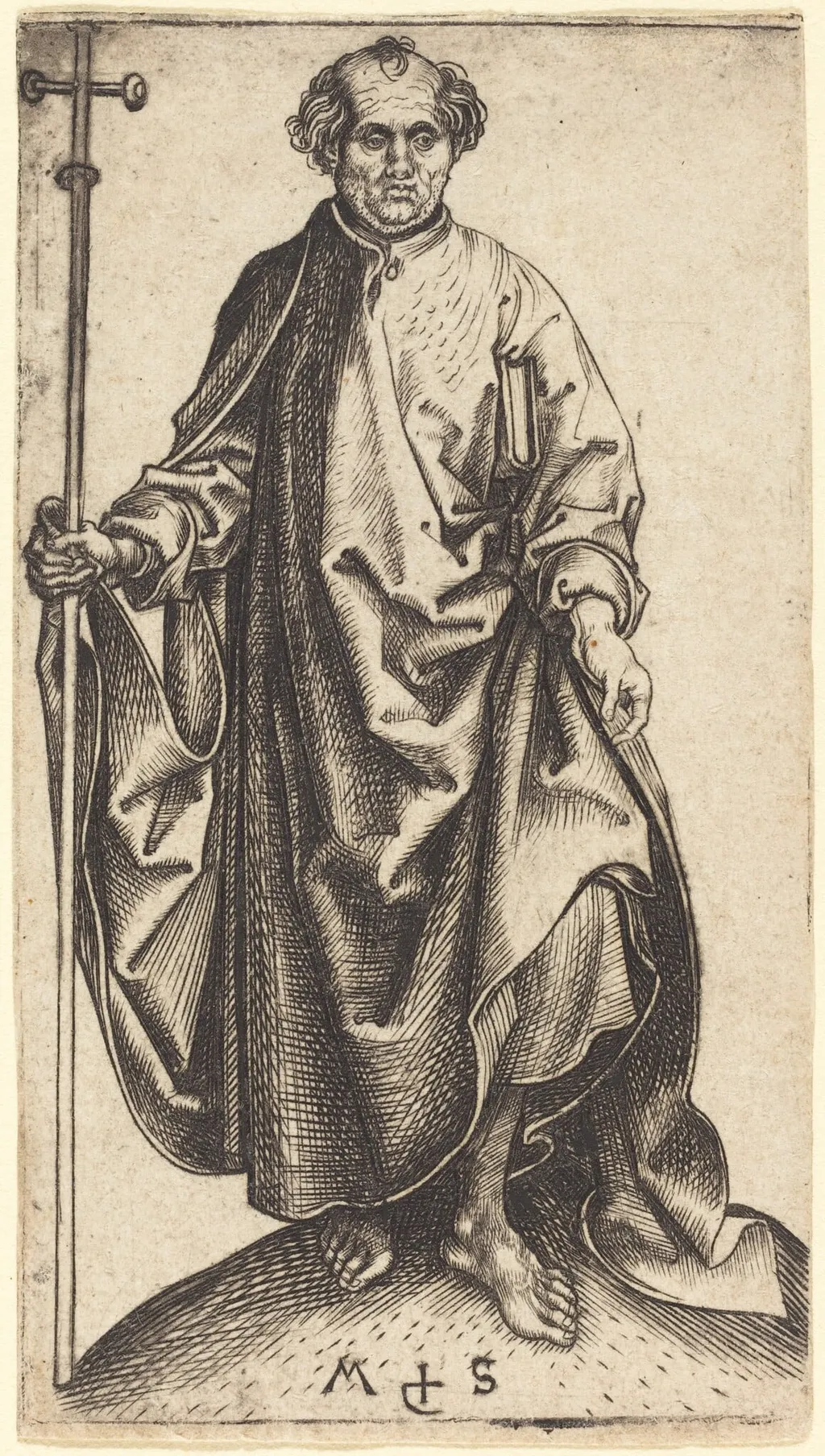
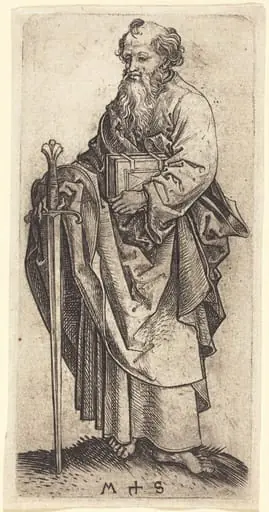
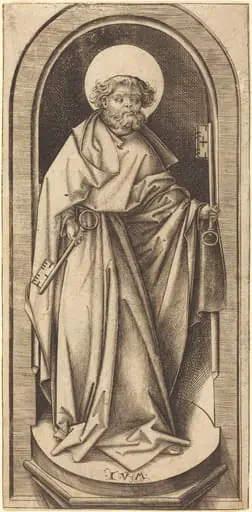
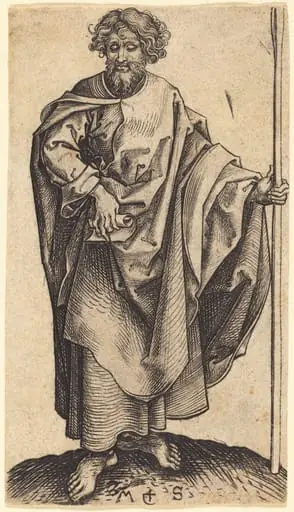
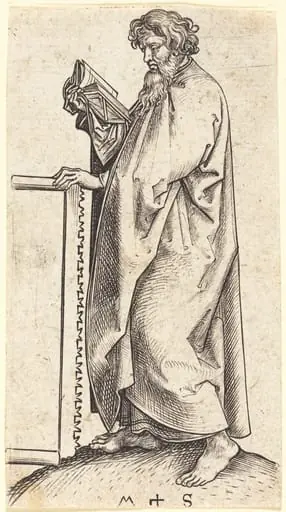
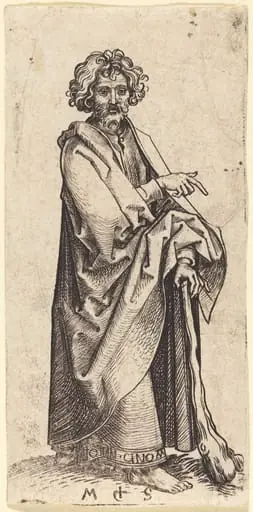
Saint Philip is an ink print by the Renaissance artist Martin Schongauer. It dates from 1480 and is held in the collection of the National Gallery of Art.
About this work
Overview
Created circa 1480, this engraving portrays a solitary figure, traditionally identified as Saint Philip, standing upon a rugged ledge. The saint is shown in a long robe with a draped cloak, holding a staff in his right hand, his expression solemn and his hair rendered in loose curls. The composition conveys a mood of quiet contemplation.
Subject & Meaning
The image presents the apostle Philip in a moment of introspection, suggested by his downward gaze and the austere landscape that isolates him. The staff, a common attribute of saints, reinforces his ecclesiastical identity, while the stark setting underscores themes of spiritual solitude and devotion.
Technique & Style
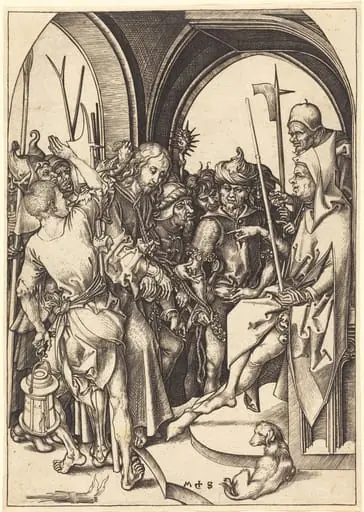
Executed in fine copper engraving, the work demonstrates Schongauer’s command of cross‑hatching to model form and generate tonal depth. The intricate lines create a textured surface that distinguishes fabric, hair, and rock, producing a subtle gradation of light and shadow characteristic of late‑15th‑century Northern European printmaking.
History & Provenance
The print belongs to a corpus of 116 engravings signed with Schongauer’s monogram, reflecting his status as the pre‑eminent German printmaker before Albrecht Dürer. Trained as a goldsmith, Schongauer applied his meticulous metalworking skills to the medium, establishing a substantial body of work that circulated widely across Europe in the late medieval period.
Artist & collection

Artist
Martin Schongauer, also known as Martin Schön or Hübsch Martin by his contemporaries, was an Alsatian engraver and painter.