Artwork
Saint Peter
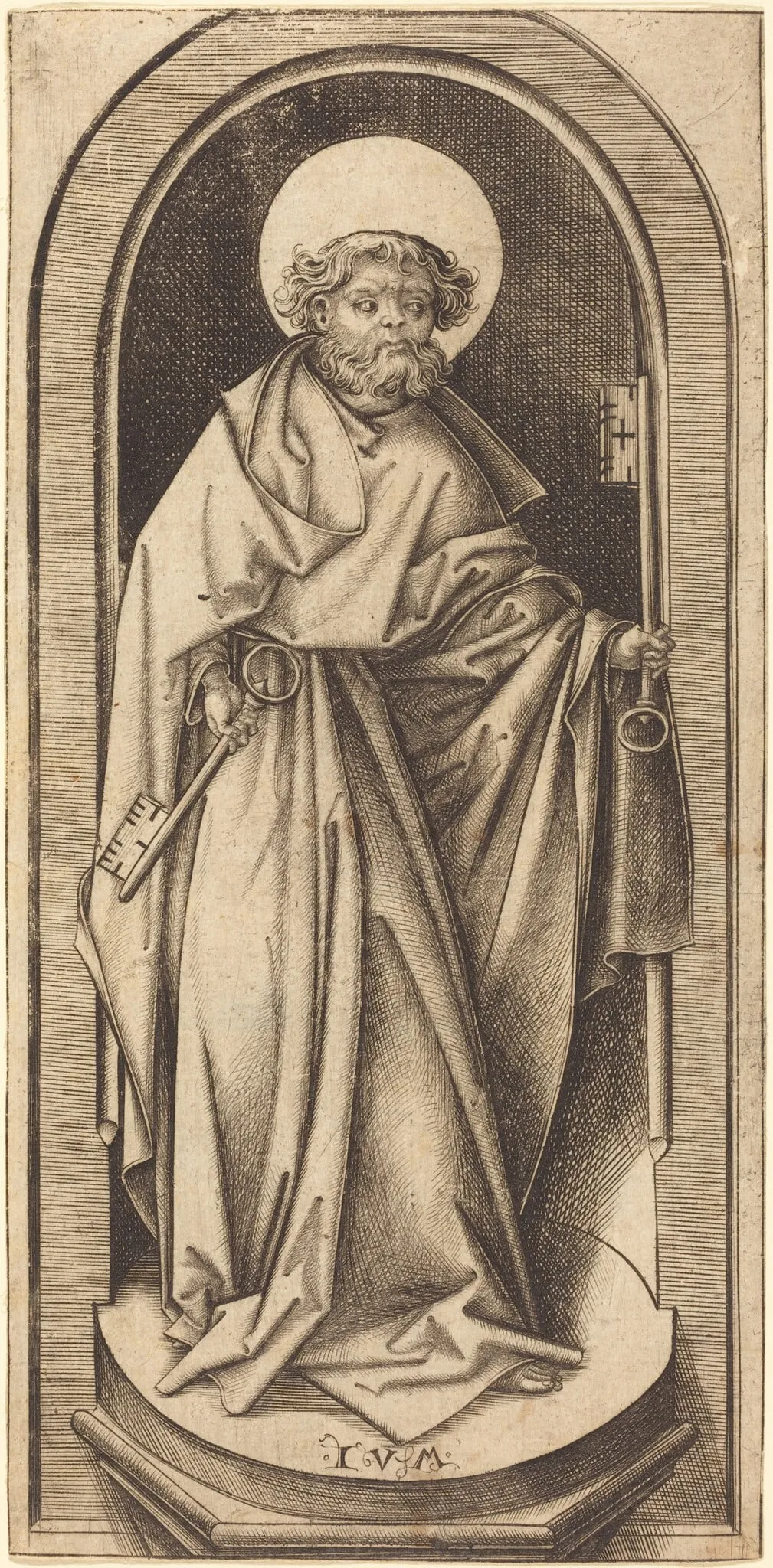
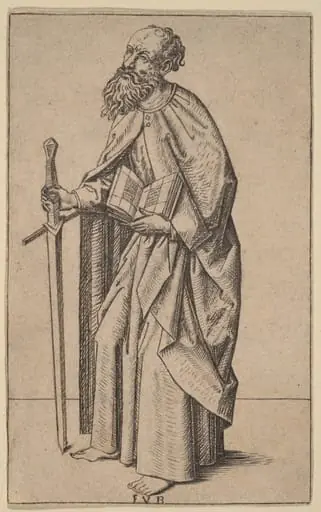
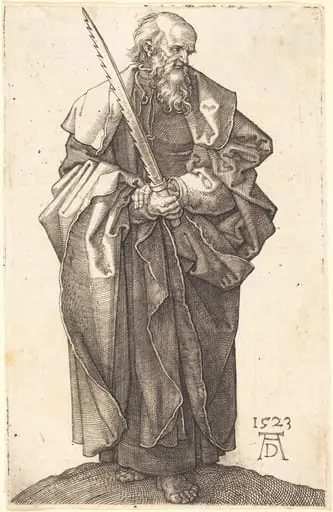
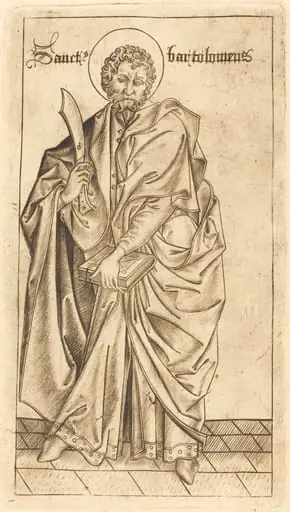
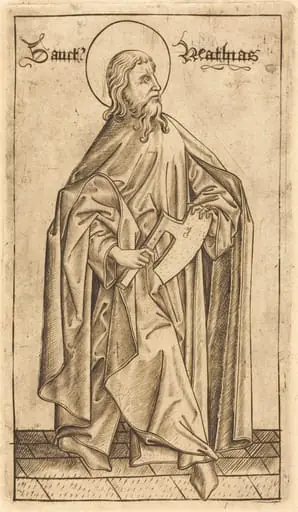
Saint Peter is an ink print by the Renaissance artist Israhel van Meckenem. It dates from 1496 and is held in the collection of the National Gallery of Art.
About this work
Overview
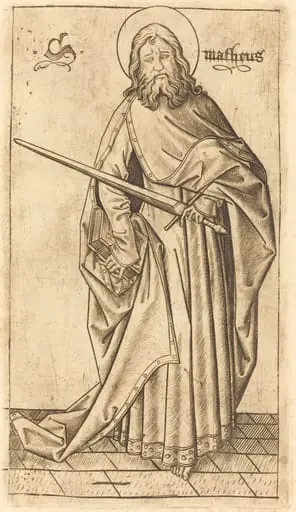
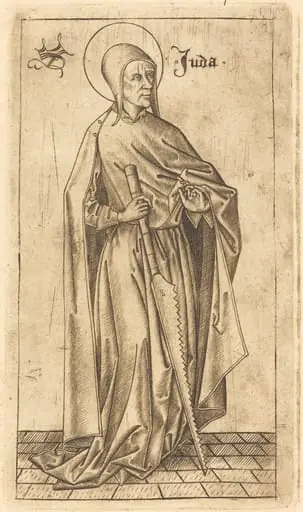
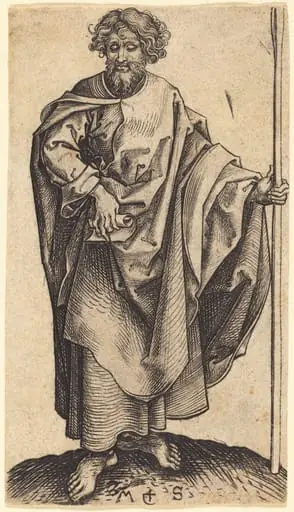
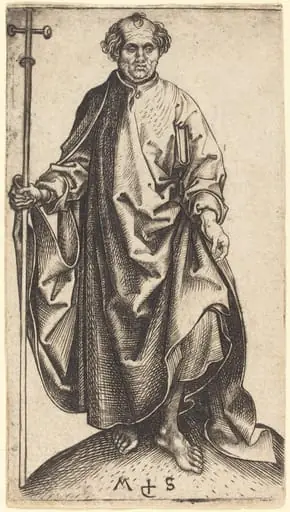
Around 1496 Israhel van Meckenem, a German goldsmith and printmaker, produced an engraving titled Saint Peter. Executed in black-and-white, the image shows a bearded, haloed figure in a long robe, holding a large key in each hand, with a faint cross visible behind him in a doorway.
Subject & Meaning
The work portrays the apostle Peter, whose authority in Christian tradition is symbolized by the keys of heaven. The halo identifies the figure as a saint, while the cross in the background reinforces his biblical significance.
Technique & Style
Meckenem employed the traditional engraving process, incising fine lines into a metal plate to achieve delicate shading and texture. The crisp linear quality and careful hatching are characteristic of late‑15th‑century German printmaking.
History & Provenance
Israhel van Meckenem was the most prolific engraver of the fifteenth century, creating over six hundred prints, many of which were copies of earlier compositions. Saint Peter is among his original religious prints, reflecting his active period from 1465 to 1503.
Context
The image belongs to the broader genre of devotional prints that circulated widely in the late medieval period, serving both as objects of personal piety and as visual aids for the faithful.
Artist & collection
Artist
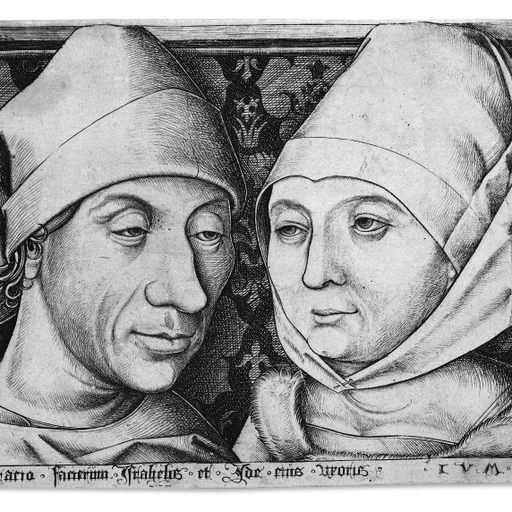
Israhel van Meckenem (c. 1445 – 10 November 1503), also known as Israhel van Meckenem the Younger, was a German printmaker and goldsmith, perhaps of a Dutch family origin. He was the most prolific engraver of the…