Artwork
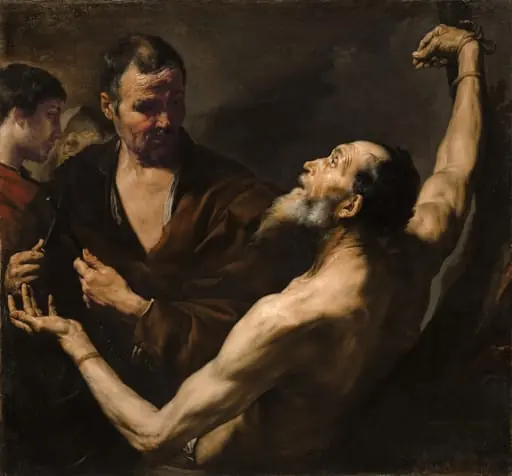
The Martyrdom of Saint Bartholomew
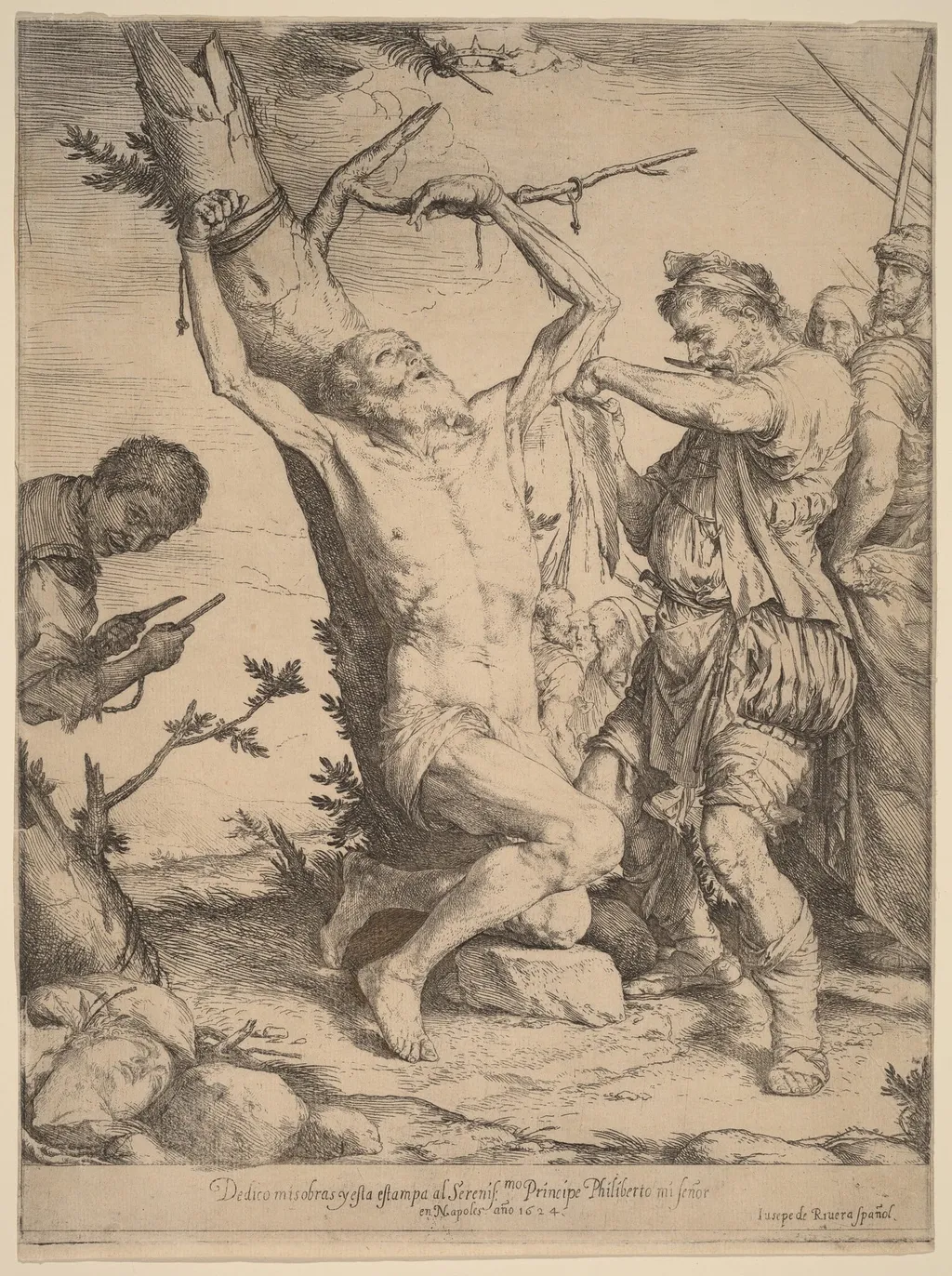
The Martyrdom of Saint Bartholomew is an ink print by the Baroque artist Jusepe de Ribera. It dates from 1624 and is held in the collection of the National Gallery of Art.
About this work
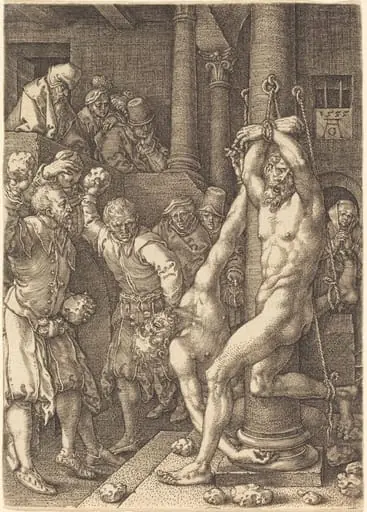
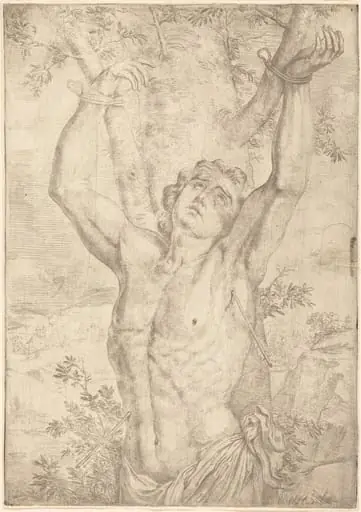
This print shows a man with a wild beard being lifted up by others while clutching a tree branch.
This print shows a man with a wild beard being lifted up by others while clutching a tree branch. Around him, a crowd of figures in loose robes watches, some holding sticks or pointing. The scene looks rough—rocks, tangled vines, and a stormy sky fill the background.
The artist signed it in the corner, noting it was made in 1624 for a prince. The lines are sharp and detailed, typical of prints made with metal plates.
Next, check out etching to see how this kind of print was made.
Overview
The Martyrdom of Saint Bartholomew is a 1624 print by Jusepe de Ribera, a prominent Spanish Baroque artist based in Naples, created using etching and engraving techniques on laid paper.
Subject & Meaning
The print graphically depicts the brutal execution of Saint Bartholomew, a subject typical of the religious genre prevalent during the era, reflecting the strong emphasis on devotional themes.
Technique & Style
Characterized by sharp, detailed lines, the work showcases Ribera's mastery of metal plate printing. The composition features dramatic realism and tenebrism, hallmarks of Ribera's style, set against a turbulent background.
History & Provenance
Signed by the artist and dated 1624, the print was specifically created for a prince, indicating its patronage and intended audience.
Artist & collection
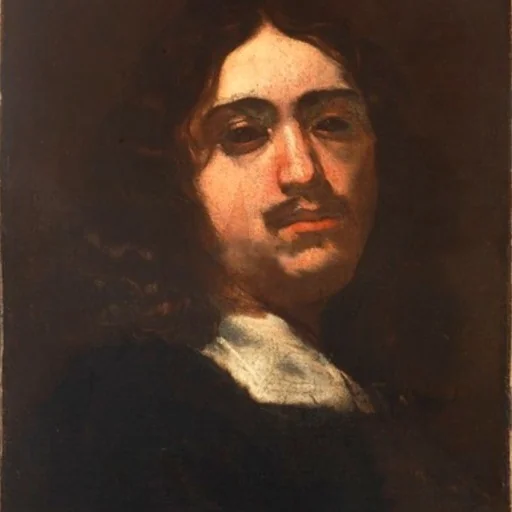
Artist
Jusepe de Ribera (Valencian: ; baptised 17 February 1591 – 3 November 1652) was a Spanish painter and printmaker.