Artwork
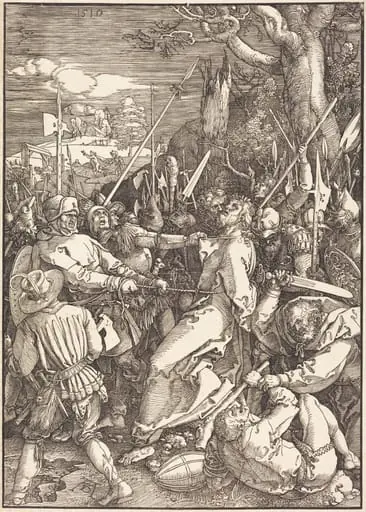
The Betrayal of Christ
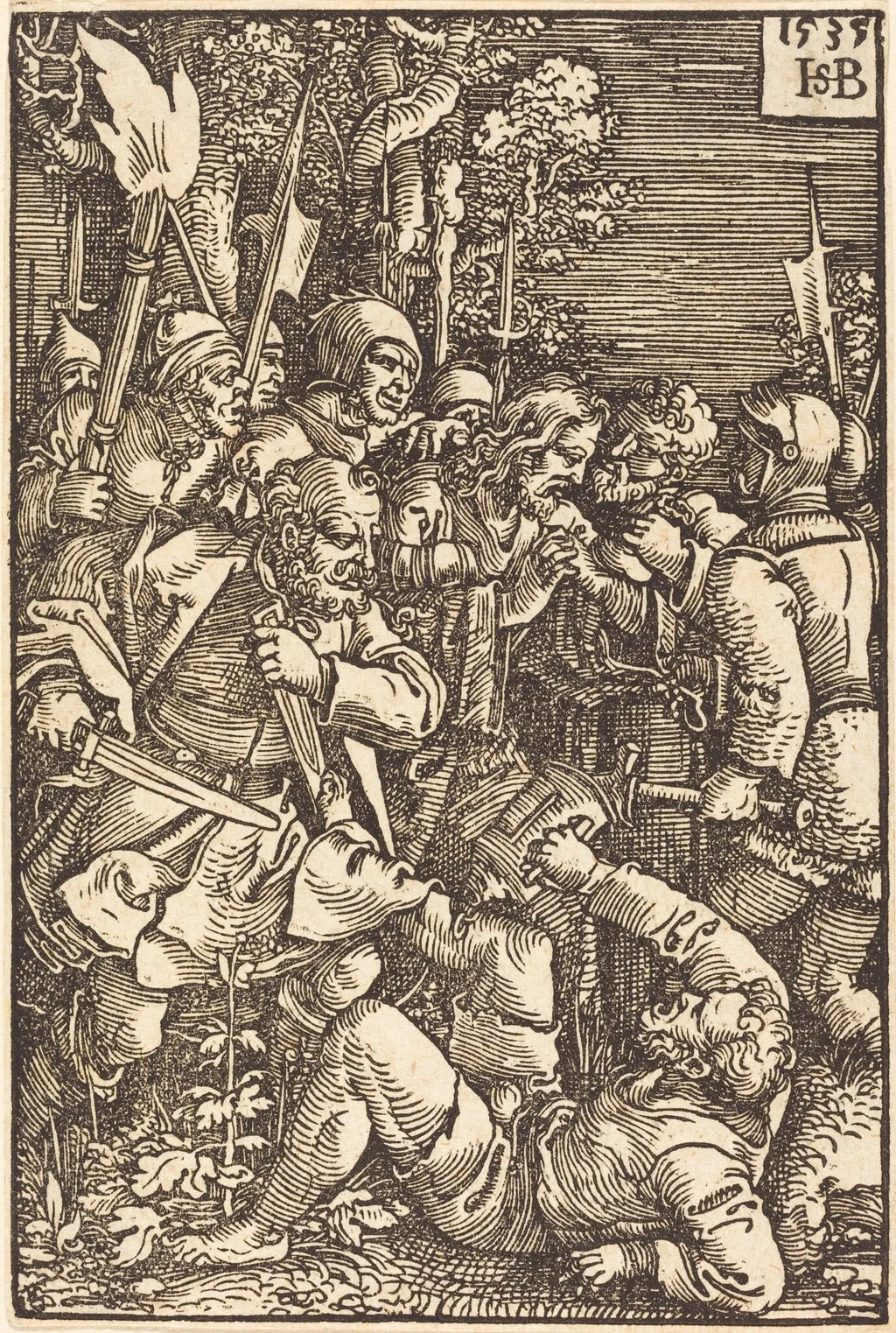
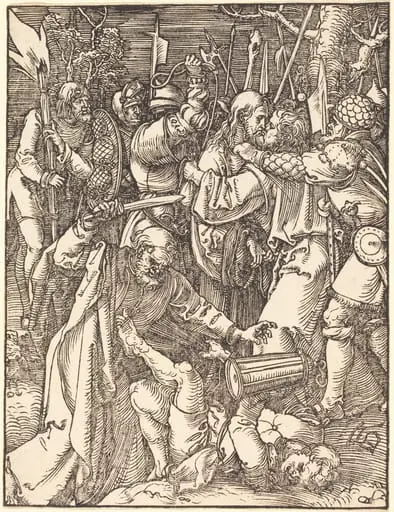
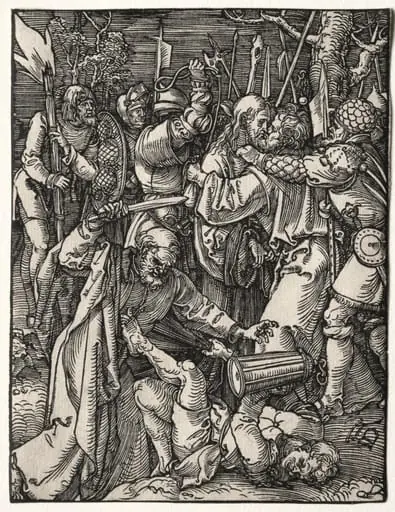
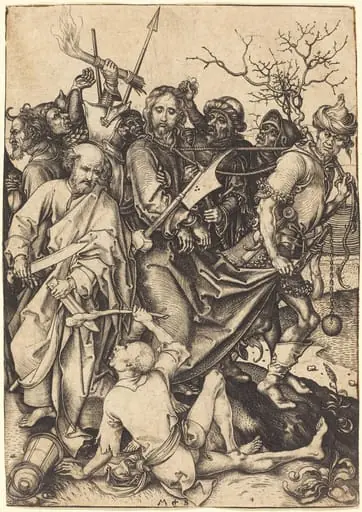
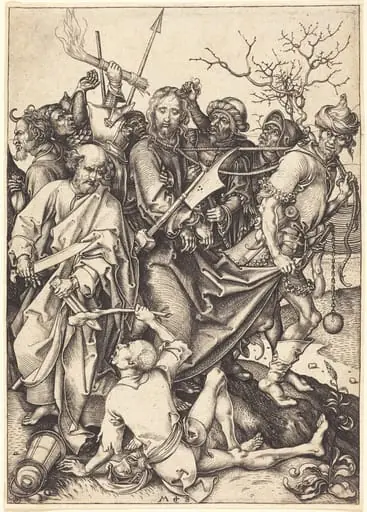
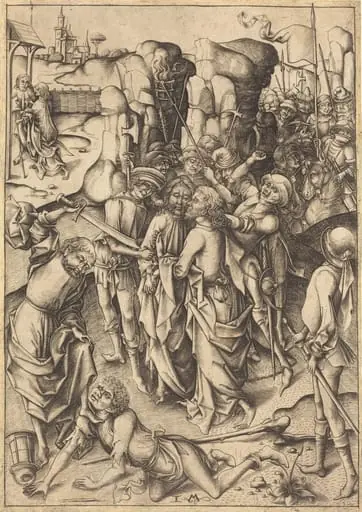
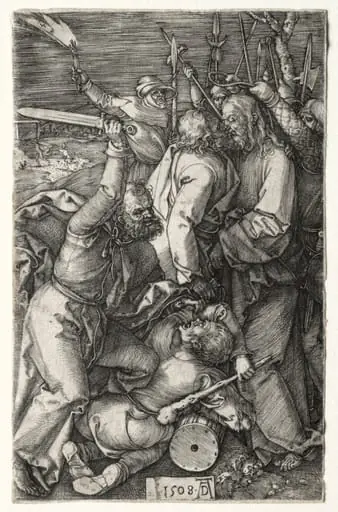
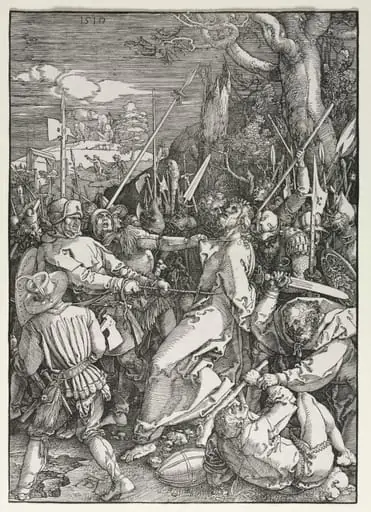
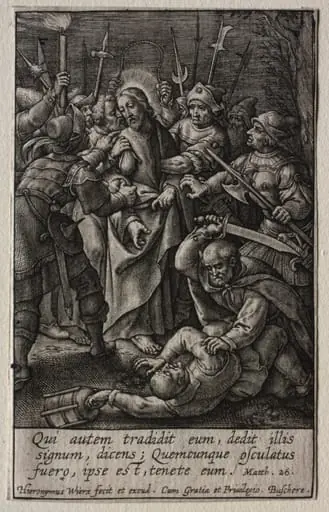
The Betrayal of Christ is an ink print by the Renaissance artist Sebald Beham. It dates from 1535 and is held in the collection of the National Gallery of Art.
About this work
Overview
This work is one of approximately 1,500 woodcuts he made, reflecting his dedication to the medium and its potential for storytelling in religious subjects.
Sebald Beham created this 1535 woodcut during his active years as a printmaker in Nuremberg and later Frankfurt. A member of the group known as the 'Little Masters,' he produced hundreds of small-scale prints characterized by fine detail and narrative precision. This work is one of approximately 1,500 woodcuts he made, reflecting his dedication to the medium and its potential for storytelling in religious subjects.
Subject & Meaning
The scene depicts the moment of Christ’s arrest in the Garden of Gethsemane, as described in the Gospels. Judas identifies Christ with a kiss while armed men close in. The fallen figure among them may represent a disciple or a soldier struck down in the chaos. The composition emphasizes betrayal and sudden violence, aligning with Protestant visual traditions that favored direct, emotionally charged biblical narratives over idealized forms.
Technique & Style
Beham employed fine, controlled lines typical of woodcut engraving, achieving intricate textures in clothing, armor, and foliage. The figures are rendered with sharp contours and minimal shading, relying on contrast and arrangement to convey depth and tension. His small scale and meticulous detail reflect the influence of Albrecht Dürer, though Beham’s style is more compact and densely packed, suited to intimate viewing rather than public display.
History & Provenance
Created in 1535, the print emerged during a period of religious upheaval in the Holy Roman Empire. Beham, influenced by Reformation ideals, often illustrated biblical scenes for private devotion. While specific early ownership records are sparse, the work was likely circulated among educated urban patrons who collected prints as both devotional aids and artistic objects.
Context
This print belongs to a broader wave of German Renaissance religious imagery that shifted focus from grand altarpieces to portable, reproducible images. As literacy and print culture expanded, artists like Beham catered to a growing market seeking personal engagement with scripture. The use of contemporary dress and weaponry grounds the sacred event in the viewer’s own world, reinforcing immediacy and moral relevance.
Legacy
Beham’s woodcuts, including this one, helped define the aesthetic of the 'Little Masters' and influenced later generations of Northern European printmakers. Though less celebrated than Dürer, his disciplined technique and narrative clarity contributed to the legitimacy of print as a serious artistic medium. His works remain studied for their synthesis of religious content and technical refinement.
Artist & collection
Artist
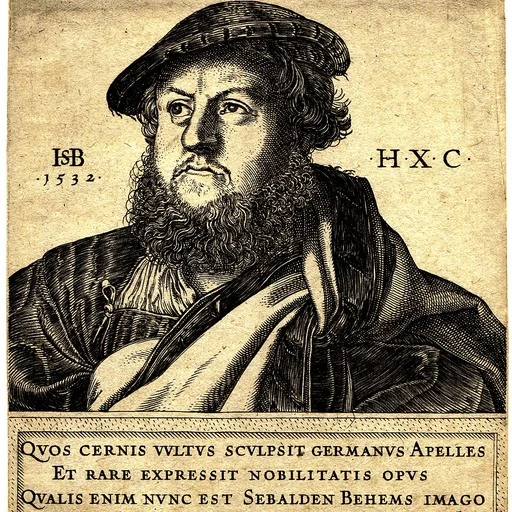
Sebald Beham (1500–1550) was a German painter and printmaker, mainly known for his very small engravings.