Artwork
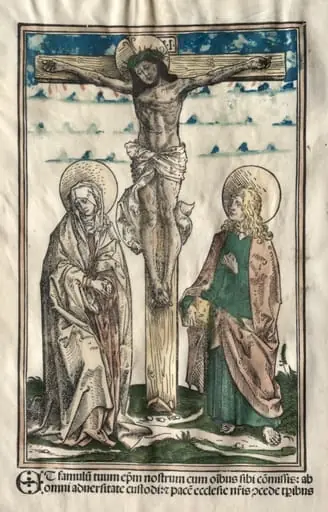
Christ on the Cross with Mary and Saint John
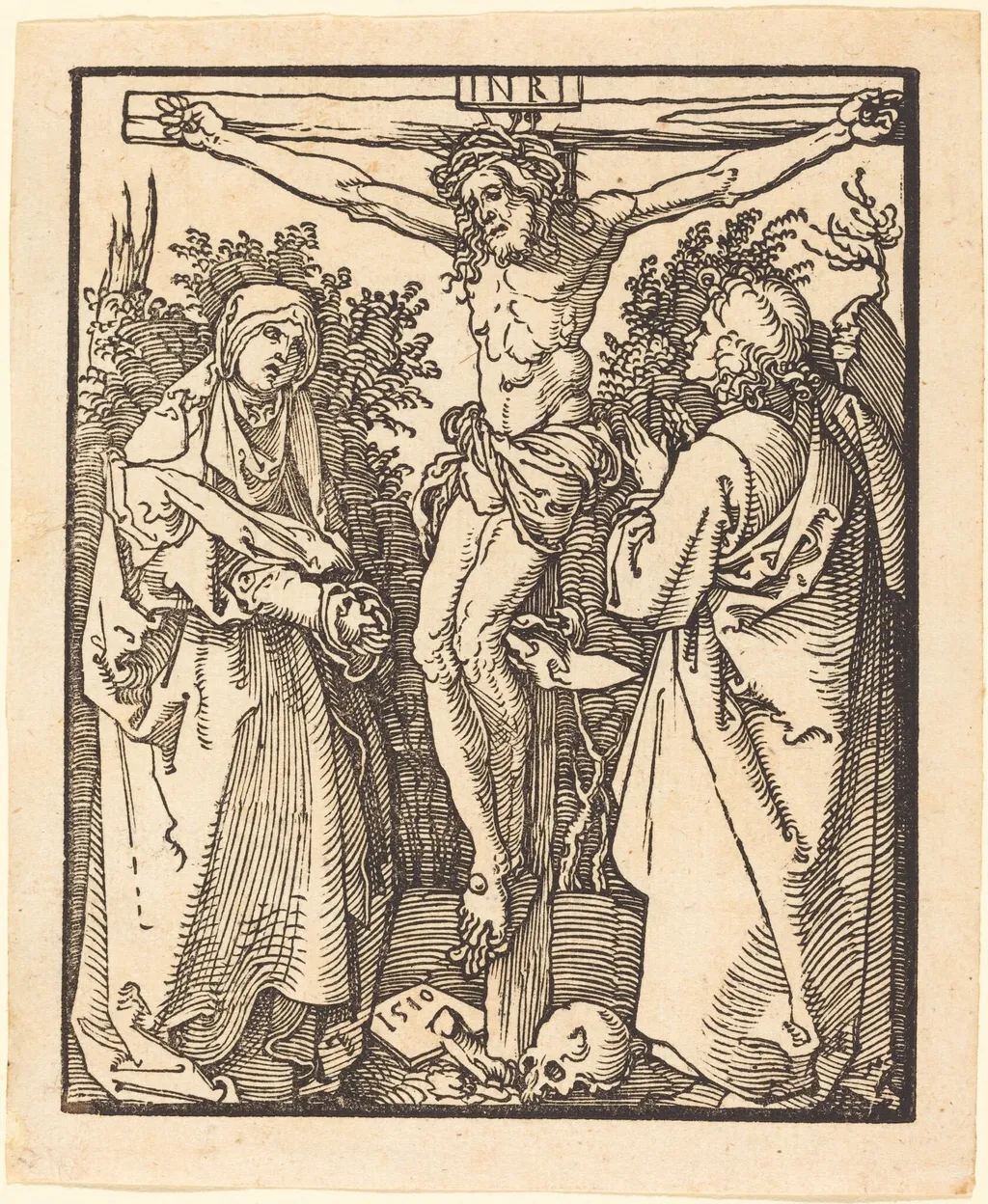
Christ on the Cross with Mary and Saint John is an ink print by the Northern Renaissance artist Albrecht Dürer. It dates from 1510 and is held in the collection of the National Gallery of Art.
About this work
Overview
Albrecht Dürer’s 1510 woodcut presents the crucifixion scene with the central figure of Christ on the cross flanked by two mournful companions. The composition is rendered in stark black lines on laid paper, emphasizing the solemnity of the moment through a limited visual vocabulary and strong tonal contrasts.
Subject & Meaning
The image brings together the crucified Jesus with the Virgin Mary and a male figure traditionally identified as Saint John, though some early catalogues label him as John the Baptist. Their proximity underscores themes of devotion, grief, and the theological significance of the Passion as a focal point for contemplation.
Technique & Style
Executed as a woodcut, Dürer incised the design into a block of wood, allowing the printer to produce multiple impressions. The medium permits fine linear detail and a textured surface that captures subtle shading, while the high contrast between inked and uninked areas heightens the dramatic effect—a hallmark of early sixteenth‑century printmaking.
History & Provenance
Created during Dürer’s mature period, the print was likely intended for devotional use and broader distribution among the faithful. Surviving copies are held in several European collections, reflecting the work’s circulation in the print market of the early 1500s and its preservation as part of Dürer’s extensive oeuvre.
Context
The piece belongs to a wave of religious imagery produced in the wake of the Reformation, when printed media became a primary vehicle for disseminating biblical narratives. Dürer’s mastery of woodcut technique positioned him among the leading artists who merged fine art sensibilities with the reproducibility of prints.
Legacy
While not as frequently reproduced as Dürer’s later engravings, this woodcut illustrates his skill in translating complex theological subjects into accessible visual forms. It continues to be studied for its compositional clarity and as an example of early modern print culture’s role in shaping devotional practice.
Artist & collection
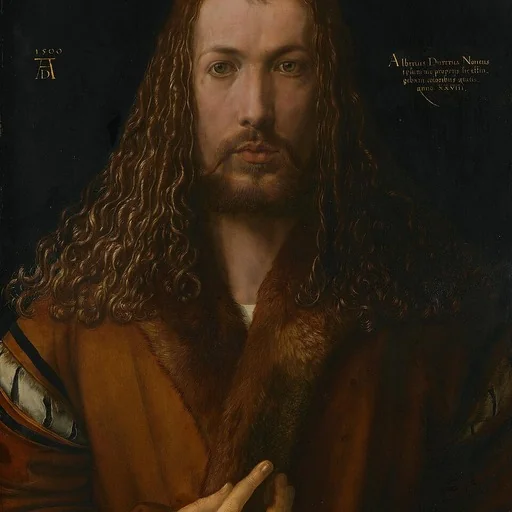
Artist
Albrecht Dürer spent his life in Nuremberg, a busy German city where artists traded prints like currency.

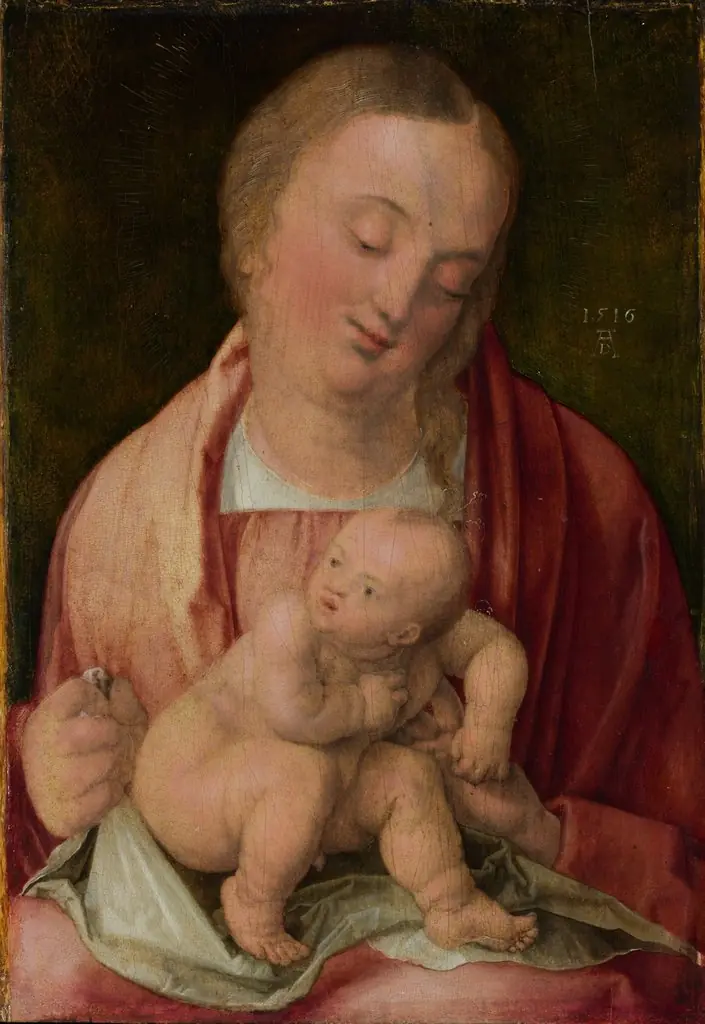
![Madonna and Child [obverse], by Albrecht Dürer](https://artifactworldgallery.com/img/albrecht-durer--madonna-and-child-obverse--d7b8ebf05d22ebe5-w320.webp)
![Lot and His Daughters [reverse], by Albrecht Dürer](https://artifactworldgallery.com/img/albrecht-durer--lot-and-his-daughters-reverse--b4ebf9b282faa17a-w320.webp)
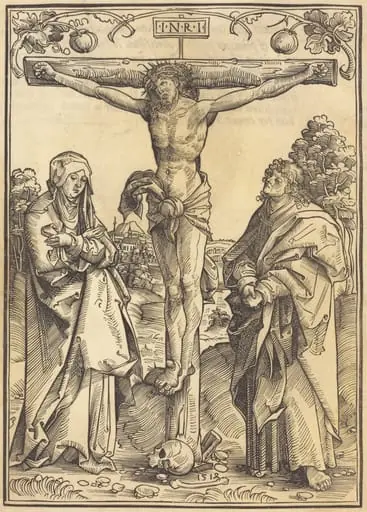 Christ on the Cross with the Virgin and Saint John the Evangelist
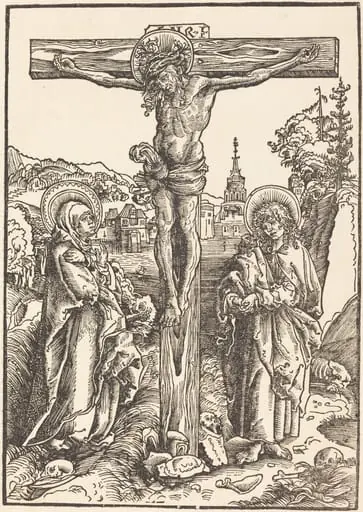 Christ on the Cross Between the Virgin and Saint John
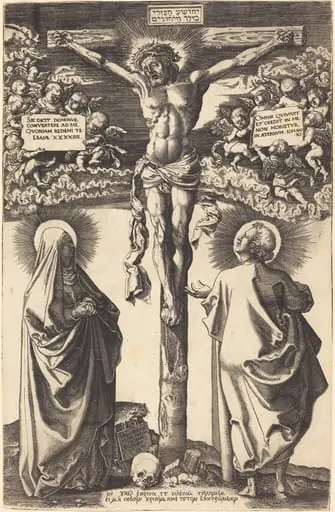 Christ on the Cross with the Virgin and Saint John
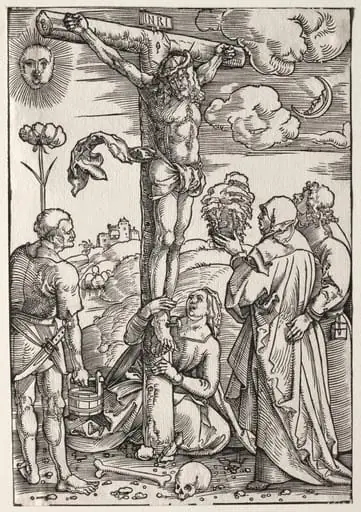 Christ on the Cross with Mary, St. John, Mary Magdalen and St. Stephen
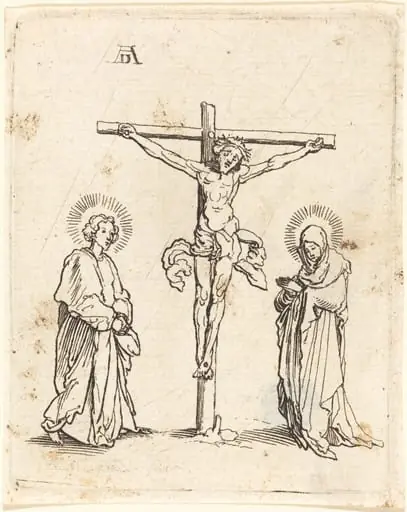 Christ on the Cross Between Saint John and Mary
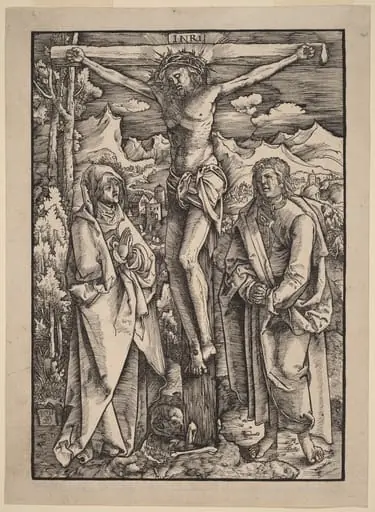 Christ on the Cross between the Virgin and Saint John
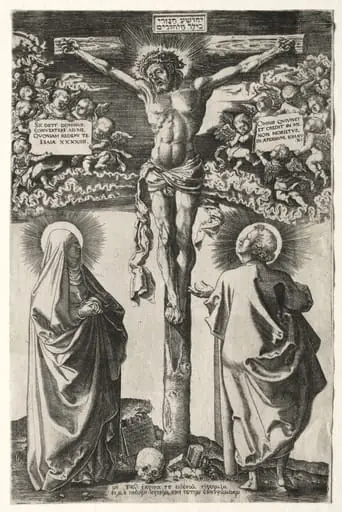 Christ on the cross between the virgin and St. John
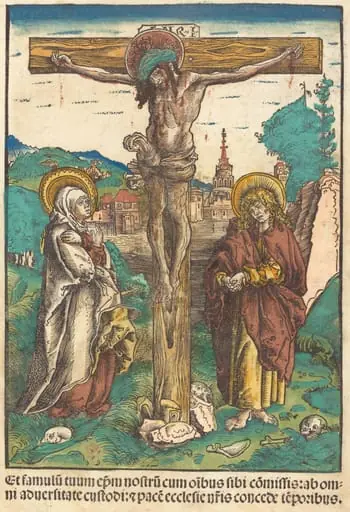 Christ on the Cross Between the Virgin and Saint John
 Christ on the Cross between Mary and John