Artwork
Virgin and Child on a Grassy Bench
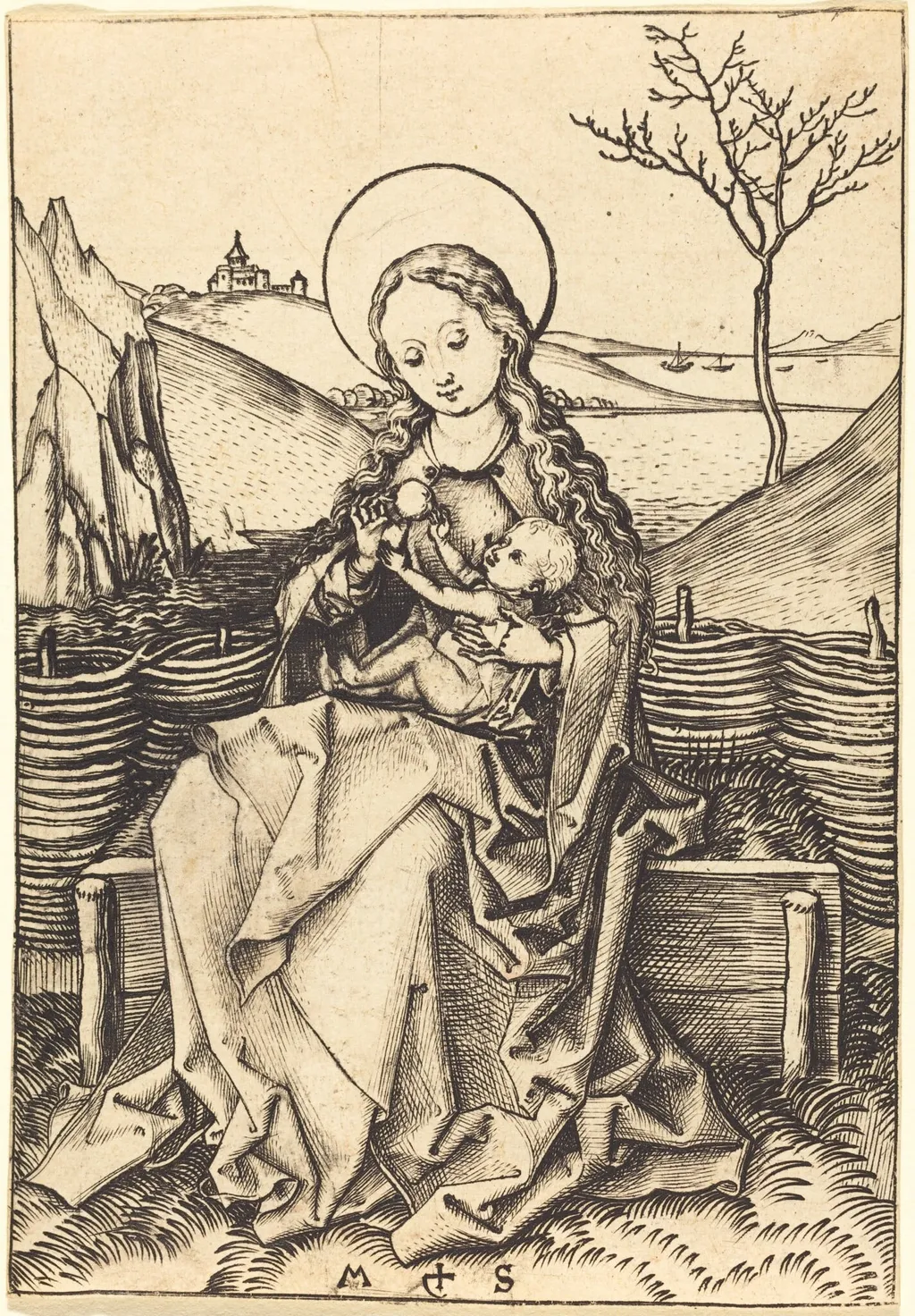
Virgin and Child on a Grassy Bench is an ink print by the Renaissance artist Martin Schongauer. It dates from 1478 and is held in the collection of the Rosenwald Collection.
About this work
Overview
His technical precision and mastery of line distinguished his work, setting a new standard for engraving as a fine art form.
Martin Schongauer created this engraving around 1478, one of approximately 116 surviving prints attributed to him. As a native of Colmar in Alsace, he emerged as the leading printmaker in northern Europe before Dürer’s rise. His technical precision and mastery of line distinguished his work, setting a new standard for engraving as a fine art form. This piece exemplifies his ability to translate devotional imagery into intricate monochrome compositions.
Subject & Meaning
The Virgin Mary is seated on a grassy bench, holding the infant Christ, who reaches toward her face with tender curiosity. Her halo and flowing garments signal her sacred role, while the intimate gesture underscores the human bond between mother and child. The quiet setting, free of overt symbolism, invites contemplation rather than narrative spectacle, reflecting a devotional shift toward personal, emotional piety in late medieval spirituality.
Technique & Style
Schongauer employed fine, controlled cross-hatching to model form and suggest texture, from the soft folds of Mary’s robe to the distant landscape. The engraving’s delicate lines capture subtle gradations of light and shadow, lending volume to the figures and depth to the background. His technique, likely informed by goldsmithing traditions, achieves remarkable detail without reliance on tone or color, relying solely on the precision of the burin.
History & Provenance
The engraving was produced during Schongauer’s mature period in Colmar, where he maintained a workshop and trained apprentices. Though no early ownership records survive for this specific impression, his prints circulated widely across Europe, influencing generations of artists. Copies and adaptations by later engravers confirm its early popularity and the esteem in which his work was held.
Context
In the late 15th century, religious imagery in print form became increasingly accessible, meeting growing demand for private devotion. Schongauer’s engravings bridged the gap between panel painting and mass-produced imagery, offering detailed, portable alternatives to costly altarpieces. His work responded to a cultural shift toward personal spirituality, making sacred scenes intimate and immediate for lay viewers.
Legacy
Schongauer’s technical innovations in engraving laid groundwork for Albrecht Dürer and other Northern Renaissance artists. His ability to convey emotion and spatial depth through line alone elevated printmaking to a respected artistic medium. Though his paintings are rare, his engravings endured as models of craftsmanship, studied and copied well into the 16th century.
Artist & collection

Artist
Martin Schongauer, also known as Martin Schön or Hübsch Martin by his contemporaries, was an Alsatian engraver and painter.
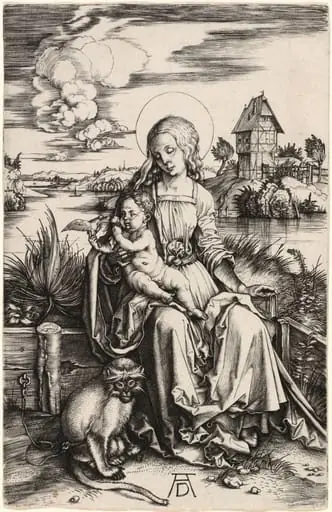 The Virgin and Child with the Monkey
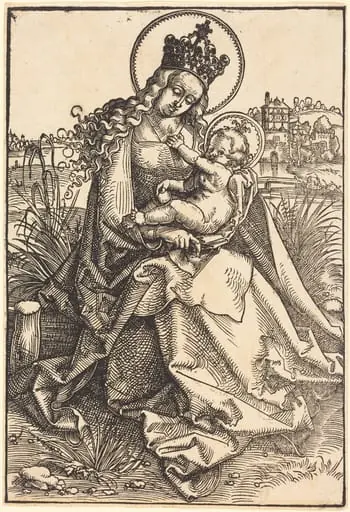 Madonna and Child on the Grassy Bank
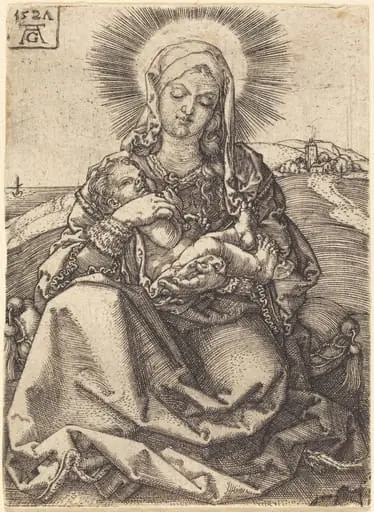 Madonna in a Landscape Sitting on a Cushion
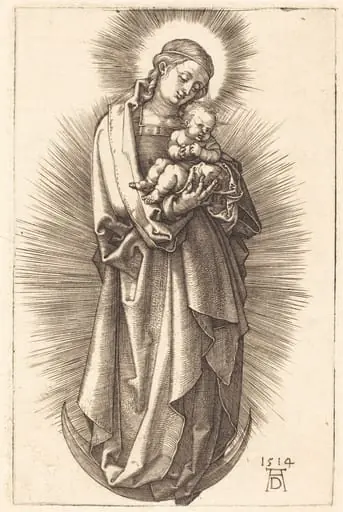 The Virgin and Child on a Crescent with a Diadem
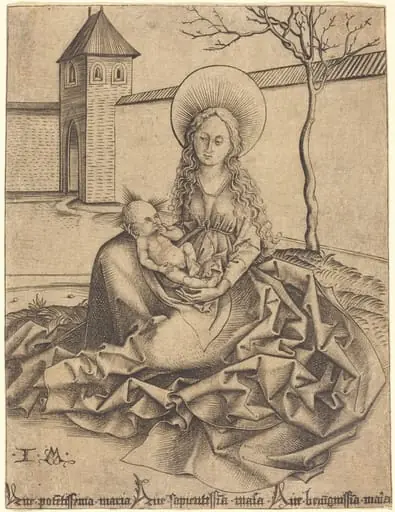 Virgin and Child in a Courtyard
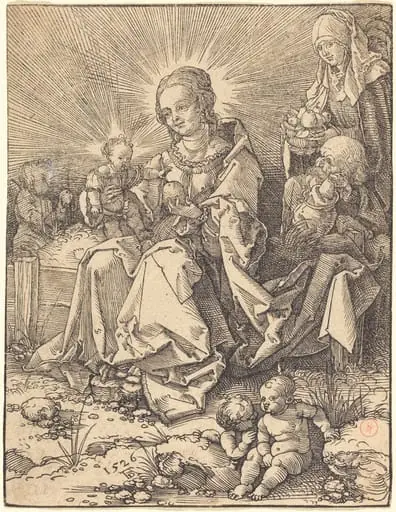 The Holy Family on a Grassy Bench
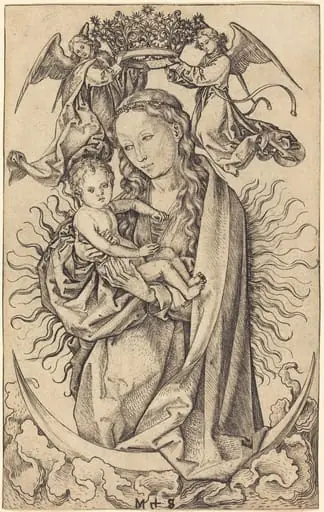 Madonna on the Crescent
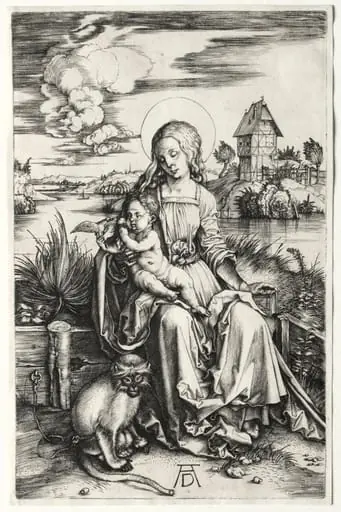 The Virgin and Child with a Monkey
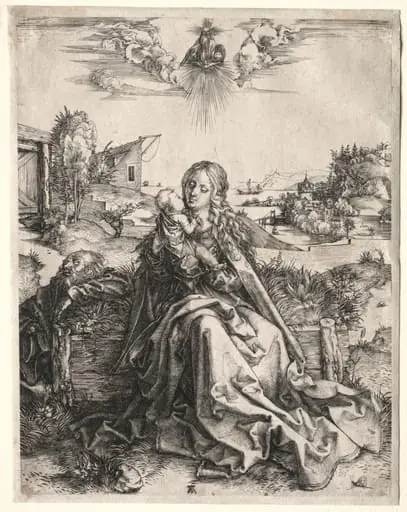 Holy Family with the Butterfly
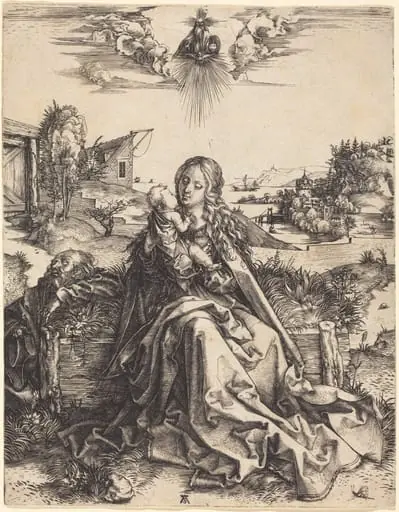 The Holy Family with the Mayfly