Artwork
Autoportret
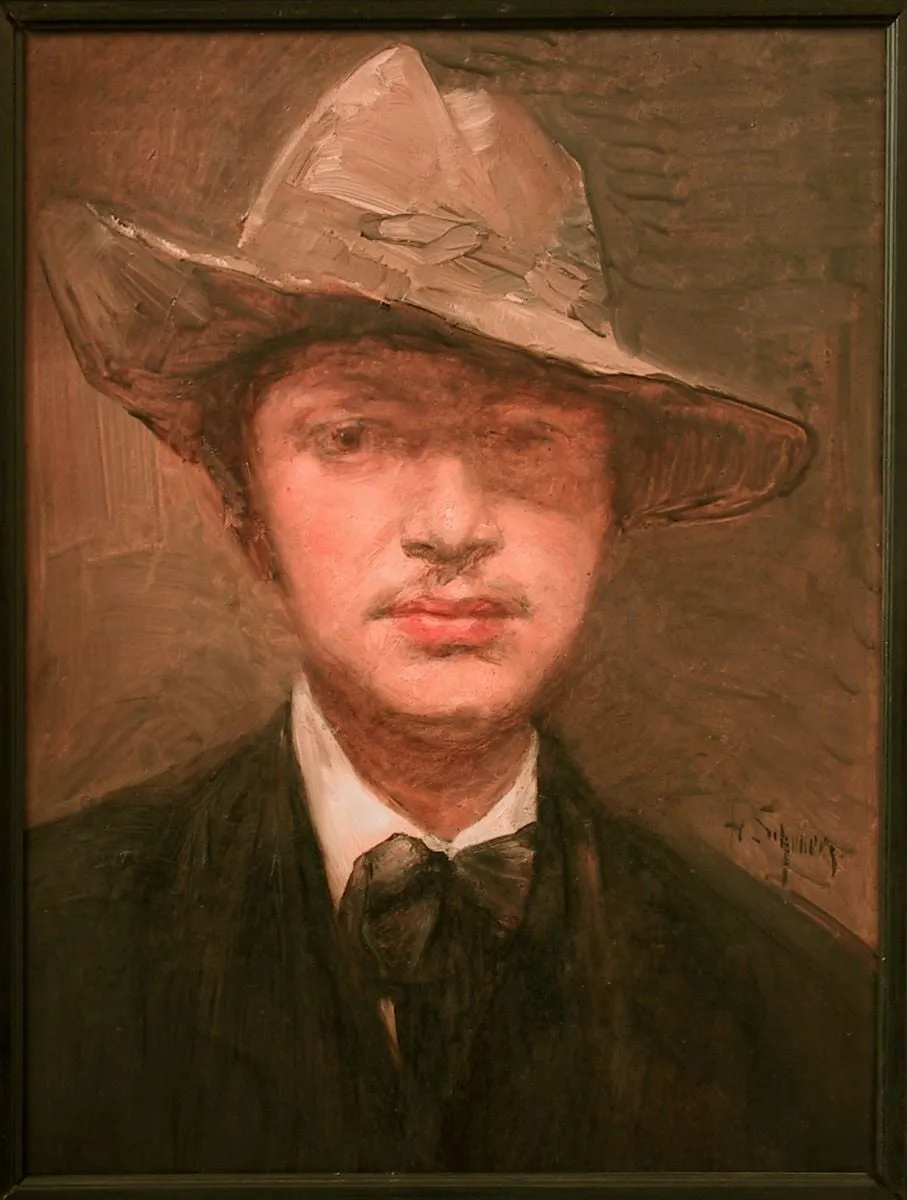
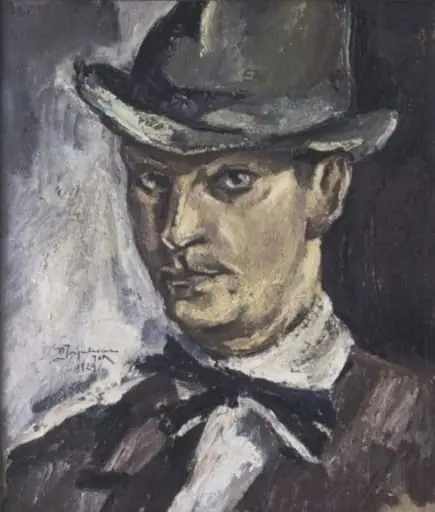
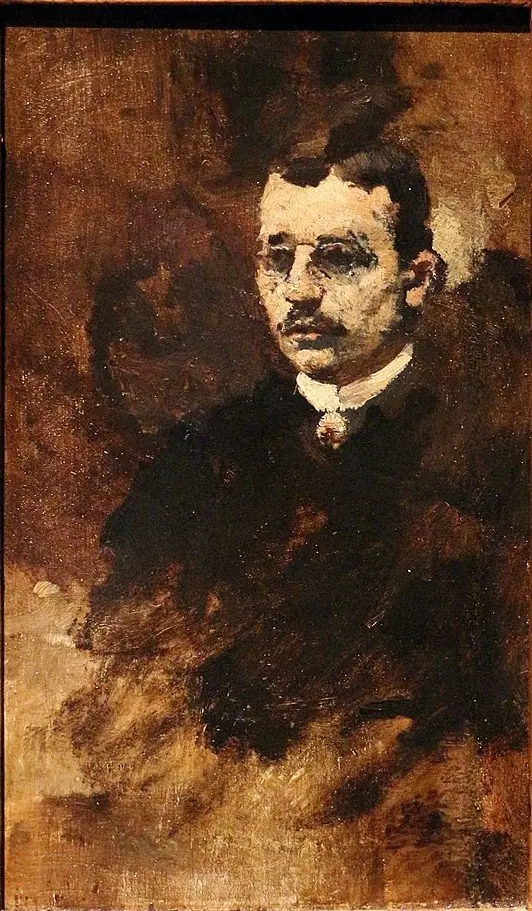
Autoportret is a print by Fritz Schullerus. It dates from 1892 and is held in the collection of the Brukenthal National Museum.
About this work
Overview
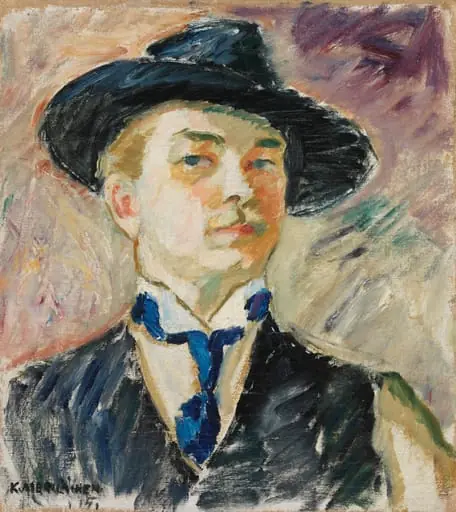
The composition isolates his upper body against a dark, neutral background, eliminating distractions to emphasize presence over circumstance.
Fritz Schullerus painted this self-portrait around 1892, capturing himself in a direct, unadorned pose. The composition isolates his upper body against a dark, neutral background, eliminating distractions to emphasize presence over circumstance. The work reflects a moment of introspection, rendered with deliberate roughness rather than refined finish, suggesting an emphasis on expression over idealization.
Subject & Meaning
The subject is the artist himself, depicted with a solemn expression and minimal adornment. His wide-brimmed hat and dark attire convey a sense of formality, while the absence of props or setting removes narrative context. The focused gaze and restrained features suggest an internal state—perhaps contemplation, resolve, or quiet self-assessment—offering a glimpse into the artist’s self-perception without overt symbolism.
Technique & Style
Schullerus employed thick, tactile brushwork, particularly in the hat and coat, creating a textured, almost three-dimensional surface. The impasto technique gives the fabric a sculpted quality, contrasting with the smoother rendering of his face. This deliberate roughness rejects polished academic conventions, favoring immediacy and material presence, aligning the work with emerging expressive tendencies in late 19th-century painting.
History & Provenance
The painting’s early history is undocumented beyond its creation circa 1892. It remained within private hands until entering a public collection in the 20th century. No exhibition records or contemporary critical responses are known, suggesting it was not widely circulated during Schullerus’s lifetime. Its current preservation reflects later recognition of its stylistic significance rather than contemporary acclaim.
Context
Created during a period when European artists were moving away from academic realism, Schullerus’s approach echoes broader shifts toward personal expression and material experimentation. While not part of a formal movement, his use of impasto and unpolished finish aligns with contemporaries exploring emotional authenticity over technical perfection, particularly in Central European circles influenced by emerging modernist sensibilities.
Legacy
Though not widely known, the self-portrait stands as a quiet example of late 19th-century introspective portraiture. Its emphasis on texture and psychological presence over detail has drawn attention from scholars studying regional modernist tendencies. The work contributes to understanding how artists outside major centers engaged with evolving techniques, preserving a personal, unmediated vision of the self.
Artist & collection