Artwork
Untitled
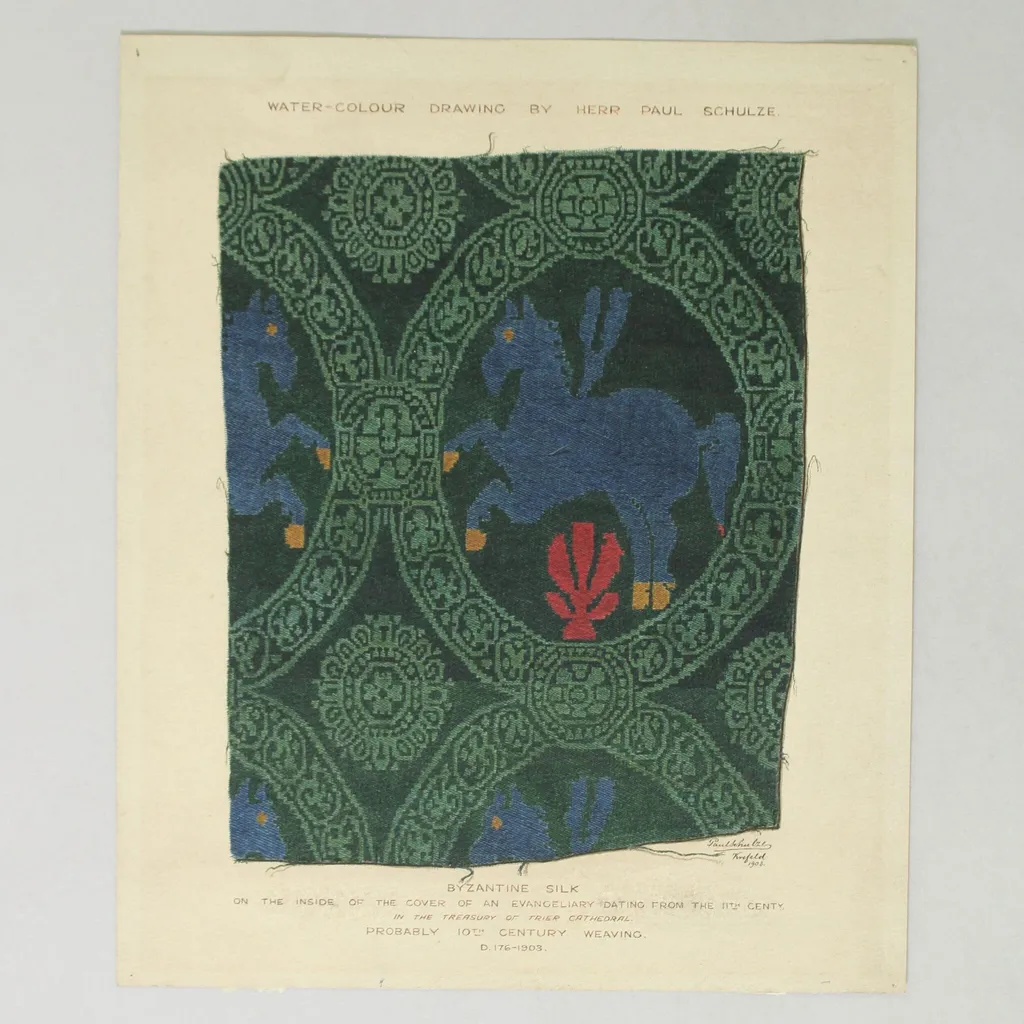
Untitled is a paint painting by the Post-Impressionist artist Paul Schulze. It dates from 1903 and is held in the collection of the Victoria and Albert Museum.
About this work
Overview
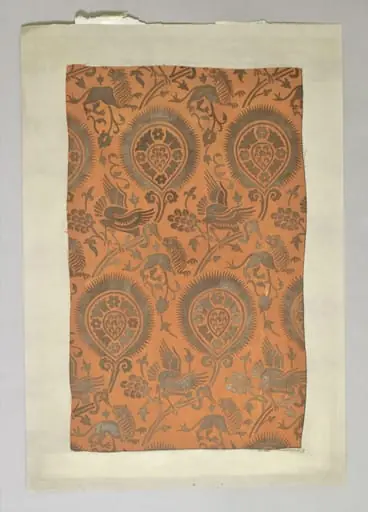
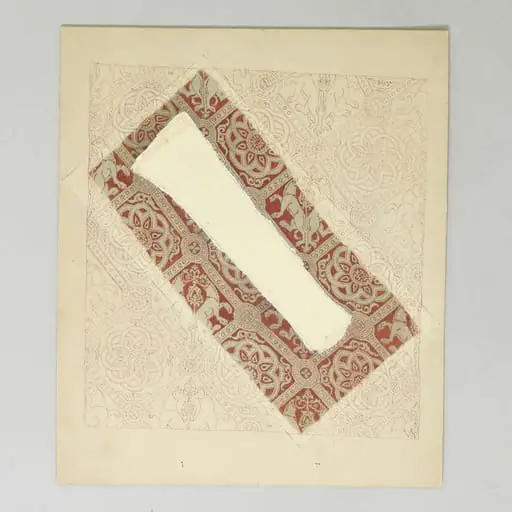
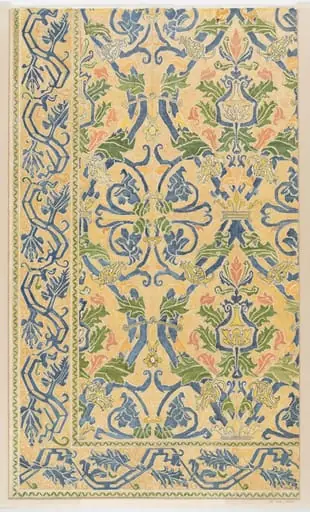
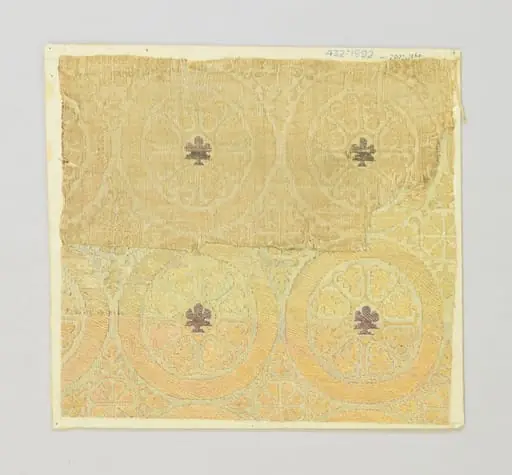
This watercolor study by Paul Schulze reproduces a fragment of 10th-century Byzantine silk, meticulously rendered in delicate washes.
This watercolor study by Paul Schulze reproduces a fragment of 10th-century Byzantine silk, meticulously rendered in delicate washes. The work captures the textile’s intricate design: winged horses enclosed within circular motifs, set against a deep green ground. Its small scale and framed presentation reflect its function as a scholarly record rather than an independent artwork, preserving details of a fragile historical object.
Subject & Meaning
The pattern depicts stylized winged horses, a motif common in Byzantine silk weaving, often symbolizing power, divine protection, or imperial authority. Arranged in repeating circular compartments, the design suggests a decorative border or panel once used on liturgical textiles. Its placement on a book cover implies ceremonial use, possibly in a church setting where such imagery reinforced sacred or royal themes.
Technique & Style
Schulze employed transparent watercolor to replicate the silk’s subtle gradations and vivid hues—crimson, cobalt, and gold—against a muted green background. The precision of the brushwork mirrors the textile’s woven precision, with each horse rendered in outline and flat color, echoing the limitations and aesthetics of medieval dye techniques. The composition remains faithful to the original’s repetitive, symmetrical structure.
History & Provenance
The original silk fragment dates to the 10th century and was likely part of a liturgical book cover, used in a Byzantine or post-Byzantine ecclesiastical context. Schulze’s watercolor, created centuries later, served as a documentation tool, preserving the design before the textile deteriorated. The piece is now held in the Victoria and Albert Museum’s textile study collection, where it aids research into medieval textile production.
Context
During the 10th century, Byzantine silk workshops produced textiles for imperial and religious use, blending Persian, Roman, and Christian iconography. Winged horses, derived from ancient Near Eastern traditions, were adapted into Christian art as symbols of spiritual ascent. Schulze’s study reflects 19th-century scholarly interest in preserving and analyzing these artifacts as cultural artifacts rather than mere decorative objects.
Legacy
Schulze’s watercolor endures as a record of a textile that may no longer survive intact. It contributes to the understanding of Byzantine textile design and the transmission of motifs across cultures. As a study object in museum archives, it continues to inform conservation efforts and scholarly comparisons, bridging medieval craftsmanship and modern documentation practices.
Artist & collection
Artist
Paul Schulze’s small, quiet paintings feel like frozen moments in time rather than grand declarations.