Artwork
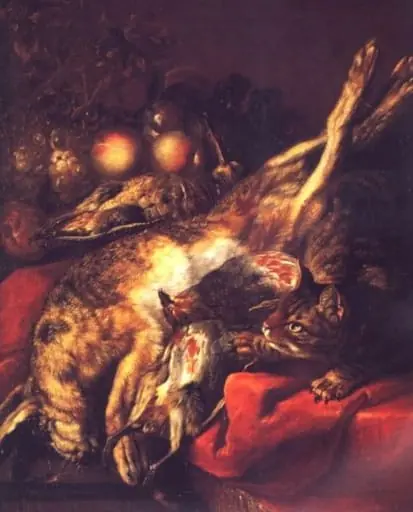
Natură moartă cu postament de piatră; pandant: Natură moartă cu pisică
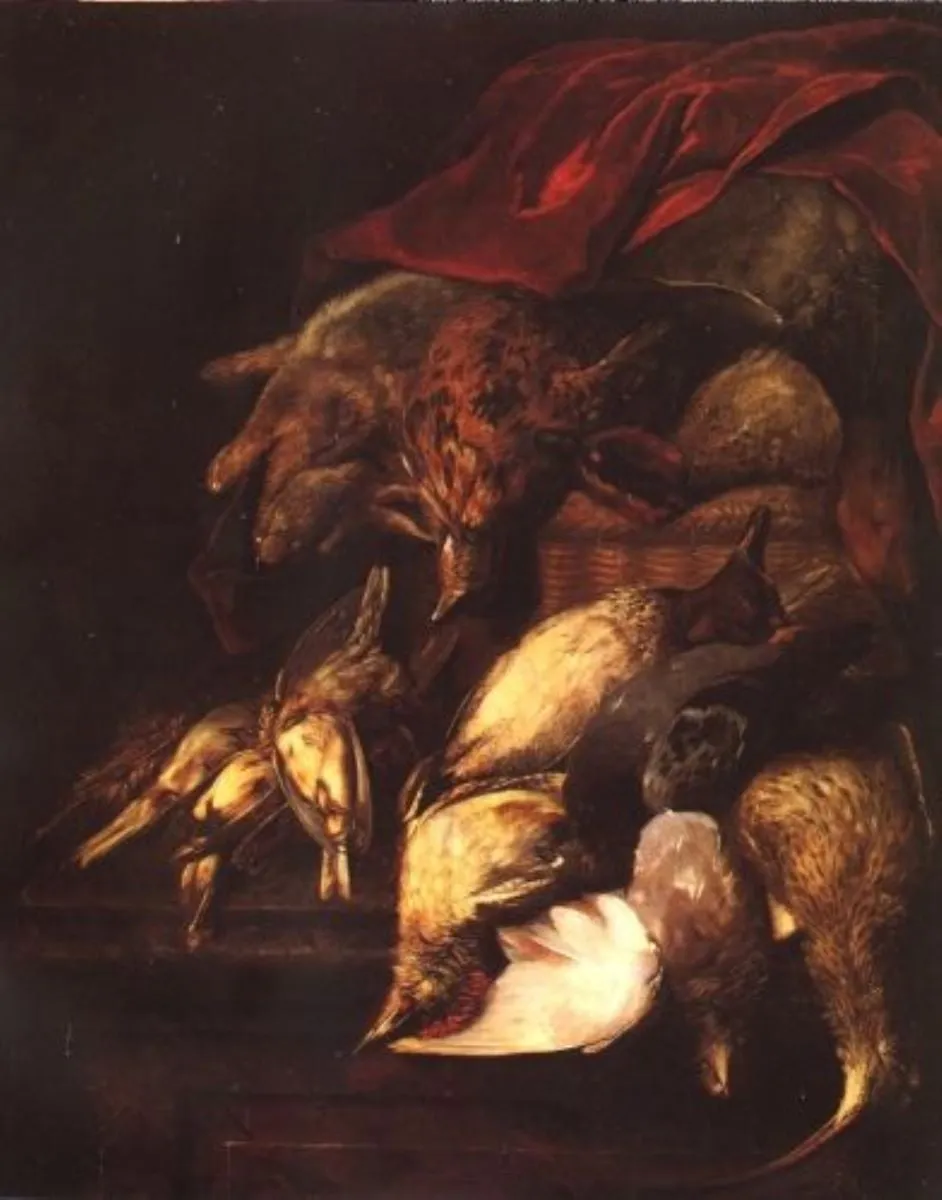
Natură moartă cu postament de piatră; pandant: Natură moartă cu pisică is an unspecified painting by the Baroque artist Jakob van Schuppen. It is held in the collection of the Brukenthal National Museum. This still life depicts a group of deceased birds arranged in a loose pile against a dark, unbroken background.
About this work
Overview
This still life depicts a group of deceased birds arranged in a loose pile against a dark, unbroken background. The composition emphasizes quiet stillness, with no human presence or contextual elements. The birds’ feathers vary in color and condition—some retain vivid hues of gold, white, and brown, while others appear weathered or dimmed—suggesting the passage of time since death.
Subject & Meaning
The arrangement of dead birds evokes themes of mortality and transience, common in 17th-century Northern European still lifes. The contrast between vibrant and faded plumage may symbolize the fleeting nature of life and beauty. The absence of movement or disturbance reinforces a meditative tone, inviting contemplation rather than narrative interpretation.
Technique & Style
The artist employs chiaroscuro to model the birds’ forms, using sharp contrasts between light and shadow to enhance three-dimensionality. Feathers are rendered with meticulous detail, capturing their texture and how they catch or absorb light. The dark background isolates the subjects, heightening the sense of realism and focusing attention on subtle tonal variations.
History & Provenance
The painting is one of two companion pieces, the other featuring a cat. Both works originate from the Dutch or Flemish tradition of still-life painting in the early 1600s. While the exact provenance remains undocumented, their pairing suggests they were intended as a matched set, possibly commissioned for private collection rather than public display.
Context
During the early Baroque period, still lifes like this reflected both aesthetic interests and moral concerns. The depiction of dead game birds aligned with broader cultural fascination with natural observation and the vanitas tradition, which used objects of decay to remind viewers of life’s impermanence and the inevitability of death.
Legacy
This work contributes to a lineage of Northern European still lifes that prioritized close observation of nature and technical precision. Its restrained composition and emphasis on light effects influenced later artists interested in realism and the quiet dignity of ordinary, transient subjects, even as the genre evolved beyond moral allegory.
Artist & collection
Artist
Jakob van Schuppen made still lifes in the early 1700s. His two works in this set pair a stone pedestal with fruit against a dark background and a matching canvas that adds a cat pawing at the arrangement. Both…

 Still Life
 Dead game with dead peacock and a hog's head
 Still life
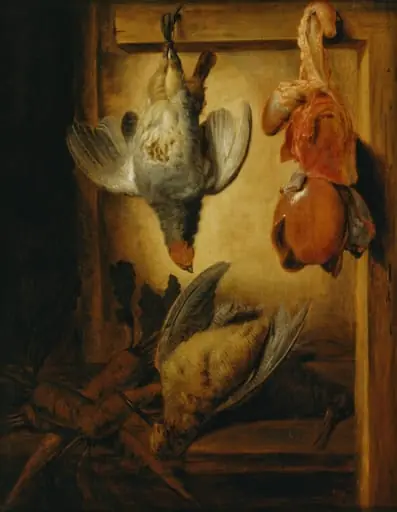 Dead Wild Fowl
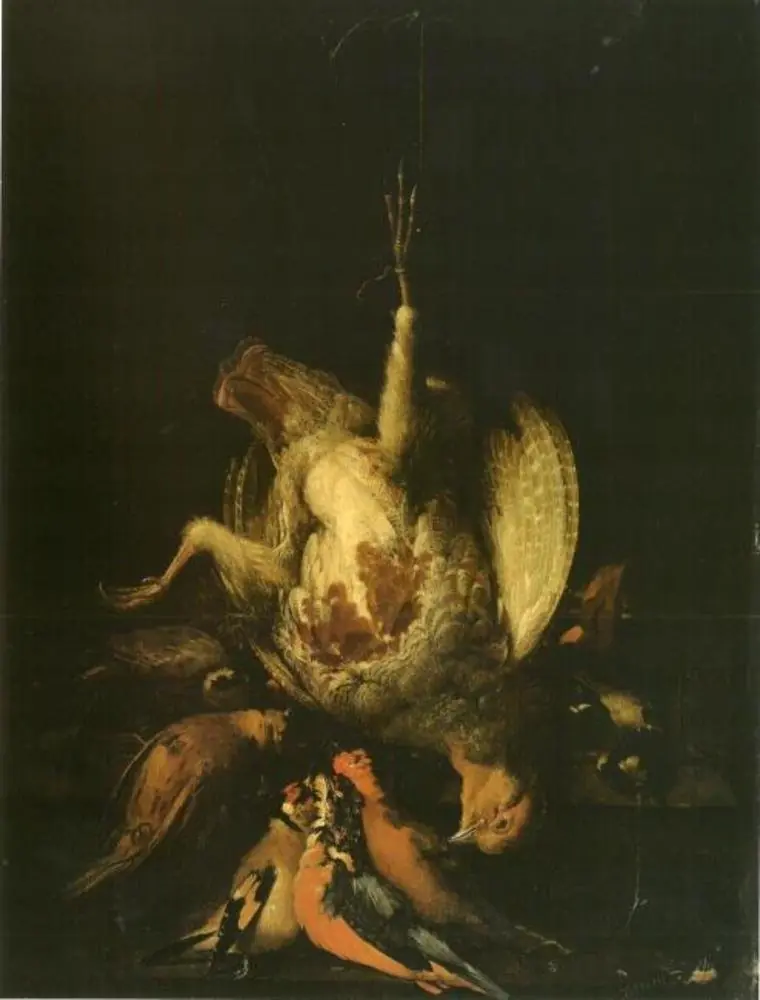 Still life with game in a niche
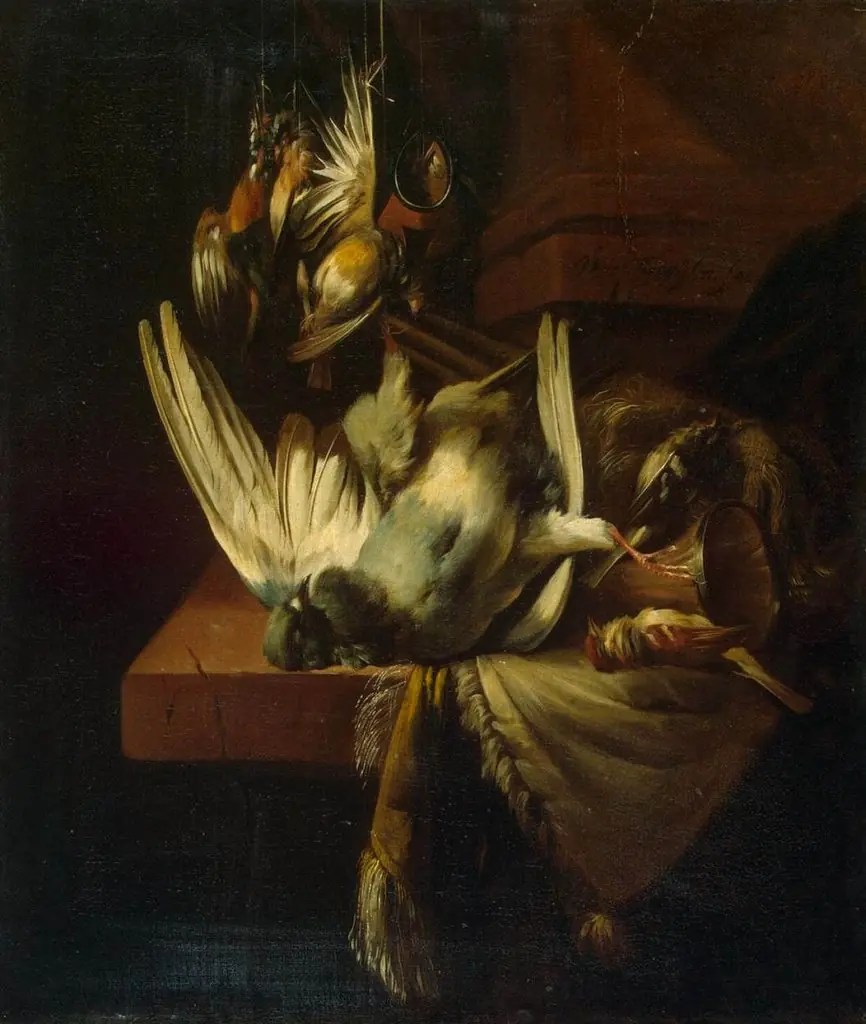 Still Life with Dead Game
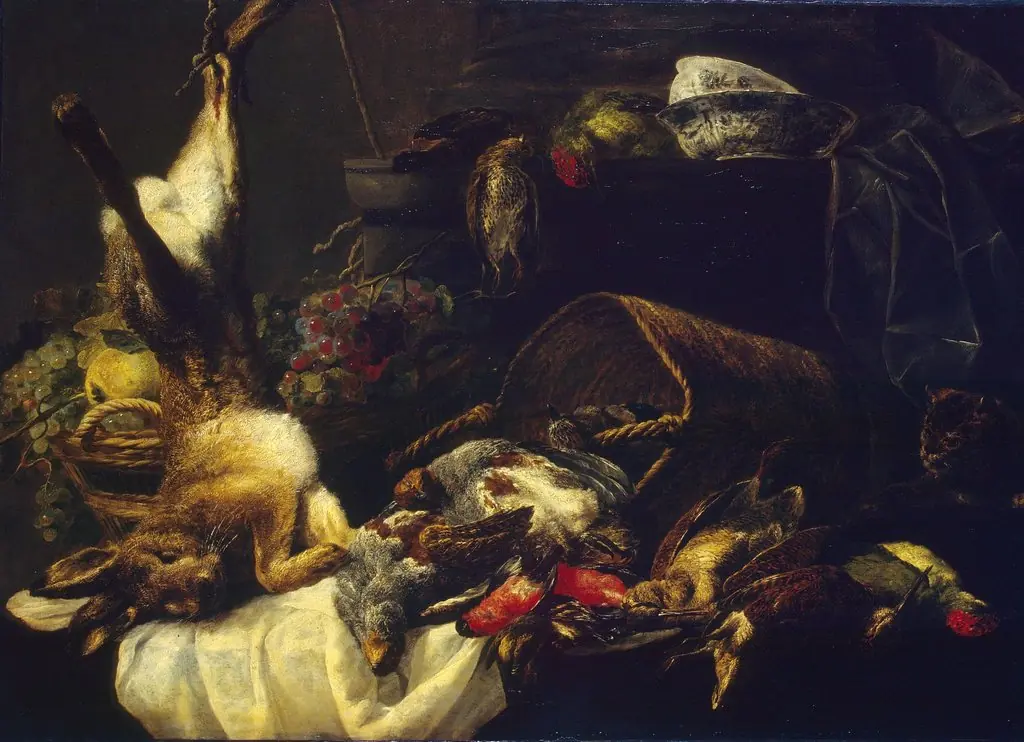 Dead Game
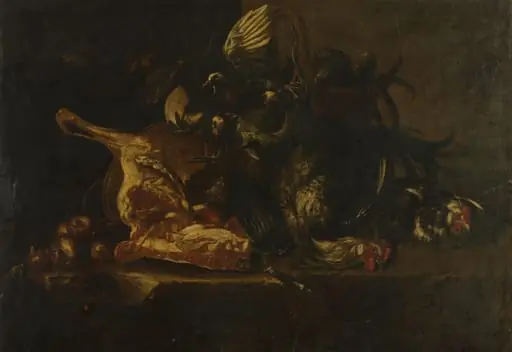 Still life with meat and dead birds
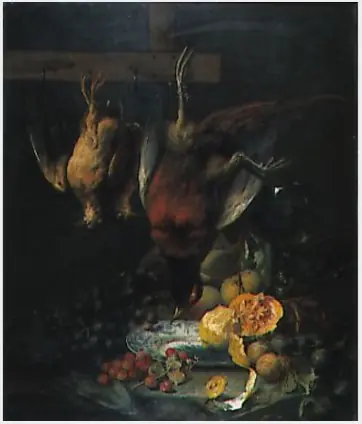 Fruit and Dead Game
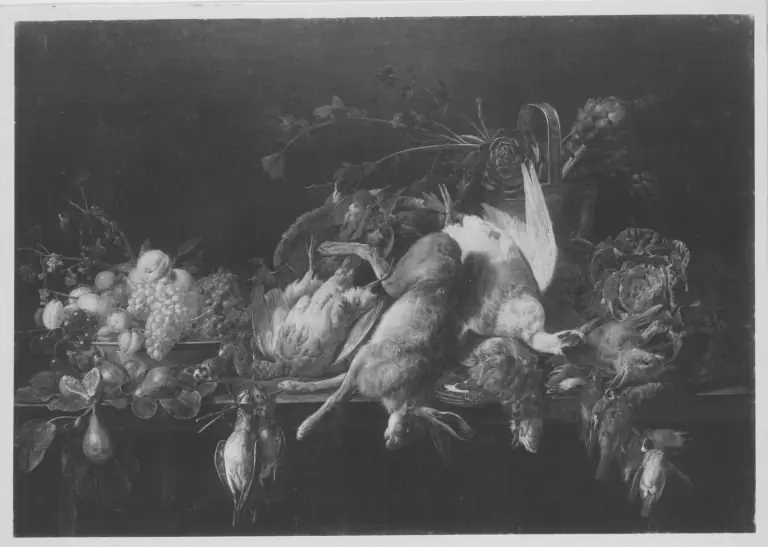 Stillleben mit Jagdbeute
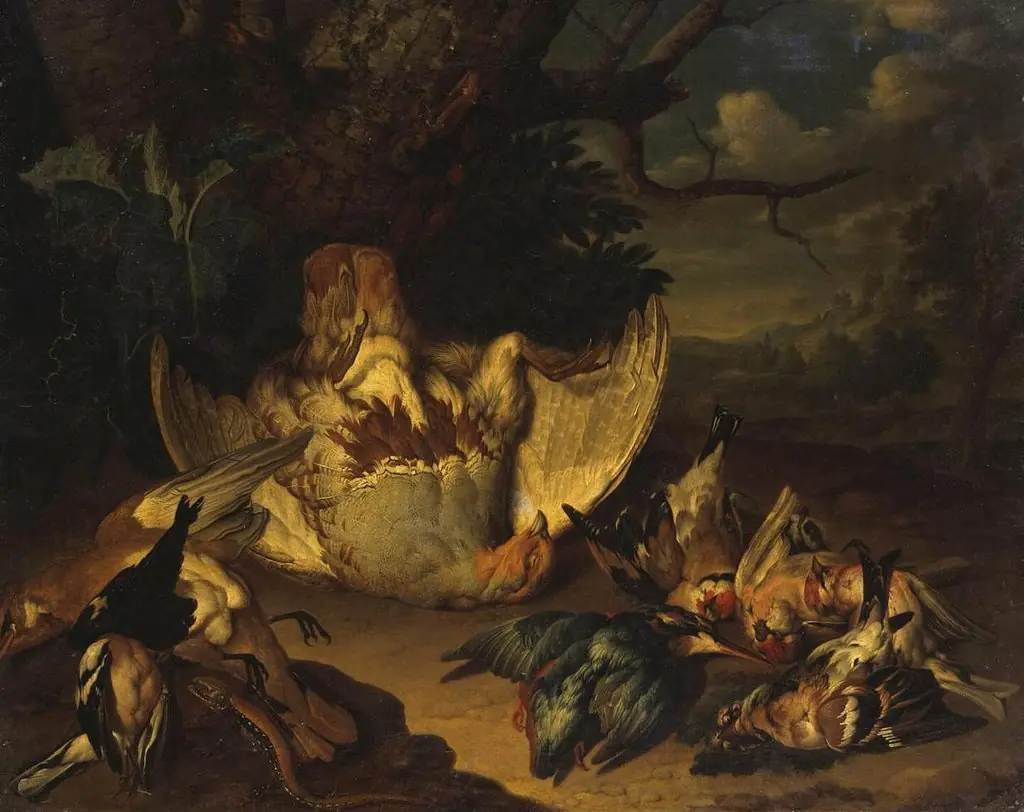 Dead Game
 Natură moartă cu pisică; pandant: Natură moartă cu postament de piatră