Artwork
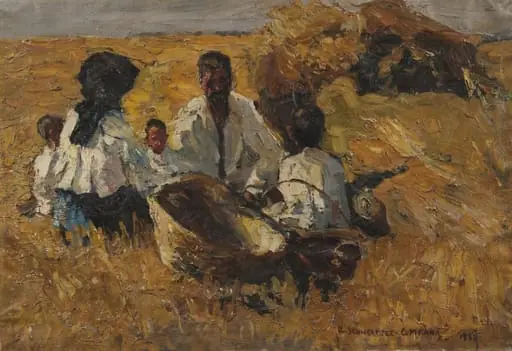
Peisaj rural
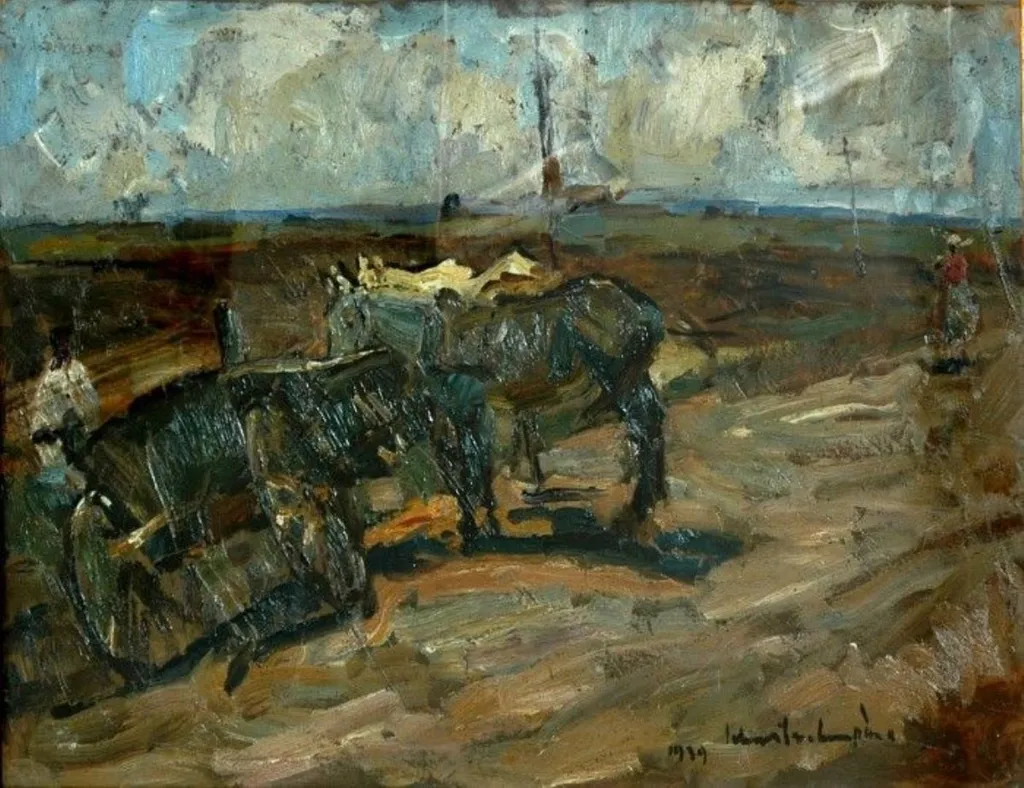
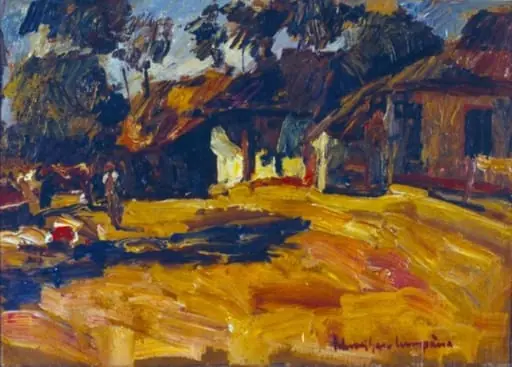
Peisaj rural is an unspecified painting by the Romanesque artist Rudolf Schweitzer-Cumpăna. It dates from 1939 and is held in the collection of the Țării Crișurilor Museum.
About this work
Overview
Peisaj rural, created by Rudolf Schweitzer-Cumpăna in 1939, is a rural landscape painting housed at the Museum of Ethnography.
Subject & Meaning
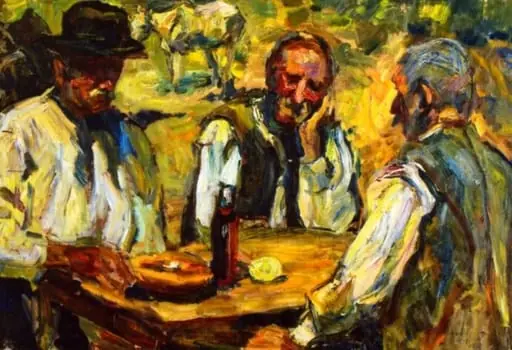
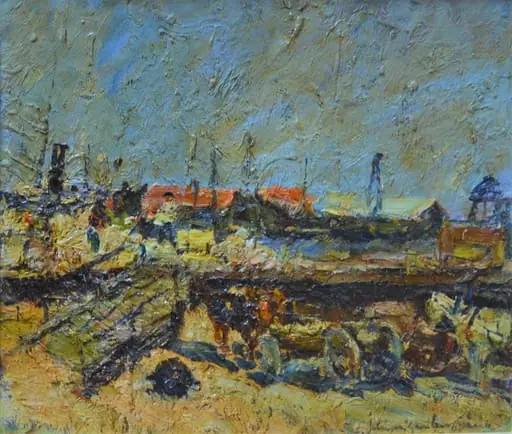
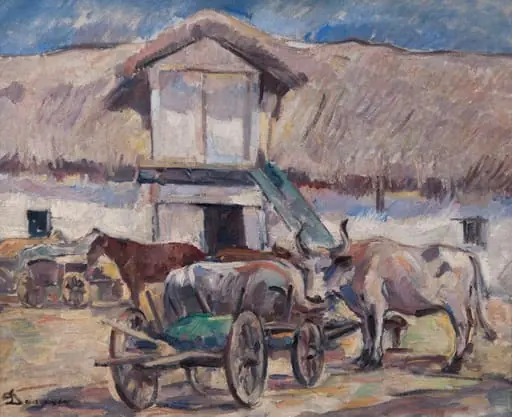
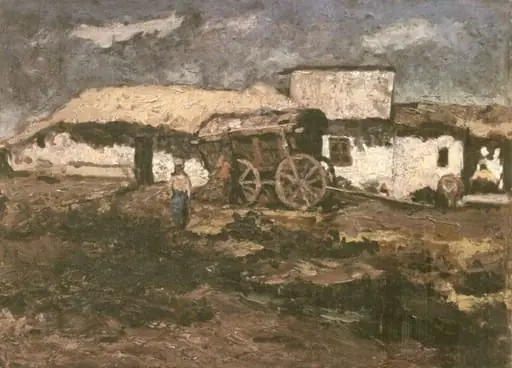
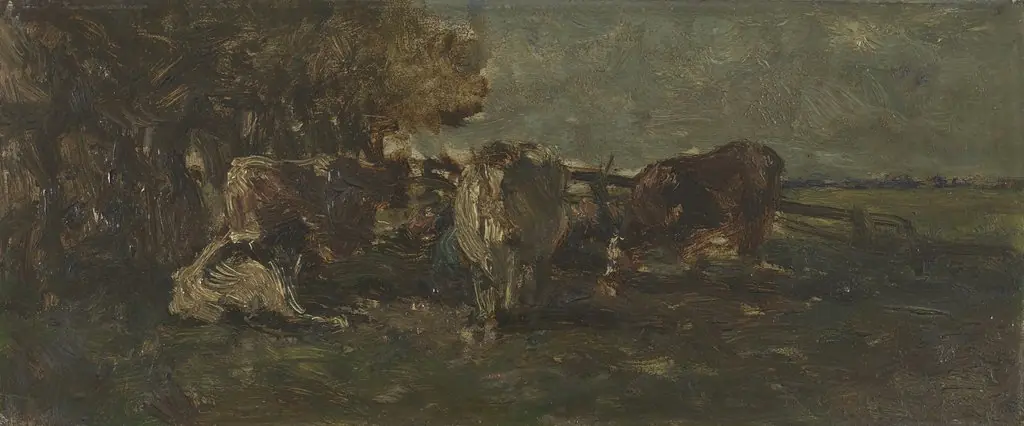
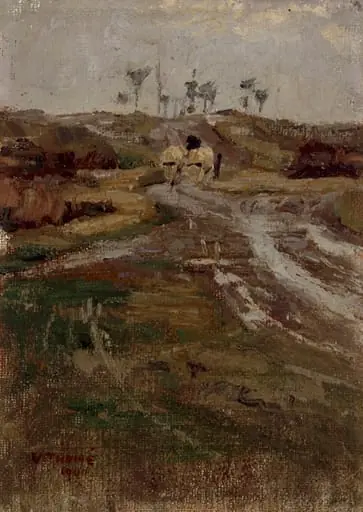
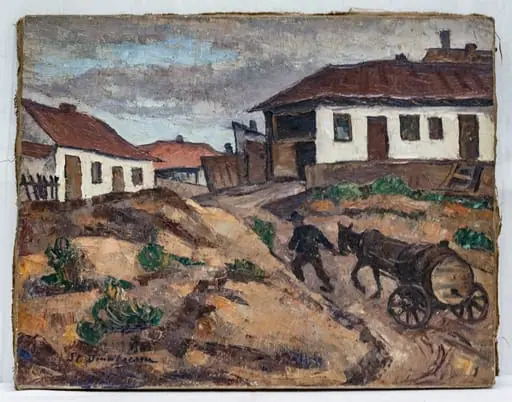
The painting depicts a desolate rural scene: a muddy field with a stranded, dark wagon, pulled by two weary horses. The vague, hazy background suggests distant, indistinct structures or trees, evoking a sense of isolation.
Technique & Style
Characterized by thick, uneven brushstrokes and a predominantly dull, earthy color palette, the work exhibits a textured, almost impasto quality, with no prominent highlights.
History & Provenance
Created in 1939, the painting is part of the collection at the Museum of Ethnography, though specific details about its acquisition or earlier ownership are not provided.
Context
While specific contextual influences are not detailed, the piece's somber tone and rural focus might reflect the economic or social realities of its time, though this is speculative without further biographical or historical context.
Legacy
The painting's impact or influence on subsequent art movements or trends is not specified, existing primarily as a documented work within Schweitzer-Cumpăna's oeuvre and the museum's holdings.
Artist & collection
Artist
Rudolf Schweitzer-Cumpăna was a Romanian painter. Born in Pitești into an ethnic German family, he finished high school in his native town before attending the Royal Academy of Arts at Berlin from 1904 to 1909, studying…