Artwork
Prânz țărănesc
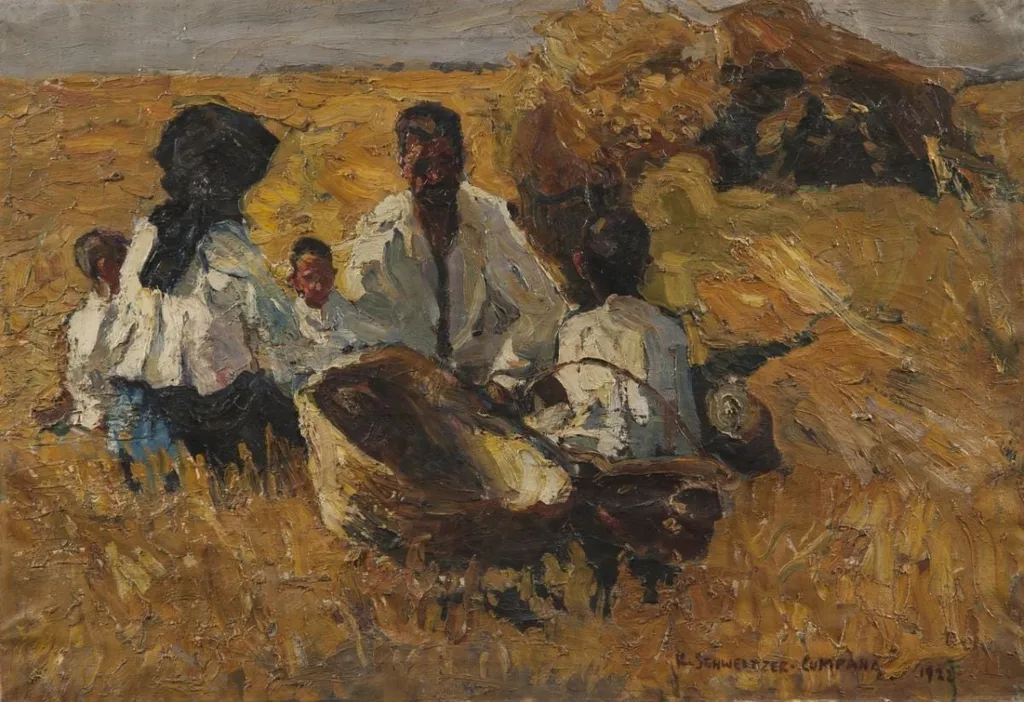
Prânz țărănesc is an unspecified painting by the Biedermeier artist Rudolf Schweitzer-Cumpăna. It dates from 1922 and is held in the collection of the National Museum of Art of Romania.
About this work
The brushstrokes are thick and uneven, making the colors—mostly browns, yellows, and whites—look almost like they were slapped on.
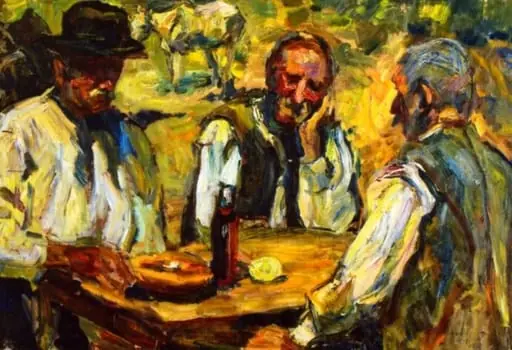
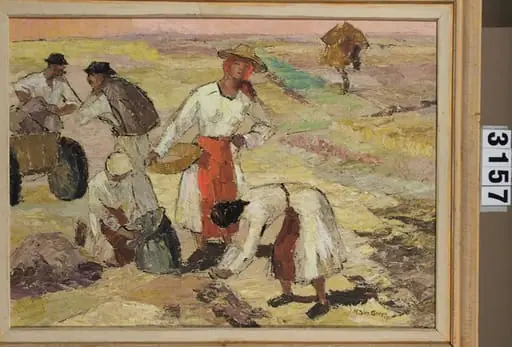
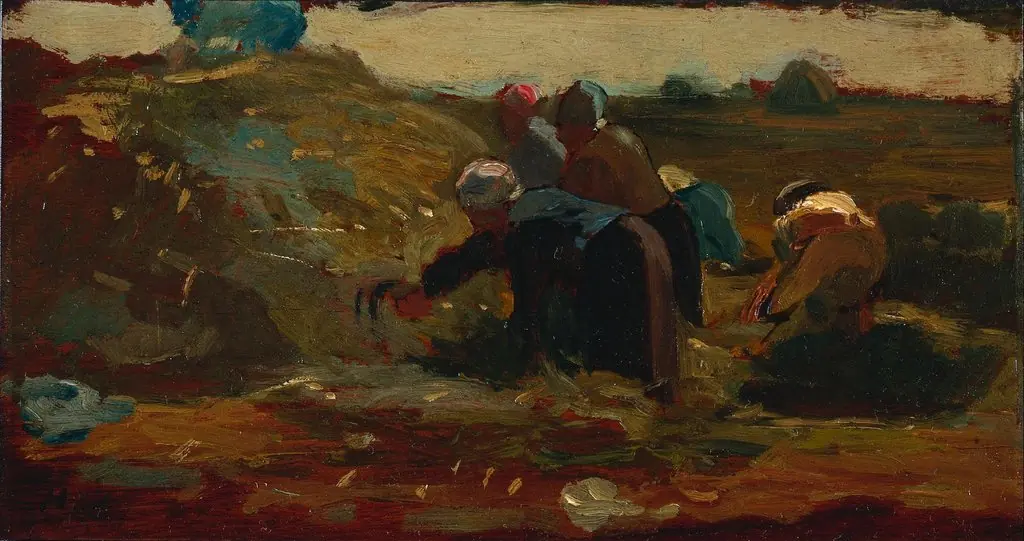
This painting shows a rough, textured scene with four figures sitting around a table. The brushstrokes are thick and uneven, making the colors—mostly browns, yellows, and whites—look almost like they were slapped on. One person is standing, another is seated with their back to us, and the table holds a few indistinct objects.
The painting feels unfinished, like the artist worked fast or didn’t smooth out the details. The signature says "R. Schweitzer-Cumpăna" and the year "1922."
If you like this style, look up impasto next.
Overview
Prânz țărănesc, painted in 1922 by Rudolf Schweitzer-Cumpăna, depicts a rural Romanian meal scene with four figures gathered around a table. The composition is unpolished, with figures arranged in a loose, informal grouping. The surface is dominated by heavy, irregular brushwork that gives the impression of urgency or spontaneity. The work carries no overt narrative, instead focusing on the physicality of the moment and the materiality of paint.
Subject & Meaning
The scene captures a quiet, everyday moment of rural laborers sharing a meal. One figure stands, perhaps preparing to leave or serve; another sits with their back turned, adding a sense of anonymity. The lack of facial detail and the indistinct table objects emphasize the universality of the act over individual identity. The painting suggests dignity in simplicity, avoiding sentimentality in favor of raw observation.
Technique & Style
Schweitzer-Cumpăna employed thick, textured brushstrokes characteristic of impasto, applying paint with visible force and minimal blending. Colors are restricted to earth tones—browns, ochres, and off-whites—enhancing the sense of material authenticity. The surface remains deliberately rough, with edges left unrefined and forms barely defined. This approach prioritizes tactile presence over realism, aligning with early 20th-century expressive tendencies.
History & Provenance
The painting is signed and dated by the artist in 1922, placing it within his early mature period. Little is documented about its immediate reception or ownership history. It remains within the sphere of Romanian interwar art, associated with regionalist themes and the broader European movement toward expressive realism. Its survival suggests it was retained by the artist or a close circle, rather than entering public collections early.
Context
Created in post-WWI Romania, the work reflects a cultural turn toward rural life as a source of national identity. Urbanization and modernization were accelerating, and artists like Schweitzer-Cumpăna turned to peasant subjects to anchor their work in tradition. The painting’s roughness contrasts with academic ideals of polish, aligning it with broader European trends that valued emotional truth over technical perfection.
Legacy
Prânz țărănesc stands as a modest but significant example of Romanian expressionist realism. While not widely exhibited, it contributes to understanding how local artists adapted international styles to depict everyday rural life. Its unvarnished technique influenced later generations interested in authenticity over idealization, though it remains a lesser-known work within the broader canon of Eastern European modernism.
Artist & collection
Artist
Rudolf Schweitzer-Cumpăna was a Romanian painter. Born in Pitești into an ethnic German family, he finished high school in his native town before attending the Royal Academy of Arts at Berlin from 1904 to 1909, studying…