Artwork
Vânat
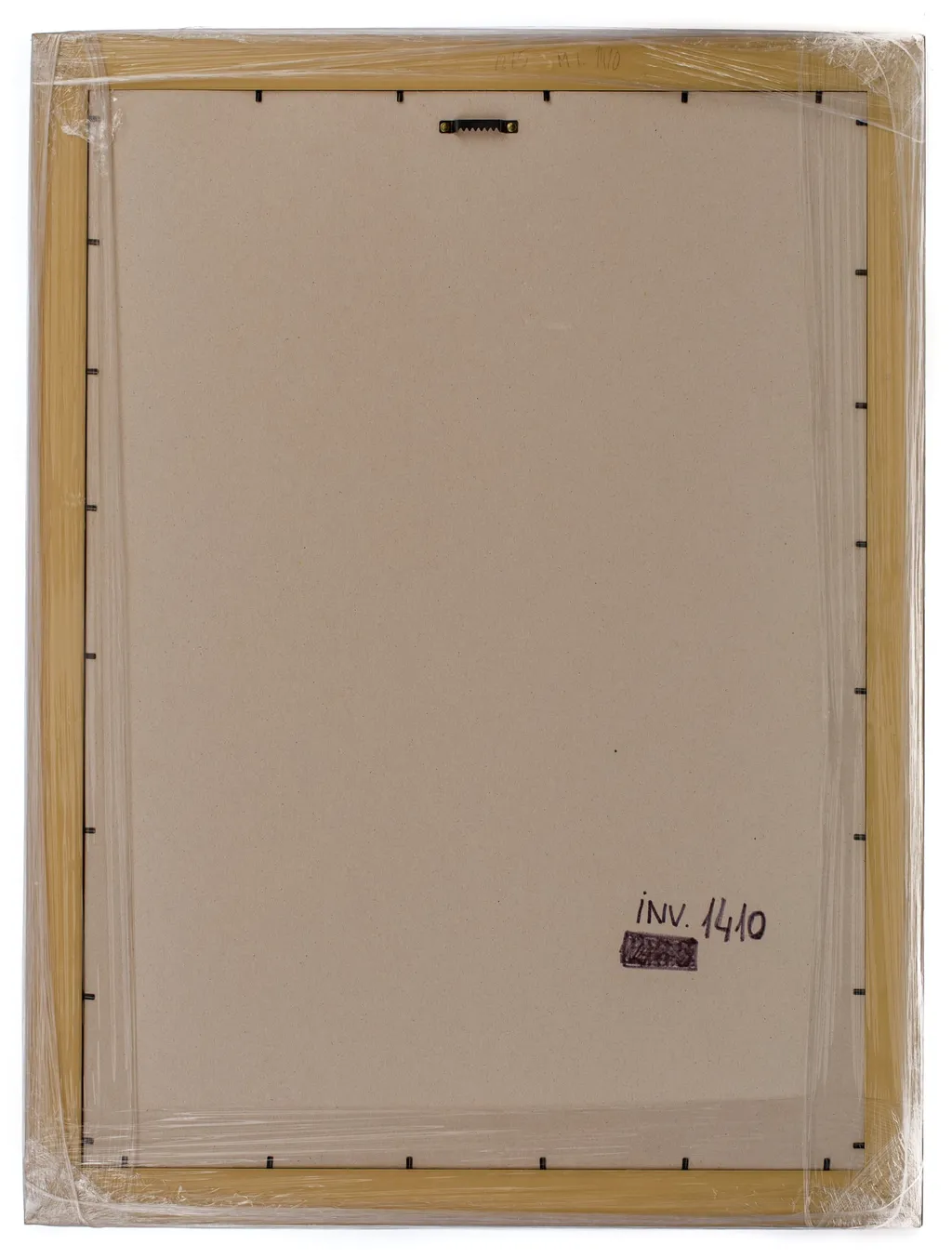
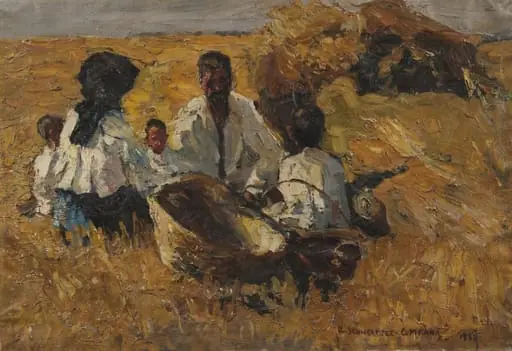
Vânat is an unspecified painting by Rudolf Schweitzer-Cumpăna. It dates from 1938 and is held in the collection of the Moldova National Museum Complex.
About this work
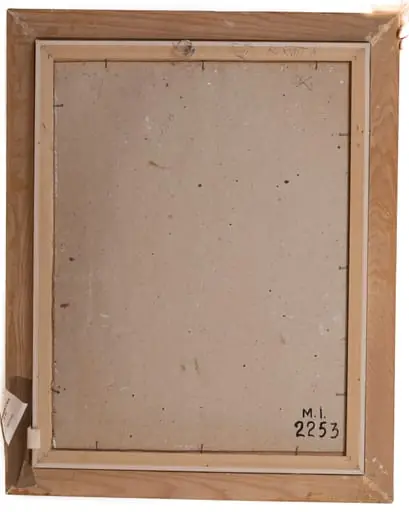
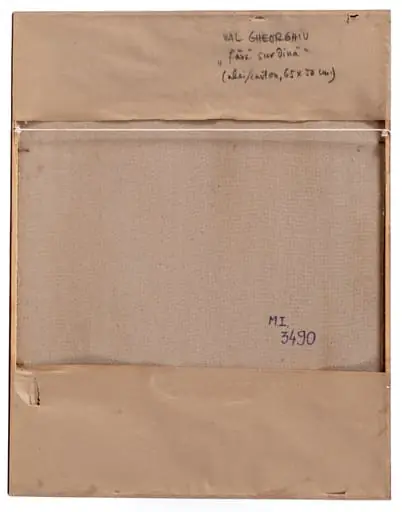
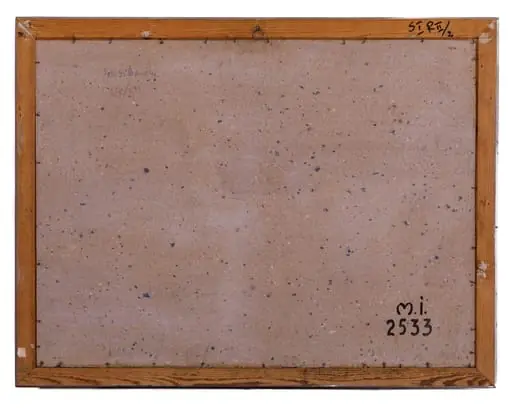
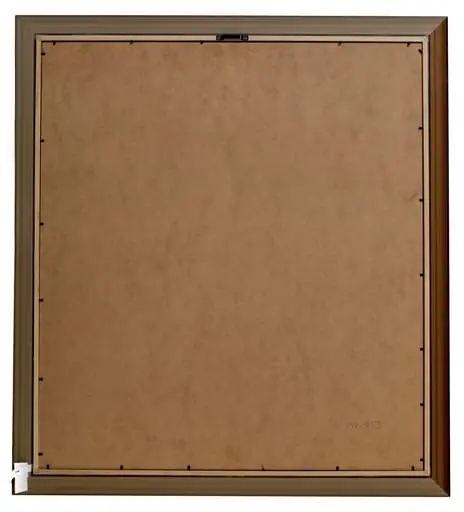
The frame is rectangular, with a small metal piece at the top center and a handwritten number "1410" in the bottom right corner.
This image shows the back of a painting, framed in light wood and wrapped in clear plastic. The frame is rectangular, with a small metal piece at the top center and a handwritten number "1410" in the bottom right corner.
The frame's backing is a light brown material, possibly cardboard or wood, with small black tabs along the edges. A handwritten label on the top of the frame reads "INV. 1410" in black marker.
This painting is part of the collection at the Museum of Ethnography.
Overview
Vânat is a painting by Rudolf Schweitzer-Cumpăna, dated 1938, held in the collection of the Museum of Ethnography. The visible portion of the work is its reverse side, framed in light wood and sealed with clear plastic. A handwritten inventory number, '1410,' appears in the lower right, matching a label above the frame. The backing is a coarse, light brown material, likely cardboard or thin wood, secured with small black fasteners along the perimeter.
Subject & Meaning
The subject of the painting remains unseen, as only the reverse is documented. The title 'Vânat,' meaning 'hunted' or 'game' in Romanian, suggests a thematic connection to hunting or rural life, common in Schweitzer-Cumpăna’s work. Without the front image, interpretation relies on contextual knowledge of the artist’s focus on Transylvanian folk traditions and regional identity during the interwar period.
Technique & Style
No details of the painted surface are visible, so stylistic analysis is limited. The frame’s simple, unadorned wood and utilitarian backing indicate a practical approach to storage or transport, typical for works in institutional collections. The handwritten labels suggest the piece was cataloged manually, reflecting standard museum practices of the mid-20th century rather than formal exhibition preparation.
History & Provenance
The painting entered the Museum of Ethnography’s collection with the inventory number 1410, assigned by hand in black marker. Its preservation in a sealed frame implies care to prevent deterioration, possibly after acquisition or during relocation. The absence of exhibition records or prior ownership details leaves its early history undocumented beyond its creation date and institutional custody.
Context
Created in 1938, Vânat emerged during a period of heightened interest in Romanian folk culture, as artists and institutions sought to define national identity through regional imagery. Schweitzer-Cumpăna, active in Transylvania, often depicted rural scenes and traditional livelihoods. This work likely reflects that movement, though its current state as a reverse view limits direct engagement with its original visual content.
Legacy
As a preserved but unexhibited reverse, Vânat serves as a physical artifact of museum practice rather than a displayed artwork. Its documentation highlights how institutional handling—labeling, framing, and storage—shapes the preservation of cultural objects. The painting’s full significance remains contingent on future access to its front surface or archival records.
Artist & collection
Artist
Rudolf Schweitzer-Cumpăna was a Romanian painter. Born in Pitești into an ethnic German family, he finished high school in his native town before attending the Royal Academy of Arts at Berlin from 1904 to 1909, studying…