Artwork
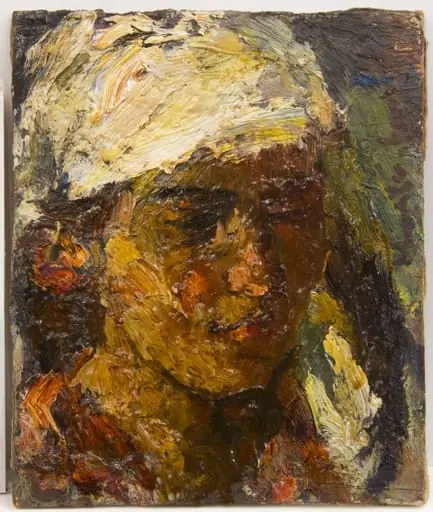
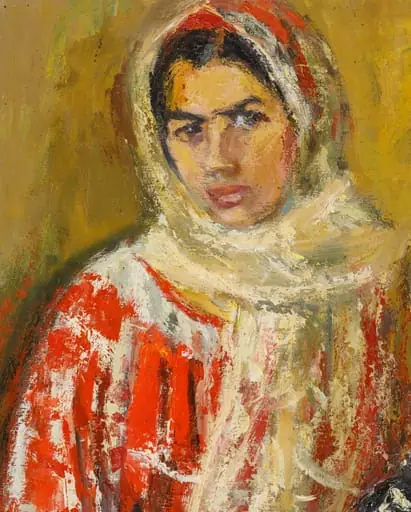
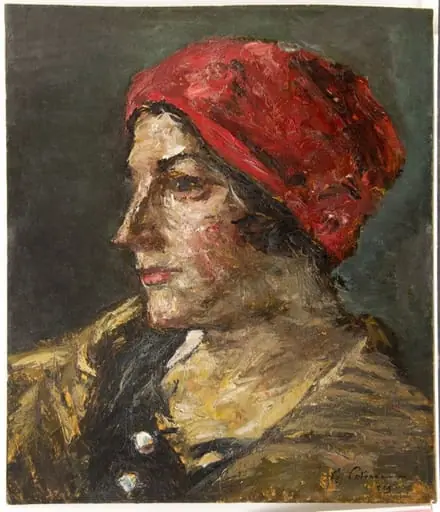
Femeie cu broboadă
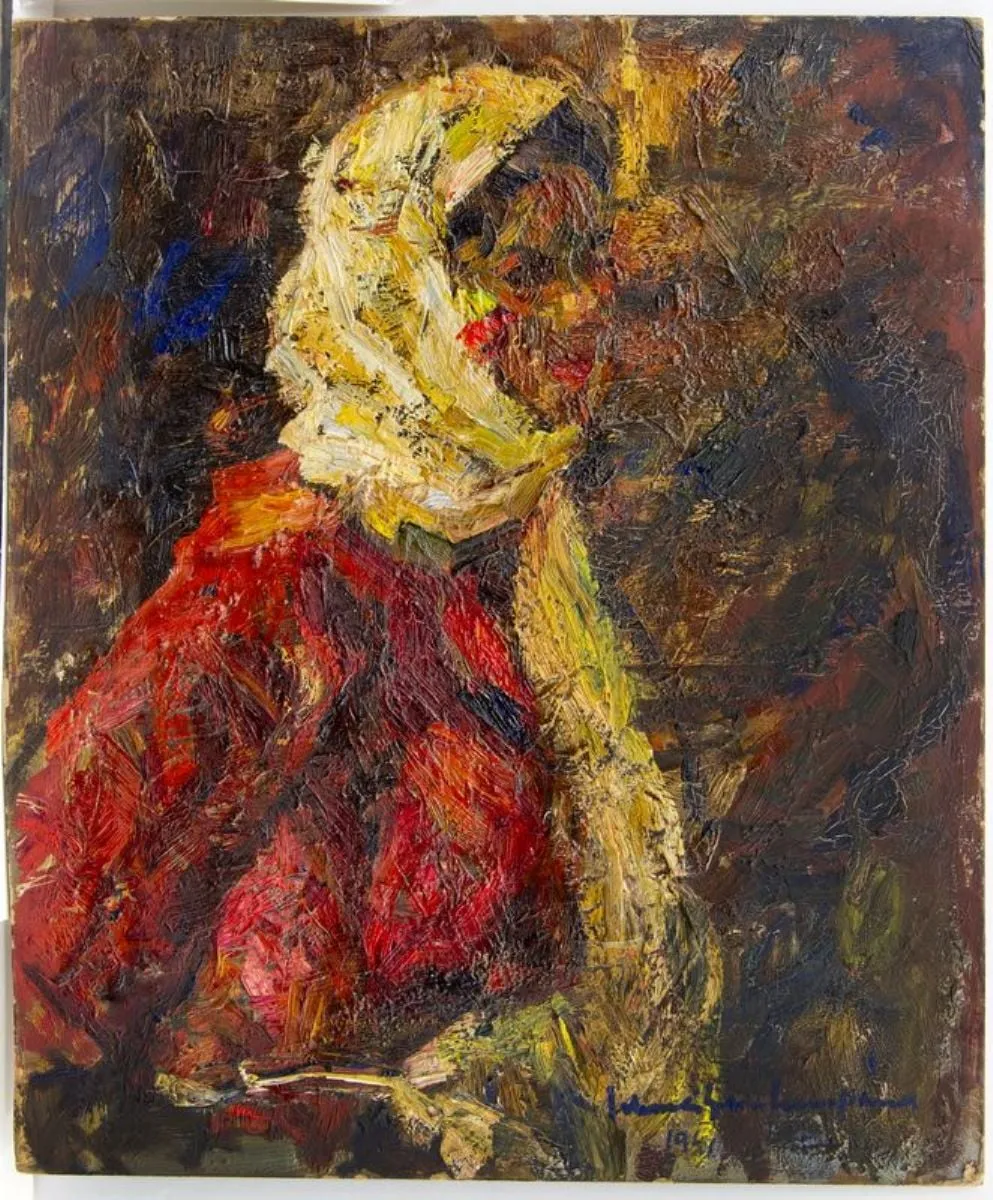
Femeie cu broboadă is a print by Rudolf Schweitzer-Cumpăna. It dates from 1936 and is held in the collection of the National Museum of Art of Romania.
About this work
Overview
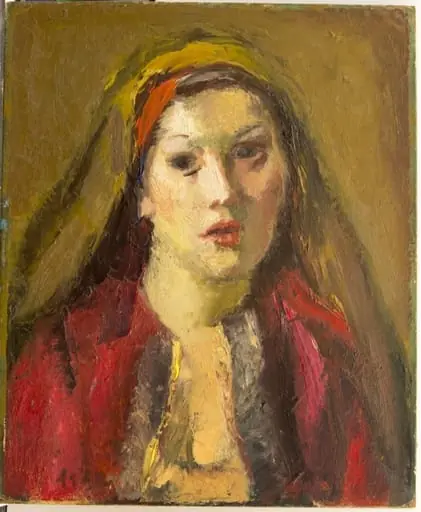
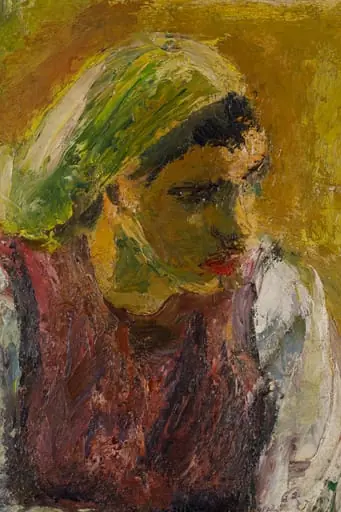
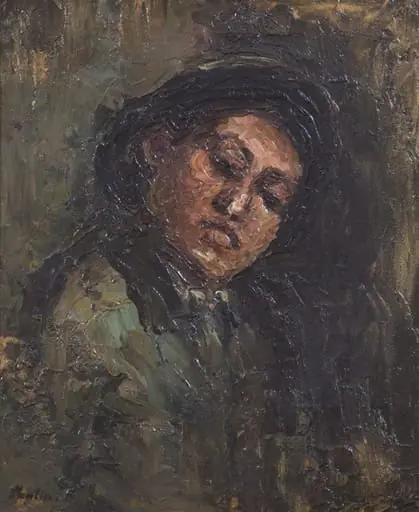
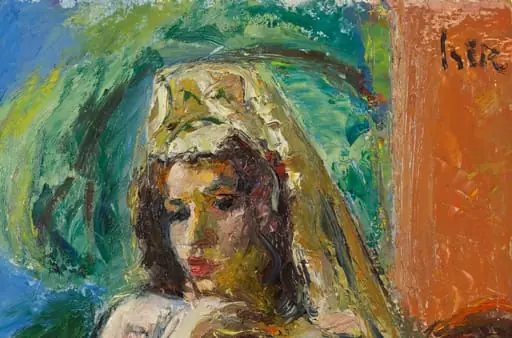
Painted around 1936 by Rudolf Schweitzer-Cumpăna, this work depicts a female figure rendered with intense physicality. The subject is enveloped in layered pigments that obscure form rather than define it, emphasizing texture over clarity. The painting’s raw surface and muted palette convey a sense of weight and presence, rooted in the materiality of the paint itself.
Subject & Meaning
The figure, wrapped in a red shawl and yellow headscarf, remains partially veiled, her features dissolved into the surrounding brushwork. This deliberate obscurity shifts focus from individual identity to the emotional resonance of posture and fabric. The anonymity suggests a universal or symbolic representation, perhaps of labor, resilience, or quiet solitude.
Technique & Style
Thick, heavily applied paint creates a tactile, almost sculptural surface, characteristic of impasto. The artist used a palette dominated by earthy reds, ochres, and deep browns, applied with vigorous, uneven strokes. The texture draws attention to the act of painting itself, prioritizing physical gesture over refined detail or naturalistic illusion.
History & Provenance
The painting emerged during Schweitzer-Cumpăna’s active period in Romania, a time when he engaged with expressive, post-impressionist tendencies. While specific ownership records are limited, it is known to have been part of regional collections in the mid-20th century, reflecting local interest in emotionally charged figurative work.
Context
Created in the interwar years, the work aligns with broader European trends favoring expressive distortion and material experimentation over academic realism. Though not part of a named movement, its approach echoes contemporaneous efforts by artists to convey inner states through the physicality of paint, distinct from both modernist abstraction and traditional portraiture.
Legacy
The painting remains a quiet example of Romanian interwar expressionism, valued for its unpolished intensity and resistance to idealization. It contributes to a lesser-known strand of regional modernism that prioritized emotional authenticity over stylistic conformity, influencing later artists interested in the corporeal potential of paint.
Artist & collection
Artist
Rudolf Schweitzer-Cumpăna was a Romanian painter. Born in Pitești into an ethnic German family, he finished high school in his native town before attending the Royal Academy of Arts at Berlin from 1904 to 1909, studying…