Artwork
Iron and Coal: the Industry of the Tyne
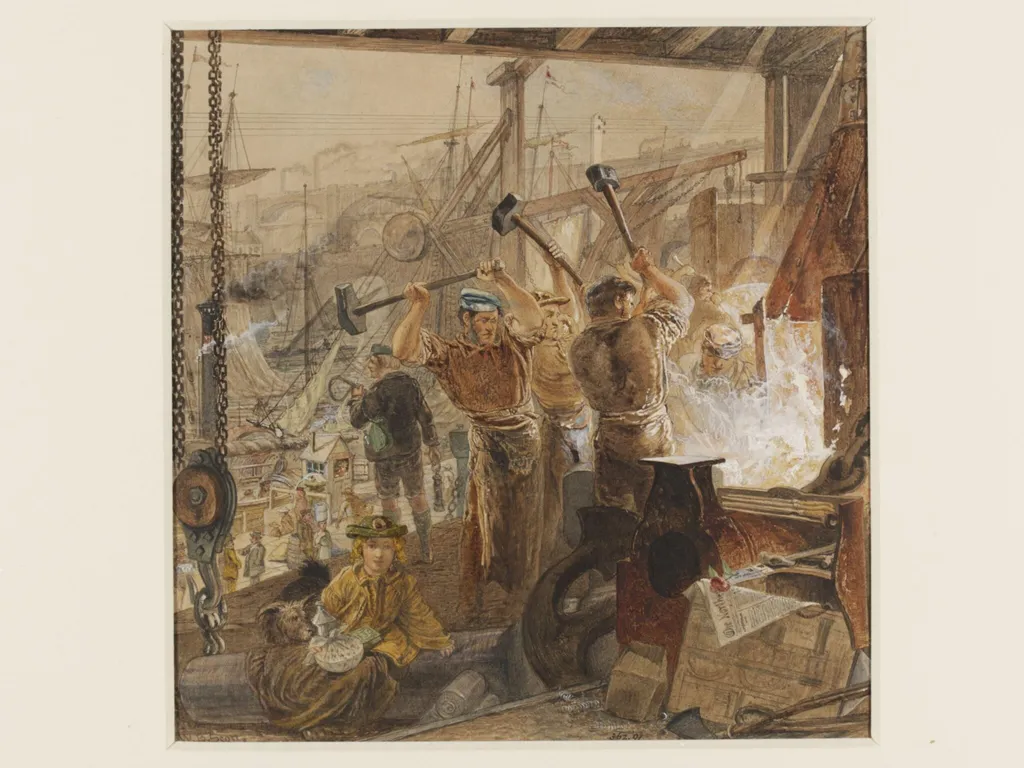
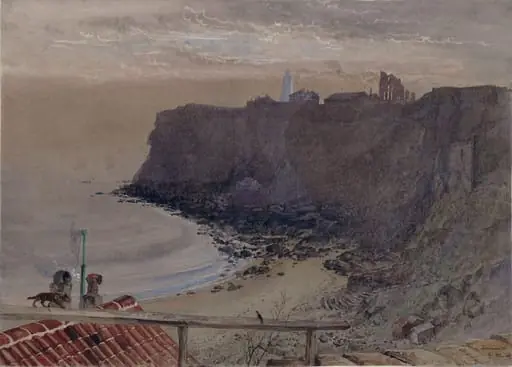
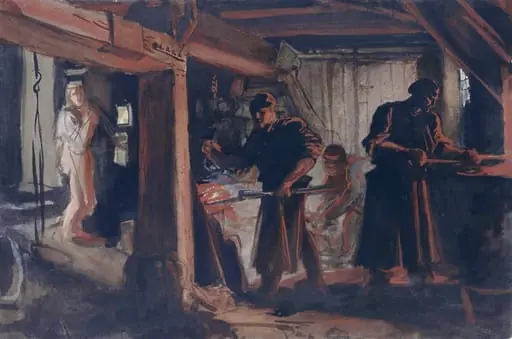
Iron and Coal: the Industry of the Tyne is a watercolor work on paper by the Impressionist artist William Bell Scott. It dates from 1859 and is held in the collection of the Victoria and Albert Museum.
About this work
Overview
Created in 1856, this watercolour by William Bell Scott records the industrial vigor of Newcastle upon Tyne during the mid‑nineteenth century.
Created in 1856, this watercolour by William Bell Scott records the industrial vigor of Newcastle upon Tyne during the mid‑nineteenth century. Commissioned by Sir Walter Trevelyan, the piece derives from a larger mural originally painted on the walls of Trevelyan’s country residence, Wallington, in Northumberland. The work presents a panoramic view of iron‑working and coal‑mining activities that underpinned the region’s economic expansion.
Subject & Meaning
The composition foregrounds bustling factories, steam‑driven machinery, and coal‑laden barges, symbolising the prosperity generated by the Tyne’s heavy industries. By depicting these elements in a celebratory manner, Scott emphasizes the pride of a community whose fortunes were increasingly tied to manufacturing and trade, reflecting the optimism of a newly affluent industrial class.
Technique & Style
Executed in watercolour, the piece employs a muted yet precise palette that balances atmospheric washes with fine linear detail. Scott’s handling of light captures the smoky haze of furnaces while retaining clarity in architectural and mechanical forms, illustrating his ability to render complex industrial scenes with both documentary accuracy and artistic compositional harmony.
History & Provenance
The original mural adorned the great hall of Wallington, where Sir Walter Trevelyan displayed it as a testament to his family’s mining heritage. A later, portable watercolour version was produced, eventually entering the collection of the Victoria and Albert Museum, where it remains accessible for study and public viewing.
Context
During the 1850s, the North of England experienced rapid growth in iron production and coal extraction, positioning Newcastle as a central hub of the British Industrial Revolution. Patrons such as Trevelyan, whose wealth derived from lead and mining enterprises, frequently commissioned artworks that glorified the very industries that secured their fortunes, linking art with economic identity.
Artist & collection

Artist
William Bell Scott was a Scottish artist in oils and watercolour and occasionally printmaking.