Artwork
Relief sculpture of the great temple at Halebid
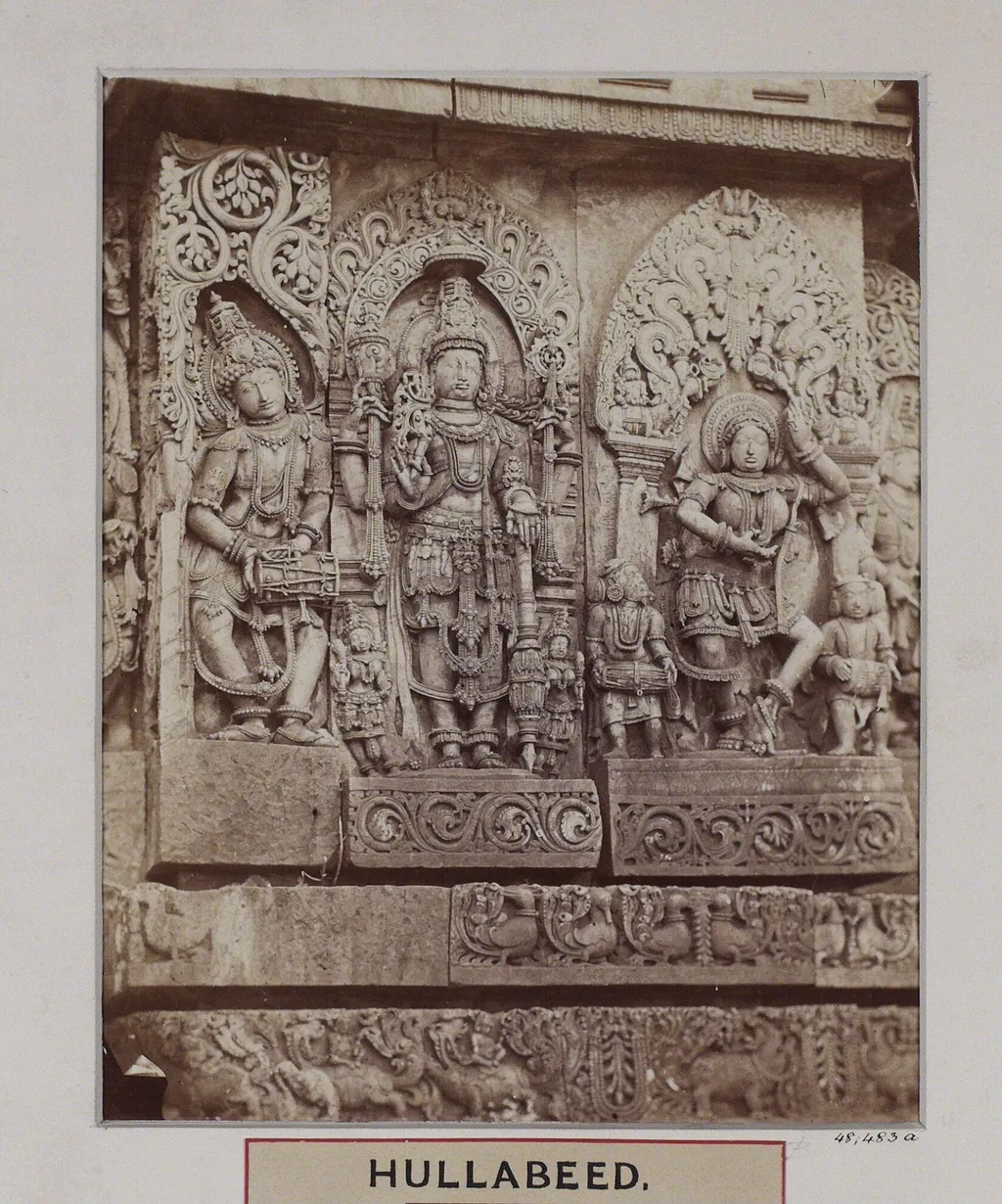
Relief sculpture of the great temple at Halebid is a photographic photography by Unknown. It dates from 1850 and is held in the collection of the Victoria and Albert Museum.
About this work
Overview
This 19th-century photograph captures a detailed stone relief sculpture originating from the great temple at Halebid, a 12th- to 13th-century Hoysala structure in India.
Subject & Meaning
The relief depicts three robed figures, centrally one holding a staff-like object, set amidst intricate swirly designs and minor figurative elements. The stiff, formal poses and calm expressions are characteristic of traditional Indian temple sculpture, likely conveying religious or ceremonial themes.
Technique & Style
The sculpture showcases refined Hoysala-era craftsmanship, with meticulous attention to detail evident in the jewelry, cloth folds, and miniature secondary figures. The style aligns with ancient Indian temple art traditions, bearing a historical connection to Gandhara influences.
History & Provenance
Originally part of the Halebid temple (12th-13th centuries), the sculpture suffered damage during later Muslim invasions. The photograph, dating to the 1800s, documents the relief's surviving state at that time.
Context
The sculpture reflects the artistic and religious practices of the Hoysala dynasty, specifically their devotion to Shiva. Its preservation via 19th-century photography highlights the intersection of ancient Indian art with colonial-era documentation efforts.
Artist & collection

 Domestic Scene
 Giacomo and Cardinal Marco, investing Andrea, Abbot of San Zeno, with his Benefice
 The Nymph of Fontainebleau
 Portrait of a Woman
 Madonna and Child with Saints in the Enclosed Garden
 Venus and Minerva
 Family Group of Four on Sofa
 Wall painting from Room H of the Villa of P. Fannius Synistor at Boscoreale
 Western front of the great temple at Halebid
 Western terraced front of the great temple at Halebid
 Hoyshaleshvara Temple Sculpture, Halebidu (Halebeedu)
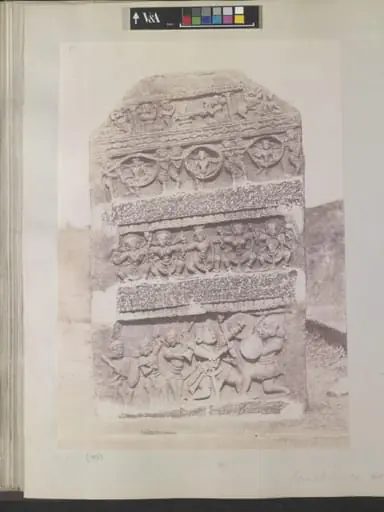 Sculpture at Hungul
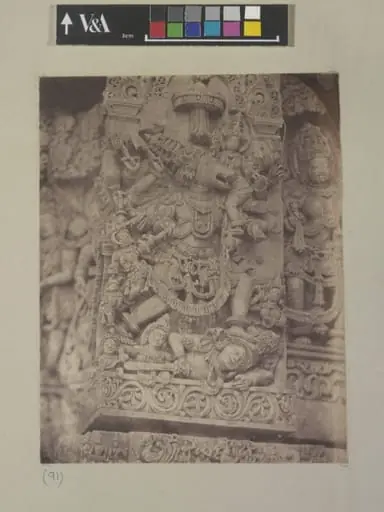 Hindoo Temple Sculptures, Southern India, Hullabeed
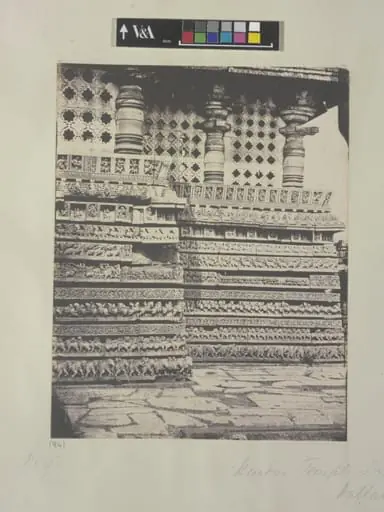 Hindoo Temple Sculpture, Southern India, Hullabeed
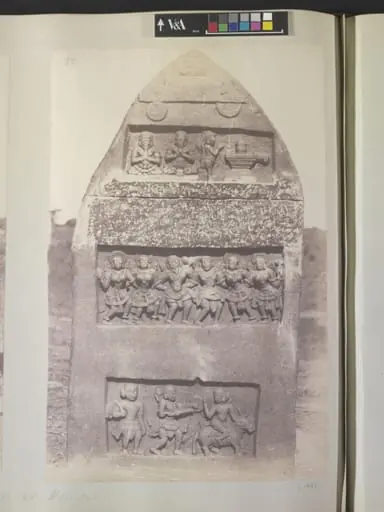 Sculpture at Hungul
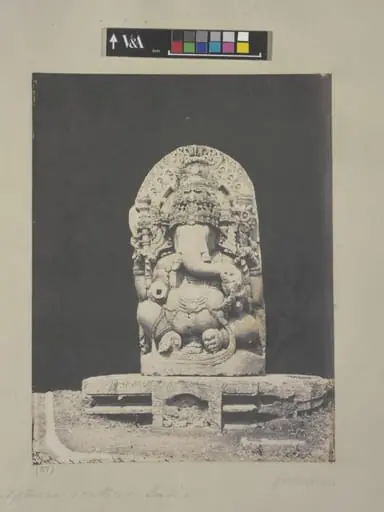 Hindoo Temple Sculptures, Southern India, Hullabeed
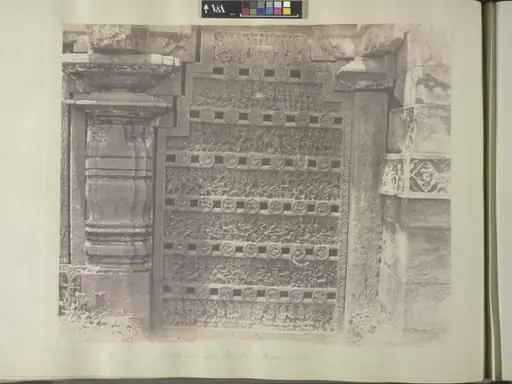 Sculpture at Temple
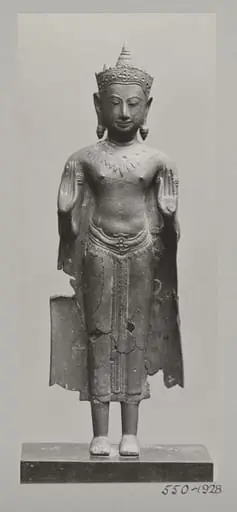 Bronze sculpture of standing figure of the Dipankara Buddha, V&A Museum