Artwork
Plundering of a Hamlet
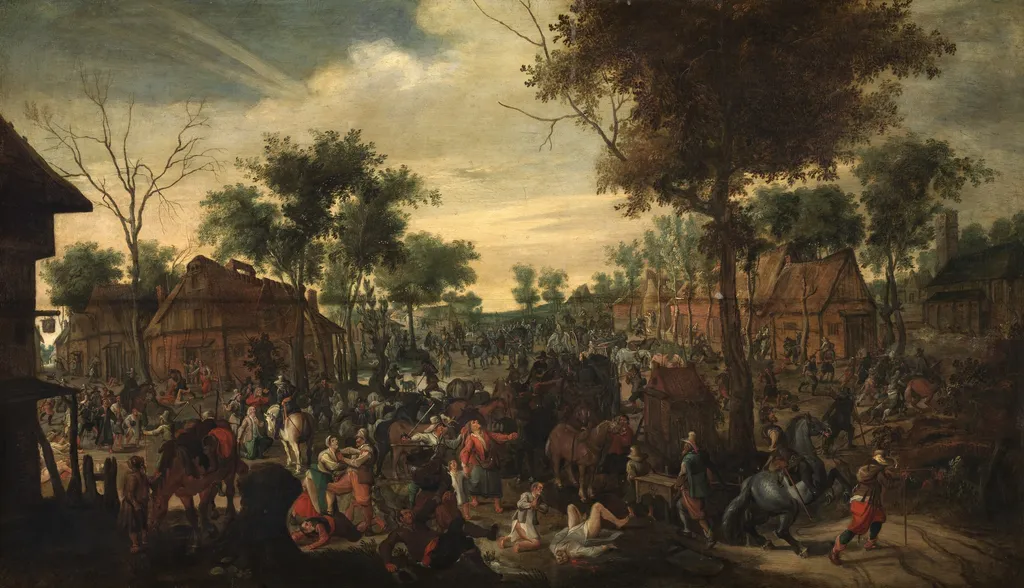
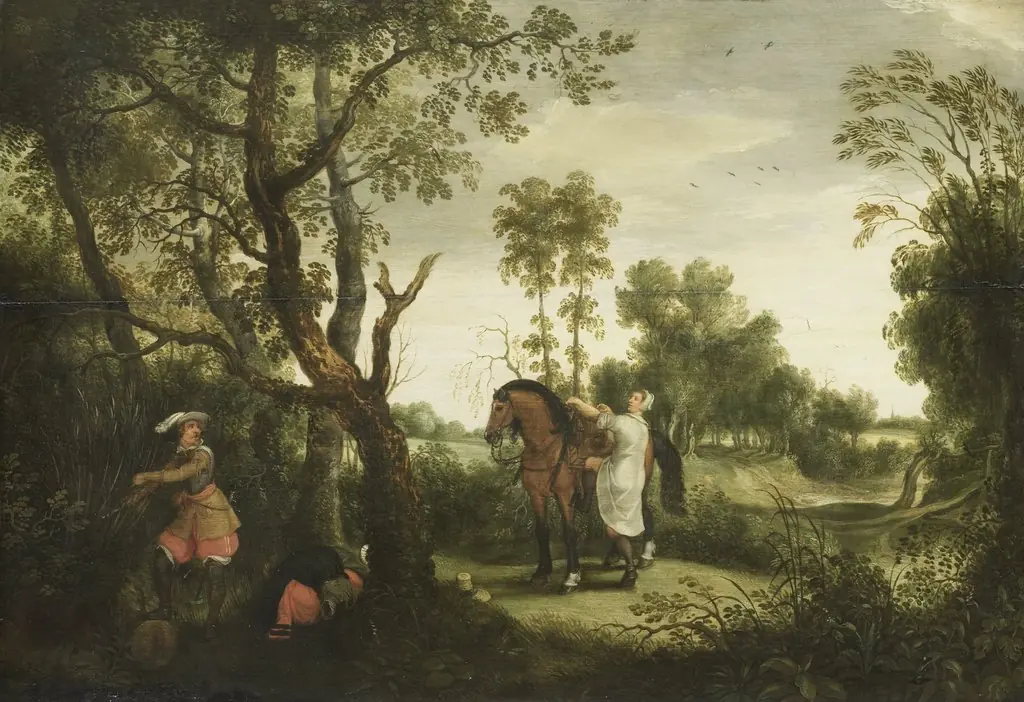
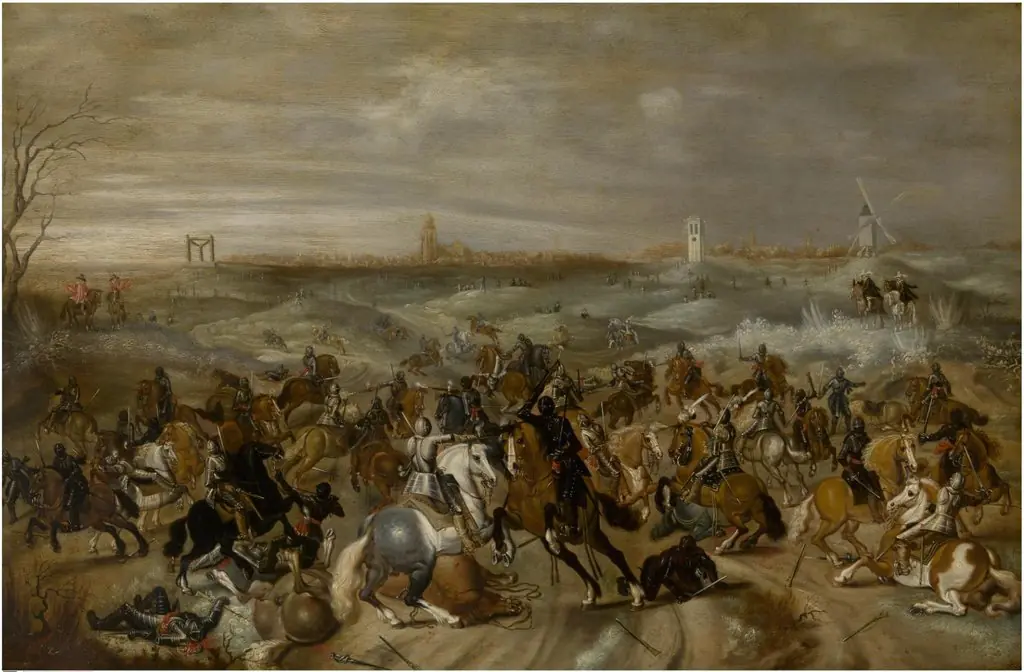
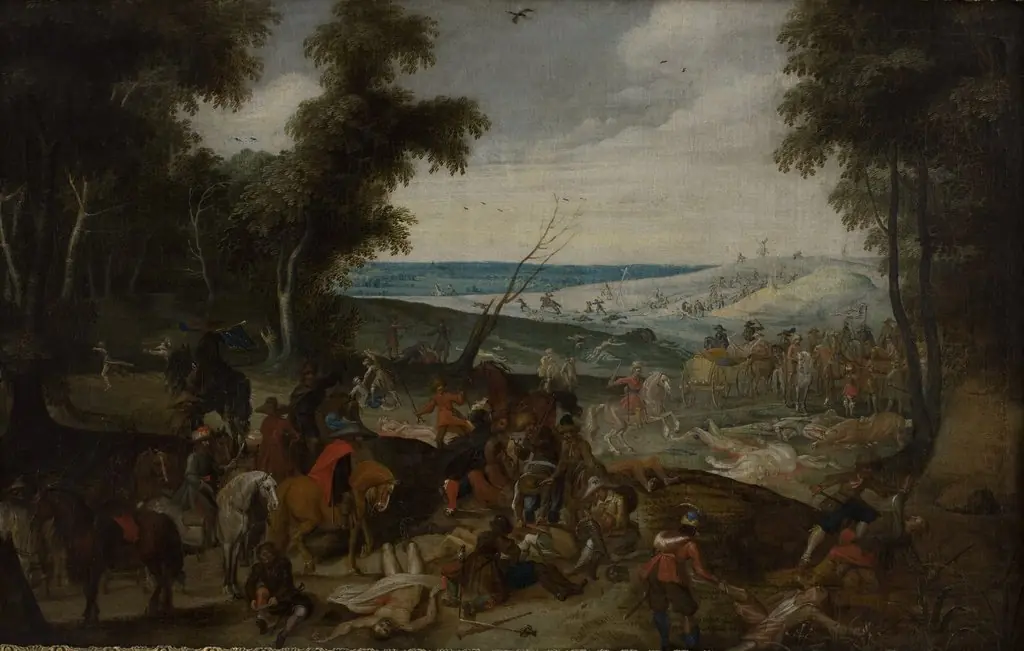
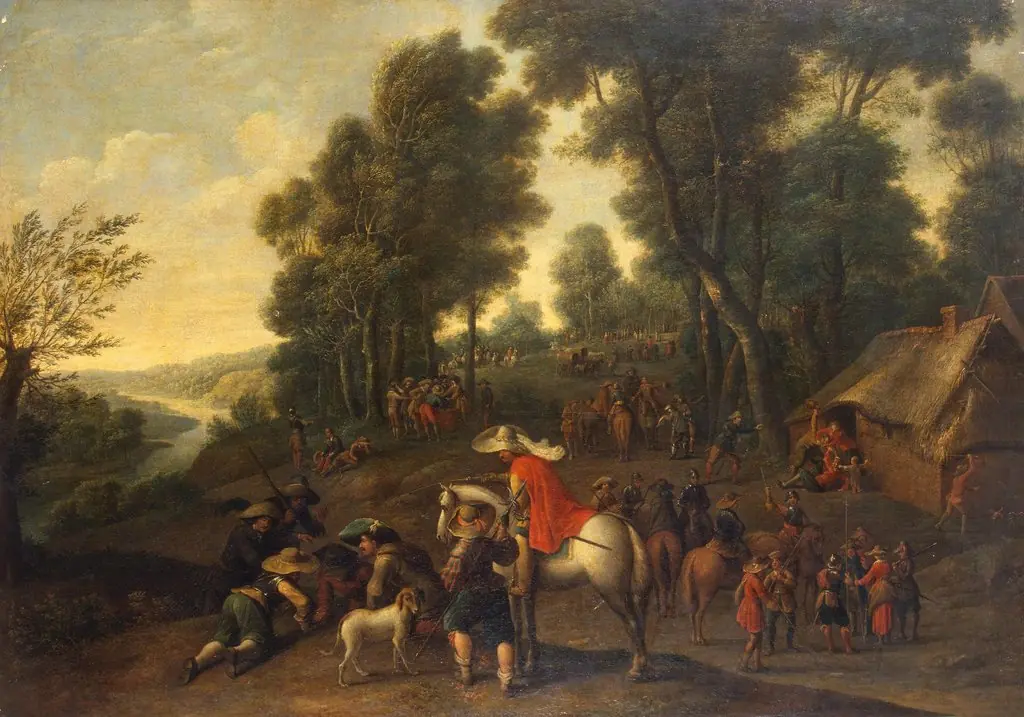
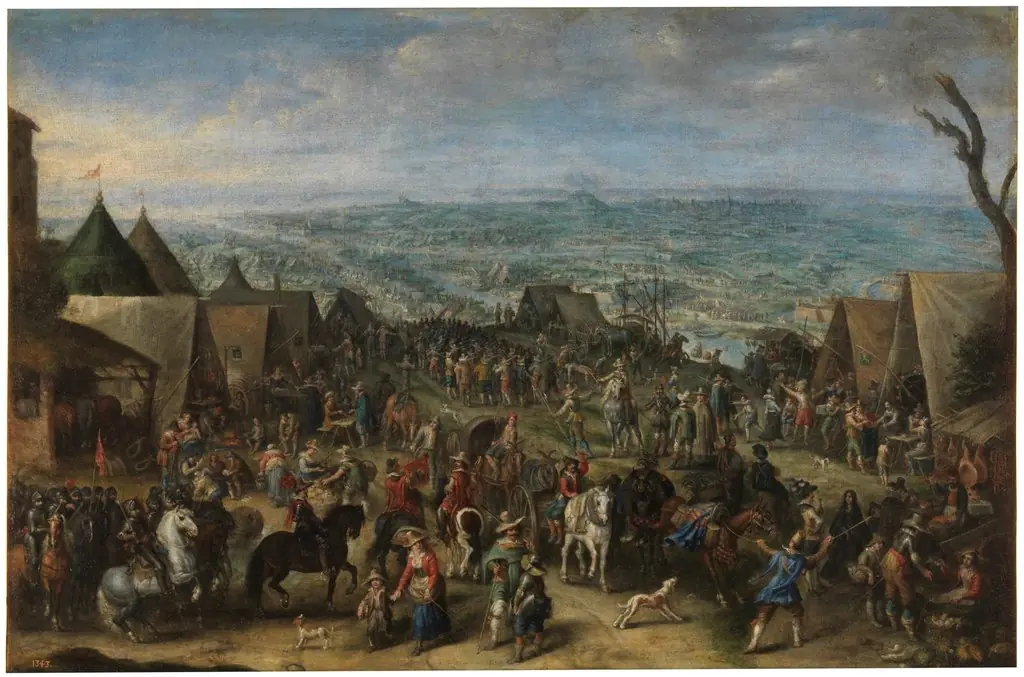
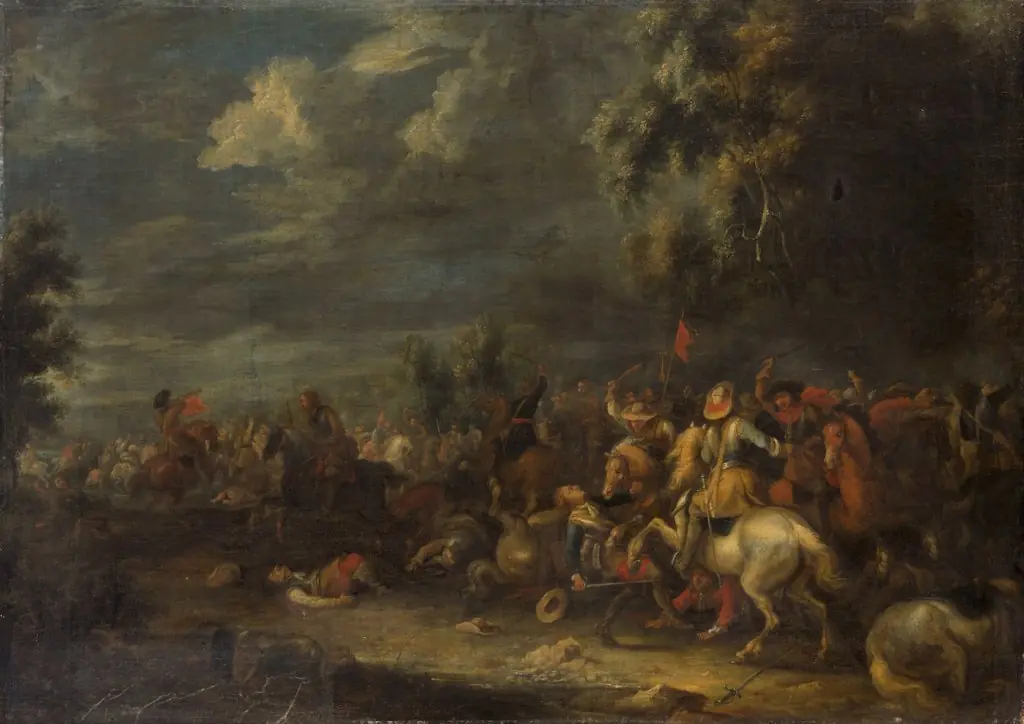
Plundering of a Hamlet is an oil painting by the Flemish Baroque painting artist Sebastiaen Vrancx. It dates from 1620 and is held in the collection of the Royal Museum of Fine Arts Antwerp.
About this work
Overview
Sebastiaen Vrancx painted *Plundering of a Hamlet* circa 1620 in oil on panel, capturing a violent raid on a rural settlement.
Sebastiaen Vrancx painted *Plundering of a Hamlet* circa 1620 in oil on panel, capturing a violent raid on a rural settlement. A Flemish artist active in the early 17th century, he was among the first in the Low Countries to treat military conflict as a subject in its own right, moving beyond religious or mythological narratives. This work exemplifies his focus on the human experience during wartime, rendered with attention to movement and disorder.
Subject & Meaning
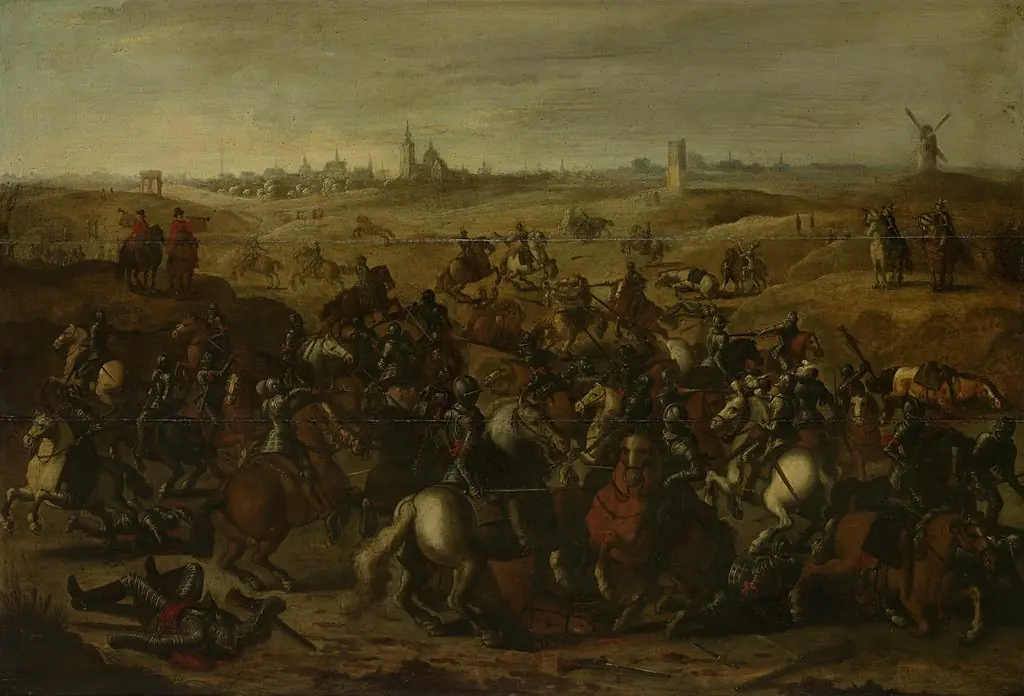
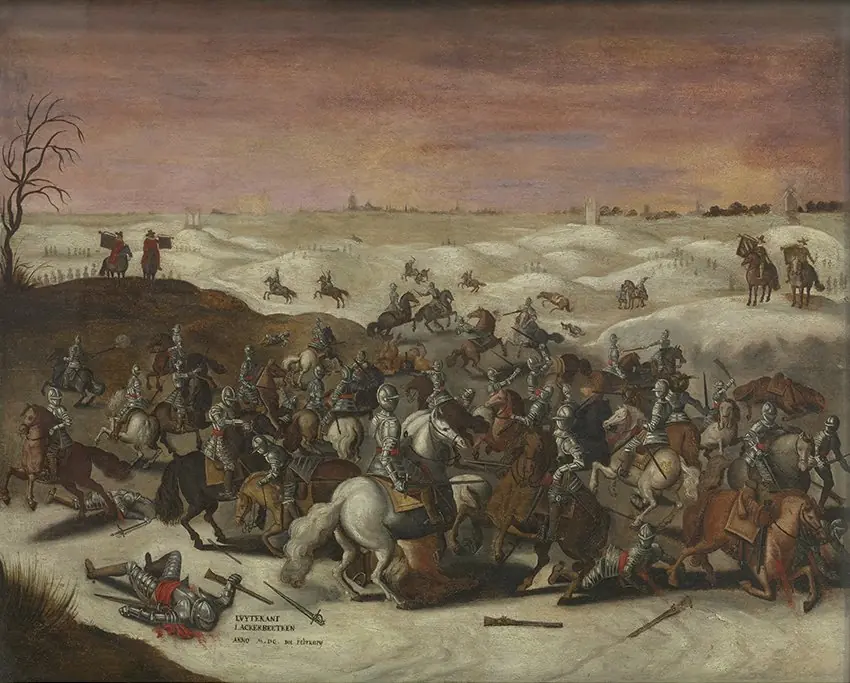
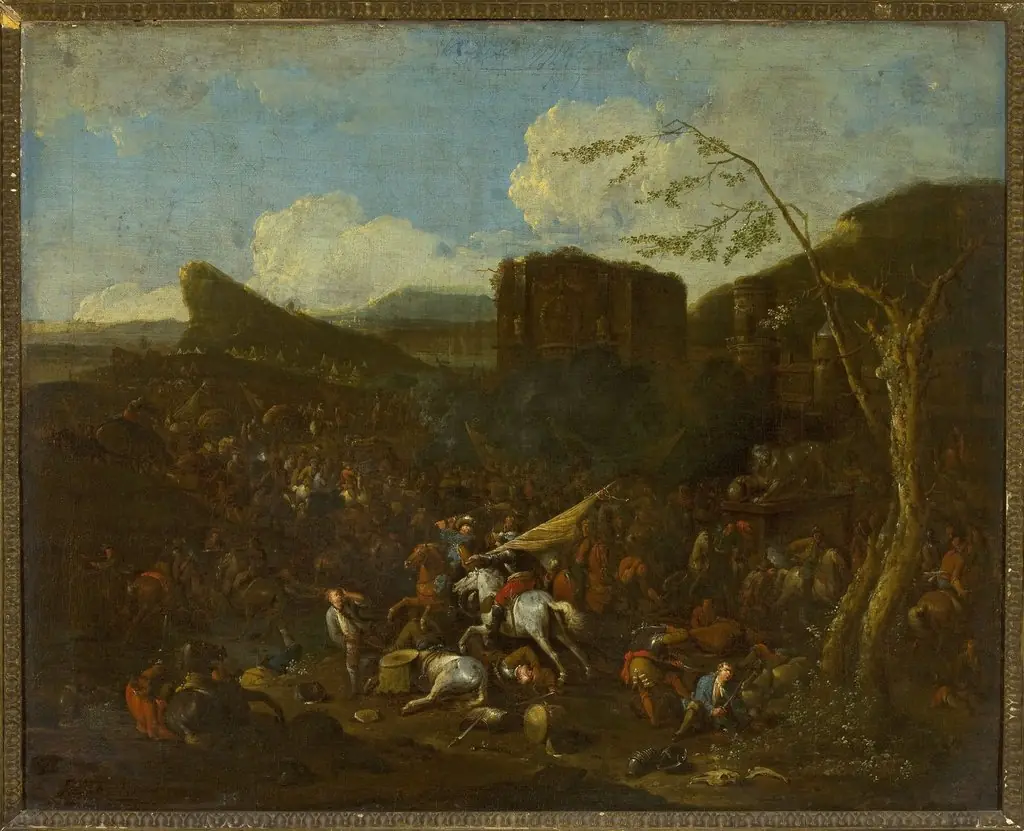
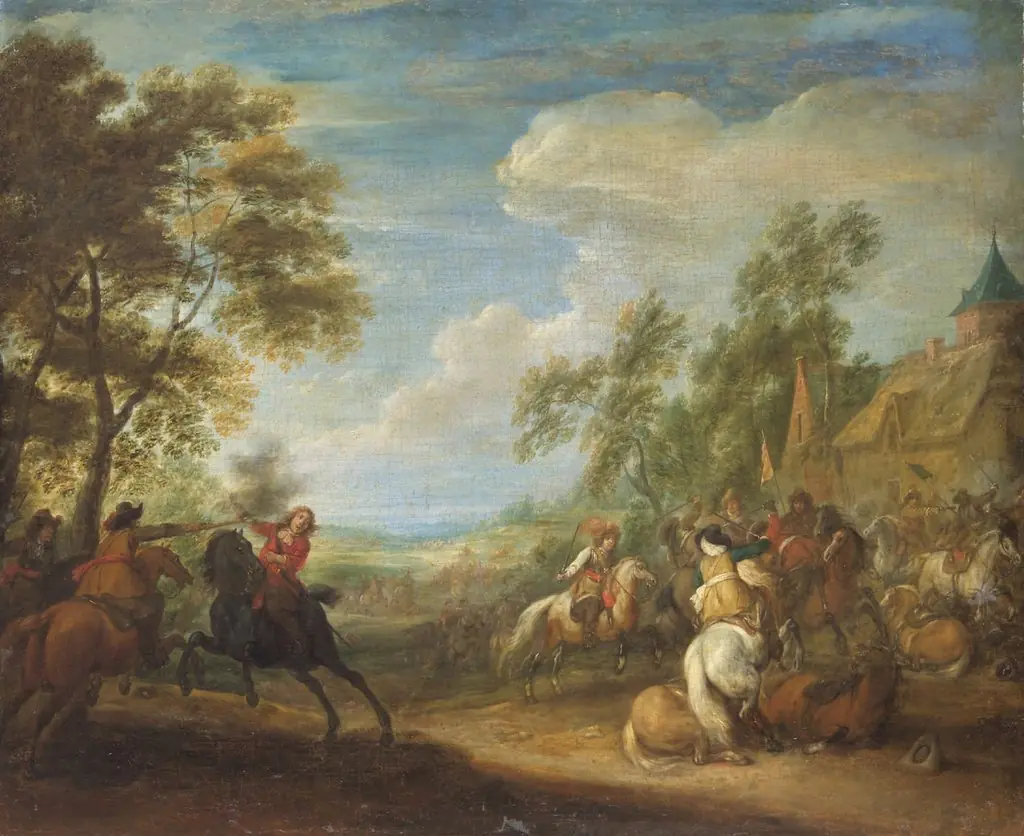
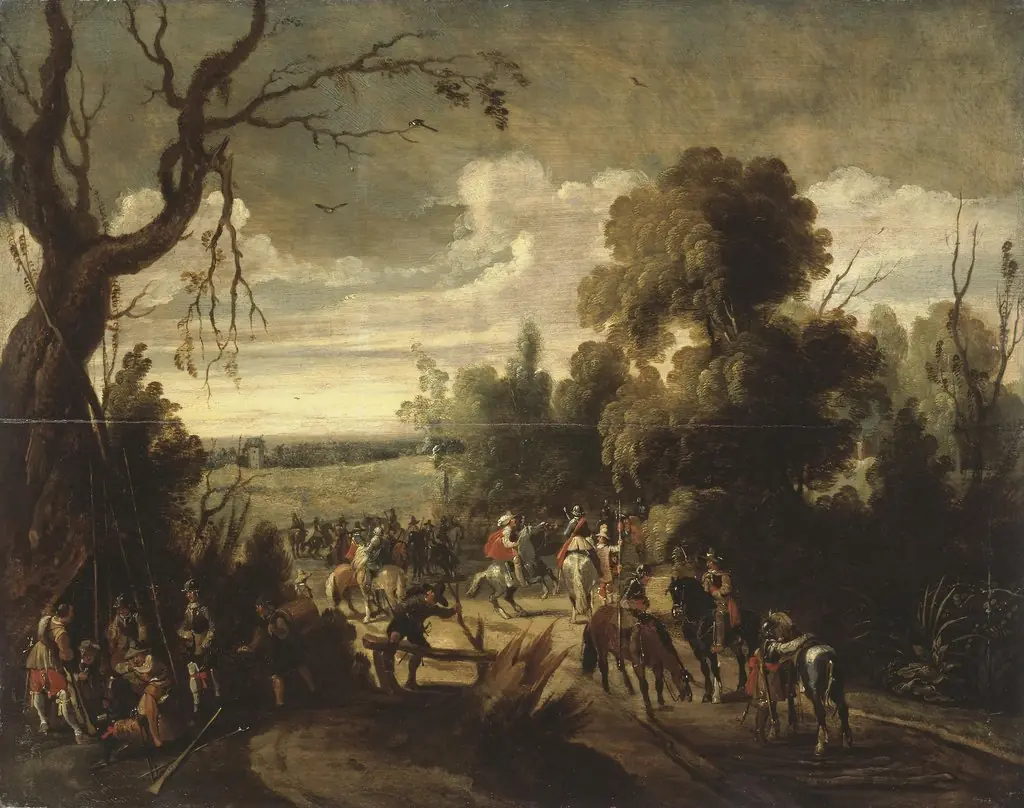
The scene depicts a village under attack, with figures in flight, combat, and collapse. A group gathers around a fallen individual in the foreground, suggesting loss and helplessness. The absence of clear heroes or victors underscores the indiscriminate brutality of such raids. Vrancx avoids glorification, instead emphasizing the vulnerability of civilians and the disarray of rural life during periods of conflict.
Technique & Style
Vrancx employs a muted palette of browns, greens, and grays to ground the scene in realism. Loose, energetic brushwork conveys motion—running figures, flailing limbs, and scattered animals. The composition is crowded yet deliberately unbalanced, guiding the eye through chaotic diagonals. Background structures are simplified, keeping focus on the human drama while suggesting depth without elaborate perspective.
History & Provenance
The painting entered the collection of the Royal Museum of Fine Arts Antwerp in the 19th century, where it remains today. While its early ownership is undocumented, its presence in the museum reflects its recognition as a representative work of Flemish Baroque genre painting. Vrancx’s reputation as a pioneer of battle scenes ensured his works were preserved by institutions focused on regional artistic heritage.
Context
Painted during the Eighty Years’ War, the work reflects the widespread devastation of the Spanish Netherlands. Rural communities were frequent targets of marauding troops, and Vrancx’s imagery resonated with contemporary audiences familiar with such violence. Unlike grand historical battles, his focus on hamlets highlights the civilian toll, aligning with a growing interest in everyday suffering during wartime.
Legacy
Vrancx’s treatment of violence as a civilian experience influenced later Flemish painters who depicted war’s impact on ordinary life. His integration of figures into landscape settings became a model for genre scenes with military themes. Though less celebrated than contemporaries like Rubens, his work contributed to a broader shift in Netherlandish art toward documenting the tangible consequences of conflict.
Artist & collection
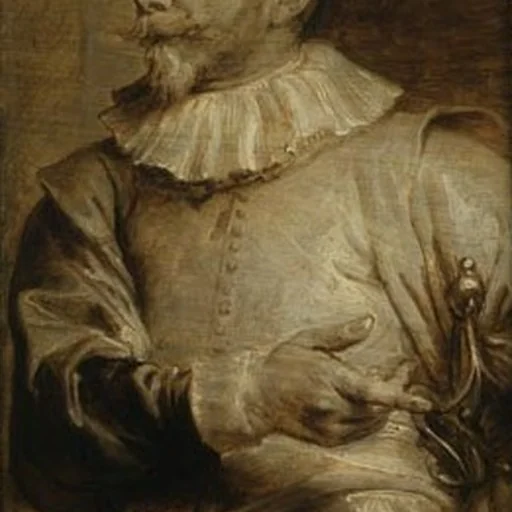
Artist
Sebastiaen Vrancx (pronounced ; before 22 January 1573 – 19 May 1647) was a Flemish Baroque painter, draughtsman and designer of prints who is mainly known for his battle scenes, a genre that he pioneered in Netherlandish painting.