Artwork
The Virgin and Child in Glory and the four Latin Fathers of the Church
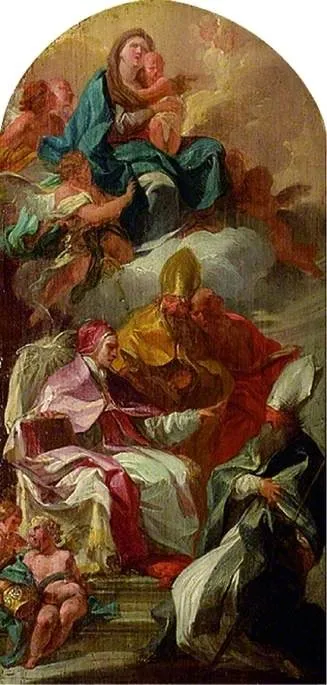
The Virgin and Child in Glory and the four Latin Fathers of the Church is an oil painting by Sebastiano Conca. It dates from 1730 and is held in the collection of the Fitzwilliam Museum.
About this work
Overview
It is part of the collection at the Fitzwilliam Museum in Cambridge, where it remains a key example of early 18th-century Italian religious painting.
Painted around 1730 by Sebastiano Conca, this oil on canvas work presents a celestial vision of the Virgin Mary with the Christ Child, surrounded by the four Latin Fathers of the Church. The composition is arranged vertically, with the holy figures elevated above the kneeling clergy, creating a sense of divine ascent. It is part of the collection at the Fitzwilliam Museum in Cambridge, where it remains a key example of early 18th-century Italian religious painting.
Subject & Meaning
The painting centers on Mary and the Christ Child in heavenly glory, symbolizing divine intercession and maternal grace. Below them, the four Latin Fathers—Ambrose, Jerome, Augustine, and Gregory the Great—are depicted in reverent postures, acknowledging the sacred presence. Their inclusion underscores the Church’s doctrinal authority and the continuity between early Christian thought and contemporary devotion, reinforcing theological hierarchy through visual order.
Technique & Style
Conca employs rich, luminous coloration and controlled chiaroscuro to define form and space. The Virgin’s blue mantle and the Fathers’ crimson robes are rendered with thick, textured brushwork, catching light to enhance their material presence. The background fades into a hazy, cloud-filled sky, where delicate angelic figures emerge subtly. Faces are softly modeled against darker tones, drawing focus to expressions of awe and serenity without theatricality.
History & Provenance
Commissioned likely for a religious institution, the painting entered the Fitzwilliam Museum’s collection in the 19th century. Its history prior to acquisition is not fully documented, but its style aligns with Conca’s ecclesiastical commissions in Rome and Naples during the 1720s–30s. It reflects the tastes of Catholic patrons seeking visually harmonious, doctrinally grounded imagery during the late Baroque period.
Context
Created during the height of the late Baroque in Italy, the work responds to Counter-Reformation ideals that emphasized clarity, emotional restraint, and doctrinal orthodoxy in religious art. While retaining dramatic elevation and celestial splendor, Conca avoids excessive movement or emotional intensity, favoring a serene, ordered composition that aligns with the Church’s preference for dignified devotion over theatrical spectacle.
Legacy
Though not widely reproduced, the painting exemplifies the transition from high Baroque exuberance to a more restrained, classical sensibility in 18th-century Italian religious art. Its presence in a major British museum highlights its role in shaping Northern European perceptions of Italian ecclesiastical painting. Conca’s balanced composition and luminous palette influenced regional artists seeking to reconcile spiritual gravity with visual harmony.
Artist & collection

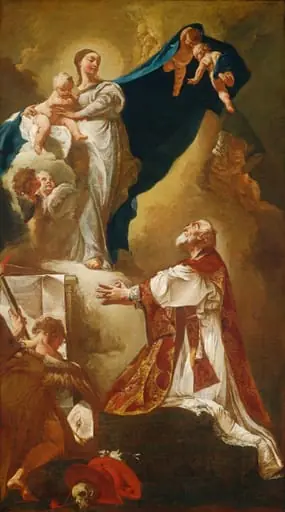 Madonna and Child Appearing to Saint Philip Neri
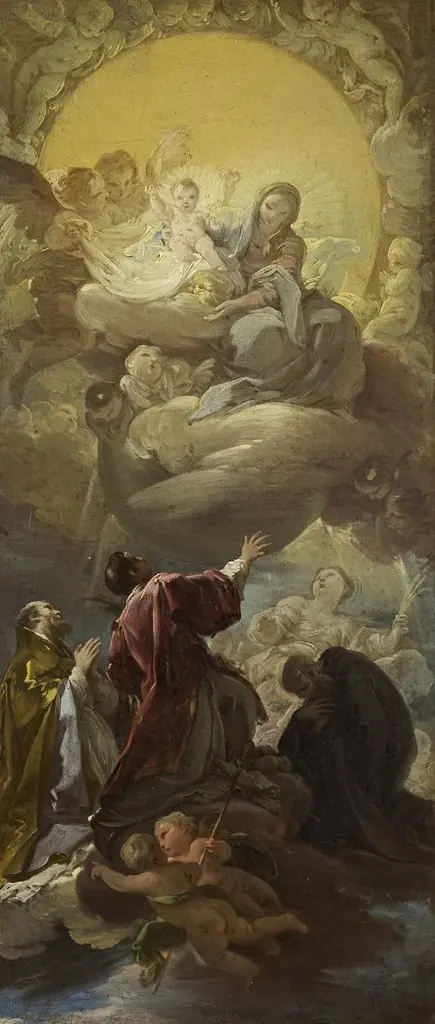 Madonna and Child in Glory appearing to St Stephen and three other Saints
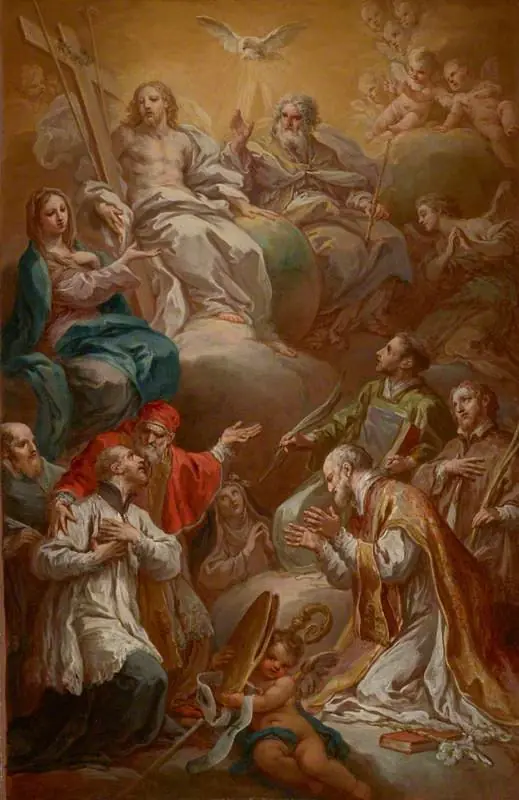 The Virgin recommending a group of Saints to the Holy Trinity
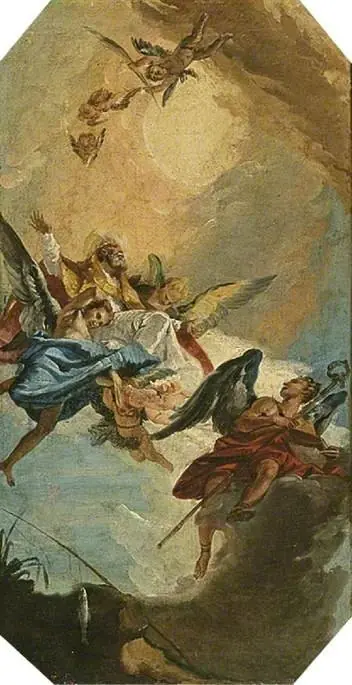 The Apotheosis of St Zeno
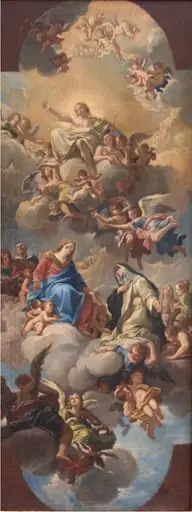 Mary Introducing St Catherine of Siena to Christ
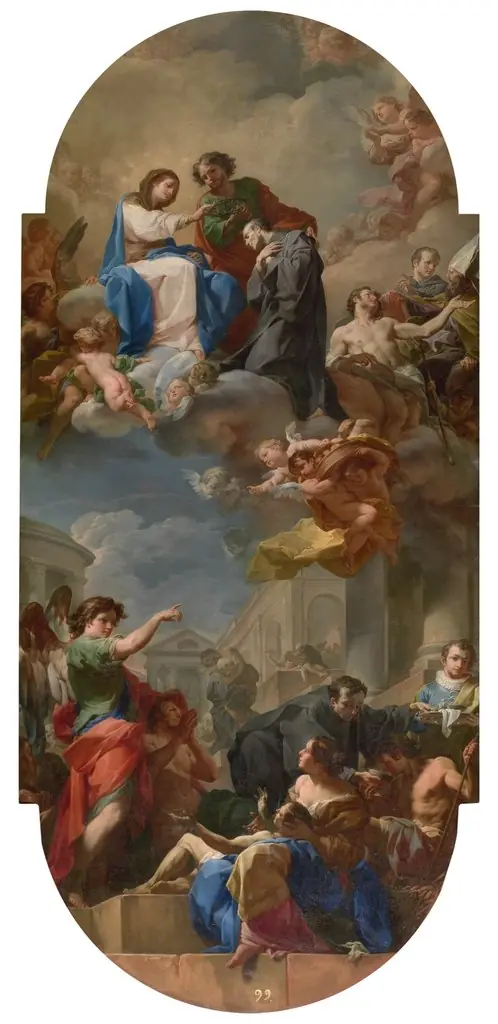 Triunfo de San Juan de Dios
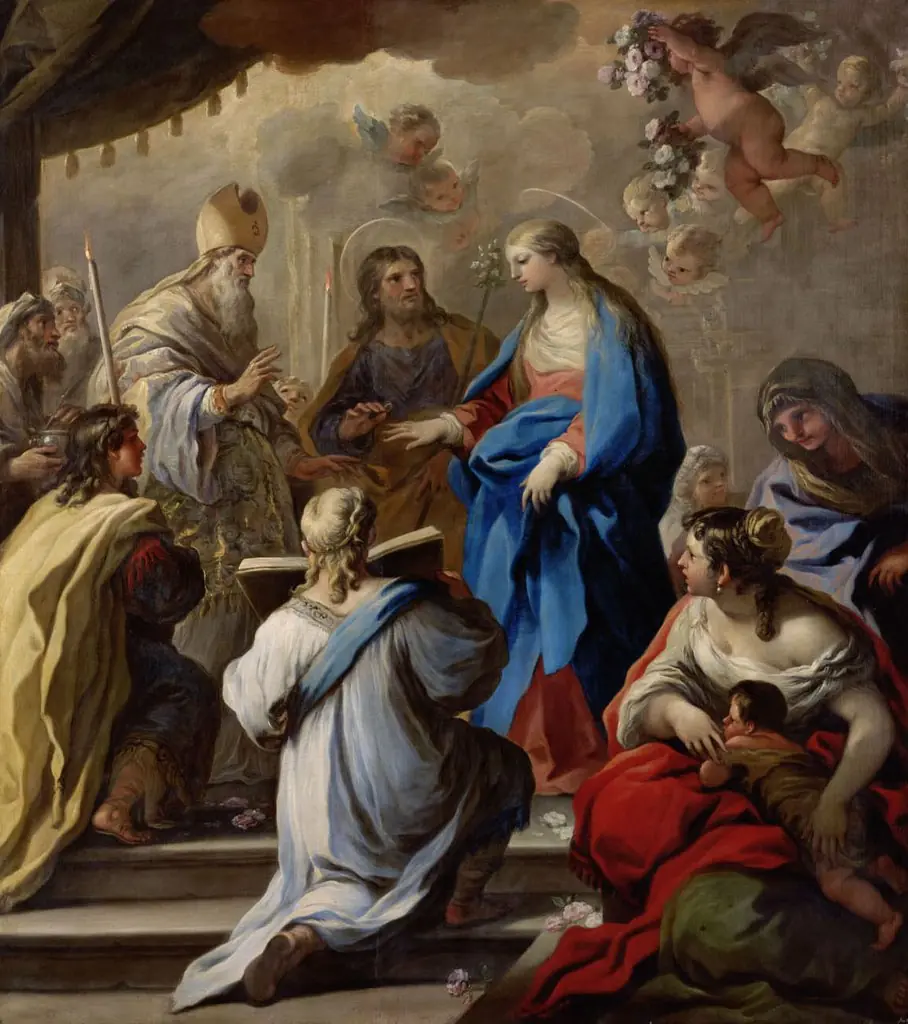 Vermählung Mariae
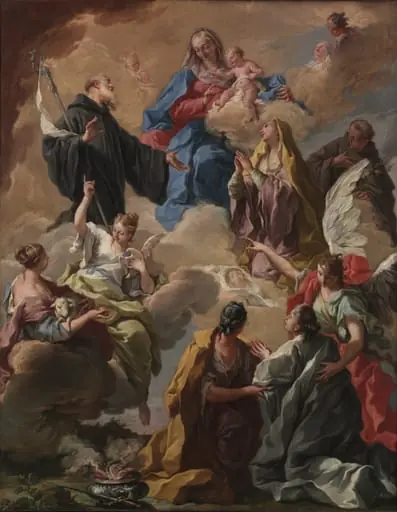 Saints Presenting a Devout Woman to the Virgin and Child
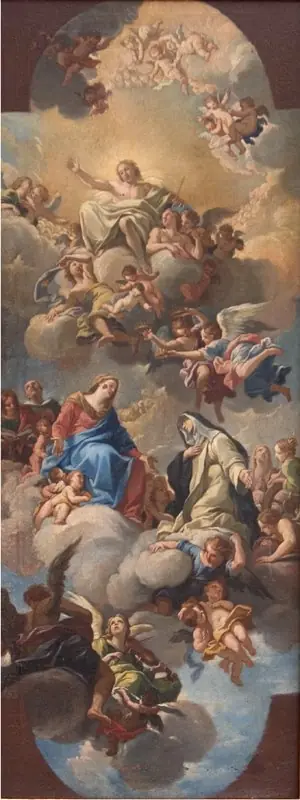 Mary Introducing St Catherine of Siena to Christ
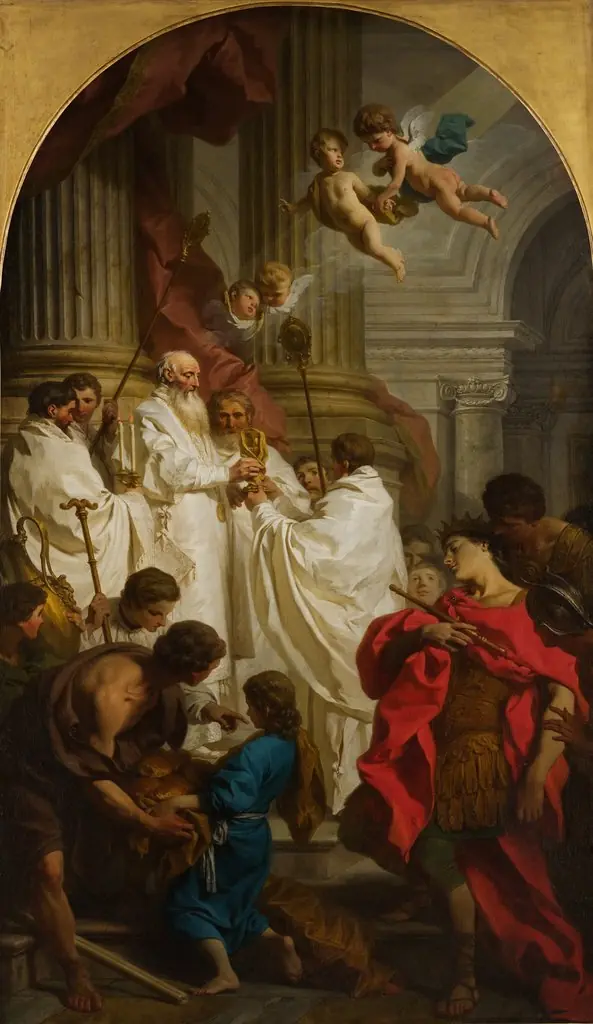 The Mass of Saint Basil
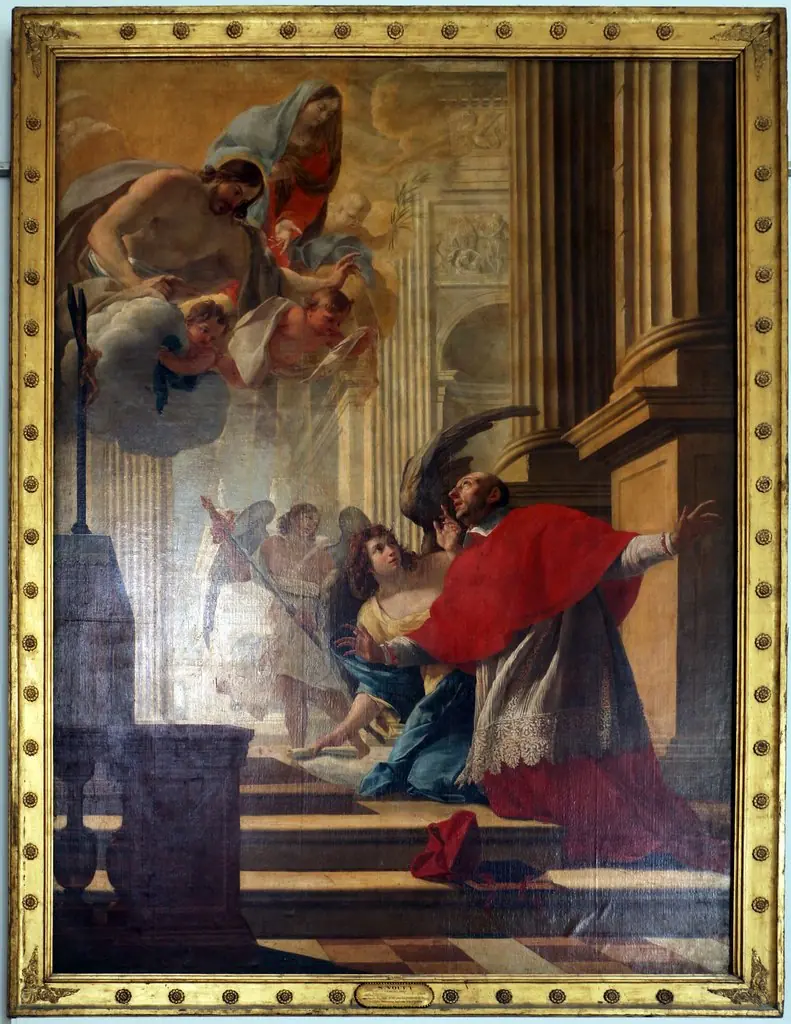 Saint Charles Borromée priant pour les pestiférés de Milan
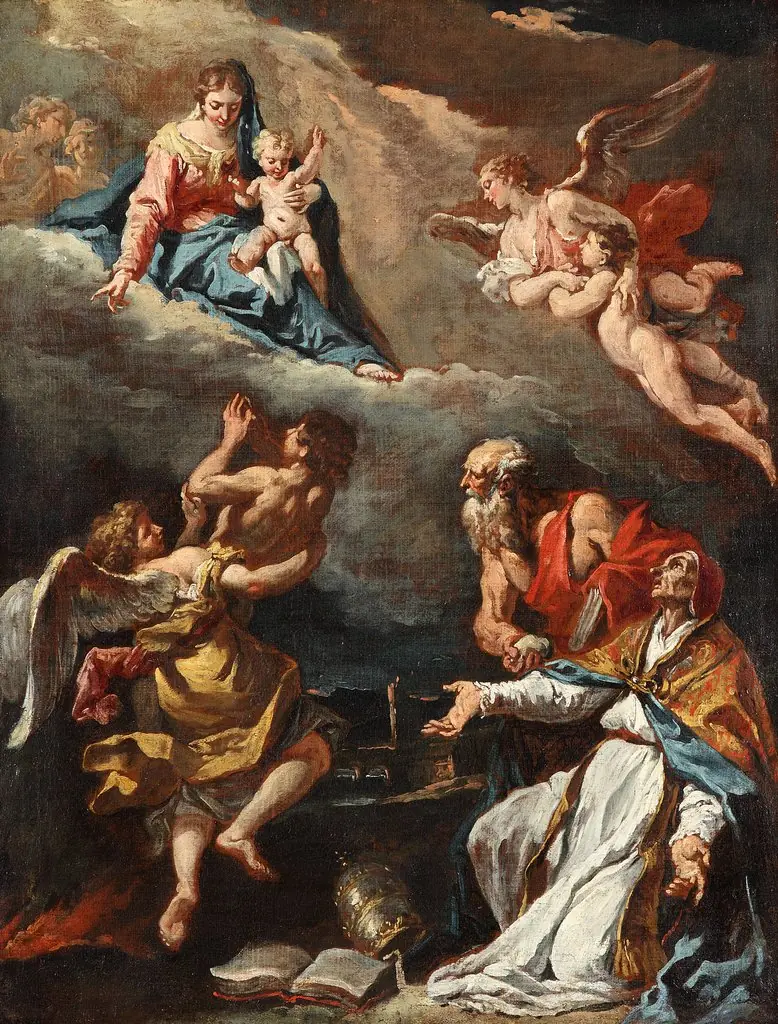 Die Fürbitte des Heiligen Gregor für die Seelen im Fegefeuer