Artwork
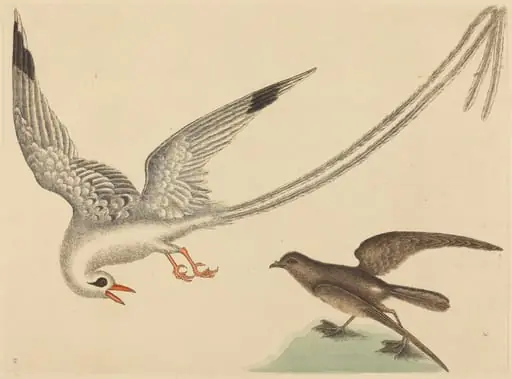
The Tropic Bird (Phaeton aethereus)
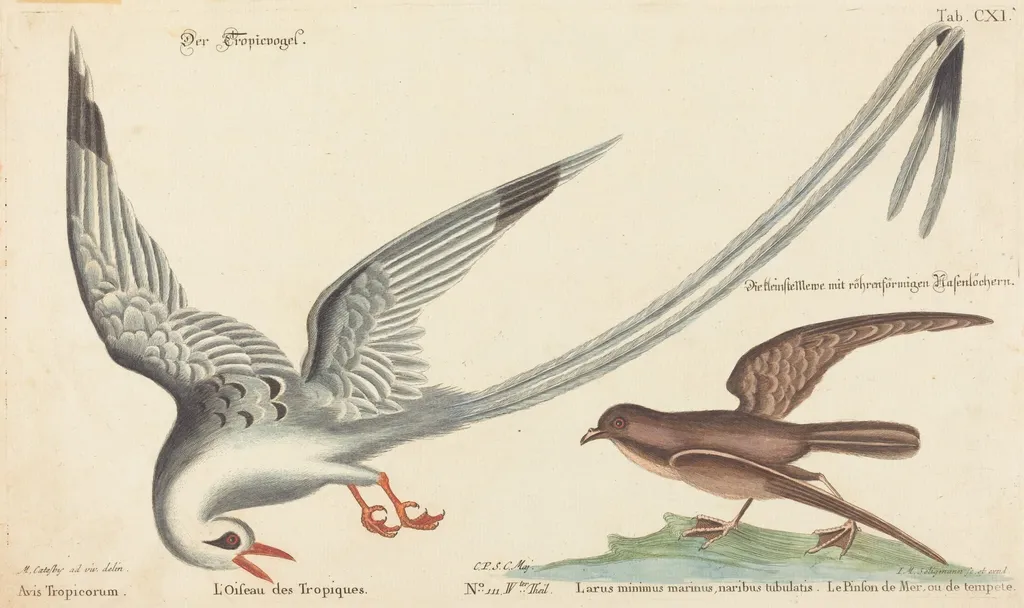
The Tropic Bird (Phaeton aethereus) is an ink print by the Baroque artist Johann Michael Seligmann. It dates from 1752 and is held in the collection of the National Gallery of Art.
About this work
Overview
Created around 1752, this print by Johann Michael Seligmann combines etching and engraving with selective hand‑applied color on laid paper.
Created around 1752, this print by Johann Michael Seligmann combines etching and engraving with selective hand‑applied color on laid paper. The composition presents two avian figures against a plain backdrop: a larger white bird with elongated, pointed wings and vivid red beak and feet, and a smaller brown bird perched on a green ground patch. Labels in German and French identify the larger figure as a tropical species.
Subject & Meaning
The dominant white bird, titled "Der Tropicvogel" in German and "L'Oiseau des Tropiques" in French, suggests an exotic, perhaps imagined, tropical bird rather than a specific species. Its bright coloration and soaring pose convey a sense of freedom and exoticism, while the accompanying brown bird, grounded and less conspicuous, may serve as a comparative element, emphasizing the former’s rarity.
Technique & Style
Seligmann employed a dual printmaking process: initial etching to outline forms, followed by engraving to deepen lines and add texture. Hand coloring was then applied to accentuate feathers, the red beak and feet, and the green perch, demonstrating the artist’s meticulous control over both line and pigment. The use of laid paper provides a subtle texture that enhances the overall visual clarity.
History & Provenance
The work originates from the mid‑18th century, a period when European artists frequently explored natural history subjects through prints. Though specific ownership records are scarce, the piece reflects the era’s fascination with exotic fauna and the growing market for illustrated scientific and decorative prints. Its survival in good condition indicates careful handling and possible inclusion in a private collection before entering public view.
Artist & collection


 The Rice-bird (Emberiza oryzivora)
 Plate 5: A Hooded Falcon and Its Wild Counterpart
 The Fishing Hawk (Falco haliaetus)
 Lark and Two Smaller Birds
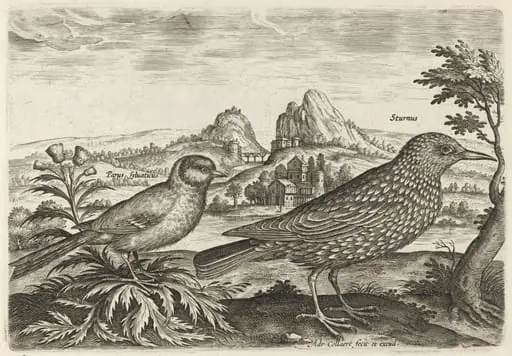 Great Tit and Starling
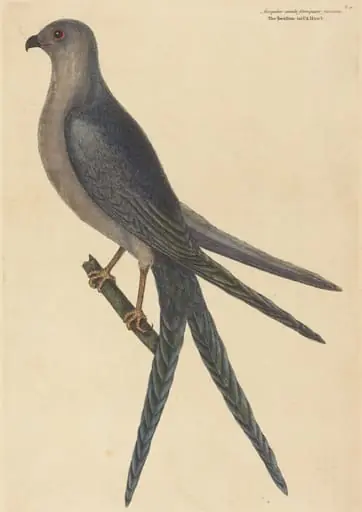 The Swallow Tail Hawk (Falco furcatus)
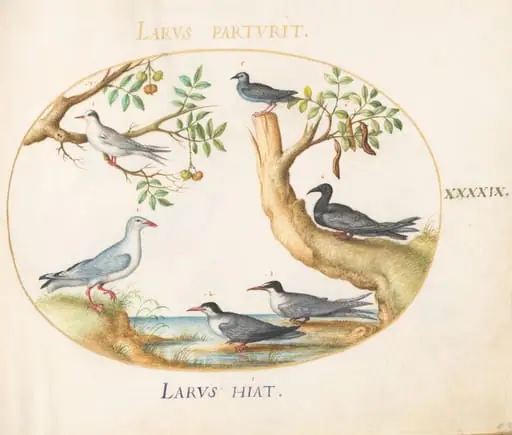 Plate 49: Gulls with a Carob Tree and a Pistachio Tree(?)
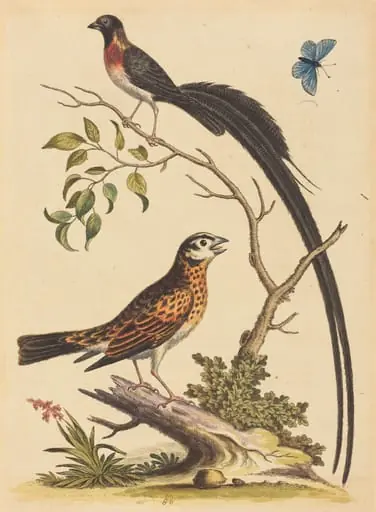 Two Birds, One with Very Long Tailfeathers, and Blue Butterfly
 Hawk and Sparrows
 Guinea Fowl and Pheasant