Artwork
Mary of Guise
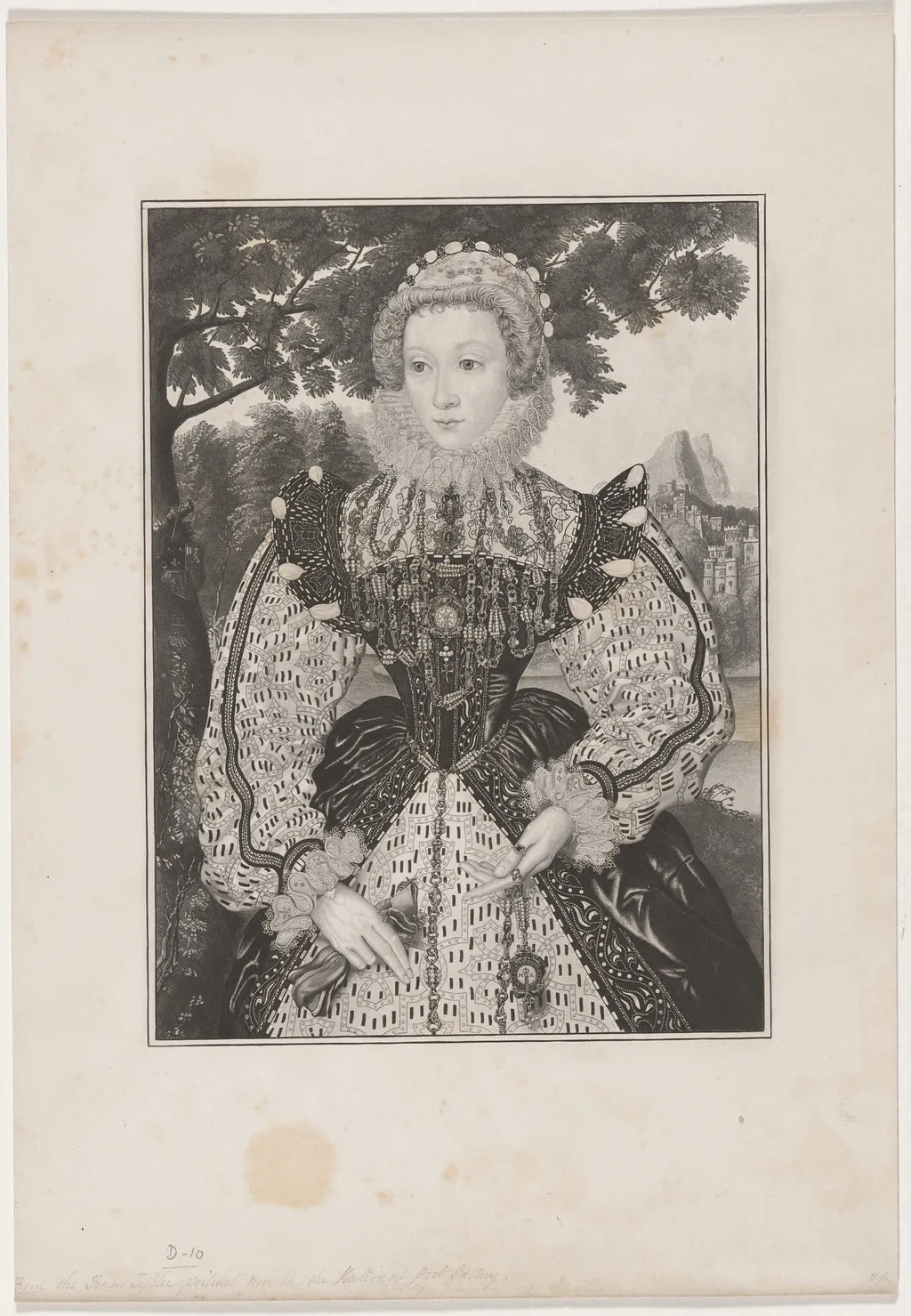
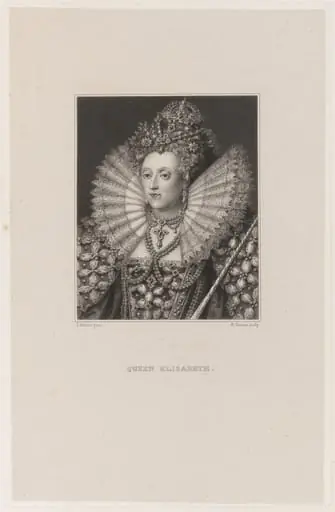
Mary of Guise is an ink print by the Romanticist artist Henry Shaw. It dates from 1836 and is held in the collection of the National Gallery of Art.
About this work
Overview
The background includes a faintly sketched tree and a distant architectural element, lending a subtle sense of depth.
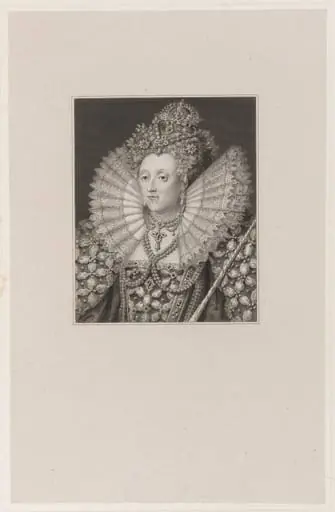
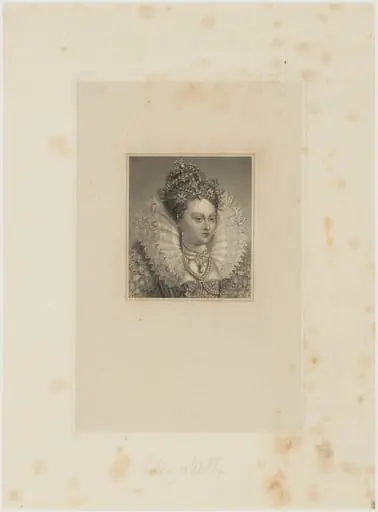
This 1836 engraving by Henry Shaw presents a portrait of Mary of Guise, the French-born queen consort of Scotland. Rendered in monochrome, the image captures the figure in a formal pose, her attire marked by elaborate ruffles and abundant jewelry, while her hair is styled in an elevated fashion. The background includes a faintly sketched tree and a distant architectural element, lending a subtle sense of depth.
Subject & Meaning
The work depicts Mary of Guise, a prominent 16th‑century political figure who served as regent of Scotland. By portraying her with calm composure and regal adornments, the engraving emphasizes her status and authority. The inclusion of architectural and natural elements behind her may allude to her connection to both courtly life and the broader landscape of Scottish governance.
Technique & Style
Shaw employed the traditional engraving method, incising lines into a metal plate to produce the print. The image relies on cross‑hatching—a network of intersecting lines—to model shadows, texture, and the intricate details of clothing and jewelry. This approach creates a nuanced tonal range despite the work’s black‑and‑white palette, typical of early‑19th‑century printmaking.
History & Provenance
Created in 1836, the engraving reflects a period of renewed interest in historical portraiture within British art circles. While specific ownership records are limited, the piece has been catalogued among Shaw’s oeuvre of historical prints and is referenced in collections focusing on 19th‑century British engraving.
Artist & collection