Artwork
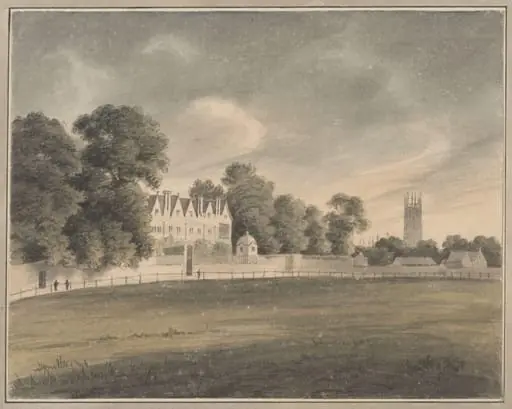
Peterborough House, Millbank, Westminster
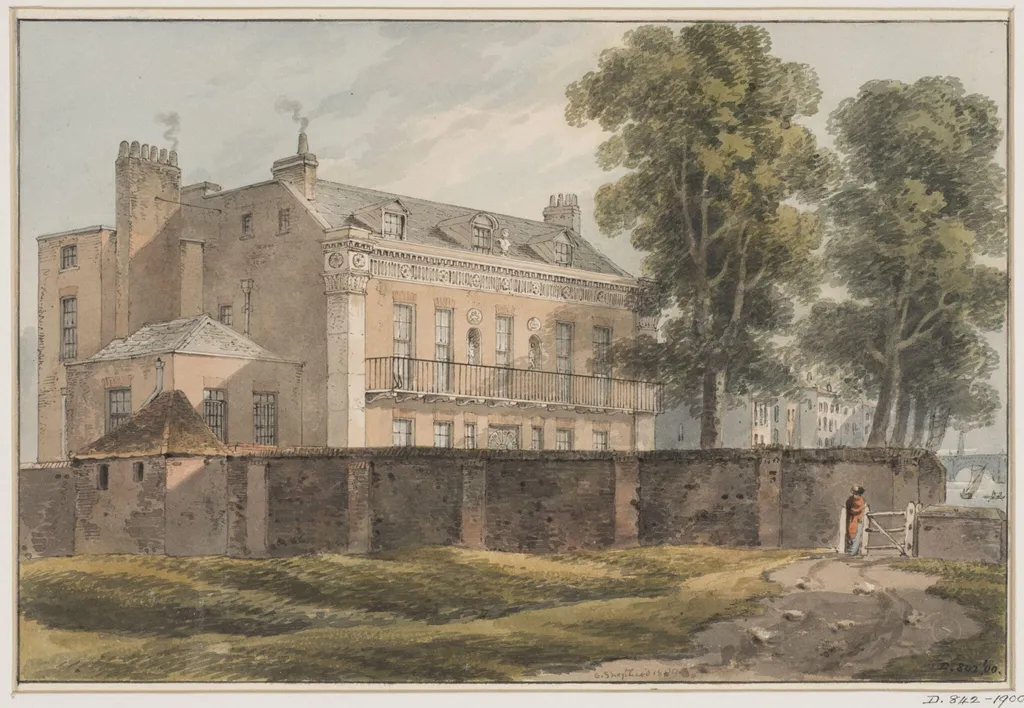
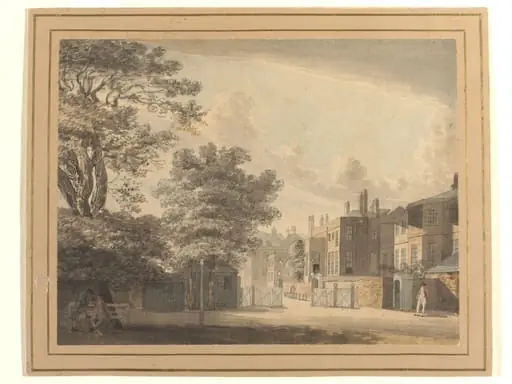
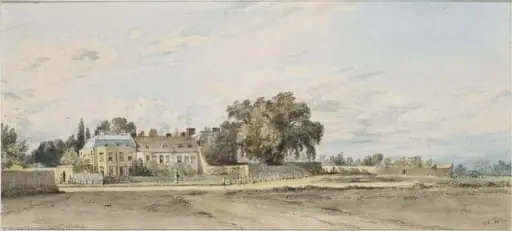
Peterborough House, Millbank, Westminster is a watercolor work on paper by the British Romanticist artist George Shepherd. It dates from 1809 and is held in the collection of the Victoria and Albert Museum.
About this work
Overview
It belongs to a series of topographical studies documenting London’s architectural landscape during the early 19th century.
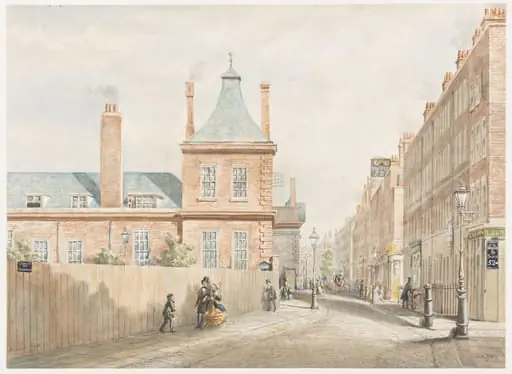
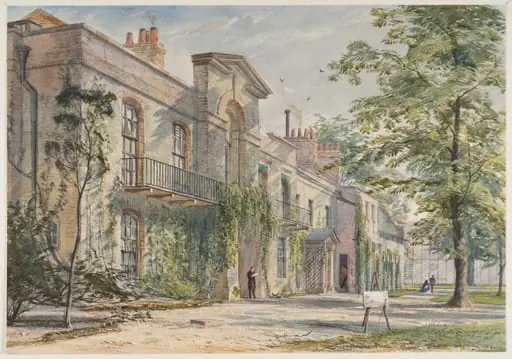
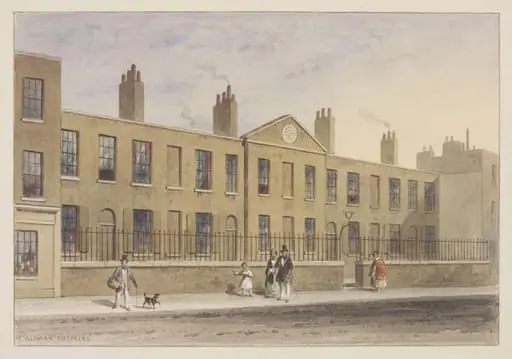
George Shepherd created this watercolour in 1809, capturing Peterborough House on Millbank in Westminster. The work is a precise, quiet observation of an urban residence, rendered in delicate washes of transparent pigment. It belongs to a series of topographical studies documenting London’s architectural landscape during the early 19th century. The piece is now part of the Victoria and Albert Museum’s collection.
Subject & Meaning
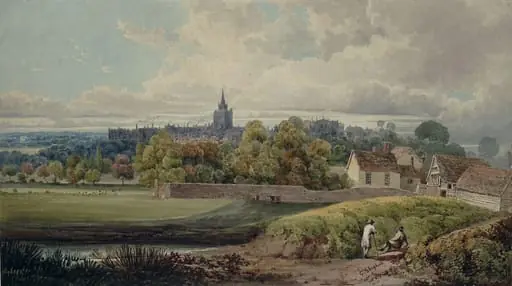
The painting presents Peterborough House as a dignified, modestly scaled residence, its symmetry and numerous windows suggesting domestic order. Two figures on the path, small but deliberate, imply quiet contemplation of the building. The composition avoids grandeur, instead emphasizing the house’s integration into its surroundings — trees, wall, and path frame it as a lived-in place rather than a monument.
Technique & Style
Shepherd employed transparent watercolour with restrained tonal variation, using light browns and soft blues to convey texture and atmosphere. The brushwork is controlled yet fluid, with fine lines defining windows and architectural details. The sky, lightly washed with cloud forms, adds depth without distraction. The foreground elements — wall, path, figures — are rendered with subtle precision, anchoring the scene in everyday observation.
History & Provenance
Peterborough House, built in the late 17th century, was demolished in the 1830s to make way for the Millbank Penitentiary. Shepherd’s watercolour, made just before its decline, serves as a visual record of its final decades. The work entered the Victoria and Albert Museum’s collection through its long-standing acquisition of topographical drawings, preserving a structure otherwise lost to urban redevelopment.
Context
In 1809, Millbank was transitioning from a semi-rural fringe to a site of institutional expansion. Peterborough House stood among other aristocratic residences, but its proximity to the Thames and growing urban pressure signaled change. Shepherd’s depiction reflects a moment before large-scale public projects reshaped the area, offering a glimpse into the quieter, pre-industrial character of London’s riverbank.
Legacy
As one of few surviving visual records of Peterborough House, the watercolour holds documentary value for architectural historians. It exemplifies the tradition of topographical art that prioritized accuracy over embellishment. While not widely exhibited, it remains a quiet testament to the transient nature of urban landscapes and the role of art in preserving them.
Artist & collection
Artist
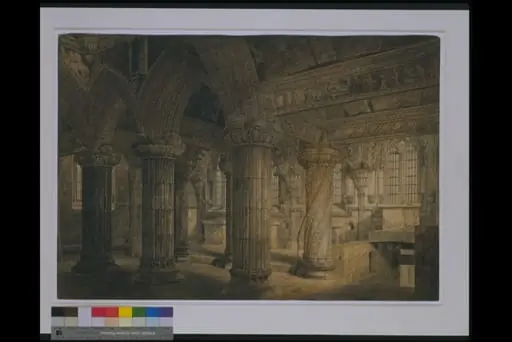
George Shepherd’s watercolours document 18th-century Britain in crisp detail. They show Aylesbury’s spires, the lost Peterborough House on the Thames, the twisting stone of Roslin Chapel, and quiet corners of Rye and…