Artwork
Bagnigge Wells
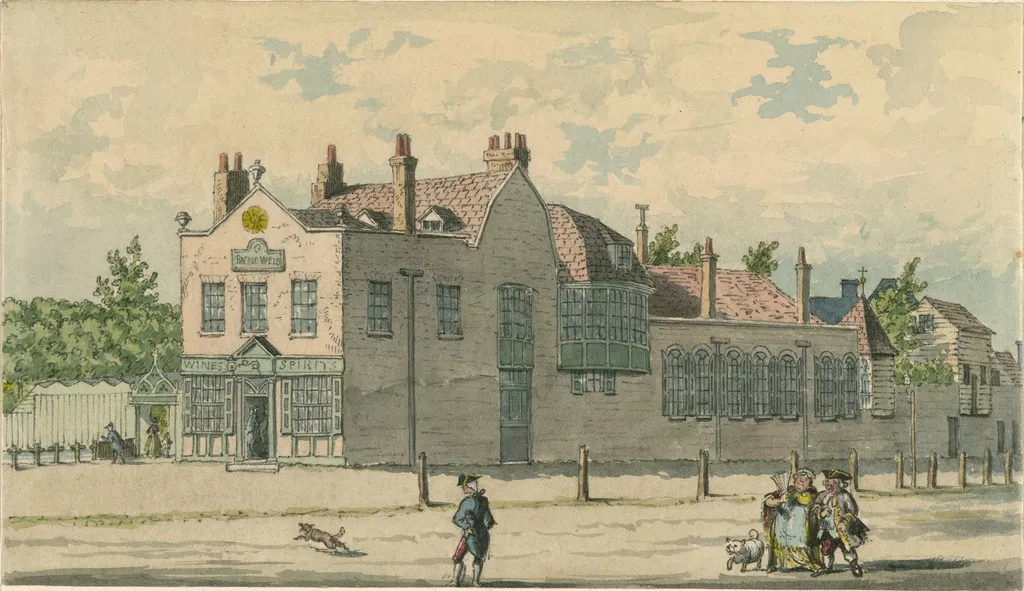
Bagnigge Wells is an unspecified painting by Samuel Hieronymus Grimm. It is held in the collection of the British Museum.
About this work
If you're interested in learning more about this style of painting, you might want to explore the works of Samuel Hieronymus Grimm.
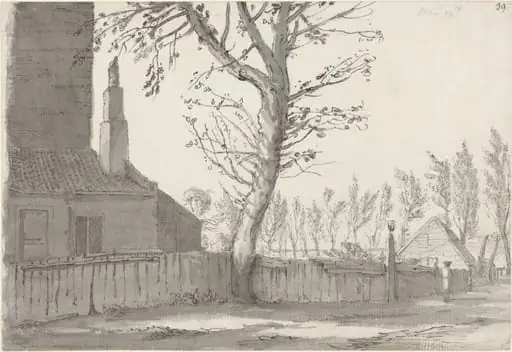
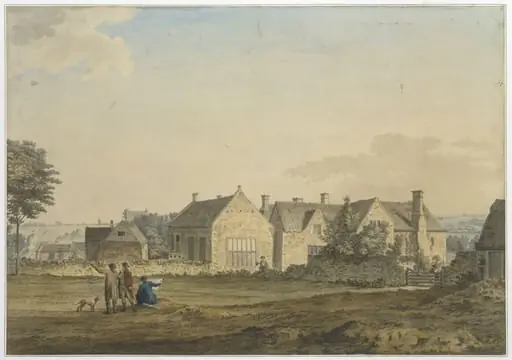
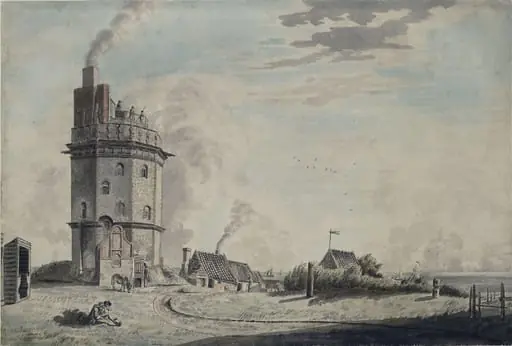
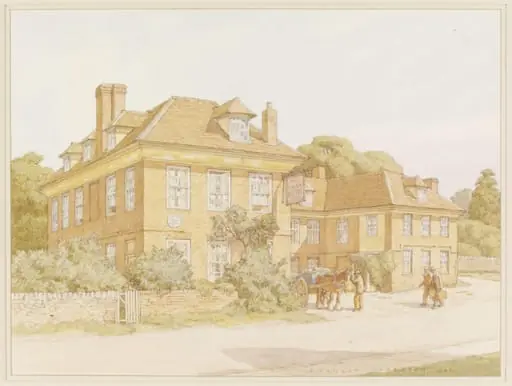
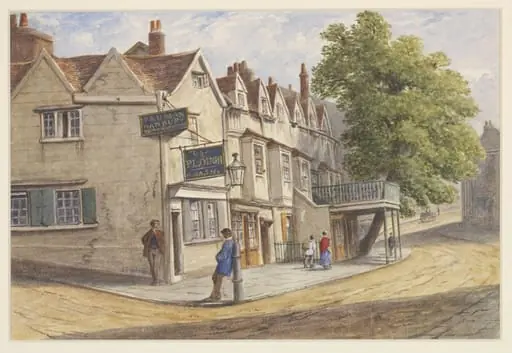
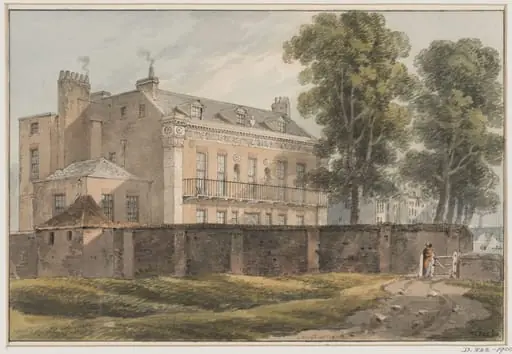
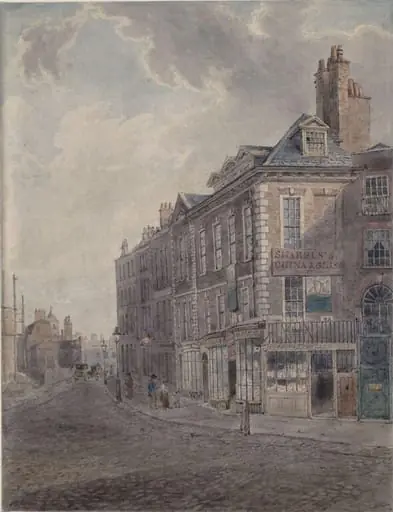
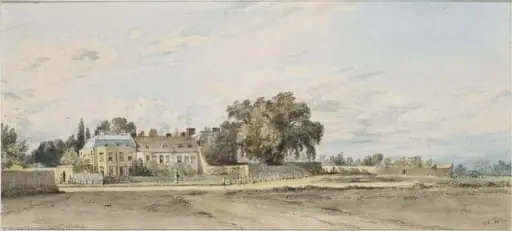
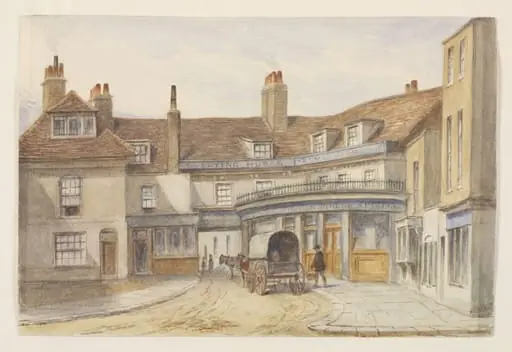
This painting depicts a serene scene of an inn, with a large building and a few people strolling around it. The building's facade features a sign that reads "Bagnigge Wells" and has a clock above it. In the foreground, a man is walking with a dog, while another man is standing in front of the building.
The artist's use of muted colors and soft brushstrokes creates a sense of calmness in the scene. The building's architecture and the people's clothing suggest a rural setting, possibly in the 18th or 19th century.
If you're interested in learning more about this style of painting, you might want to explore the works of Samuel Hieronymus Grimm.
Overview
This painting captures a quiet moment at Bagnigge Wells, a rural inn known in the 18th century for its mineral springs. The scene is composed with restrained detail, emphasizing stillness over action. A large building with a visible clock and signage anchors the composition, while a few figures move gently through the foreground. The muted palette and soft brushwork contribute to an atmosphere of calm, typical of topographical art from the period.
Subject & Meaning
The painting documents a real location that attracted visitors seeking therapeutic waters, blending leisure with early public health practices. The figures—a man with a dog, another near the entrance—suggest ordinary daily routines rather than grand events. The presence of the inn’s sign and clock implies a place of measured time and social gathering, reflecting the quiet rhythms of provincial English life in the late 1700s.
Technique & Style
The artist employs gentle, blended brushstrokes and a subdued color scheme to evoke tranquility. Architectural details are rendered with precision but without flourish, prioritizing accuracy over drama. The lighting is even and diffused, minimizing shadows and enhancing the sense of serenity. This approach aligns with topographical traditions that valued clear documentation over expressive interpretation.
History & Provenance
Bagnigge Wells was a popular destination near London from the mid-18th century until its decline in the early 1800s. Paintings of the site were often made by artists commissioned to record local landmarks. While the specific provenance of this work is unconfirmed, its style and subject match the work of Samuel Hieronymus Grimm, who extensively documented English landscapes and buildings during this era.
Context
In the 18th century, spa towns like Bagnigge Wells became sites of modest social activity, frequented by middle-class visitors. Artists such as Grimm were employed to record these places as part of a broader cultural interest in documenting the English countryside. These works served both as records and as visual souvenirs, reflecting a growing public interest in local history and topography.
Legacy
Paintings of places like Bagnigge Wells contribute to a historical archive of everyday English landscapes before industrialization transformed them. Though not widely celebrated in major art institutions, such works remain valuable for their observational clarity and insight into regional life. They offer a quiet counterpoint to more dramatic narratives of the period, preserving the texture of ordinary existence.
Artist & collection

Artist
Samuel Hieronymus Grimm (18 January 1733 – 14 April 1794) was an 18th-century Swiss landscape artist who worked in oils (until 1764), watercolours, and pen and ink media.