Artwork
Birdcage Walk, London
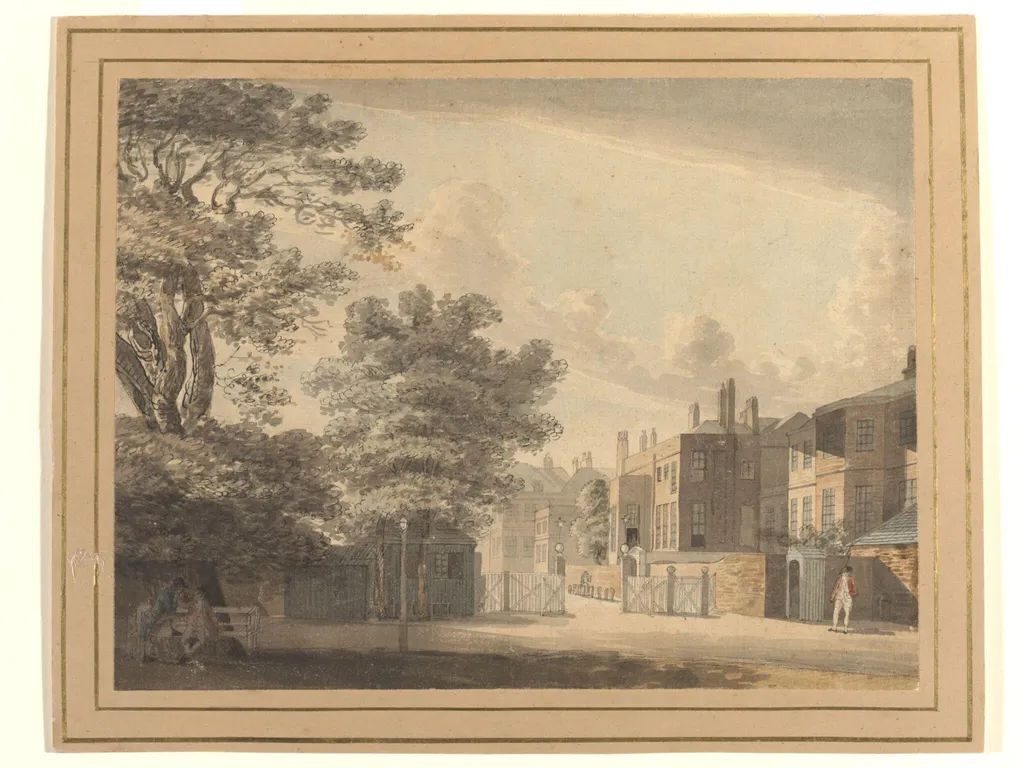
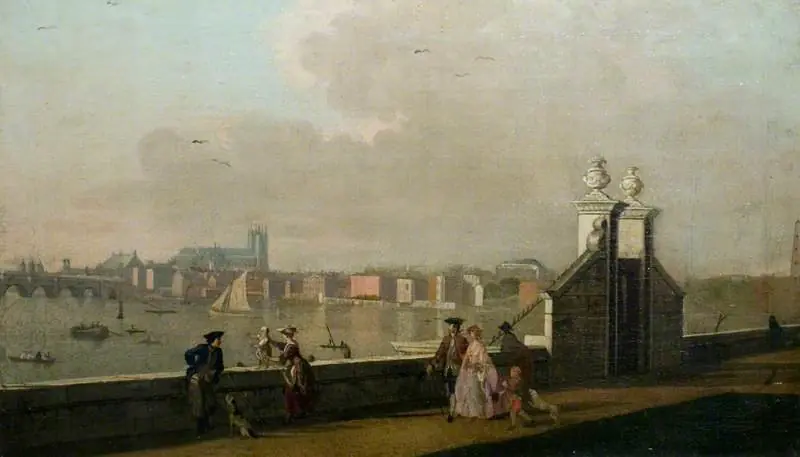
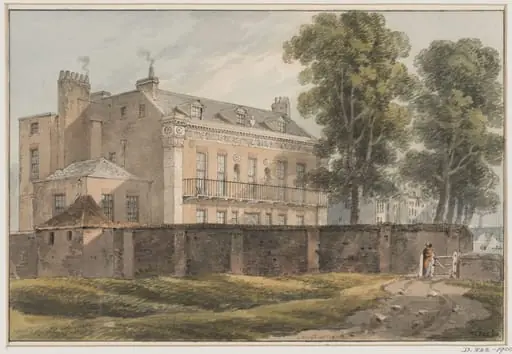
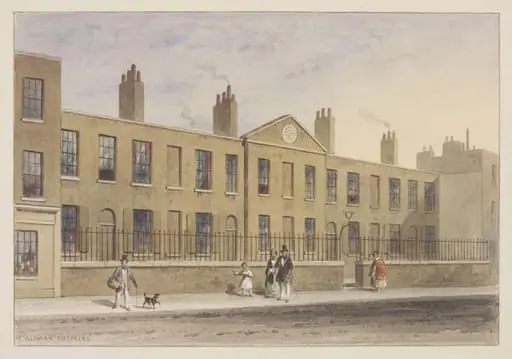
Birdcage Walk, London is a watercolor work on paper by the Rococo painting artist Paul Sandby. It dates from 1765 and is held in the collection of the Victoria and Albert Museum.
About this work
Overview
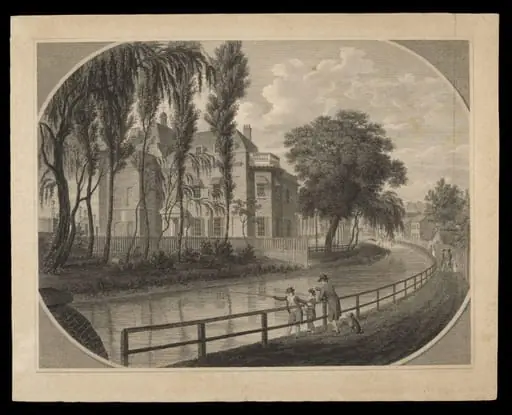
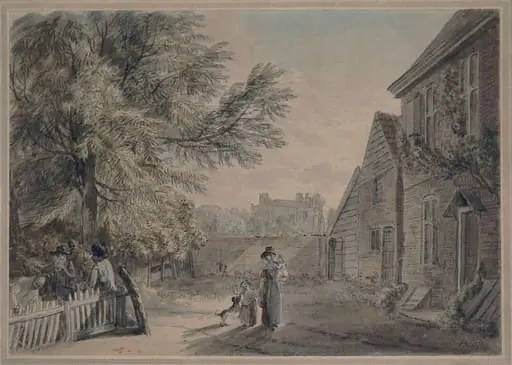
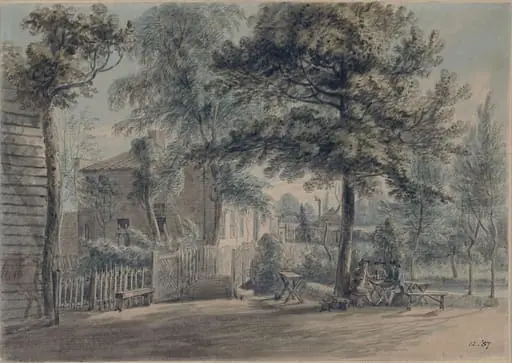
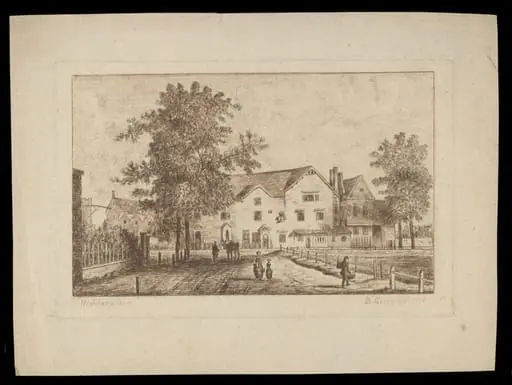
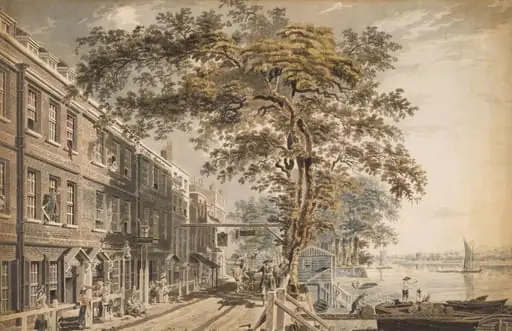
Paul Sandby’s watercolour of Birdcage Walk records a modest London thoroughfare flanked by trees and modest buildings. The composition captures the south side of St James’s Park, adjacent to the former Wellington Barracks, presenting a tranquil urban landscape typical of late‑18th‑century topographical studies.
Subject & Meaning
The work portrays an everyday street scene, emphasizing the ordinary rhythm of city life rather than grand historical events. By focusing on the quiet alignment of foliage and architecture, Sandby highlights the interplay between public space and the built environment in a period of expanding urban infrastructure.
Technique & Style
Executed in transparent washes, the watercolour relies on precise linear drawing and subtle tonal contrasts to suggest depth. Sandby’s handling of light and shadow, reminiscent of chiaroscuro principles, gives the scene a modest three‑dimensionality while preserving the delicate atmospheric quality characteristic of his topographical practice.
History & Provenance
Sandby, a founding member of the Royal Academy in 1768 and chief drawing master at the Royal Military Academy, Woolwich, produced this piece as part of his broader series of London vistas. The drawing reflects his dual role as a landscape artist and a draughtsman documenting contemporary urban settings.
Context
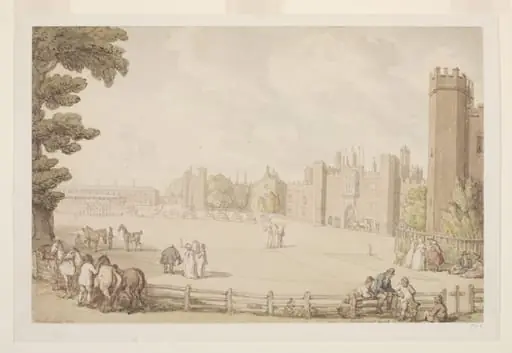
During the late 1700s, Birdcage Walk served as a key promenade beside St James’s Park, linking royal precincts with military installations such as Wellington Barracks. Sandby’s depiction aligns with a growing interest in documenting the city’s evolving topography for both artistic and practical purposes.
Artist & collection
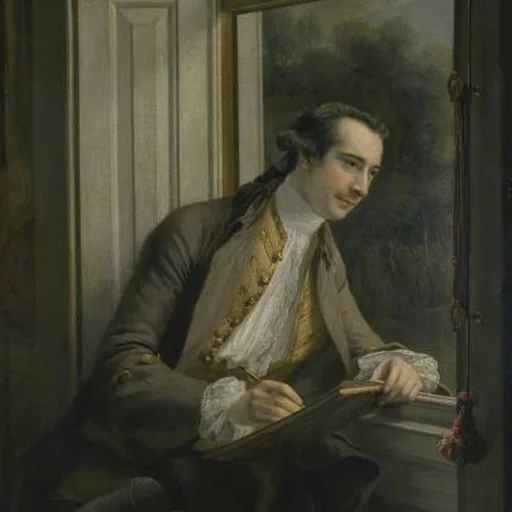
Artist
Paul Sandby, (1731 – 7 November 1809) was an English mapmaker and painter who specialised in landscape art. Along with his older brother Thomas Sandby, he was one of the founding members of the Royal Academy in 1768.