Artwork
Untitled
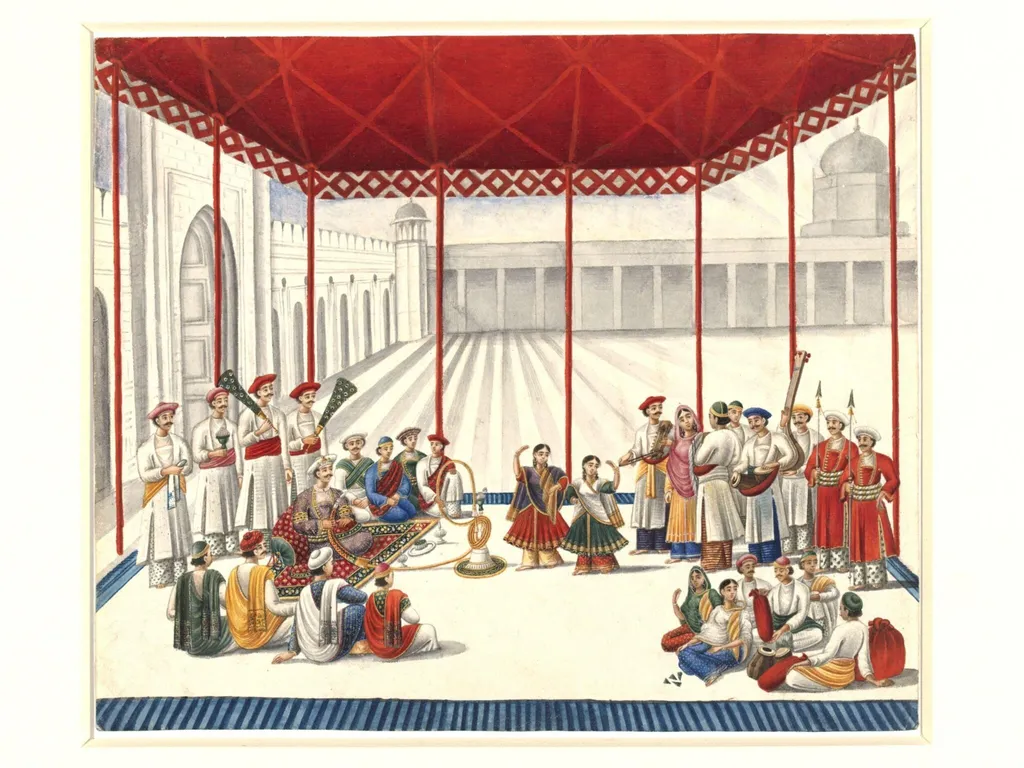
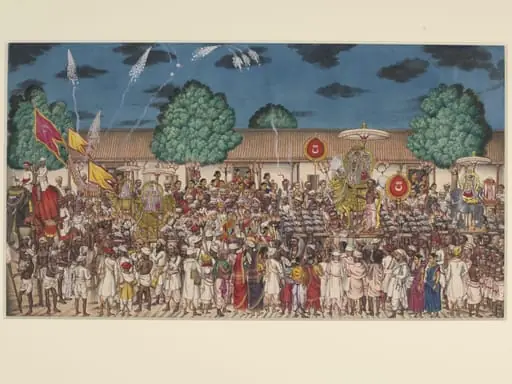
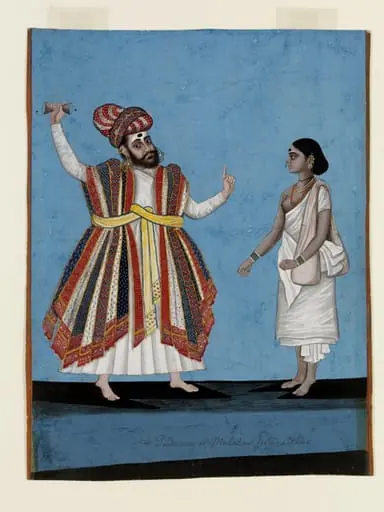
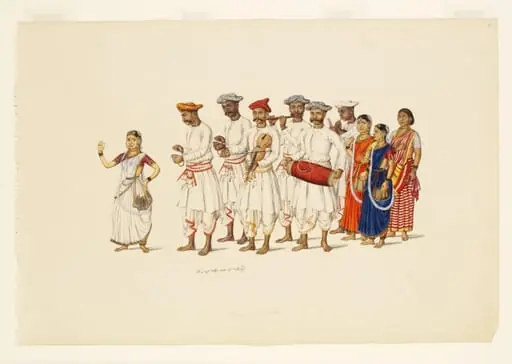
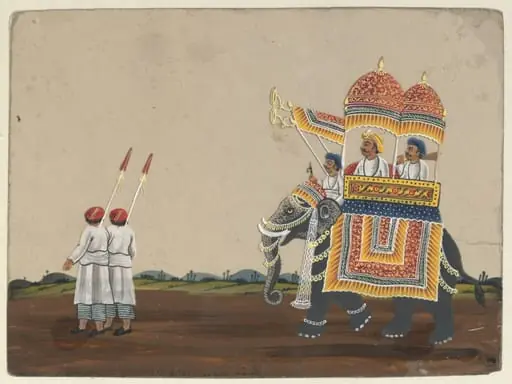
Untitled is a paint painting by the Patna School of Painting artist Shiva Lal. It dates from 1860 and is held in the collection of the Victoria and Albert Museum.
About this work
Overview
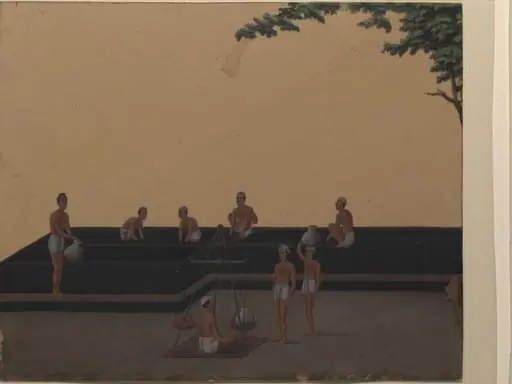
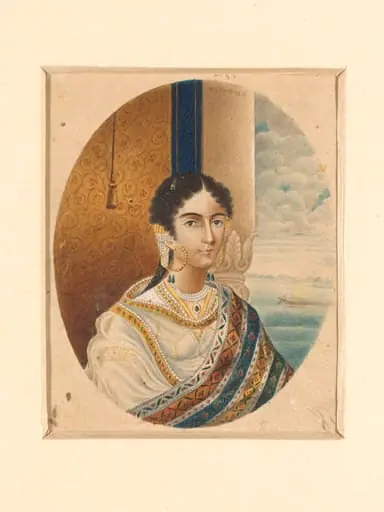
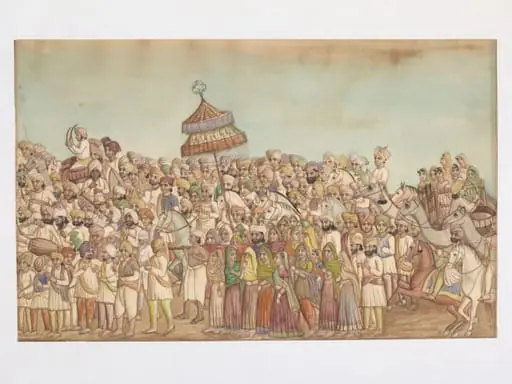
This painting, created around 1860 by Shiva Lal in Patna, belongs to the Company painting tradition—a genre developed by Indian artists to meet the tastes of British colonial officials and local elites. It reflects a hybrid aesthetic, blending Indian miniature techniques with Western naturalism, produced for a clientele that sought visual records of Indian life under colonial rule.
Subject & Meaning
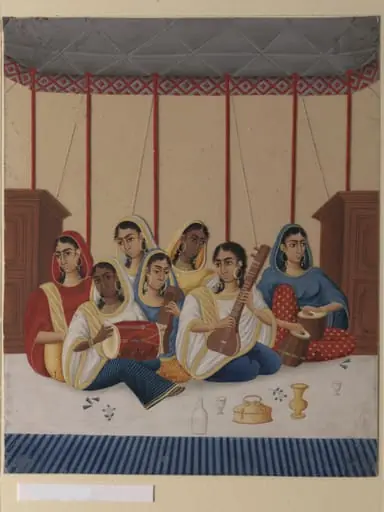
The subject’s passive gaze implies a role of observer, reinforcing social hierarchies and the performative nature of elite entertainment.
The scene depicts a wealthy patron seated on a carpet, propped against a bolster, observing a performance by dancers and musicians. The relaxed posture and intimate setting suggest a private moment of leisure, likely commissioned to document the refined social customs of the local aristocracy. The subject’s passive gaze implies a role of observer, reinforcing social hierarchies and the performative nature of elite entertainment.
Technique & Style
Shiva Lal employed fine brushwork and muted color palettes typical of Patna’s Company style, with careful attention to textile patterns and facial detail. Subtle modeling of form suggests an awareness of European chiaroscuro, though without dramatic contrasts. The composition is flattened, preserving the spatial conventions of Indian painting while accommodating Western preferences for realistic depiction.
History & Provenance
Shiva Lal operated a studio in Patna, a center for Company painting, where artists catered to both Indian gentry and British residents. His work, like that of his cousin Shiva Dayal Lal, depended on local patronage. This piece likely originated as a private commission, later entering colonial collections, possibly through direct sale or as a gift between British officials and Indian artists.
Context
During the mid-19th century, as British influence expanded, Indian artists adapted their practices to serve new audiences. Company paintings documented customs, costumes, and daily life, serving as both cultural records and status objects. Patna’s artists, including Shiva Lal, navigated this shift by blending indigenous traditions with European expectations, creating a distinct visual language for a colonial marketplace.
Legacy
Shiva Lal’s work contributes to a broader understanding of artistic agency under colonialism. Rather than passive imitators, artists like him actively negotiated cultural expectations, preserving elements of Indian aesthetics while accommodating foreign tastes. These paintings now serve as critical sources for studying cross-cultural exchange, social structure, and the complexities of artistic production in colonial India.
Own this work as a print
Artist & collection
Artist
A Mewari painter active in the mid-1800s, Shiva Lal made precise, lively records of daily life and workshops.