Artwork
Buna Vestire
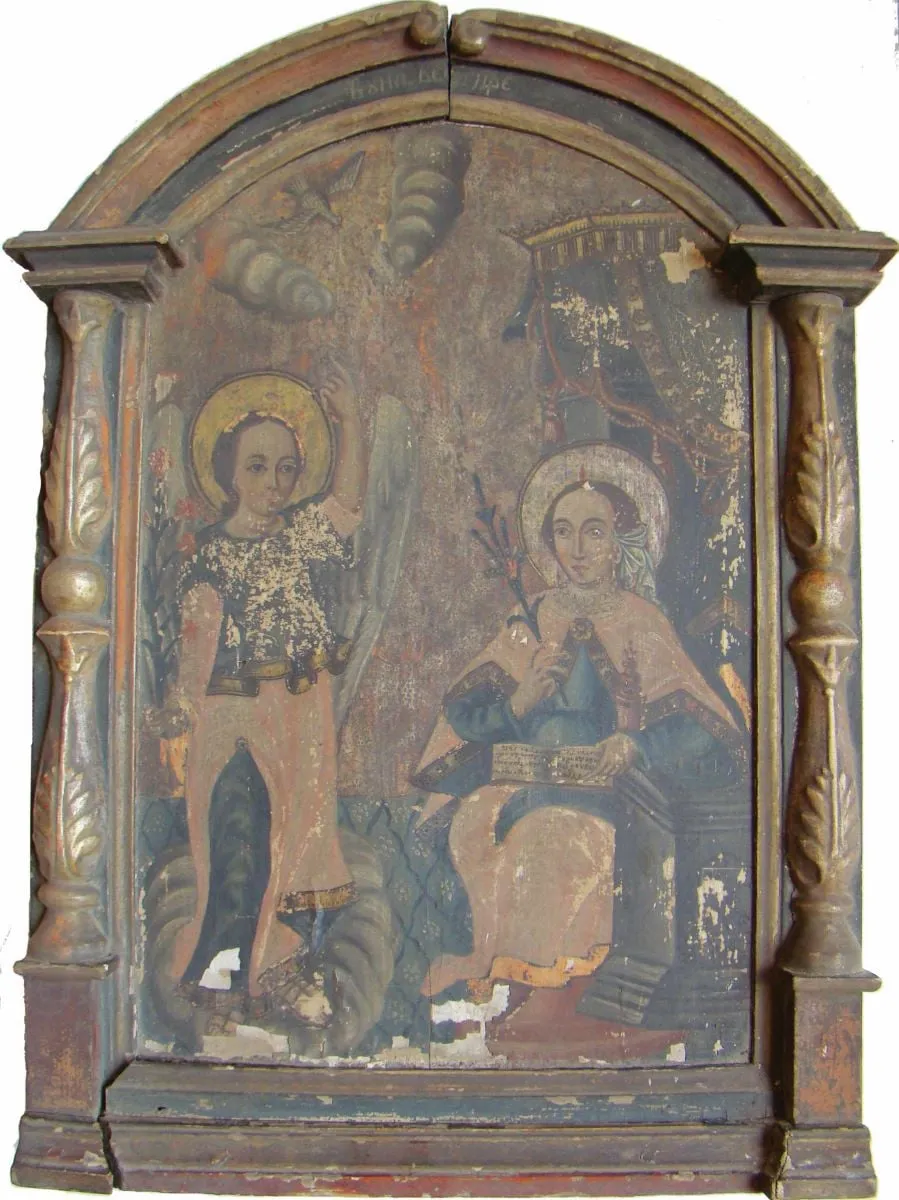
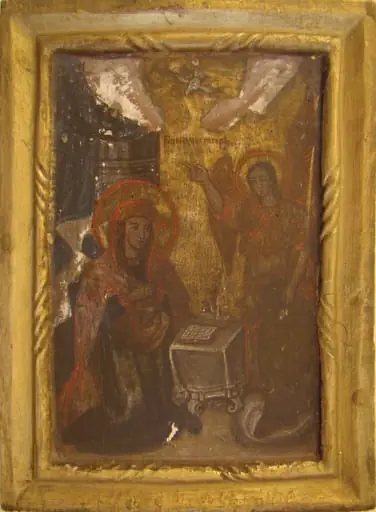
Buna Vestire is a drawing by the Romanticist artist Simion Silaghi-Sălăgeanu. It dates from 1815 and is held in the collection of the Alba Iulia Orthodox Archdiocese.
About this work
Overview
The work reflects early 19th-century Romanian devotional art, blending local traditions with broader European visual conventions of the period.
Created in 1815 by Simion Silaghi-Sălăgeanu, Buna Vestire is a religious-themed painting executed on a wooden panel. It is part of the collection at the Museum of Ethnography. The composition features two figures in a muted, atmospheric setting, rendered with subdued tones and a soft luminosity. The work reflects early 19th-century Romanian devotional art, blending local traditions with broader European visual conventions of the period.
Subject & Meaning
The painting depicts the Annunciation, with the angel on the left wearing a light robe and halo, and the Virgin Mary on the right in darker, more ornate attire, holding a small object likely symbolizing her acceptance of divine will. Their expressions are quiet and contemplative, avoiding theatricality. The scene conveys solemn reverence rather than dramatic revelation, emphasizing inner spiritual response over external spectacle.
Technique & Style
The artist employed tempera or oil on wood, with thin, layered pigments that have faded over time, producing a gentle, diffused glow. The background suggests a stormy sky with indistinct architecture, creating depth without detail. Halos are rendered as subtle rings of light, not gilded or exaggerated. The brushwork is restrained, favoring emotional restraint over expressive flourish, aligning with pre-Romantic sensibilities in regional religious art.
History & Provenance
The painting has remained in institutional care since at least the early 20th century, entering the Museum of Ethnography’s collection as part of a broader effort to preserve Romanian ecclesiastical artifacts. Its survival through periods of political and religious change suggests its cultural significance was recognized early. No records indicate prior ownership outside religious or community contexts in Moldavia or Wallachia.
Context
Produced during the early Romantic era, the work predates the full emergence of Romanticism in Romanian art but shares its interest in mood and natural atmosphere. Unlike Western European religious paintings of the time, it avoids grandeur, instead favoring intimacy and quietude. This reflects local liturgical practices and the influence of Orthodox iconography, adapted into a more secularized, painterly format.
Legacy
Buna Vestire remains a representative example of early 19th-century Romanian religious painting, illustrating the transition from traditional iconography to more naturalistic representation. It is studied for its restrained emotional tone and regional stylistic choices. While not widely reproduced, it holds value within scholarly discussions on the development of national visual identity in the pre-modern Balkans.
Artist & collection
Artist
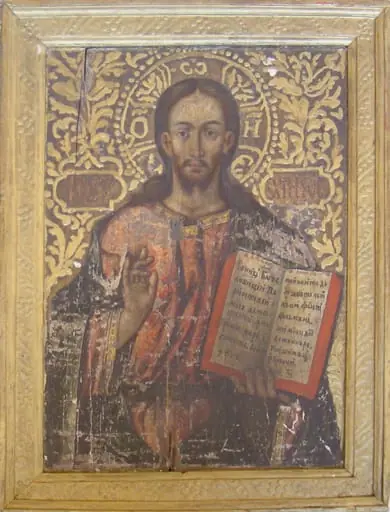
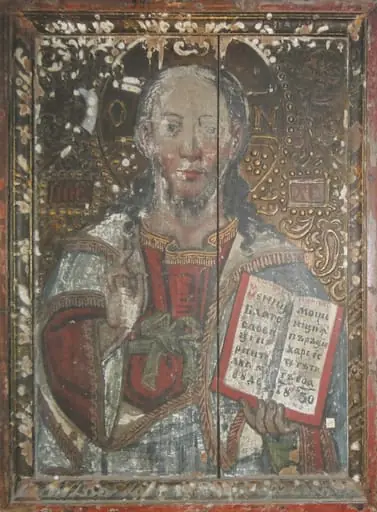
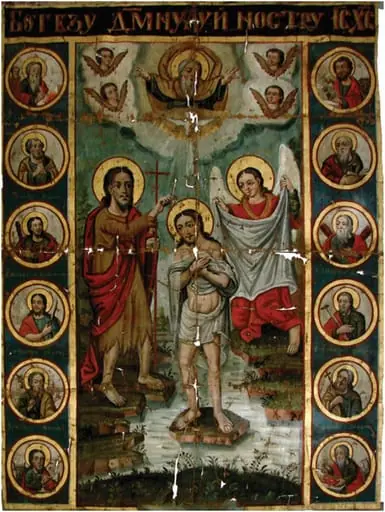
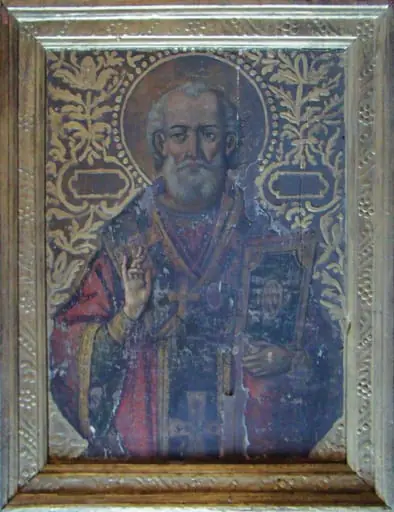
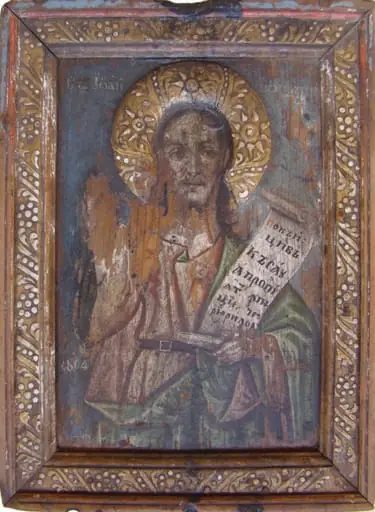
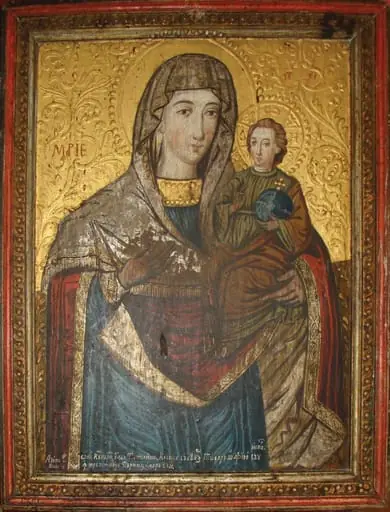
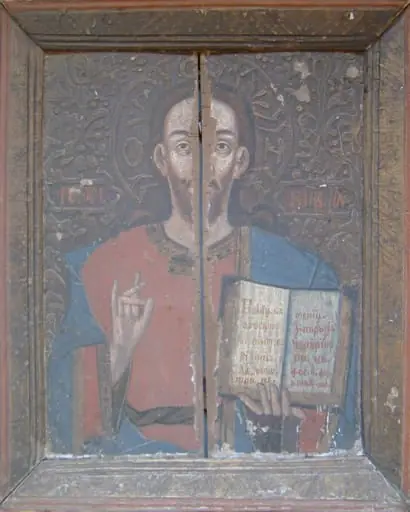
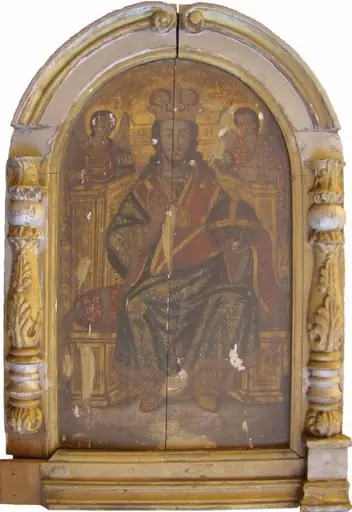
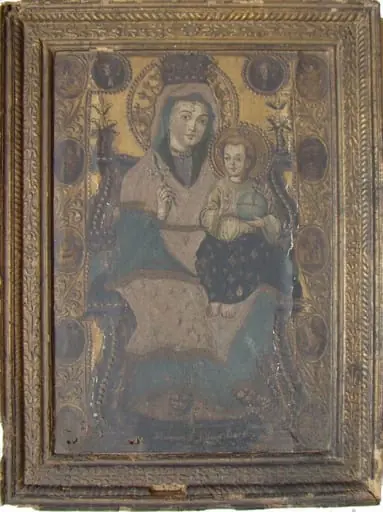
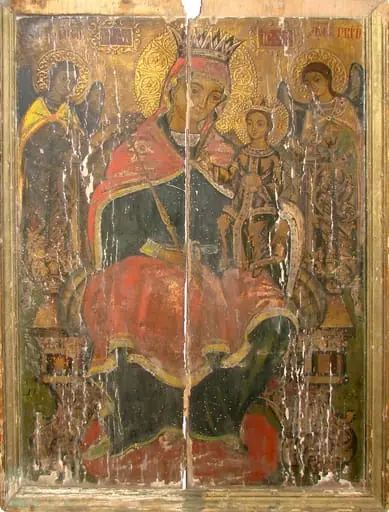
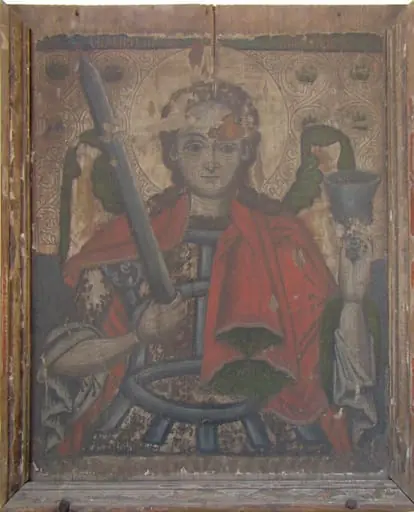
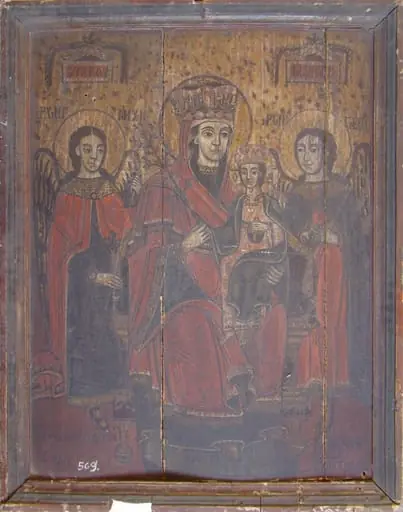
Religious images fill these drawings and paintings by Simion Silaghi-Sălăgeanu, rooted in Orthodox icon traditions.