Artwork
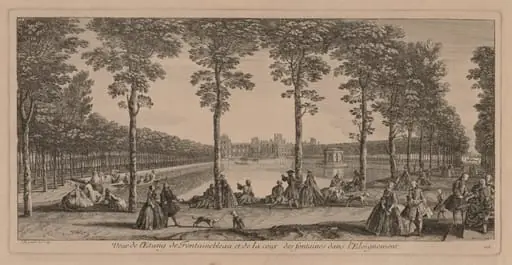
Veue de la cour des Fontaines de Fontaine Beleau
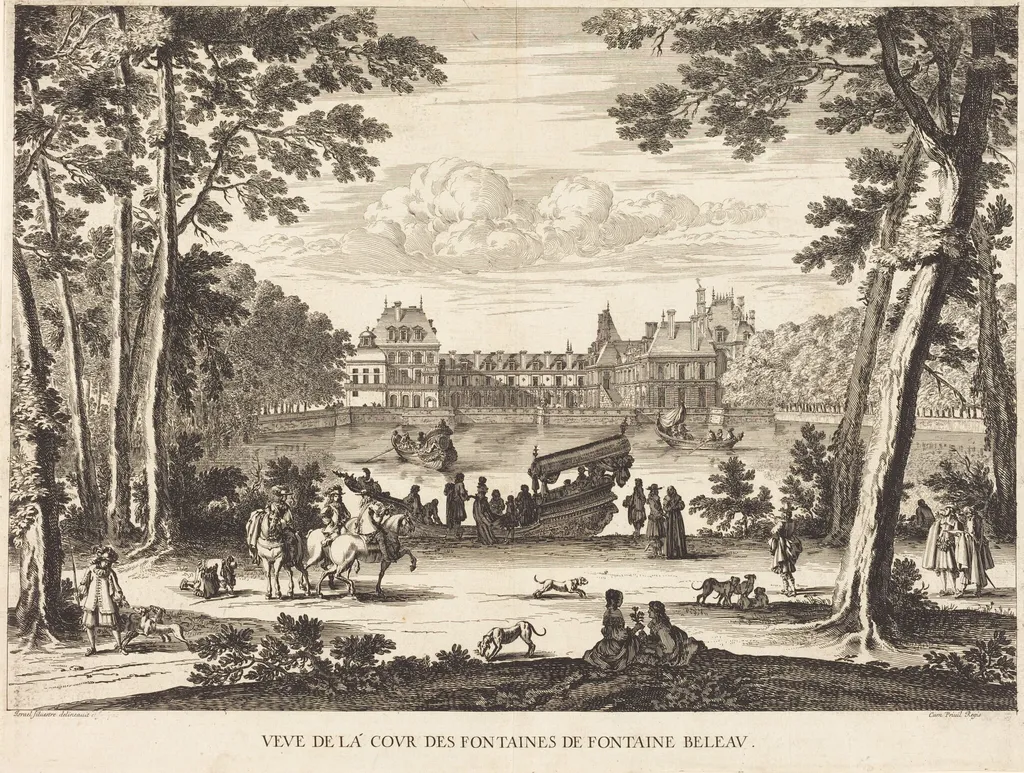
Veue de la cour des Fontaines de Fontaine Beleau is an ink print by the Baroque artist Israël Silvestre. It dates from 1666 and is held in the collection of the National Gallery of Art. The 1666 engraving titled *Vue de la cour des Fontaines de Fontaine‑Beleau* presents a bustling courtyard scene rendered on laid paper.
About this work
Overview
Fine, intersecting lines convey depth, shadow and the movement of figures, horses and dogs amid architectural elements, trees and a waterway.
The 1666 engraving titled *Vue de la cour des Fontaines de Fontaine‑Beleau* presents a bustling courtyard scene rendered on laid paper. Fine, intersecting lines convey depth, shadow and the movement of figures, horses and dogs amid architectural elements, trees and a waterway. The composition balances human activity with the surrounding built environment, offering a snapshot of daily life in a French locale of the mid‑seventeenth century.
Subject & Meaning
The image captures the courtyard of the Fontaines de Fontaine‑Beleau, a site distinguished by a sizable building with numerous windows, a prominent spire, and a surrounding garden. Figures are shown loading a boat, strolling, or resting, suggesting the space functioned as both a social hub and a point of transit. The inclusion of animals and everyday tasks underscores the engraving’s aim to document ordinary activity within a notable architectural setting.
Technique & Style
Created by the French draftsman Israel Silvestre, the print employs the traditional engraving method, using a burin to incise fine lines into a copper plate before transferring the image onto laid paper. Silvestre’s characteristic precision in line work renders textures—stone, foliage, water—and models light through cross‑hatching, producing a subtle three‑dimensional effect. The work exemplifies the topographical genre, where meticulous detail serves both aesthetic and documentary purposes.
History & Provenance
Silvestre, who trained under his uncle—a Parisian etcher and print‑seller—produced this view after extensive travels across France, Spain and Italy. The engraving was likely issued as an individual print, part of a broader series of architectural and landscape studies that circulated among collectors and patrons interested in contemporary French sites. Its survival on laid paper indicates it was intended for a market that valued both artistic merit and accurate visual records.
Context
The mid‑seventeenth century saw a rise in demand for visual records of notable locations, driven by aristocratic patronage and the growth of print culture. Silvestre’s work fits within this trend, providing a reliable visual account of Fontaine‑Beleau’s courtyard for audiences unable to visit in person. The engraving reflects contemporary interests in architecture, urban planning and the everyday life of French towns.
Artist & collection
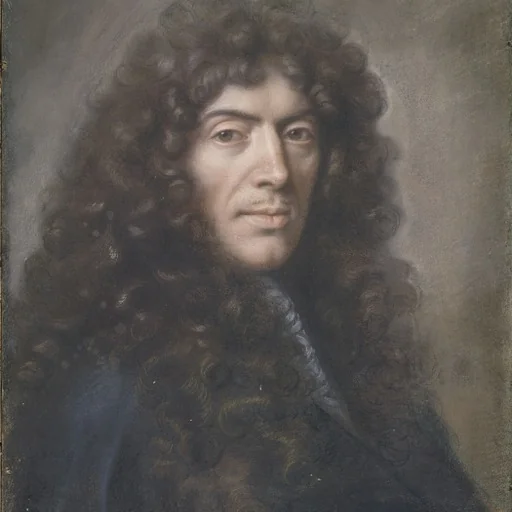
Artist
Israel Silvestre (13 August 1621 in Nancy – 11 October 1691 in Paris), called the Younger to distinguish him from his father, was a prolific French draftsman, etcher and print dealer who specialized in topographical views and perspectives…

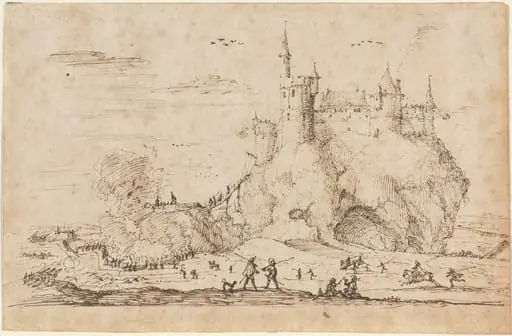 Castle under Siege
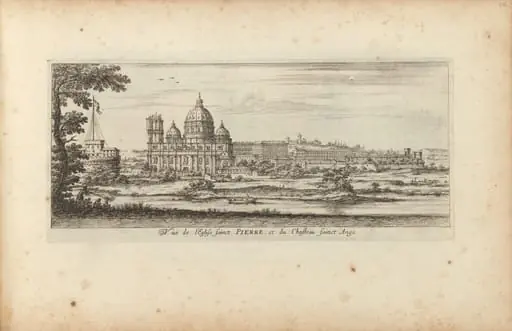 Vuë de l'Eglise sainct Pierre, et du Chasteau Sainct Ange
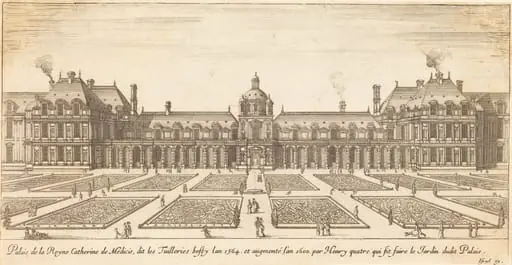 Palais de la Reyne Catherine de Medicis
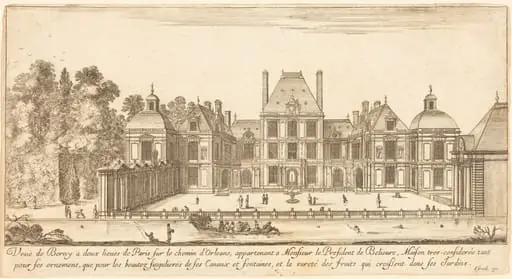 Veue de Berny a deux lieues de Paris sur le chemin d'Orléans
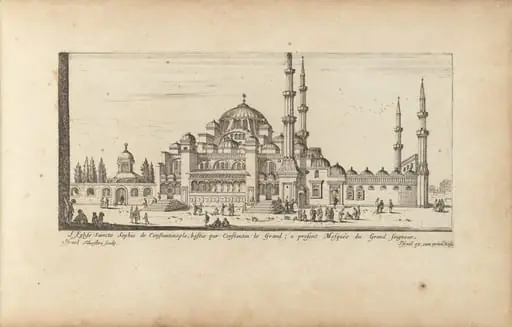 L'Eglise Saincte Sophie de Constantinople, bastie par Constantin le Grand; a present Mosquée du Grand seigneur
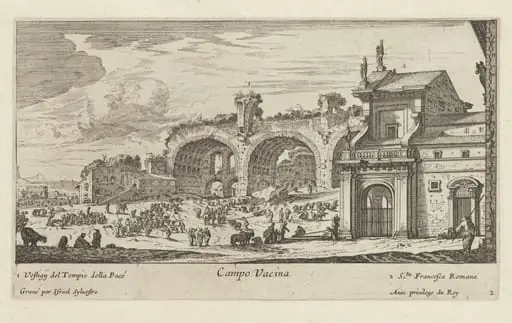 Campo Vacina
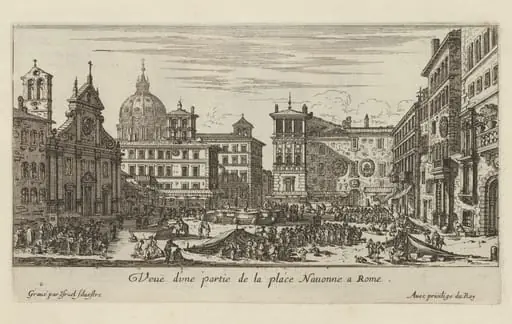 Veuë d'une partie de la place Navonne a Rome
 Veue de l'Eglise nostre Dame de Rouen